AWS Announces General Availability of AI-Powered DevOps and Security Frontier Agents to Streamline Cloud Operations and Threat Mitigation


Amazon Web Services (AWS) has officially transitioned its pioneering Frontier Agents from the preview phase to General Availability (GA), signaling a transformative shift in how enterprise cloud environments are managed and secured. These autonomous agents, specifically the AWS DevOps Agent and the AWS Security Agent, represent a new class of generative artificial intelligence designed to execute multi-step, complex tasks with minimal human intervention. By operating continuously until a specified outcome is achieved, these agents aim to alleviate the "undifferentiated heavy lifting" that has historically burdened IT operations and security teams. This announcement, made following extensive testing with global partners, underscores AWS’s commitment to integrating agentic AI into the core of the cloud development lifecycle.
The Evolution of Frontier Agents in the AWS Ecosystem
The concept of Frontier Agents was first introduced at the AWS re:Invent conference, where the company outlined a vision for AI that moves beyond simple chatbots to become proactive teammates. Unlike standard AI models that require constant prompting for every individual step, Frontier Agents are designed with the reasoning capabilities necessary to understand a high-level goal, plan a sequence of actions, and execute those actions across various environments.
The launch of the AWS DevOps Agent and the AWS Security Agent marks the first realization of this vision. These tools are built to integrate seamlessly not only within the AWS Cloud but also across multicloud and on-premises architectures, reflecting the reality of modern enterprise infrastructure. The move to General Availability indicates that the underlying models and orchestration frameworks have reached the maturity required for production-level reliability and scale.
AWS DevOps Agent: Accelerating Incident Response and System Reliability
The AWS DevOps Agent is engineered to address one of the most persistent challenges in cloud computing: the rising complexity of incident management. As microservices architectures expand, identifying the root cause of a system failure can involve sifting through petabytes of logs and metrics. The DevOps Agent automates this investigation process, working autonomously to identify anomalies and suggest—or in some cases, implement—remediations.
Key enterprise adopters, including United Airlines, T-Mobile, and Western Governors University (WGU), have provided data demonstrating the efficiency gains achieved during the agent’s preview period. At WGU, for instance, the time required to resolve complex technical incidents reportedly dropped from several hours to just a few minutes. Across the broader customer base, AWS reports that the DevOps Agent has contributed to a 75% reduction in Mean Time to Resolution (MTTR).
Furthermore, the agent operates as a predictive tool. By continuously monitoring system health, it can identify patterns that precede a failure, allowing teams to prevent issues before they impact end-users. This proactive stance is a significant departure from traditional reactive monitoring tools, potentially saving enterprises millions of dollars in avoided downtime.
AWS Security Agent: Continuous and Context-Aware Penetration Testing
Parallel to the advancements in operations is the AWS Security Agent, which focuses on the "shift-left" philosophy of integrating security early in the development process. Traditional penetration testing is often a manual, periodic, and expensive endeavor, frequently resulting in a snapshot of security that becomes outdated the moment code is updated.
The AWS Security Agent functions as an "always-on" human penetration tester. It possesses the context-aware reasoning to understand an application’s architecture and probe for vulnerabilities in real-time. This includes identifying misconfigurations, insecure API endpoints, and potential pathways for lateral movement within a network.
Early adopters such as LG CNS, HENNGE, and Wayspring have reported substantial improvements in their security posture. LG CNS, a major global IT service provider, estimated that the agent allowed their teams to conduct security testing 50% faster while reducing associated costs by approximately 30%. Crucially, the agent’s advanced reasoning capabilities resulted in significantly fewer false positives compared to traditional automated scanners, allowing security engineers to focus on genuine threats rather than administrative noise.
Chronology of Development and Global Community Engagement
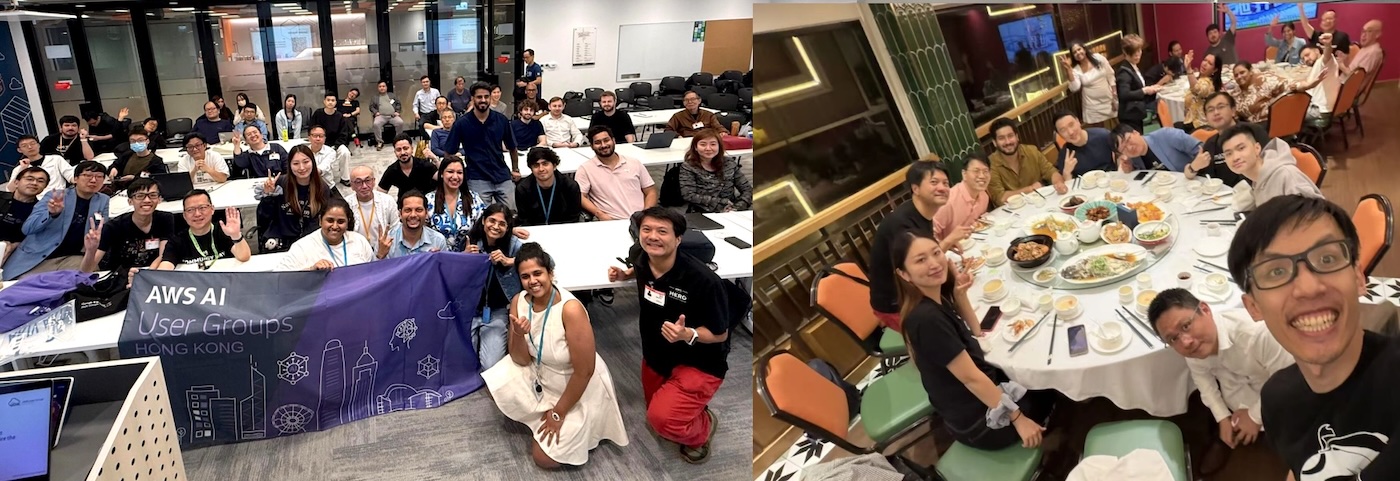
The path to General Availability has been marked by a rigorous feedback loop between AWS developers and the global user community. A pivotal moment in this timeline occurred during the recent engagement with the AWS Hong Kong User Group. This community, which has recently established a dedicated AI user group, serves as a microcosm of the global demand for autonomous cloud tools.
The timeline of the Frontier Agents’ rollout is as follows:

- Late 2024: Initial concept of Frontier Agents introduced at re:Invent, showcasing the shift from generative AI to agentic AI.
- 2025: Limited preview phase where select enterprise customers integrated the agents into their CI/CD pipelines.
- Early 2026: Expansion of preview to include multicloud support and enhanced reasoning models.
- March 31, 2026: Final updates to AWS Product Lifecycle Changes and official GA announcement for both DevOps and Security Agents.
The involvement of user groups in regions like Hong Kong has been instrumental in refining the agents’ ability to handle diverse localized requirements and complex regulatory environments. The energy and passion of these communities have driven AWS to prioritize features like cross-environment compatibility and human-in-the-loop oversight mechanisms.
Supporting Data and Operational Impact
The move toward autonomous agents is supported by compelling metrics that highlight the economic and operational necessity of AI integration. According to AWS internal data and customer reports:
- Operational Efficiency: DevOps teams using the agent have reported resolving incidents 3 to 5 times faster than with manual intervention.
- Cost Reduction: Security testing costs have seen a downward trend of 30% due to the automation of routine vulnerability assessments.
- Reliability: The predictive nature of the DevOps Agent has led to a measurable decrease in "Severity 1" incidents for early adopters.
These figures suggest that the "Frontier" designation is apt; these tools represent the edge of what is currently possible in cloud automation. By handling the "heavy lifting," these agents allow human engineers to transition from being reactive "firefighters" to proactive architects of innovation.
Official Responses and Industry Implications
Industry analysts view the General Availability of these agents as a competitive move against other major cloud providers who are also racing to capture the agentic AI market. By embedding these agents directly into the AWS management console and CLI, Amazon is making AI an native feature of the cloud rather than an add-on service.
Official statements from AWS emphasize that these agents are not intended to replace human workers but to empower them. The company highlights that as cloud environments become too large for any single human or team to monitor effectively, autonomous agents become a requirement for maintaining system integrity.
"The goal is to provide an always-available teammate," the company noted in its technical documentation. This philosophy of "AI as a teammate" is central to AWS’s strategy, ensuring that while the agents handle the data-intensive tasks of investigation and testing, the final decision-making and strategic oversight remain with the human operators.
Broader Impact on the Tech Landscape
The release of the AWS DevOps and Security Agents is expected to have a ripple effect across the technology sector. First, it sets a new standard for Cloud Service Providers (CSPs) regarding the level of autonomy expected in management tools. Second, it accelerates the trend of "AIOps" (Artificial Intelligence for IT Operations), moving it from a buzzword to a functional reality.
For the developer community, this launch necessitates a shift in skill sets. Knowledge of how to prompt, oversee, and integrate AI agents will likely become as fundamental as knowing how to write scripts or manage containers. Furthermore, the GA of these agents may lead to a reorganization of internal IT departments, where "Security" and "Operations" silos are further bridged by shared AI tools that provide a single source of truth for system health and safety.
As of March 31, 2026, AWS has also updated its Product Lifecycle Changes to assist customers in migrating from legacy monitoring and security tools to these new AI-driven alternatives. The company has urged customers to consult updated documentation and AWS Support to ensure a smooth transition, emphasizing that while the agents are autonomous, their initial configuration requires careful alignment with organizational policies and compliance standards.
With the AWS Builder Center and various global events like AWS Summits and Community Days on the horizon, the focus will likely remain on how these Frontier Agents evolve. As more data is gathered from diverse workloads, the agents are expected to become even more refined, potentially expanding into other domains such as automated cost optimization and cloud governance in the near future.