AWS Launches Standalone Sustainability Console to Centralize Carbon Footprint Reporting and Accelerate Net Zero Goals

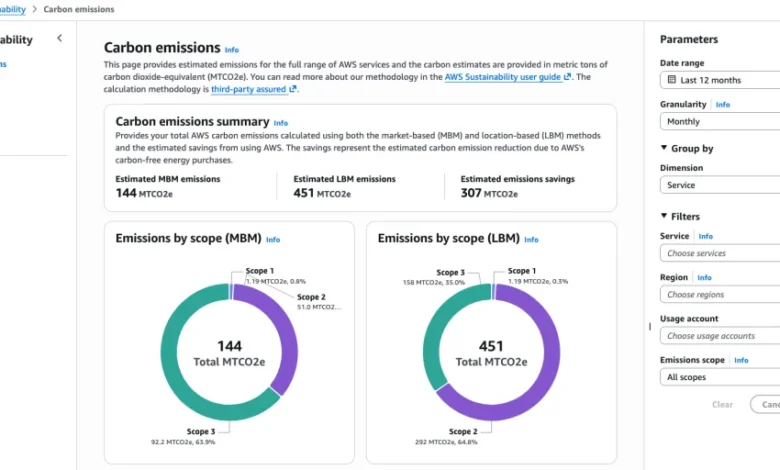
Amazon Web Services (AWS) has officially announced the launch of the AWS Sustainability Console, a dedicated standalone service designed to centralize sustainability reporting, metrics, and resources for its global customer base. This new interface marks a significant evolution from previous reporting methods, which were traditionally housed within the AWS Billing console. By decoupling environmental data from financial data, AWS aims to streamline the workflow for sustainability professionals, allowing them to monitor, analyze, and report on the carbon footprint of their cloud workloads without requiring access to sensitive corporate billing information.
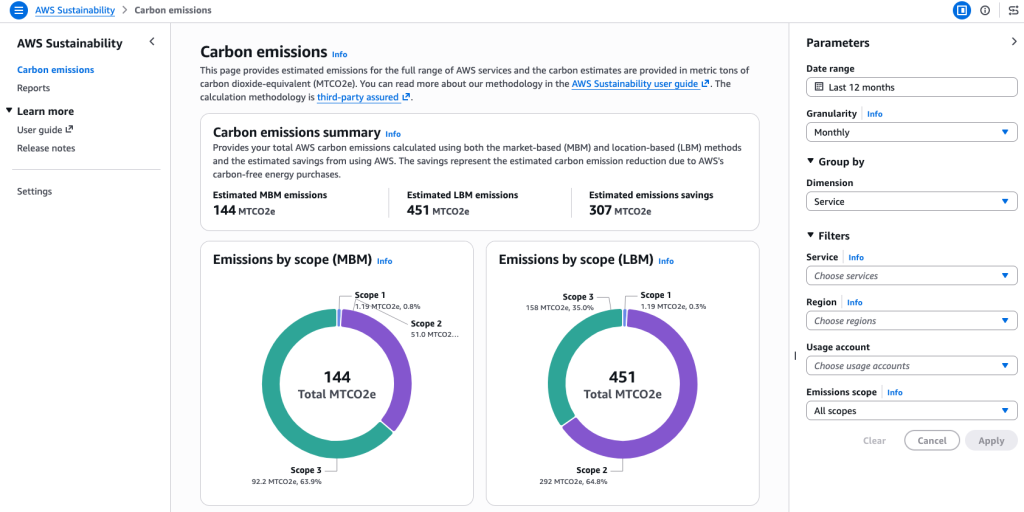
The launch of the console is a direct response to the increasing demand for transparency in corporate environmental, social, and governance (ESG) reporting. As organizations face mounting pressure from regulators, investors, and consumers to disclose their carbon emissions, the need for precise, accessible, and granular data has become a priority for IT and sustainability departments alike. The AWS Sustainability Console provides a comprehensive view of Scope 1, 2, and 3 emissions, offering a detailed breakdown by AWS Region and specific services, including high-usage products such as Amazon Elastic Compute Cloud (EC2), Amazon Simple Storage Service (S3), and Amazon CloudFront.
The Evolution of AWS Carbon Tracking and the Shift to Standalone Access
The journey toward the AWS Sustainability Console began in early 2022 with the introduction of the Customer Carbon Footprint Tool (CCFT). While the CCFT provided essential insights into the carbon impact of cloud operations, its placement within the AWS Billing console created a significant hurdle for many organizations. Historically, accessing carbon data required billing-level permissions—a level of access that many companies restrict to finance and procurement teams for security and privacy reasons.
This organizational friction often meant that sustainability officers and ESG reporting teams had to request manual exports from finance departments, leading to delays and potential inaccuracies in reporting cycles. The new AWS Sustainability Console solves this by introducing an independent permissions model. Organizations can now grant sustainability professionals direct access to the emissions data they need through specific Identity and Access Management (IAM) policies, ensuring that environmental oversight is separated from financial administration.
This structural change reflects a broader trend in the technology industry where "Green Ops" is becoming a distinct discipline, similar to how "FinOps" emerged to manage cloud spending. By providing a dedicated workspace, AWS is acknowledging that sustainability is no longer a subset of finance, but a core operational pillar of modern enterprise management.
Technical Specifications and Methodology of the Sustainability Console
The AWS Sustainability Console utilizes a rigorous methodology to calculate the carbon footprint associated with a customer’s cloud usage. The data is expressed in metric tons of carbon dioxide equivalent (MTCO2e), a standard unit for comparing the emissions from various greenhouse gases based on their global-warming potential.
The console provides data according to the Greenhouse Gas (GHG) Protocol, categorized into three scopes:
- Scope 1: Direct emissions from operations that are owned or controlled by the company. In the context of AWS, this includes emissions from sources such as the backup diesel generators used in data centers.
- Scope 2: Indirect emissions from the generation of purchased energy. The console provides two distinct figures for Scope 2: the Location-Based Method (LBM), which reflects the average emissions intensity of the local power grids where the data centers operate, and the Market-Based Method (MBM), which accounts for AWS’s investments in renewable energy and energy attribute certificates.
- Scope 3: All other indirect emissions that occur in the value chain. For AWS customers, this includes the "embodied carbon" associated with the manufacturing of servers, networking equipment, and the construction of the data centers themselves.
The underlying data and methodology have been independently verified by Apex, a leading third-party environmental consultancy, ensuring that the reports generated by the console meet the high standards of accuracy required for formal corporate disclosures.
Enhanced Reporting Flexibility and Fiscal Alignment
One of the most requested features included in the new console is the ability to align carbon reporting with an organization’s specific fiscal year. Previously, carbon data was strictly presented on a calendar-year basis, which created reconciliation challenges for companies whose financial cycles began in months other than January. The new configuration settings allow users to define their reporting periods, ensuring that all dashboard views and data exports match the company’s internal reporting cadence.
Furthermore, the console introduces a robust Reports page. Users can now download preset monthly and annual reports or generate custom comma-separated values (CSV) files. These custom reports allow users to filter by specific timeframes, regions, and services, enabling a granular "hotspot" analysis. For example, a company might discover that a specific legacy application running in a high-carbon-intensity region is disproportionately contributing to its total footprint, prompting a migration to a more energy-efficient region or a more modern instance type.
Automation Through APIs and SDK Integration
For large-scale enterprises and software-as-a-service (SaaS) providers, manual data entry and console navigation are often insufficient. To address this, AWS has released a new Sustainability API and integrated sustainability features into the AWS Software Development Kits (SDKs) and Command Line Interface (CLI).

This programmatic access allows developers to build automated reporting pipelines that feed carbon data directly into third-party ESG platforms, corporate dashboards, or compliance software. This is particularly beneficial for organizations managing hundreds or thousands of AWS accounts. Using the API, these organizations can aggregate emissions data across their entire infrastructure, create custom account groupings that may not follow their standard AWS Organizations structure, and automate the delivery of monthly sustainability reports to stakeholders.
The ability to programmatically retrieve carbon data represents a shift from "reactive" reporting to "proactive" management. Companies can now set up alerts or triggers based on carbon intensity, much like they do for cloud costs, allowing for real-time optimization of their environmental impact.
Chronology of Amazon’s Climate Commitment
The launch of the Sustainability Console is a milestone in a timeline that dates back to the co-founding of The Climate Pledge by Amazon and Global Optimism in 2019. The pledge committed Amazon to reaching net-zero carbon across its entire operations by 2040, ten years ahead of the Paris Agreement.
- September 2019: Amazon co-founds The Climate Pledge.
- 2020-2021: AWS aggressively expands its renewable energy portfolio, becoming the world’s largest corporate purchaser of renewable energy.
- March 2022: AWS launches the initial Customer Carbon Footprint Tool within the Billing console.
- 2023: AWS announces it has met its goal of matching 100% of the electricity consumed by its global operations with renewable energy sources seven years ahead of schedule.
- Present: The launch of the standalone Sustainability Console provides the toolset for customers to mirror Amazon’s internal progress within their own organizations.
Industry Implications and Regulatory Context
The introduction of this tool comes at a critical time for the global business community. In the United States, the Securities and Exchange Commission (SEC) has been moving toward finalized rules that would require public companies to disclose certain climate-related risks and greenhouse gas emissions. In Europe, the Corporate Sustainability Reporting Directive (CSRD) already mandates rigorous sustainability reporting for thousands of companies operating in the EU.
By providing a verified, easy-to-access source of carbon data, AWS is lowering the barrier to compliance for its customers. Analysts suggest that tools like the Sustainability Console will soon become an industry standard as cloud providers transition from being mere infrastructure vendors to becoming "sustainability partners."
Industry experts anticipate that this launch will spark a competitive response from other major cloud providers, such as Microsoft Azure and Google Cloud Platform, who have their own sustainability dashboards. However, the granularity of AWS’s service-by-service breakdown and the flexibility of its new API-first approach may set a new benchmark for how cloud carbon data is consumed and utilized.
Broader Impact on Cloud Architecture and Strategy
Beyond compliance, the AWS Sustainability Console is expected to influence how software is designed and deployed. The visibility provided by the console highlights the environmental cost of inefficient code and suboptimal architecture. This is likely to accelerate the adoption of the "AWS Well-Architected Sustainability Pillar," a set of design principles that encourages developers to maximize utilization and minimize the resources required for their workloads.
As customers begin to see the direct correlation between their architectural choices and their carbon MTCO2e figures, "Carbon-Aware Computing" may move from a niche concept to a mainstream practice. This could involve shifting non-urgent batch processing jobs to times of day when the local grid is powered by a higher percentage of renewable energy, or choosing instance types powered by AWS’s more energy-efficient Graviton processors.
The AWS Sustainability Console is available starting today at no additional cost to all AWS customers. With historical data available back to January 2022, organizations can immediately begin analyzing their multi-year emissions trends and integrating these insights into their broader corporate sustainability strategies. As AWS continues to update the console’s capabilities and methodology, it remains a central component of the company’s mission to help customers build a more sustainable future in the cloud.