27 Essential Instagram Tools for Marketers in 2026 to Scale Growth and Engagement

As Instagram continues to evolve into a multifaceted ecosystem of short-form video, e-commerce, and direct community engagement, the demands on social media marketing teams have shifted significantly. In 2026, the landscape of digital marketing requires more than just raw creativity; it necessitates a sophisticated tech stack capable of managing cross-platform workflows, deep data analytics, and real-time social listening. With Meta’s ad revenue projected to maintain its dominance over the digital landscape this year, the pressure to optimize organic and paid content has never been higher.

The Strategic Shift in Social Media Management
The role of third-party software has transformed alongside Instagram’s native capabilities. While the platform’s Professional Dashboard now provides a robust hub for basic insights, monetization, and in-app editing, enterprise-level marketing still faces significant gaps. Native tools often lack long-term historical data storage, cross-platform reporting, and complex team approval workflows. Consequently, the modern marketing toolkit for 2026 is defined by tools that solve specific workflow bottlenecks rather than duplicating native features.
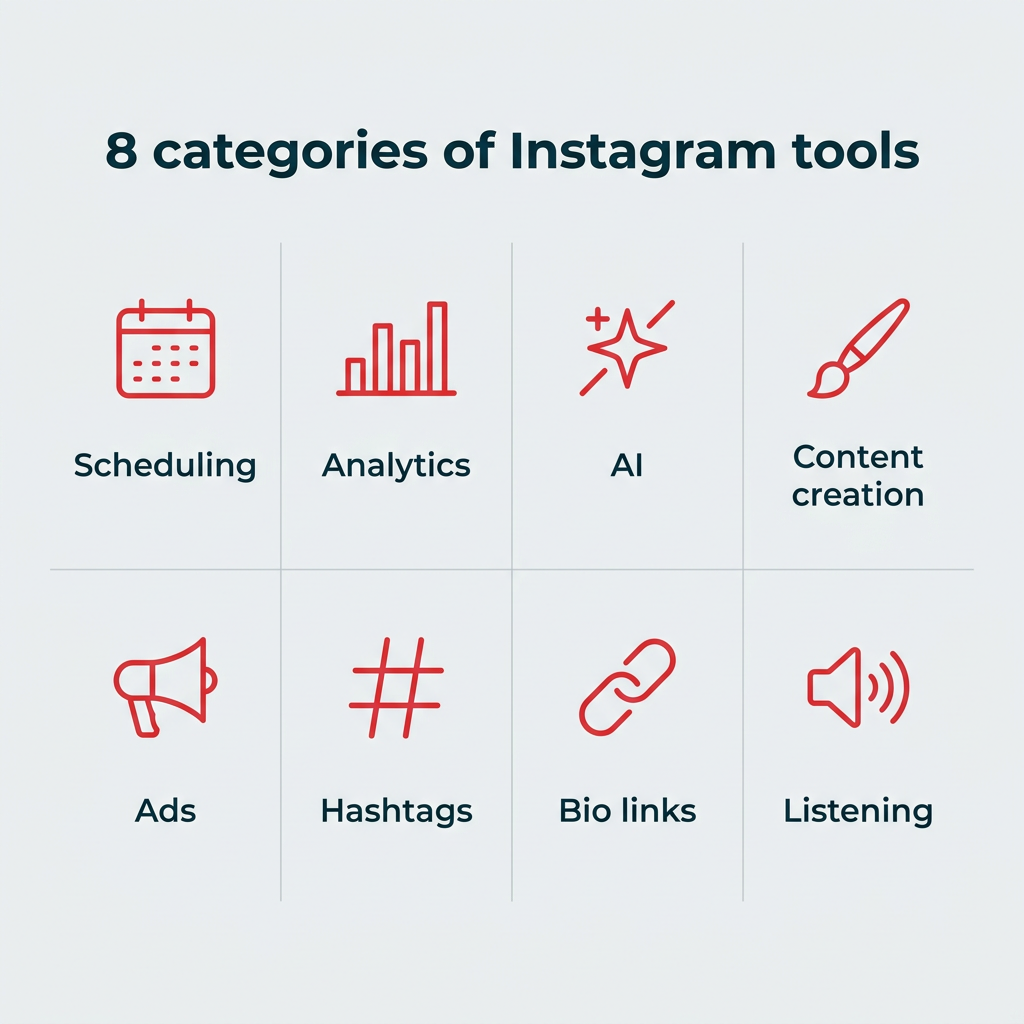
Current market data indicates that high-performing marketing teams now prioritize consolidation. By integrating scheduling, analytics, and social listening into a unified dashboard, teams report an average of 15 to 20 hours saved per week in manual administrative tasks. This efficiency is critical as the average engagement rate for brands continues to fluctuate in response to algorithm updates, necessitating faster, data-backed pivots in content strategy.
Navigating the 2026 Tool Ecosystem
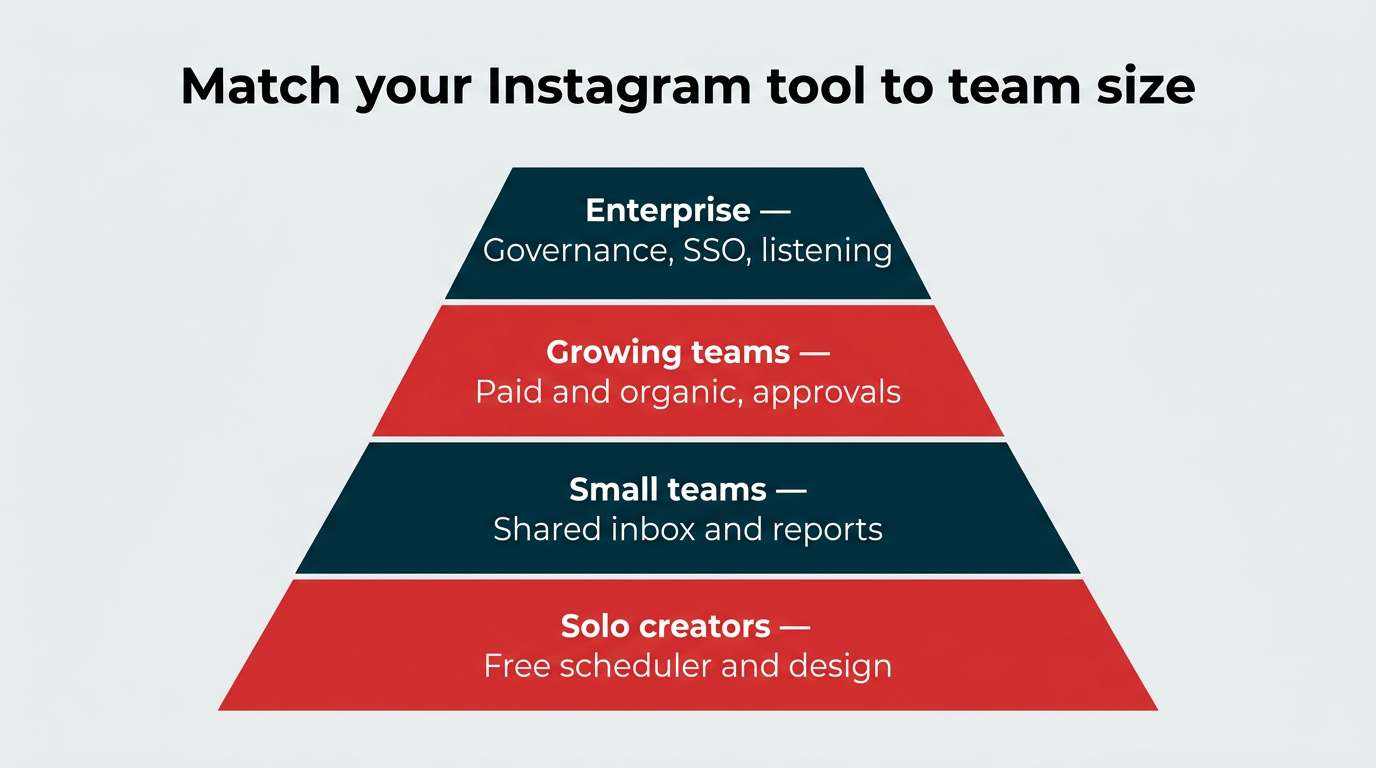
To effectively manage an Instagram presence today, marketers are categorized into three operational tiers: solo creators, small business teams, and enterprise-level organizations.
Scheduling and Publishing Orchestration
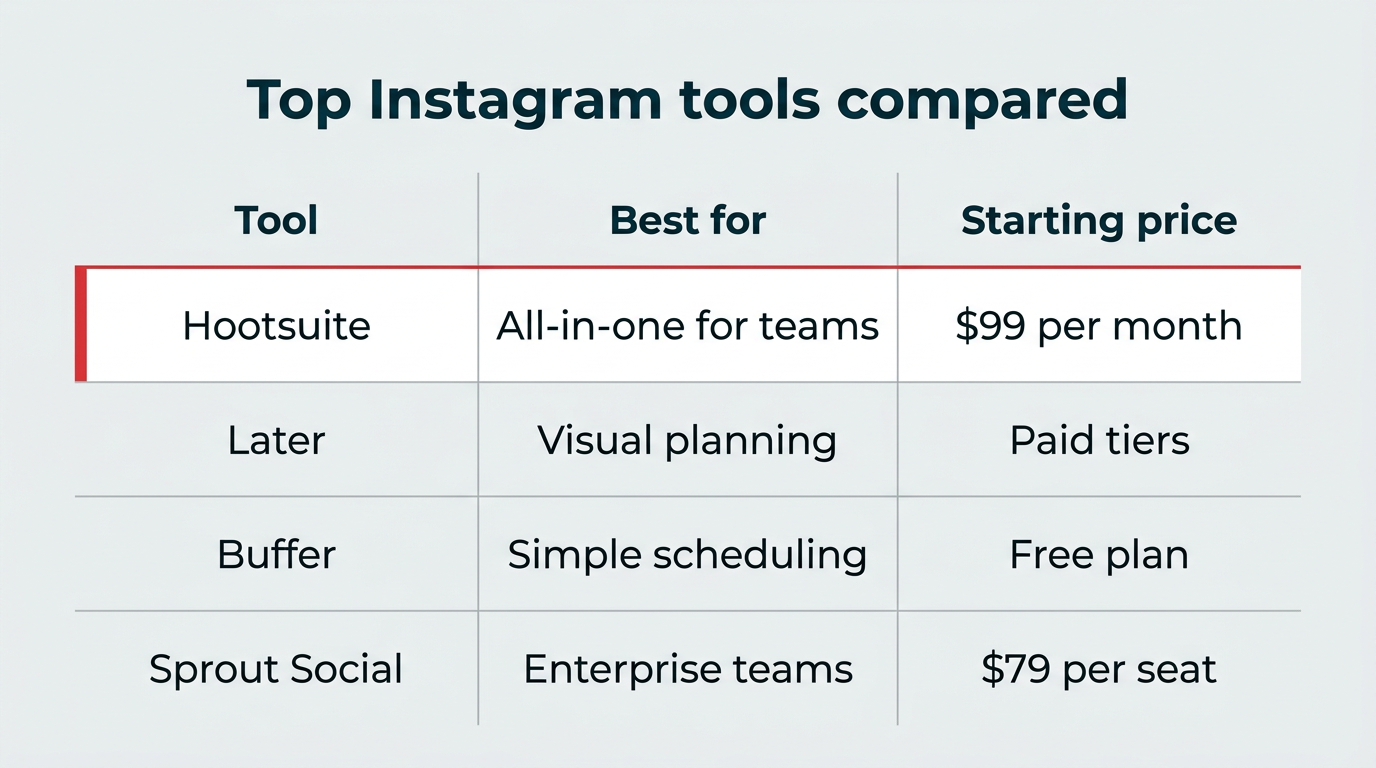
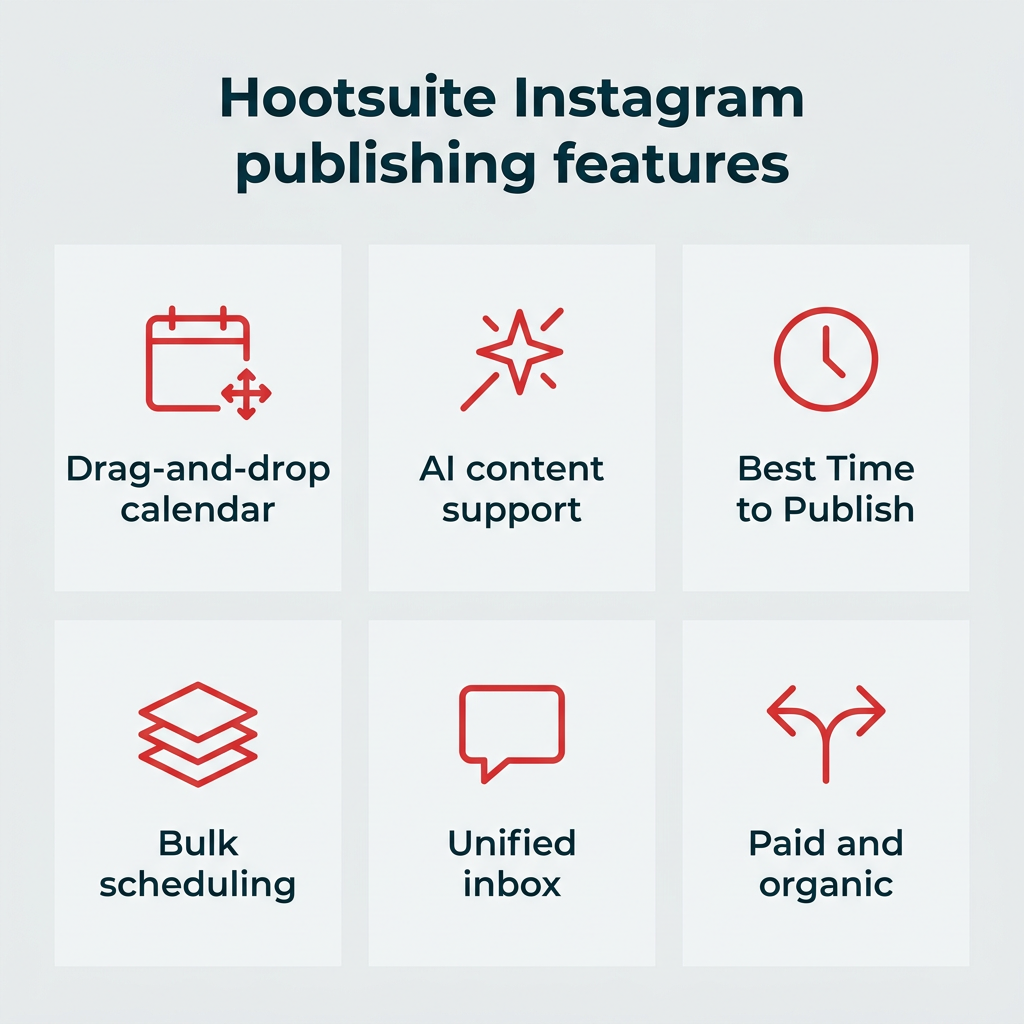
The foundation of any successful strategy remains consistent publishing. Platforms like Hootsuite have become industry staples by offering unified dashboards that manage organic content, advertising budgets, and engagement across multiple social channels. For teams managing dozens of accounts, the ability to bulk-schedule content—coupled with AI-driven "Best Time to Publish" features—has become a non-negotiable asset.
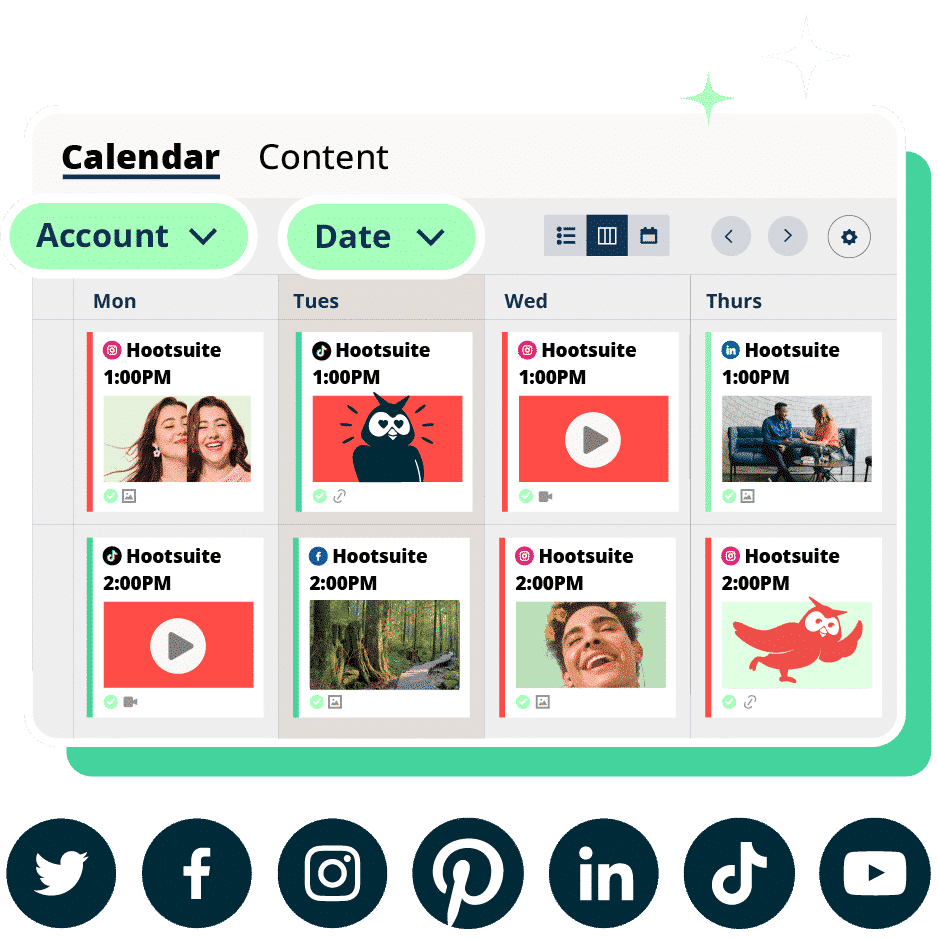
Conversely, niche tools like Later focus on the aesthetic-first approach, offering visual grid planners that allow creators to curate the look and feel of their feed before going live. For smaller, agile teams, Buffer provides a minimalist, cost-effective alternative that excels in straightforward scheduling without the overhead of enterprise-grade analytics suites.
The AI Revolution in Content Creation
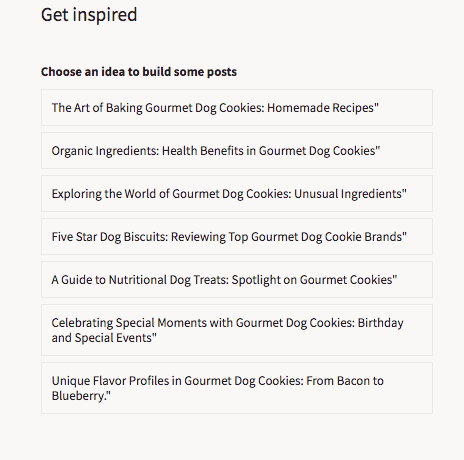
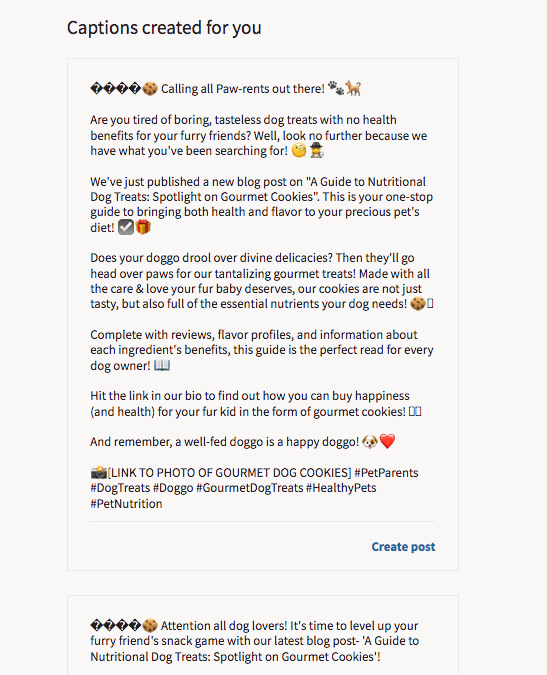
Artificial Intelligence has moved from a novelty to a fundamental component of the creative workflow. Tools like Hootsuite’s Wisdom AI layer now handle the labor-intensive aspects of ideation, such as generating caption variants, hashtag clusters, and even entire content calendars based on high-level topic inputs.
Video content, which remains the primary driver of reach on Instagram, is also seeing an AI-led transformation. Platforms such as Pictory allow teams to convert long-form text or blog posts into professional-quality short-form videos. This is particularly vital for lean teams that lack a dedicated production crew but must maintain a high cadence of Reels to stay relevant in the algorithm.
Advanced Analytics and Performance Attribution
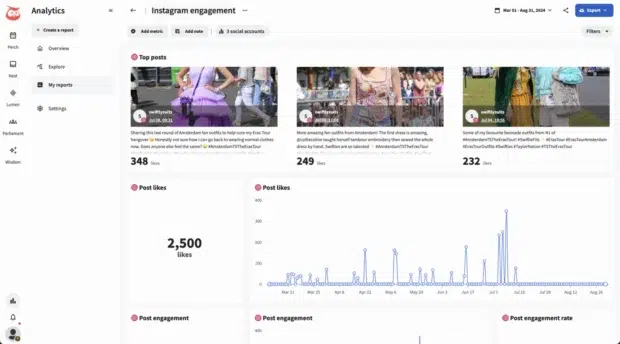
Data is the currency of modern marketing. While Instagram Insights provides a reliable baseline, the 2026 marketer requires deep-dive reporting. Tools such as Iconosquare and Phlanx provide essential health checks, including profile audits and influencer engagement calculators. These metrics are crucial for proving ROI to stakeholders.
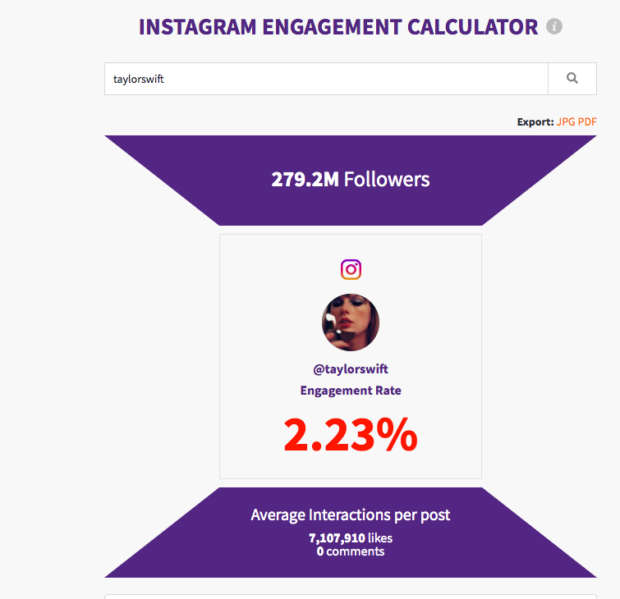
Enterprise-grade solutions like Sprout Social provide the advanced layer of governance that larger organizations require, offering granular approval workflows and complex, multi-layered reporting. These tools ensure that every post, whether organic or paid, adheres to brand guidelines and contributes to wider organizational KPIs.
The Role of Social Listening and Monitoring
Perhaps the most significant advancement in recent years is the integration of real-time social listening. Tools like Lumen, integrated into the Hootsuite ecosystem, allow brands to monitor sentiment and track industry-wide conversations as they happen. This proactive approach to listening allows brands to anticipate crisis events, identify emerging content trends, and monitor competitor movements.
By analyzing millions of conversations in real-time, brands can pivot their strategy before a trend expires. For instance, if data shows a shift in audience sentiment toward a specific product category, marketing teams can adjust their content calendar within the same dashboard, ensuring that their messaging remains resonant and timely.
Optimizing for Conversion: Links and Ads
With the increasing importance of social commerce, the "link in bio" has evolved into a conversion funnel. Tools like Hootbio and Milkshake have moved beyond simple link lists, now offering fully customizable, mobile-optimized landing pages that function as mini-websites. This allows brands to bypass the limitations of Instagram’s single-link policy, driving traffic to multiple touchpoints such as storefronts, newsletters, and promotional campaigns.
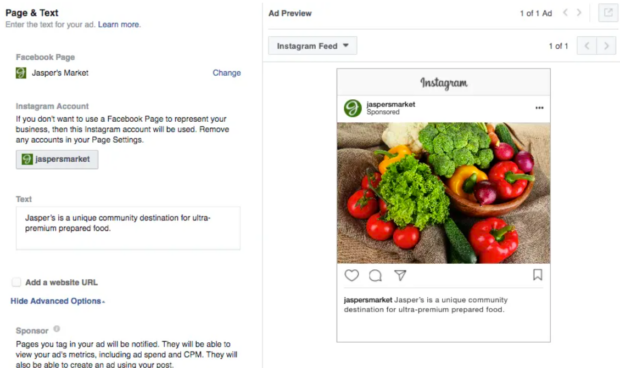
Simultaneously, the integration of Meta Ads Manager with third-party tools has streamlined the paid-to-organic handoff. The ability to automatically boost high-performing organic posts—based on specific triggers—is now a standard tactic for maximizing advertising efficiency without increasing overall spend.

Selecting the Right Stack for Your Team
Choosing the appropriate software requires a realistic assessment of team size and objectives.

- Solo Creators: Prioritize visual planning and ease of use. Tools like Later and Canva offer the most value for building a strong, consistent brand identity.
- Small Business Teams: Focus on consolidation. A single tool that handles scheduling, basic analytics, and a shared inbox is more efficient than juggling multiple subscriptions.
- Enterprise Organizations: Demand governance and depth. Large teams should invest in platforms that offer robust role-based access, approval workflows, and the ability to integrate with business intelligence software like Tableau or Power BI.
Broader Implications and Future Outlook
As we look toward the remainder of 2026, the reliance on these third-party tools will only deepen. Instagram is increasingly favoring authentic, high-quality, and community-focused content, which places a higher burden on marketers to accurately measure what truly resonates with their audience. The tools that will define the next generation of social media marketing are those that successfully blur the line between human strategy and machine efficiency.
Ultimately, the goal of utilizing this diverse tech stack is to reclaim time—time that should be spent on high-level strategic thinking rather than manual scheduling or data entry. By leveraging these tools, marketers can move away from the "post and pray" method of the past and toward a data-driven, highly optimized approach to Instagram growth. As the digital landscape becomes increasingly competitive, those who master their toolkit today will hold a distinct advantage in capturing the attention of their target audience.