Neighborhood Intelligence Pivots Strategy: Restructuring Fathom Holdings Deal Around Digital Assets

Neighborhood Intelligence, the corporate entity formerly known as Bed Bath & Beyond Inc., is significantly shifting its strategic trajectory once again. In a joint announcement released on Thursday, September 25, 2026, the company revealed that it is actively exploring alternatives to its previously announced real estate platform deal with Fathom Holdings, initially publicized in June 2026. Under the newly proposed framework, the transaction will fundamentally pivot from an all-stock acquisition of the brokerage into a high-value asset-contributing partnership centered on digital infrastructure.
The revised agreement proposes to leverage substantially all of Neighborhood Intelligence’s diverse digital assets. This includes contributing nearly 40% in direct and indirect ownership interest in the digital securities platform tZero Group, its associated Medici-related fund assets, and a direct investment in agricultural supply-chain technology firm GrainChain. According to the joint press release, the parties attribute a baseline value of at least $130 million to these digital asset contributions.
This dramatic restructuring marks the latest in a rapid sequence of strategic pivots, cancellations, and transformations for the retail icon as it attempts to redefine its corporate identity far beyond its historical roots in home goods retail.
Evolution of the Fathom Holdings Agreement
The original merger agreement, announced in June 2026, envisioned Neighborhood Intelligence acquiring Fathom Holdings outright in an all-stock transaction valued at approximately $53 million, with an anticipated closing timeline slated for the second half of the year. However, market realities have shifted significantly over the subsequent three months, prompting executive leadership to reconsider the financial mechanics of the union.
Under the newly proposed terms, Fathom will issue new shares to Neighborhood Intelligence, the exact count of which will be finalized as closing conditions are ironed out. Crucially, even with the structural transformation of the deal, Neighborhood Intelligence anticipates maintaining a controlling interest in Fathom Holdings.
Marcus Lemonis, Executive Chairman and CEO of Neighborhood Intelligence, addressed the shifting market valuations during the announcement. He noted that the intrinsic value of the newly proposed deal is decoupled from Fathom’s current public market capitalization, acknowledging that Fathom’s share price has drifted lower since the initial announcement in June.
Despite the compressed share price, Lemonis expressed strong confidence in Fathom’s operational fundamentals. “We believe its brokerage and title businesses have made meaningful progress during that same period,” Lemonis stated. “The proposed structure is intended to recognize both that progress and the value we believe exists in the digital asset portfolio Neighborhood would contribute.”
Furthermore, the reworked agreement intentionally grants Fathom the operational flexibility to pursue targeted third-party acquisitions designed to strengthen its core brokerage and service segments.
The Strategic Convergence of Real Estate and Digital Assets
The core thesis behind the restructured Fathom deal rests on the intersection of modern real estate operations and blockchain-backed digital infrastructure. Both executive teams believe that the real estate sector represents an optimal environment for deploying tZero’s digital securities infrastructure.
Specifically, the roadmap includes exploring the tokenization of commercial real estate portfolios and single-family rental properties. By utilizing tokenization, the companies aim to introduce more flexible capital structures and establish entirely new pathways to market liquidity. Over time, the strategic scope is expected to expand further, targeting innovative applications within title services, escrow processes, and individual homeownership mechanics.
Neither Neighborhood Intelligence nor Fathom Holdings immediately responded to requests for supplemental commentary regarding the definitive timeline for closing the newly proposed transaction, leaving market analysts watching closely for subsequent regulatory filings.

A Turbulent Period of Dealmaking and Terminations
The strategic pivot toward Fathom’s digital asset portfolio arrives on the heels of a major transaction collapse for Neighborhood Intelligence. Just weeks prior to the Fathom announcement, Neighborhood Intelligence formally canceled its high-profile deal to acquire F9 Brands—the parent company behind retail mainstays Cabinets to Go and Lumber Liquidators—in a transaction previously valued at $150 million.
At the time of the cancellation, Neighborhood Intelligence released a brief statement explaining that F9 Brands was ultimately unable to satisfy all mandatory closing requirements within the mutually agreed-upon timeframe. The termination of the F9 Brands acquisition represented a noticeable setback for leadership, which had envisioned the brands as central pillars of an ambitious house-of-brands model.
These consecutive developments underscore the volatile and experimental nature of Neighborhood Intelligence’s broader corporate transformation strategy. Over the past two years, the company has actively sought to transcend traditional home retail, pursuing a diversified portfolio spanning home services, property technology, and physical retail partnerships.
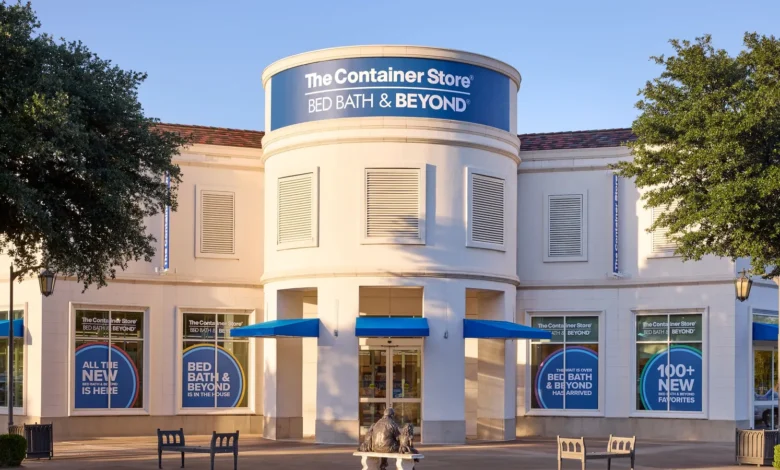
Earlier milestones in this aggressive turnaround strategy included high-profile joint ventures and partnerships, such as teaming up with The Container Store to open co-branded retail concepts (with the first flagship opening in Fort Worth, Texas) and acquiring controlling stakes in retail groups like The Brand House Collective, formerly known as Kirkland’s Inc.
Chronology of the Transformation: From Bed Bath & Beyond to Neighborhood Intelligence
To understand the current positioning of Neighborhood Intelligence, it is necessary to examine the rapid chronology of corporate events that brought the legacy retailer to this juncture:
- April – July 2023: Bed Bath & Beyond Inc. files for Chapter 11 bankruptcy protection after years of declining sales, store closures, and failed turnaround attempts. Intellectual property and digital assets are auctioned off, with Overstock.com acquiring the online name and brand assets, while Beyond Inc. eventually forms. Concurrently, the physical retail shell transitions under new leadership.
- Late 2023 – 2024: Leadership under Marcus Lemonis begins laying out a multi-phase turnaround strategy. The company transitions its identity toward a broader operational holding structure, eventually manifesting as Neighborhood Intelligence.
- 2025: Neighborhood Intelligence aggressively pursues cross-industry acquisitions, expanding into home services, furniture, and cabinetry, while forming strategic retail alliances with entities like The Container Store and The Brand House Collective.
- June 2026: Neighborhood Intelligence announces an all-stock merger agreement to acquire real estate platform Fathom Holdings for approximately $53 million.
- August – September 2026: The company terminates its $150 million acquisition of F9 Brands (Cabinets to Go and Lumber Liquidators) after the target fails to meet mandatory closing prerequisites.
- September 25, 2026: Neighborhood Intelligence and Fathom Holdings jointly announce a complete restructuring of their deal. The transaction pivots from a traditional stock acquisition into a digital asset contribution agreement valued at a minimum of $130 million, leveraging tZero, Medici-related assets, and GrainChain investments.
Market Implications and Future Outlook
The decision by Neighborhood Intelligence to anchor its real estate ambitions around tZero and associated digital assets signals a profound bet on tokenization and blockchain-enabled financial architecture within the property sector.

For Fathom Holdings, the revised deal offers immediate access to a high-value digital asset portfolio without the dilution concerns of a traditional low-valuation buyout. By securing a controlling interest via newly issued shares while allowing Fathom management the autonomy to pursue targeted acquisitions, Neighborhood Intelligence is attempting to engineer a resilient hybrid vehicle. This vehicle combines traditional residential brokerage operations with cutting-edge financial technology infrastructure.
However, challenges remain. Financial markets have demonstrated skepticism regarding the speed at which real estate tokenization and digital securities can achieve mainstream commercial adoption. Furthermore, the consecutive unwinding of major traditional retail and home-improvement deals—such as the aborted F9 Brands merger—leaves market observers questioning the execution velocity of Neighborhood Intelligence’s overarching transformation plan.
As the companies work toward finalizing the definitive terms and share-count allocations for the restructured Fathom partnership, stakeholders will be monitoring whether this digital asset strategy can successfully bridge the gap between legacy brokerage operations and next-generation capital markets. For now, Neighborhood Intelligence continues its high-stakes journey far beyond the aisles of its bed and bath origins, staking its future on the digitization of property, title, and trade.
Related posts: