Five Essential Color and Gradient Generators to Streamline Modern Web Design Workflows

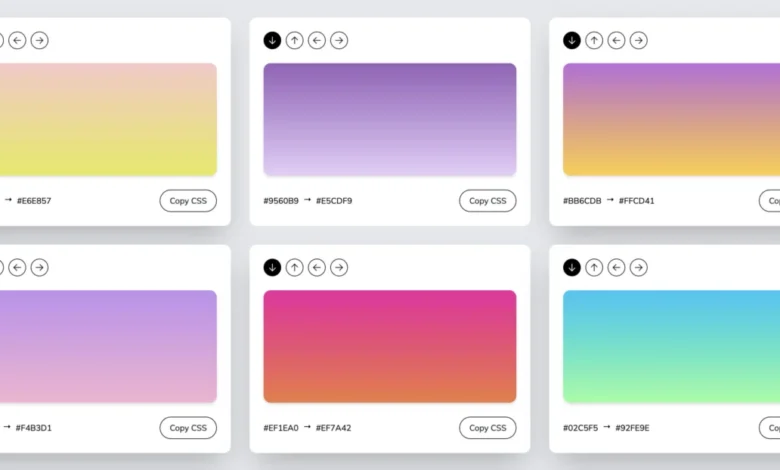
The selection of a cohesive and accessible digital color palette remains one of the most persistent hurdles in modern interface design. While foundational design education emphasizes the importance of hue, saturation, and luminance, the practical execution of building a functional user interface often dissolves into an inefficient cycle of manual hex-code adjustments and endless color tuning. To address this friction in the design pipeline, a new generation of browser-based color utility platforms has emerged, bridging the gap between raw inspiration and production-ready code.
The Evolution of Digital Color Workflows
Historically, digital designers relied heavily on native desktop software toolkits, manually calculating color harmonies, contrast ratios, and gradient stops. This manual approach frequently created bottlenecks, particularly during the initial ideation and prototyping phases. As web development standards evolved—emphasizing responsive layouts, complex component states, and rigorous accessibility compliance—the demand for specialized, real-time color generation tools accelerated.
Industry data consistently highlights the tangible business impact of effective digital design systems. According to human-computer interaction studies, consistent visual branding and clear color contrast can increase user retention and conversion rates significantly while reducing bounce rates on primary landing pages. Furthermore, compliance with regulatory frameworks, such as the Web Content Accessibility Guidelines (WCAG), requires that color combinations meet strict contrast thresholds to ensure readability for users with visual impairments. Consequently, modern color tools have expanded beyond simple aesthetic generators to incorporate robust accessibility checkers, automated contrast audits, and direct integrations with popular cascading style sheet (CSS) frameworks like Tailwind.
Comprehensive Review of Leading Color and Gradient Platforms
To optimize the design phase and eliminate repetitive trial-and-error procedures, industry professionals frequently rely on specialized web utilities. Five platforms stand out for their utility, speed, and integration capabilities within contemporary development environments.
1. Coolors: The Comprehensive All-in-One Palette Ecosystem
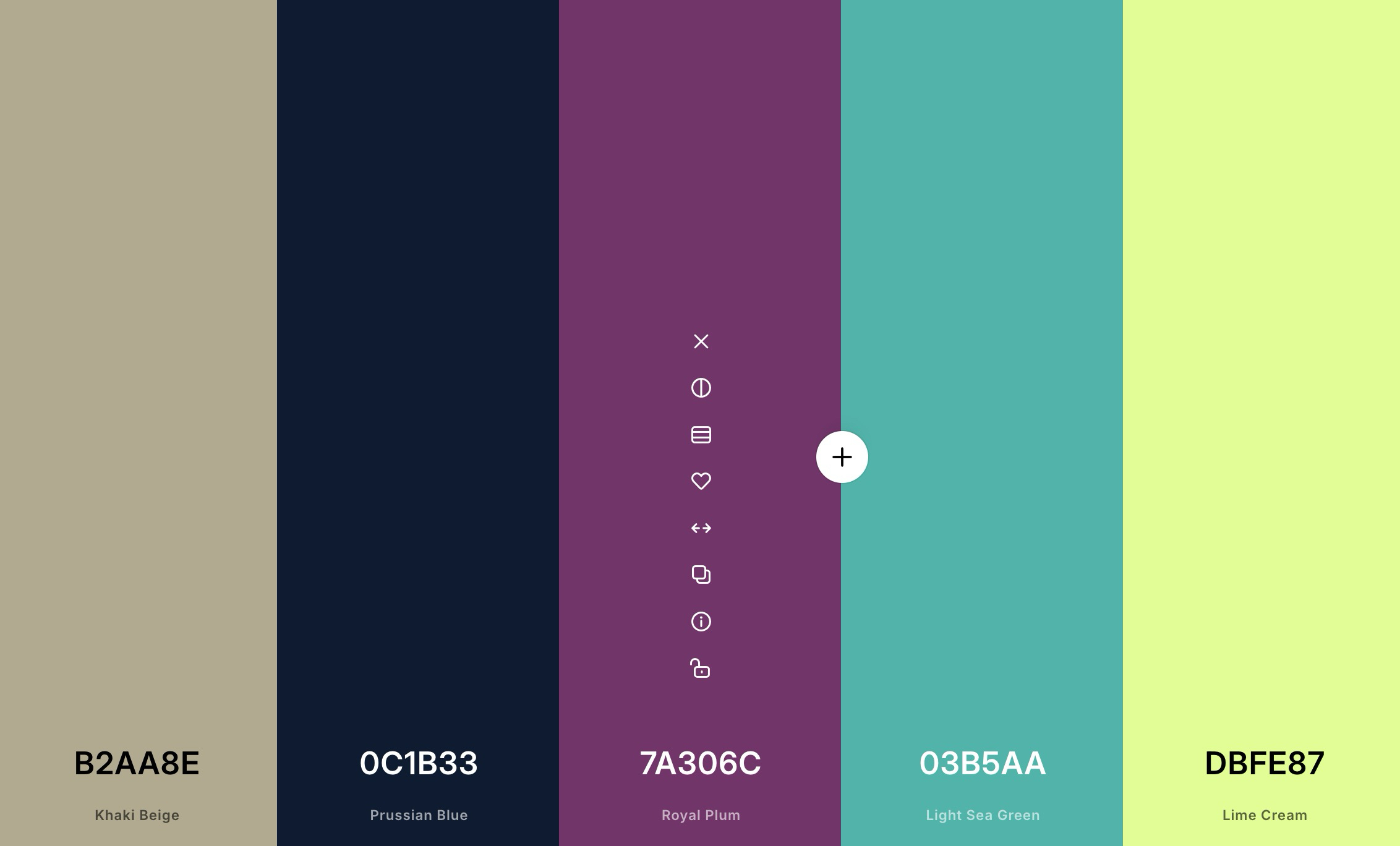
Coolors has established itself as an industry standard for rapid palette generation and refinement. The platform’s core functionality revolves around its intuitive generator: users simply press the spacebar to cycle through harmonious, algorithmically balanced color combinations until a desired aesthetic is achieved.
Beyond basic generation, Coolors provides an extensive suite of auxiliary tools. Designers can extract palettes directly from uploaded reference imagery, audit color choices against WCAG accessibility standards using an integrated contrast checker, and visualize how combinations appear across simulated user interface layouts. Additionally, the platform features dedicated Tailwind CSS integration, allowing developers to copy configuration objects directly into their build environments. This breadth of functionality makes Coolors particularly valuable for projects transitioning from conceptual art direction to front-end implementation.
2. Grabient: Specialized CSS Gradient Generation
When a project demands depth through multi-stop color transitions rather than flat hues, Grabient serves as a specialized utility for CSS gradient creation. The platform addresses the historical complexity of writing complex linear and radial gradient syntax by hand, offering a clean visual interface where designers can manipulate angle, color stops, and transition curves in real time.
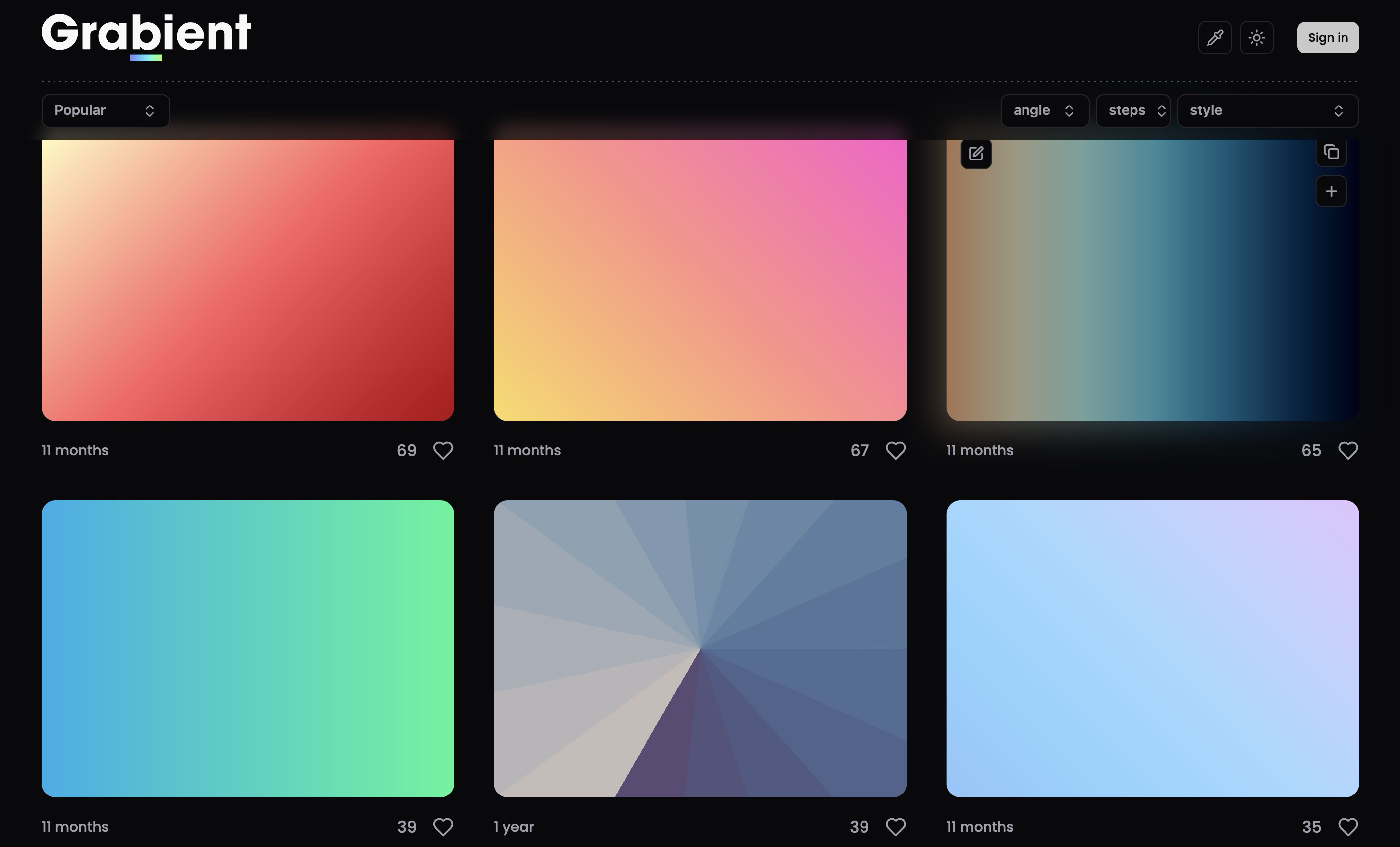
While gradients remain the primary focus, Grabient also functions as a complementary palette discovery tool. For front-end developers building immersive hero sections, marketing banners, and modern landing pages, the ability to instantly export production-ready CSS code drastically reduces development overhead and ensures cross-browser visual consistency.
3. ColorHub: Product-Minded Palette Validation
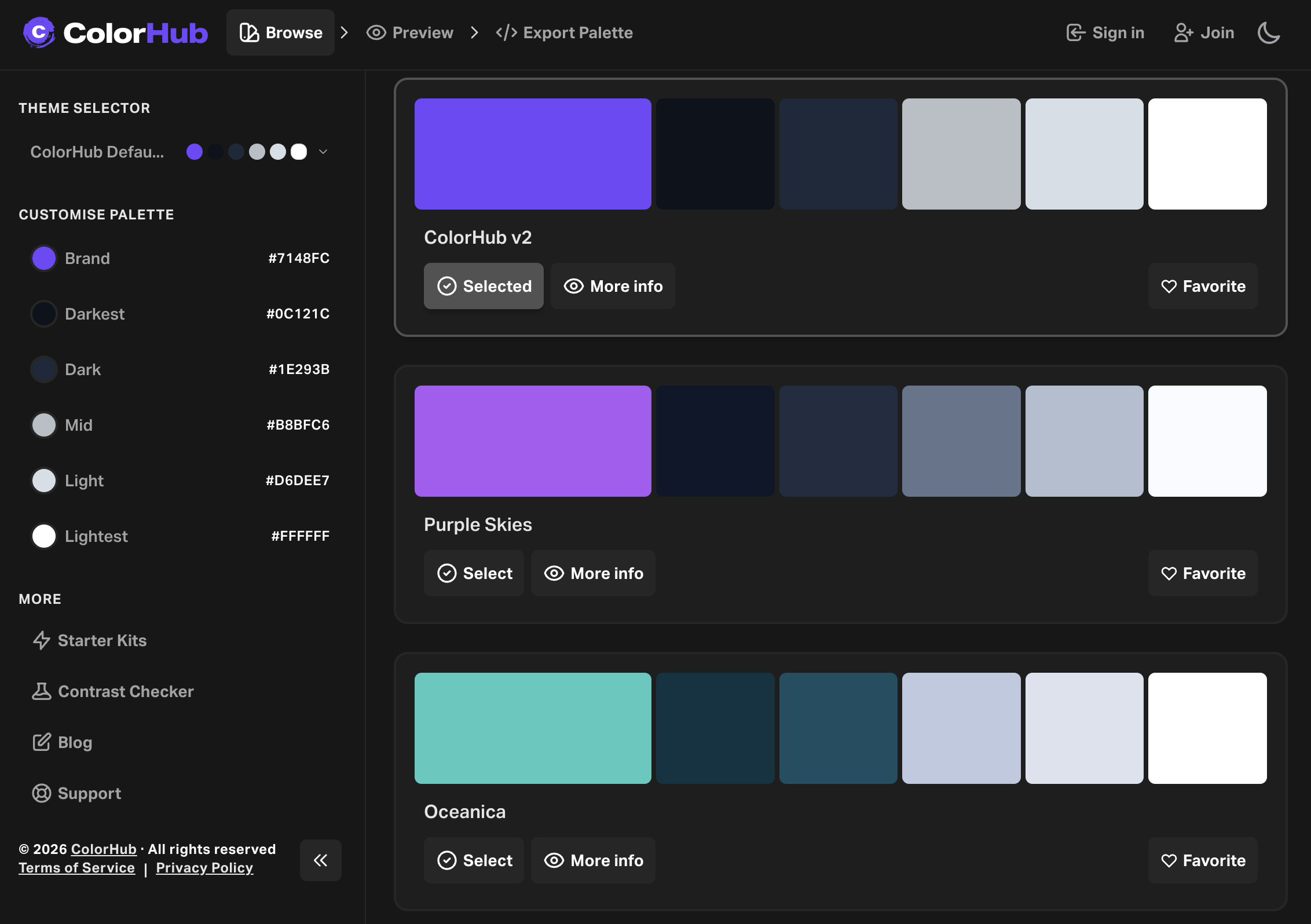
ColorHub approaches color selection from a distinctly utilitarian perspective, recognizing that a palette that appears attractive in isolation may fail when applied to complex software interfaces. The platform bridges the gap between abstract color theory and practical application by allowing users to preview selected palettes across realistic, multi-component layout templates.
Recent updates to ColorHub include curated starter kits, deep-dive libraries categorized by industry use case, integrated favorites management, and automated contrast verification. By contextualizing colors within simulated card layouts, navigation bars, and typography hierarchies, ColorHub enables designers to evaluate the functional hierarchy of a palette before writing a single line of production code.
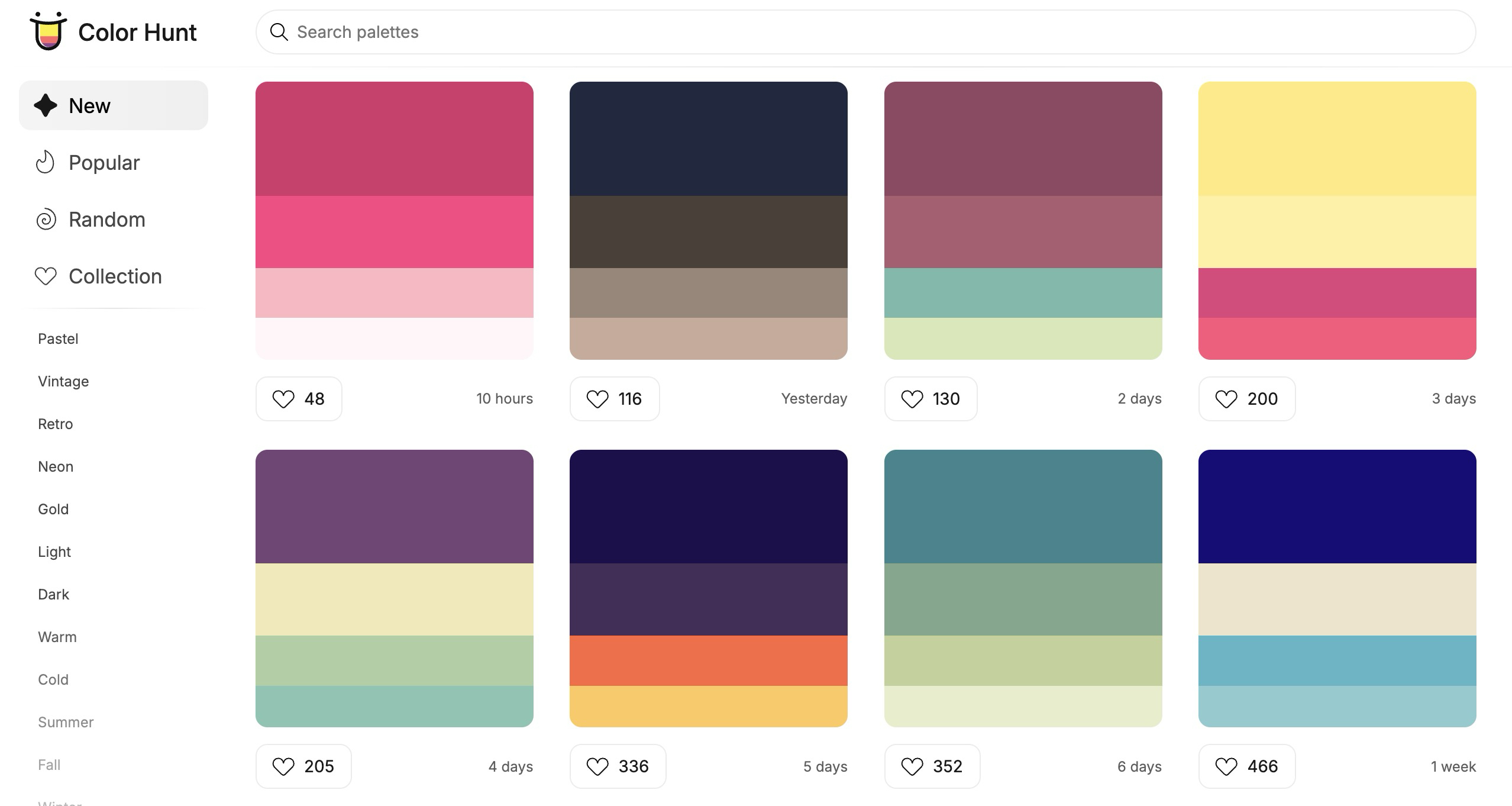
4. Color Hunt: Curated Inspiration for Rapid Ideation
For designers seeking immediate aesthetic direction without the cognitive load of manual parameter tuning, Color Hunt offers a vast, hand-picked repository of color schemes. The platform organizes palettes by specific moods, historical periods, seasonal themes, and stylistic genres—ranging from muted pastels and retro tones to high-contrast neon compositions.
Color Hunt’s primary advantage lies in its simplicity and frictionless user experience. By removing complex customization controls during the initial browsing phase, the platform allows creators to quickly scan diverse combinations and isolate a preferred direction, serving as an efficient starting point for broader branding and interface projects.
5. Gradients by Colorion: Direct, Frictionless CSS Output
Gradients by Colorion prioritizes speed and directness for developers seeking sophisticated background fills without navigating complex parameter dashboards. The platform provides a curated library of subtle, modern color blends specifically optimized for contemporary web interfaces.
Users can quickly adjust gradient orientation, inspect the resulting visual output, and copy the clean, optimized CSS code instantly. This streamlined approach eliminates unnecessary configuration steps, making it an ideal resource for rapid prototyping and minor aesthetic enhancements.
Strategic Implications for Design Teams
The proliferation of advanced color and gradient generators reflects a broader shift toward workflow optimization in digital product development. By automating the mechanical aspects of color theory—such as contrast calculation, harmonic balancing, and code export—these utilities allow designers and developers to redirect their focus toward user experience, accessibility compliance, and overarching brand strategy.
Industry analysts note that standardizing color workflows across cross-functional teams also minimizes discrepancies between design prototypes and final coded implementations. When designers and developers utilize synchronized tools that export standardized tokens, the handoff process becomes more seamless, reducing revision cycles and accelerating time-to-market for digital products. Ultimately, while software tools cannot replace fundamental design intuition, integrating platforms like Coolors, Grabient, ColorHub, Color Hunt, and Colorion into the daily routine provides a measurable advantage in efficiency, precision, and visual execution.