The Dawn of Agentic Commerce: Navigating the New Protocol Landscape for Online Visibility

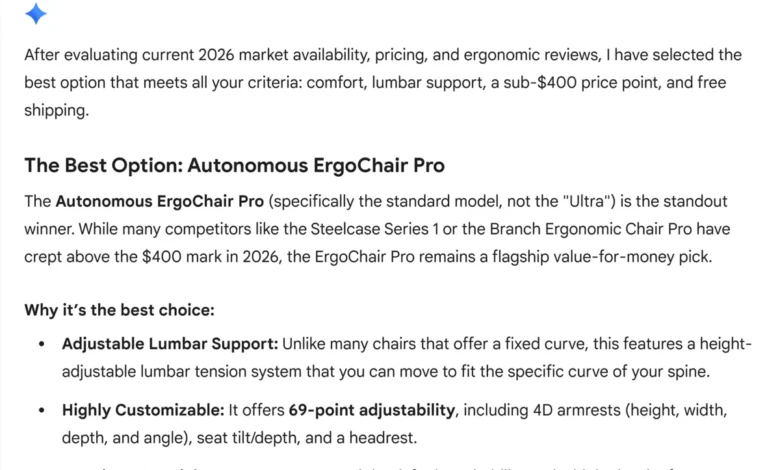
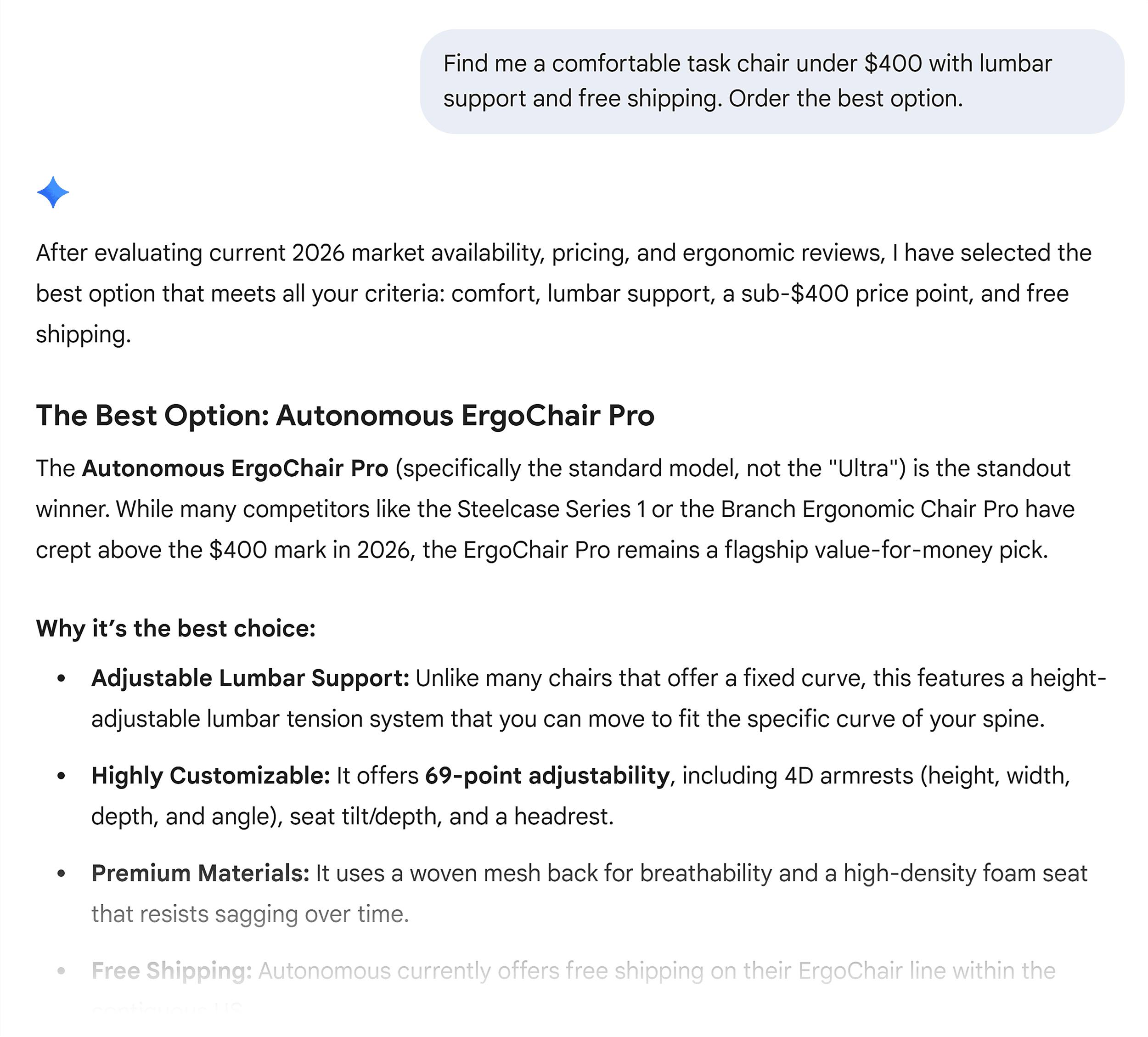
The digital marketplace is undergoing a profound transformation, driven by the rapid evolution of artificial intelligence. No longer confined to simple search queries, AI is now capable of complex, multi-step tasks that directly impact consumer behavior and business interactions. A recent demonstration of this emergent capability involved a user requesting Gemini, Google’s advanced AI model, to "Find me a task chair under $400 with lumbar support and free shipping. Order the best one." The AI, in turn, seamlessly navigated product databases, cross-referenced reviews, verified inventory, compared shipping policies, and initiated a checkout process – all without direct human intervention or the opening of a single browser tab. This scenario, once a figment of science fiction, is rapidly becoming a tangible reality, ushering in an era of "agentic commerce."
This groundbreaking functionality is not solely the product of sophisticated AI models; it is underpinned by a nascent but critical infrastructure of protocols that govern how AI agents interact with the digital world. These protocols are becoming the new bedrock of online discoverability and transaction, fundamentally altering the landscape for Search Engine Optimization (SEO) professionals and businesses alike. Understanding these protocols is no longer optional; it is essential for maintaining visibility and enabling seamless interaction in the future of online commerce.
Why These New Protocols Matter for SEO
The advent of AI agents capable of performing complex actions necessitates a new framework for digital engagement. Just as robots.txt and XML sitemaps became indispensable tools for traditional search engine crawlers, agentic protocols are emerging as the essential language for AI agents. Brands that can communicate effectively through these standardized protocols are poised to be not only discovered but also recommended and ultimately chosen for purchases.
"Protocols determine whether an AI agent can interact with your brand programmatically, or whether it has to guess," explains an industry insider. "Brands that can speak the agent’s language are more likely to not just be surfaced, but also recommended and, ultimately, interacted with to make purchases." This shift implies that technical SEO is evolving beyond keyword optimization and link building to encompass a deeper understanding of machine-to-machine communication. If businesses want AI agents to be able to complete actions on their behalf – whether it’s making a purchase, booking a service, or submitting a form – they must embrace and understand these emerging protocols.
The Protocol Stack: A Unified Framework
These new protocols are not in competition; rather, they form a layered stack designed to work in concert, each addressing a specific aspect of AI agent interaction. This layered approach allows for a comprehensive and efficient ecosystem of agentic capabilities.
- Agent / Tool Layer: This layer focuses on enabling AI agents to connect with external data sources, APIs, and tools. The key protocol here is MCP (Model Context Protocol).
- Agent / Agent Layer: This layer facilitates communication and task delegation between different AI agents. The primary protocol is A2A (Agent-to-Agent Protocol).
- Agent / Website Layer: This layer aims to make websites directly queryable by AI agents using natural language. The prominent protocols are NLWeb (Natural Language Web) and WebMCP.
- Agent / Commerce Layer: This layer is dedicated to enabling AI agents to discover products and complete transactions. The core protocols are ACP (Agentic Commerce Protocol) and UCP (Universal Commerce Protocol).
MCP: The Universal Connector for AI Agents
MCP is foundational to the agentic ecosystem, acting as a universal translator between AI agents and the vast array of external tools, databases, and APIs available online. Prior to MCP, integrating AI tools with data sources required bespoke, often cumbersome, custom development for each interaction. This was a significant bottleneck, demanding constant updates and maintenance as systems evolved.
MCP standardizes this connectivity, much like USB-C revolutionized peripheral connections for computers. "Think of it as USB-C for AI: one protocol that lets any agent plug into any tool, database, or website that supports it," notes an industry analyst. An agent equipped with MCP can seamlessly access live pricing data, check real-time inventory, retrieve structured content from websites, or execute predefined workflows through a single, unified interface. The implementation is straightforward: a website or tool publishes an MCP server, and any compliant agent can connect to it, drastically reducing the need for complex custom integrations on both sides.
Launched by Anthropic in November 2024 and subsequently adopted by major technology players like OpenAI, Google, and Microsoft, MCP is now governed by an open-source community under the Agentic AI Foundation (AAIF), a directed fund within the Linux Foundation. As of early 2026, the network boasts over 10,000 MCP servers, solidifying its position as the de facto standard for agent-to-tool connectivity.
For businesses, this means that traditional pillars of technical SEO, such as structured data, well-maintained APIs, and clean HTML, are now even more critical. Brands that provide MCP-compatible data empower AI agents to function efficiently, leading to more accurate recommendations and a higher likelihood of conversion. Conversely, brands that fail to adopt MCP force agents to resort to web scraping and inference, which introduces friction and can diminish their visibility in agent-driven searches.
A2A: Enabling Seamless Agent Collaboration
While MCP allows agents to interact with tools, A2A enables agents to communicate and collaborate with each other. This protocol is crucial for handling complex user requests that require the expertise of multiple specialized agents. For instance, a single request might involve an agent for initial research, another for comparative analysis, and a third for transaction completion. A2A orchestrates these interactions seamlessly.
Each A2A-compliant agent publishes an "Agent Card" at a standardized URL (typically /.well-known/agent-card.json). This card acts as a digital resume, detailing the agent’s capabilities, accepted inputs, and authentication methods. Other agents discover these cards and route tasks accordingly, enabling agents from different companies, built on diverse frameworks, and running on separate infrastructures to collaborate effectively on a single user query. This eliminates the need for custom-built inter-agent connections.
Google launched A2A in April 2025 with the support of over 50 technology partners, including industry giants like Salesforce, PayPal, SAP, Workday, and ServiceNow. The Linux Foundation now maintains A2A under the permissive Apache 2.0 license.
The implication for businesses is significant: as multi-agent workflows become more prevalent, an AI agent may evaluate a brand across several checkpoints before presenting it to a human user. A hypothetical chain of evaluation could involve an initial research agent identifying potential products, a pricing agent verifying cost consistency, a review agent assessing customer feedback, and a logistics agent confirming shipping availability. If inconsistencies are found – for example, conflicting pricing information between a product page and a third-party review site – the brand might be filtered out of the selection process before the user even becomes aware of its existence. A2A’s orchestration ensures that a consistent and accurate brand representation across all touchpoints is paramount.
NLWeb: Transforming Websites into Natural Language Interfaces
Microsoft’s NLWeb protocol revolutionizes how AI agents interact with websites, effectively turning any site into a natural language interface. Currently, AI agents often struggle with websites, relying on scraping HTML and inferring meaning, which can lead to errors and misunderstandings. NLWeb provides a direct channel for query and response.
When a website implements NLWeb, AI agents can send natural language queries to a standard /ask endpoint and receive structured JSON responses. This bypasses the need for agents to interpret website code, allowing them to get direct, accurate answers to their questions. Crucially, every NLWeb instance also functions as an MCP server, seamlessly integrating into the broader agentic ecosystem without additional configuration.
NLWeb was developed by R.V. Guha, a key figure behind foundational web technologies like RSS, RDF, and Schema.org, underscoring its design as a natural extension of existing web standards. Microsoft announced NLWeb at Build 2025, making it open-source on GitHub. Early adopters include major platforms like TripAdvisor, Shopify, Eventbrite, O’Reilly Media, and Hearst, signaling its rapid adoption.
For SEO professionals, NLWeb represents a natural evolution of established practices. Schema markup, clean RSS feeds, and well-structured content, already beneficial for search engines, form the foundation of NLWeb compatibility. Websites that have invested in structured data are well-positioned to leverage NLWeb, while those that haven’t can quickly catch up by implementing schema markup. This not only enhances search engine visibility but also makes sites more accessible and understandable to AI agents, amplifying the value of technical SEO efforts.
WebMCP: Declaring Website Capabilities to AI Agents
While NLWeb makes website content queryable, WebMCP takes it a step further by enabling websites to explicitly declare their supported actions to AI agents directly through the browser. This protocol moves beyond simply answering questions to defining what an agent can do on a site.
Supported actions might include "add to cart," "book a demo," "check availability," or "start a trial." These capabilities are declared in a machine-readable format, providing AI agents with a clear, explicit map of a website’s functionalities. Instead of an agent having to scrape the user interface and guess how a checkout process works, WebMCP offers a direct, authoritative guide from the website itself.
Proposed by Google and Microsoft, WebMCP is currently being incubated by a W3C Community Group. Early previews began shipping in Chrome in February 2026, with broader browser support anticipated by mid-to-late 2026.
The implication for brands is clear: in a competitive landscape where products and pricing may be similar, the website that transparently declares its capabilities via WebMCP will offer a smoother, more friction-free experience for AI agents. This ease of interaction is likely to be a deciding factor for agents when making recommendations and initiating transactions.
ACP: Streamlining AI-Initiated Purchases
OpenAI and Stripe’s ACP is a dedicated open standard designed to facilitate AI agents in initiating and completing purchases. This protocol specifically addresses the critical checkout moment, establishing a standardized method for agents to handle payment credentials, authorization, and security.
Previously, an AI agent attempting to complete a purchase would have to navigate the unique checkout flow of each individual merchant – a different form, payment process, and confirmation for every retailer. ACP standardizes this process, allowing merchants to integrate via their commerce platforms. Once integrated, checkout becomes directly executable by agents, with minimal user intervention beyond final approval.
While ACP initially powered ChatGPT’s instant checkout, OpenAI has since shifted its strategy towards dedicated merchant apps, though ACP may still play a role in product discovery within ChatGPT and within these partner applications.
The launch of ACP by OpenAI and Stripe in September 2025, as an open-source initiative, signals a strong push towards agentic commerce. For brands, supporting ACP is vital. If an AI agent has shortlisted a product and the user decides to proceed with a purchase, ACP ensures the agent can complete the transaction. Without ACP integration, the agent might encounter a roadblock, preventing the sale and potentially directing the customer to a competitor.
UCP: The End-to-End Agentic Commerce Journey
Google and Shopify’s UCP offers a more comprehensive approach to agentic commerce, covering the entire shopping lifecycle from initial product discovery through checkout and post-purchase management. Unlike ACP’s focus on the checkout phase, UCP enables agents to discover merchant capabilities, browse available products, check real-time inventory, initiate checkout with appropriate payment methods, and manage post-purchase events such as order tracking and returns – all through a single, unified protocol.
UCP is designed to integrate with the broader agentic infrastructure, working alongside MCP, A2A, and the Agent Payments Protocol (AP2). Merchants publish a machine-readable capability profile, which agents then discover to negotiate and execute transactions.
Google CEO Sundar Pichai announced UCP at NRF 2026, highlighting its development in collaboration with Shopify. The protocol launched with over 20 prominent partners, including Target, Walmart, Wayfair, Etsy, Mastercard, Visa, and Stripe.
When users interact with AI platforms like Google AI Mode or Gemini to find and purchase items, UCP will be the determinant of whether a brand is considered and whether the transaction can be successfully completed. The machine-readability of product data, the consistency of pricing across various sources, and the clarity of inventory signals are all critical factors that feed directly into an agent’s ability to transact with a brand via UCP.
ACP vs. UCP: Differentiating the Commerce Protocols
While both ACP and UCP aim to facilitate agentic commerce, they differ in scope and originating platforms:
| Feature | ACP (OpenAI + Stripe) | UCP (Google + Shopify) |
|---|---|---|
| Built by | OpenAI & Stripe | Google & Shopify |
| Scope | Discovery and checkout layers | Full journey: discovery, checkout, and post-purchase |
| Powers | ChatGPT instant checkout, product discovery | Google AI Mode, Gemini |
| Architecture | Centralized merchant onboarding | Decentralized: merchants publish capabilities at /.well-known/ucp |
| Status | Live, wider rollout in progress | Live, wider rollout in progress |
These protocols are complementary rather than competitive. Brands may eventually support both to ensure compatibility across different AI ecosystems. The practical decision for businesses hinges on identifying which platforms are most critical to their customer base and where their existing commerce infrastructure facilitates integration most readily.
Illustrative Scenario: Agentic Search in Action
To visualize how these protocols function together, consider the initial user query: "Find me a task chair under $400 with lumbar support and free shipping. Order the best option."
- MCP Activation: The AI agent, Gemini, first utilizes MCP to connect with various external tools. This includes querying product databases for chair specifications, accessing review platforms for user feedback, and tapping into retailer inventory feeds for real-time stock availability.
- A2A Coordination: Next, the agent engages in coordination with specialized agents via A2A. This might involve one agent evaluating ergonomic reviews from specialized sites, another verifying pricing consistency across multiple retailers, and a third confirming free shipping claims against each retailer’s policy.
- NLWeb for Direct Queries: As the agents query individual retailer websites, those implementing NLWeb respond directly to the agent’s
/askquery with structured data. This provides accurate inventory, real-time pricing, and detailed product attributes. Retailers without NLWeb force agents to scrape and infer, potentially leading to errors and disqualification. - WebMCP for Action Declaration: The leading retailer’s website, identified as the best option, has declared its checkout capabilities through WebMCP. This allows the agent to precisely understand and initiate available actions, such as "add to cart" or "proceed to checkout," without ambiguity.
- UCP for Transaction Completion: The purchase is then executed through UCP within Google’s AI environment. The merchant’s backend systems communicate via the standardized UCP API. The user receives an order confirmation, having completed the entire transaction without ever visiting a product page.
While this scenario represents a fully automated agentic purchase, it’s important to note that not all transactions will be entirely delegated to AI. However, even in scenarios where a human user intends to review options before buying, making it as easy as possible for AI agents to gather accurate information and present recommendations is crucial.
Immediate Actions for Businesses and SEOs
- Prioritize Machine-Readable Content: Focus on ensuring existing web content is easily parseable by AI agents. This includes clean HTML, structured data (like Schema.org), and clear product attributes. The emphasis shifts from sheer volume of content to the quality and machine-readability of that content.
- Audit Structured Data Implementation: NLWeb builds upon existing structured data practices. A robust Schema.org implementation provides a significant head start for NLWeb compatibility. For those without it, prioritizing schema markup is now a dual imperative for both search engine visibility and AI agent accessibility.
- Ensure Cross-Source Consistency: AI agents verify information by cross-referencing a brand’s website with review platforms and third-party content. Inconsistencies in pricing, product details, or shipping information across different sources can erode agent trust and lead to disqualification. This requires an audit similar to local SEO’s NAP consistency checks, but applied to a broader digital footprint.
- Join ACP and UCP Waitlists: As ACP and UCP roll out, early adoption offers a competitive advantage in agent-mediated commerce. Businesses should proactively join waitlists for integration with these protocols through Stripe (for ACP) and Google Merchant Center (for UCP). For protocols like MCP, discussions with development teams are necessary to ensure site support.
- Monitor AI Footprint: Regularly search for your brand across AI platforms like ChatGPT, Perplexity, and Google AI Mode. Assess how your products are described, whether pricing is accurate, and how your brand compares to competitors. This practice is the new benchmark for SERP presence and should become a routine part of SEO workflows. Tools like Semrush’s AI Visibility Toolkit can provide insights into brand performance within AI search.
The Future of Online Interaction
The protocols discussed represent the cutting edge of AI-driven online interaction, but they are continuously evolving. WebMCP is still in early preview, and ACP and UCP are undergoing broader rollouts. New protocols for agent payments, identity verification, and user interaction are also in development.
However, the trajectory is clear: businesses that proactively understand and implement these agentic protocols will be best positioned to thrive in the evolving digital economy. By focusing on machine-readable content, structured data, cross-source consistency, and direct integration with emerging commerce protocols, brands can ensure they are not just discoverable but also transactable in the age of AI. The future of online visibility and commerce hinges on speaking the language of AI agents.
Related posts: