The rapid integration of generative artificial intelligence into the product development lifecycle is fundamentally altering the professional landscape for digital designers. For decades, the design profession has operated within a framework defined by institutional friction, where the ability to execute an idea was frequently hindered by bureaucratic processes, limited engineering availability, and rigid product roadmaps. As AI tools lower the barrier to technical production, the industry is approaching a critical juncture that may redefine the designer’s role from a service-oriented contributor to a central product architect, or conversely, risk the commoditization of design outputs.
The historical tension between design intent and product execution has long been a subject of debate within the technology sector. Designers have traditionally occupied an intermediary space, tasked with reconciling user-centric ideals with the logistical constraints of engineering and the financial priorities of product management. According to industry surveys conducted by organizations like the Interaction Design Association (IxDA) and various design leadership forums, a recurring point of friction has been the "permission gap"—the delta between a designer’s identification of a usability flaw and their ability to implement a resolution. This gap is often exacerbated by the necessity of multi-stage approvals, cross-departmental handoffs, and the prioritization of feature sets over design debt remediation.
A Chronology of Design Autonomy
The evolution of design software has historically followed a trajectory of increasing efficiency. In the 1990s and early 2000s, the focus was on the transition from analog to digital drafting tools. By the 2010s, the rise of collaborative platforms like Figma shifted the focus toward real-time synchronization and version control. However, these tools remained primarily focused on visualization rather than functional implementation.
The emergence of Large Language Models (LLMs) and multimodal generative AI in 2022 and 2023 marked a definitive shift. For the first time, the production of functional code, copywriting, and high-fidelity interface components could be accelerated by non-engineers. This technological leap has created a new timeline: where once a design iteration might require weeks of coordination between research, design, and front-end engineering, it is now theoretically possible for a single practitioner to prototype, test, and deploy minor product adjustments within a single workday.
Data-Driven Perspectives on Productivity
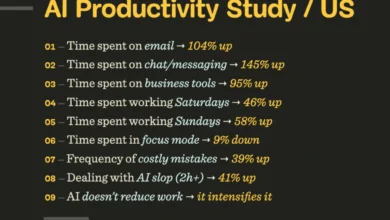
While empirical data on AI’s impact on design headcount is still emerging, preliminary studies from the software development sector provide a proxy. Research from GitHub and McKinsey & Company suggests that developers using AI-assisted coding tools can experience a 30% to 55% increase in task completion speed. Applying this logic to design, the reduction in time spent on repetitive tasks—such as creating UI variations or drafting documentation—is significant.
However, the "bull case" for design suggests that this productivity gain will not merely result in cost-cutting, but in an expansion of the designer’s scope. If a designer can bridge the gap between concept and code, they move from being a provider of "assets" to a driver of product strategy. This shift mirrors the historical evolution of the "full-stack developer," suggesting a future where the most effective designers are those who possess "hybrid product leadership" skills—the ability to interpret data, understand commercial constraints, and execute interfaces independently.
The Bear Case: The Risk of Plausible Mediocrity
Conversely, industry analysts and skeptics of rapid AI adoption highlight a significant "bear case" for the profession. As the technical barriers to entry drop, the market is likely to be flooded with "plausible design." This phenomenon occurs when non-designers—or junior practitioners using AI tools—produce interfaces that appear coherent, follow standard component libraries, and pass basic usability tests, but lack the deeper strategic inquiry that defines high-quality design.
This creates a structural risk for design organizations. If stakeholders, such as Product Managers or founders, perceive AI-generated interfaces as "good enough," the perceived value of specialized design departments may diminish. This could lead to a contraction in headcount, particularly for roles centered on execution, documentation, and interface maintenance. In this scenario, design teams might find themselves relegated to "brand policing" or governance, losing their seat at the table where fundamental product decisions are made.
Strategic Implications and Institutional Responses
The institutional response to this shift has been mixed. Some organizations are aggressively integrating AI into design workflows to maximize the output of their existing teams, while others are pausing to evaluate the impact on design quality and brand consistency.
Design leaders at major technology firms have noted that while AI can enhance speed, it cannot replicate the nuance of human-centric problem solving. In recent industry conferences, the consensus among design directors is that "judgment" has become a more valuable currency than "craft." As AI becomes capable of generating infinite design options, the primary value of the human designer shifts to the curation, synthesis, and ethical evaluation of those options.
The challenge for the profession is twofold: first, navigating the inevitable internal restructuring that follows any major technological shift; and second, articulating the value of design beyond the screen. If design is defined strictly as the production of visual layouts, it is highly susceptible to automation. If, however, design is defined as a methodology for solving complex business and user problems, then AI represents an auxiliary tool rather than a replacement.
Future Outlook: A Hybrid Reality
Looking forward, the integration of AI will likely lead to a bifurcated outcome. In the short term, the market will likely see an increase in "plausible" products that prioritize speed over depth. This may temporarily erode the status of design teams that have historically focused on incremental, output-based tasks.
However, in the medium to long term, the organizations that thrive will likely be those that empower designers to exercise greater agency. The most successful practitioners will be those who transcend the traditional silos of their role, utilizing AI to bypass the "permission structures" that have historically constrained them. By adopting a more commercial and technical mindset, these designers will move closer to the center of product strategy.
The shift is ultimately a test of the design industry’s claim to strategic influence. For years, the argument has been that designers could do more if they were less constrained by organizational bureaucracy. AI has now removed those constraints, effectively calling the profession’s bluff. Whether the resulting environment leads to a golden age of designer-led innovation or a decline in the standard of product quality depends entirely on whether designers choose to leverage this autonomy to solve harder problems or simply to accelerate the creation of superficial ones.
In summary, the transition is not merely a technological update; it is an organizational pivot. The coming years will likely be characterized by an uncomfortable period of transition where companies recalibrate their reliance on design talent. While some roles will inevitably be subsumed by AI-driven automation, the strategic importance of human-led design—defined by critical judgment and an empathetic understanding of user behavior—remains the most significant differentiator in a marketplace increasingly saturated with AI-generated content.