Microsoft Enhances Cloud Reliability Through the Public Preview of Azure Chaos Studio Workspaces and AI-Driven Resilience Testing

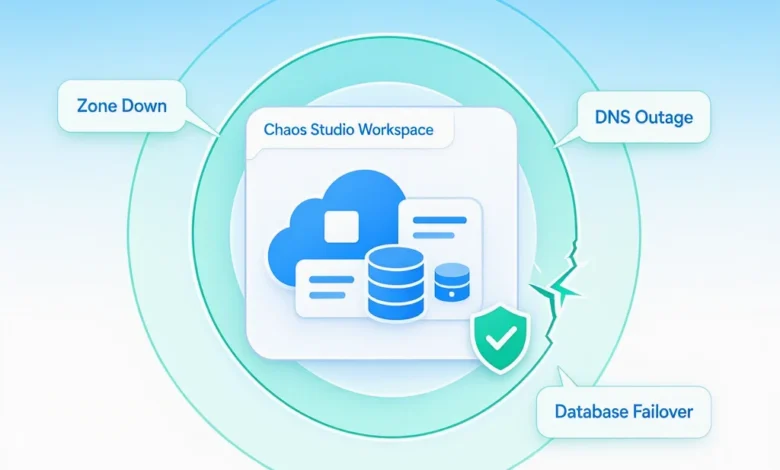
Microsoft has officially transitioned Azure Chaos Studio Workspaces into public preview, marking a significant evolution in how enterprises approach cloud resilience and fault injection. This managed service is designed to move beyond isolated component testing by offering a scenario-focused approach that simulates complex, multi-layered outages observed in real-world production environments. By integrating advanced automation, curated failure patterns, and artificial intelligence, the platform aims to bridge the gap between theoretical architecture and operational reality, ensuring that applications can withstand the inevitable disruptions of distributed computing.
The Critical Gap in Modern Cloud Resilience
As organizations increasingly migrate mission-critical workloads to the cloud, the complexity of these systems has outpaced traditional testing methodologies. While many Azure customers utilize sophisticated architectural patterns—such as multi-zone deployments, geo-redundant storage, and automatic database failovers—these designs often harbor hidden vulnerabilities. The fundamental challenge lies in the difference between a system that is "designed to be resilient" and one that is "proven to be resilient."
In many instances, an outage does not stem from a total platform failure but rather from a misconfiguration or an unhandled edge case. For example, a zone-redundant deployment may fail to recover if a health probe was improperly configured during initial setup, or a database failover might leave an application disconnected because of a hard-coded connection string. These discrepancies often remain dormant until a high-pressure incident occurs.
Microsoft’s latest offering addresses the "Shared Responsibility Model" of cloud reliability. Under this framework, while Microsoft ensures the resilience of the underlying platform infrastructure, the customer remains responsible for the configuration and the application code that interacts with those services. Azure Chaos Studio Workspaces provides the tools necessary for customers to fulfill their part of this responsibility by intentionally inducing controlled disruptions to validate their recovery logic.
A New Framework: Azure Chaos Studio Workspaces
The introduction of "Workspaces" represents a shift from the previous iteration of Chaos Studio, which focused on individual, granular faults. The new Workspace resource acts as a centralized management hub that simplifies the discovery and targeting of resources. When a Workspace is pointed toward an Azure subscription or resource group, it utilizes a managed identity to scan the environment, identify components, and recommend specific failure scenarios tailored to that infrastructure.
This "scenario-first" approach is intended to lower the barrier to entry for site reliability engineering (SRE) teams. Rather than requiring engineers to manually chain together individual faults—such as shutting down a Virtual Machine Scale Set (VMSS) and then disrupting a network security group—Workspaces provides pre-configured templates. These templates, known as "Named Scenarios," mirror the most common outage patterns seen by Azure support teams, including "Zone Down" events and DNS outages.
Curated Failure Scenarios and Technical Depth
The public preview of Chaos Studio Workspaces includes a library of curated scenarios that address the full stack of an application. These scenarios are designed to test both the platform layer (e.g., did the traffic reroute?) and the application layer (e.g., did the code maintain data integrity during the failover?).
Current available scenarios include:
- Zone Down: Simulates the total loss of an availability zone, testing whether the application correctly shifts traffic to remaining zones.
- DNS Outage: Disrupts name resolution services to verify if retry logic and local caching mechanisms function as expected.
- SQL Database Failover: Forces a primary database to fail over to a secondary region, testing connection string flexibility and application-side reconnection logic.
Behind these scenarios are granular, API-level actions. The platform allows for the injection of VM-level faults—such as CPU and memory pressure—alongside service-direct faults that target Azure’s managed services without requiring agent installation.
The Economic and Operational Impact of Downtime
The push for more rigorous resilience testing is driven by the escalating costs of system outages. According to industry data from the Uptime Institute, over 60% of significant public cloud outages result in more than $100,000 in total losses, with many exceeding $1 million in direct and indirect costs. Furthermore, Gartner reports that the average cost of IT downtime is approximately $5,600 per minute, though this figure can be substantially higher for e-commerce or financial services organizations.
By enabling proactive testing, Azure Chaos Studio Workspaces helps organizations avoid these financial pitfalls. The service provides "Scenario Reports" following every drill. These reports function as mock post-mortems, detailing exactly what was injected, which resources were impacted, and how the recovery timeline compared to the organization’s Recovery Time Objectives (RTO) and Recovery Point Objectives (RPO). These structured reports are designed to be shared with stakeholders, used as evidence for compliance audits, or attached to internal change management tickets.

Chronology of Azure’s Chaos Engineering Evolution
The journey toward Chaos Studio Workspaces began several years ago as Microsoft sought to internalize the principles of Chaos Engineering popularized by firms like Netflix and Amazon.
- 2021: Microsoft launched the initial preview of Azure Chaos Studio, focusing on a library of faults for Virtual Machines and specific Azure services.
- 2023: The service saw increased adoption as more service-direct faults were added, including support for Azure Cosmos DB and Azure Key Vault.
- 2024 (Early): Internal testing began on a more automated, scenario-based model to reduce the complexity of experiment design.
- Present: The launch of Azure Chaos Studio Workspaces in public preview, introducing the "Discovery" feature and AI-driven integrations.
- Future (Late 2026): Microsoft has set a tentative target for General Availability (GA), during which time the library of scenarios is expected to expand to include event-driven messaging disruptions and cache stampede simulations.
Integration with AI and Autonomous Operations
One of the most distinctive features of the new Chaos Studio Workspaces is its deep integration with artificial intelligence. Microsoft has recognized that the decision to run a chaos experiment is often the most difficult step for engineering teams. To address this, the company has released the "Chaos Studio Skill" for GitHub Copilot.
This integration allows engineers to manage the entire chaos engineering lifecycle through a conversational interface. An engineer can ask Copilot to identify vulnerabilities in a specific subscription, trigger a "Zone Down" scenario, and analyze the resulting Azure Monitor signals to determine if the application’s performance remained within acceptable bounds.
Additionally, Microsoft has introduced a Model Context Protocol (MCP) server for Chaos Studio. This allows other AI agents—including those built on Claude, Cursor, or proprietary models—to interact directly with Chaos Studio APIs. This paves the way for autonomous SRE agents that can provision workspaces, run drills, and refine infrastructure configurations without human intervention.
Resilience for AI Workloads
The rise of generative AI and Retrieval-Augmented Generation (RAG) pipelines has introduced new failure modes that Chaos Studio is now beginning to target. AI applications rely on a complex web of dependencies, including inference endpoints, vector databases, and search indexes.
While these applications use standard Azure building blocks, they are susceptible to unique issues such as token throttling, model latency shifts, and retrieval drift. Microsoft has indicated that while current scenarios like "DNS Outage" and "Database Failover" validate the foundation of AI apps, future updates will include scenarios specifically designed to stress-test AI inference loads and data retrieval pipelines.
Industry Reactions and Strategic Implications
The move has been met with positive early feedback from the SRE community. Analysts suggest that by making chaos engineering "the default" through automated discovery and AI assistance, Microsoft is attempting to democratize a discipline that was previously reserved for high-maturity engineering organizations.
"Resilience is no longer an optional feature; it is a requirement for survival in a cloud-native world," noted one industry analyst. "Microsoft’s focus on scenario-based testing reflects a mature understanding that components rarely fail in isolation. It is the interaction between components where the most dangerous bugs reside."
By providing a platform that generates "audit-ready" evidence of resilience, Microsoft is also appealing to regulated industries such as banking, healthcare, and government, where proof of disaster recovery capabilities is a legal mandate.
Looking Ahead: The Path to General Availability
As Azure Chaos Studio Workspaces moves through its public preview phase, Microsoft plans to continuously expand the scenario library. Upcoming additions are expected to focus on event-driven architectures and complex networking disruptions, such as ExpressRoute failures and global traffic manager misconfigurations.
The company has emphasized that the current preview period is a collaborative phase, encouraging users to provide feedback on the "Scenario Designer"—a drag-and-drop interface within the Azure Portal that allows users to customize curated templates or build entirely new experiments from scratch.
In conclusion, Azure Chaos Studio Workspaces represents a significant step forward in cloud management. By shifting the focus from "if" a system will fail to "how" it will fail, Microsoft is providing enterprises with the tools to build a more robust, predictable, and resilient digital future. The integration of AI and the emphasis on real-world scenarios suggest that the future of cloud reliability will be defined not just by better architecture, but by continuous, automated verification.