Radaris domain seizure signals a major shift in the accountability of data brokers under Daniel’s Law


The landscape of the American data broker industry has undergone a seismic shift following a landmark judicial intervention in New Jersey, where a court ordered the transfer of Radaris.com and over a dozen affiliated domains to a private plaintiff. This extraordinary legal remedy follows a protracted battle between the consumer data giant Radaris and Atlas Data Privacy Corp, which has spearheaded litigation against firms accused of violating Daniel’s Law. The statute, a significant piece of privacy legislation, mandates the immediate removal of personal information belonging to law enforcement officials, judges, and government personnel from commercial databases, imposing a $1,000 fine for every instance of non-compliance.
A Chronology of Evasion and Litigation
The conflict represents the culmination of a decade-long game of cat-and-mouse between regulators, privacy advocates, and a nebulous network of data-harvesting entities. The controversy gained public attention in February 2024, when Atlas Data Privacy Corp initiated a lawsuit against Radaris. The litigation focused on the company’s systemic failure to honor removal requests protected under New Jersey’s privacy framework.
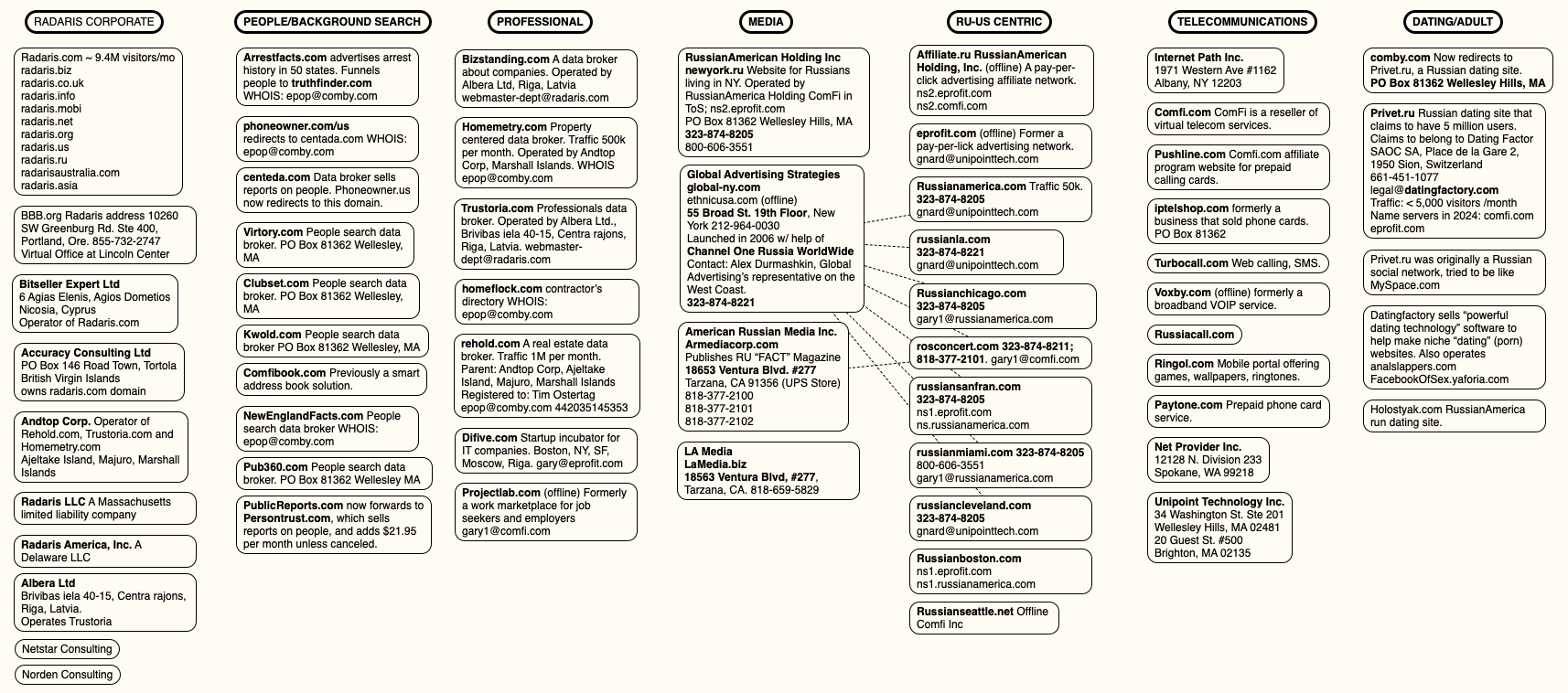
For years, Radaris had been characterized by a strategy of procedural attrition. By utilizing a rotating cast of corporate shells, the company managed to avoid accountability in multiple jurisdictions. Legal filings suggest that whenever a lawsuit neared a judgment, the entity named as the operator would be discarded, replaced by a new, often offshore, organization. These “island-hopping” tactics—moving registration to jurisdictions like the Marshall Islands, the Seychelles, and the British Virgin Islands—allowed the operators to exploit jurisdictional gaps and confuse plaintiffs attempting to serve process.
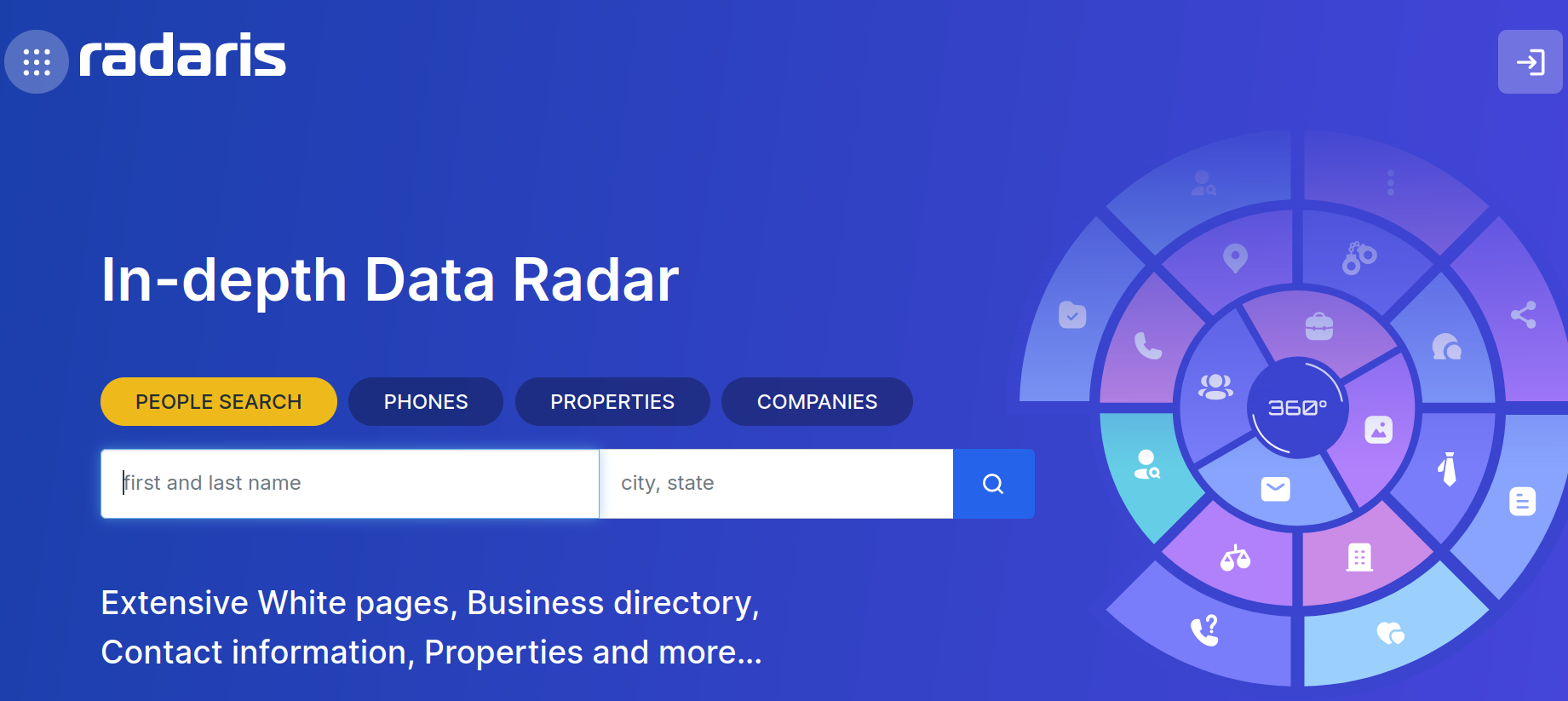
The legal pressure mounted in 2025 when Atlas re-filed its complaint, this time with a significantly broader scope. By presenting evidence of the shared infrastructure between various domains, the plaintiffs successfully argued that these disparate companies were, in fact, a single, integrated enterprise. The presiding judge, acknowledging the defendants’ repeated failures to participate in good faith, ultimately authorized the transfer of the domain assets as a means to satisfy the mounting claims of the plaintiffs.
The Anatomy of a Data Broker Empire
Deep investigations into the ownership of Radaris have peeled back the layers of corporate obfuscation surrounding the firm. The company is primarily linked to the Lubarsky brothers, Igor and Dmitry, who reside in Massachusetts. Despite their central role in the operation, the company frequently utilized the pseudonym “Gary Norden” as its public-facing CEO, a fact later admitted by legal counsel for the firm.
Internal documents recovered during discovery provide a rare window into the financial and operational mechanics of the data broker industry. According to data provided by Atlas, the Radaris family of sites operates with high efficiency, generating substantial monthly revenue through direct sales of personal dossiers and lucrative advertising partnerships. For example, Radaris.com reportedly nets roughly $42,000 per month, while its sibling site, Veripages.com, generates approximately $45,000. These figures are bolstered by affiliate marketing agreements with firms like the Lifetime Value Company and, notably, Onerep—a company that simultaneously offers “privacy removal” services while operating its own network of people-search sites.
The evidentiary corpus obtained during litigation includes over 10,000 emails, which confirm that seemingly independent legal entities such as Bitseller Expert Limited, Digital Orbit Corp, and Virtura Corp were all managed by the same core team. These entities shared banking protocols, technical infrastructure, and administrative staff, operating from a unified set of mail domains. This evidence effectively debunked claims that Radaris was a decentralized collection of independent businesses.

The Defense Response
Legal representatives for Radaris have maintained a posture of aggressive defiance. Val Gurvits, an attorney associated with the Boston Law Group, initially defended the firm by questioning the accuracy of reporting regarding the company’s ownership. Following the recent domain seizure, the legal defense shifted to Victor Worms, who has formally moved to vacate the default judgment.
Worms argues that the court’s order is fundamentally flawed because it targets “Radaris.com,” which he describes as a domain name rather than a legal person or entity. “We have made a motion to vacate that default judgment on the grounds that it is void since a non-entity has no legal capacity to sue or be sued,” Worms stated, adding that the firm intends to pursue all available appellate channels, framing the domain seizure as a violation of constitutional due process rights.
Broader Implications for Privacy Law
The Radaris case is not an isolated incident but a central battleground in the national debate over digital privacy. Daniel’s Law, named after the late son of a New Jersey judge who was murdered by a disgruntled attorney who had tracked the family’s location online, serves as a test case for state-level authority in the digital age.
However, the efficacy of such laws is under siege. Data broker firms have launched a coordinated legal offensive, moving dozens of lawsuits to federal court and challenging the constitutionality of Daniel’s Law on First Amendment grounds. They argue that the legislation is overly broad and infringes upon their right to publish truthful information available in the public record. In August 2025, a federal district court in West Virginia ruled that a similar law in that state was facially unconstitutional, adding weight to the industry’s argument.
Privacy experts like Justin Sherman, author of The Middlemen, view these developments with concern. Sherman argues that the legal focus on specific statutes like Daniel’s Law, while vital for public officials, ignores the systemic failure to protect the average citizen. “The lack of comprehensive federal privacy law is not for a lack of knowledge,” Sherman noted. “We are seeing a massive lobbying effort by tech, social media, and data-broker industries to prevent the passage of laws that would meaningfully limit the commercialization of personal data.”
The Future of Data Regulation
The current legal environment is characterized by a dangerous lack of uniformity. While 14 states have adopted versions of privacy protections for public officials, the private sector remains largely unfettered. Because most privacy legislation contains broad exemptions for “publicly available” records—such as property filings, motor vehicle records, and court documents—the underlying mechanism of the data broker economy remains intact.
The breach at IDScan.net, which exposed 153 million driver’s license records, serves as a poignant reminder of the risks inherent in the current status quo. Without a federal standard that mandates data minimization and restricts the sale of sensitive identity documents, the industry will continue to operate as a central point of failure for national security.
As the Radaris case proceeds to the appellate level, the outcome will likely shape the future of digital surveillance in the United States. If the court-ordered domain transfer stands, it could set a powerful precedent, proving that the corporate shell game is no longer a foolproof shield against legal accountability. If, however, the judgment is overturned on constitutional grounds, it may signal that the current legal framework is insufficient to curb the influence of an industry that treats personal privacy as a tradeable commodity. For now, the Radaris.com domain remains a placeholder—a digital monument to a legal standoff that is far from over.
Related posts: