The rapid expansion of the generative artificial intelligence landscape has introduced a complex challenge for software developers: navigating the fragmentation of model providers. Historically, building applications powered by large language models (LLMs)—such as OpenAI’s GPT series, Anthropic’s Claude, or Meta’s Llama ecosystem—required developers to establish separate accounts, master distinct authentication protocols, and write custom integration code for every distinct provider. This architectural friction significantly increased development overhead, particularly during the prototyping phase when comparing model performance was crucial.
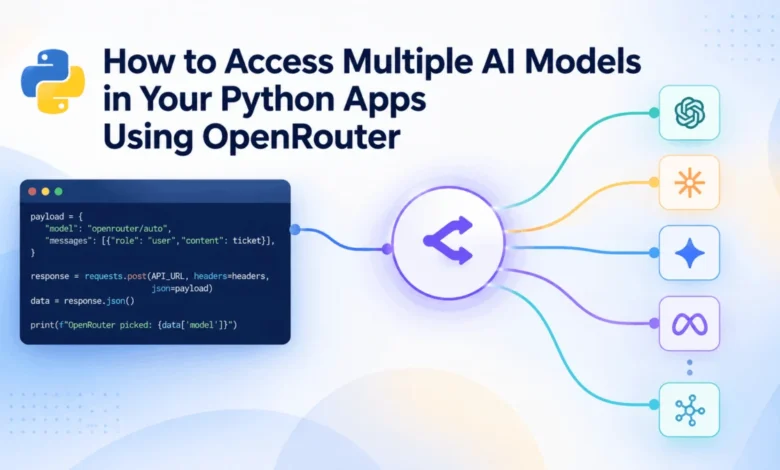
To address these inefficiencies, modern development workflows are increasingly adopting unified API gateways. Platforms like OpenRouter have emerged as critical middleware, aggregating dozens of disparate AI providers behind a single, standardized endpoint. By normalizing requests and responses into an OpenAI-compatible format, these gateways allow developers to switch between models via a simple string parameter change, rather than a complete rewrite of application logic. This technical overview examines the practical implementation of multi-model integration using Python, detailing setup procedures, code execution, and architectural resilience strategies.
Background Context and Industry Evolution
The genesis of unified AI routing stems from the rapid commoditization and diversification of foundational models. As open-source alternatives like Meta’s Llama models achieved performance parity with proprietary systems, enterprises and independent developers alike sought flexible deployment strategies. Vendor lock-in quickly became a primary concern, prompting the developer community to advocate for interoperable tooling.
Middleware platforms bridge this gap by acting as a translation layer. Instead of managing concurrent software development kits (SDKs) and fluctuating API rate limits across multiple vendor dashboards, engineers interact with a singular interface. This abstraction not only accelerates time-to-market for AI-driven applications—such as automated customer support agents, sentiment analysis tools, and document processors—but also enhances long-term system stability through automated failover mechanisms.
Prerequisites and Environment Configuration
Implementing a multi-model Python application via an API gateway requires minimal foundational setup. Developers do not need advanced machine learning expertise; a basic understanding of Python scripting, package management via pip, and environment variable configuration is sufficient.
The first operational phase involves establishing an account with the gateway provider and generating a secure authentication credential. Best practices in software security dictate that API keys should never be hardcoded into source code repositories. Instead, they must be injected into the runtime environment. On Unix-based systems such as macOS and Linux, this is achieved by exporting the key:
export OPENROUTER_API_KEY="your-key-here"For zero-cost experimentation, platforms frequently designate specific models with a :free suffix. These variants route traffic to fully subsidized versions of open-source weights, eliminating the necessity of attaching a payment method during initial development phases. If a specific free model identifier deprecates, developers can query the provider’s active model directory or utilize a dynamic routing alias that automatically resolves to an operational free model.
Project Initialization and Dependency Management
Establishing an isolated workspace ensures that project dependencies remain clean and manageable. Developers begin by creating a dedicated directory and initializing a Python virtual environment:
mkdir support-bot-demo
cd support-bot-demo
python -m venv .venv
source .venv/bin/activate
While official SDKs exist that offer typed client objects, utilizing standard HTTP libraries like requests provides absolute visibility into the raw JSON payloads being transmitted and received. This transparency is particularly valuable during the learning phase, as it demystifies the underlying REST architecture before transitioning to higher-level abstractions. Installing the required library is executed via standard package management:
pip install requestsExecuting the Initial API Request
With the environment configured, developers can construct their first request script. The core architecture relies on an HTTP POST request directed at the chat completions endpoint, accompanied by authorization headers and a structured JSON payload containing the model identifier and conversation history.
import os
import requests

API_URL = "https://openrouter.ai/api/v1/chat/completions"
API_KEY = os.getenv("OPENROUTER_API_KEY")

customer_message = (
    "My order #48213 arrived with the wrong charger. "
    "I need the correct one before Friday, can you help?"
)

payload =
    "model": "meta-llama/llama-3.2-3b-instruct:free",
    "messages": [
        "role": "system", "content": "You are a concise, polite customer support agent.",
        "role": "user", "content": customer_message,
    ],


headers =
    "Authorization": f"Bearer API_KEY",
    "Content-Type": "application/json",


response = requests.post(API_URL, headers=headers, json=payload)
data = response.json()

print(f"Model used: data['model']")
print(f"Reply: data['choices'][0]['message']['content']")
In this architecture, the payload dictionary serves as the configuration blueprint. The model key specifies the desired weights using a provider/model-name nomenclature, while the messages array maintains the contextual dialogue format standard across modern chat completion APIs. Because the gateway normalizes responses into a unified schema, extracting the generated text remains consistent regardless of the underlying hardware provider.
Model Agnostic Iteration and Comparative Analysis
One of the primary operational advantages of unified gateways is the elimination of boilerplate code when performing comparative benchmarking. Because model selection is governed strictly by a string value within the payload, developers can easily iterate through multiple architectures to evaluate response quality, tone, and latency for specific domain tasks.
def ask_model(model_name, message):
    payload =
        "model": model_name,
        "messages": [
            "role": "system", "content": "You are a concise, polite customer support agent.",
            "role": "user", "content": message,
        ],

    response = requests.post(API_URL, headers=headers, json=payload)
    return response.json()

ticket = "My order #48213 arrived with the wrong charger. I need the correct one before Friday."

models_to_test = [
    "meta-llama/llama-3.2-3b-instruct:free",
    "qwen/qwen3-4b:free",
    "mistralai/mistral-7b-instruct:free"
]

for model in models_to_test:
    result = ask_model(model, ticket)
    reply = result["choices"][0]["message"]["content"]
    print(f"--- model ---")
    print(reply, "n")
This modular approach transforms what would otherwise be three separate API integrations into a single, reusable function call, significantly streamlining the evaluation pipeline for AI engineering teams.
Automated Routing and Provider Optimization
When application requirements do not mandate a specific model, developers can delegate selection to automated routers. By assigning the model parameter to a generalized routing alias, the system dynamically selects an operational model based on current availability.
payload =
    "model": "openrouter/free",
    "messages": ["role": "user", "content": ticket],

response = requests.post(API_URL, headers=headers, json=payload)
data = response.json()

print(f"OpenRouter picked: data['model']")
This strategy is particularly effective for prototyping phases, guaranteeing zero operational cost. Furthermore, when utilizing commercial, paid models hosted by multiple third-party infrastructure providers, developers can inject provider optimization preferences into the request payload. For instance, setting payload["provider"] = "sort": "price" instructs the gateway to route traffic through the most economically advantageous host, whereas sorting by latency prioritizes response speed.
Architectural Resilience and Fallback Strategies
Production-grade applications demand robust error-handling mechanisms to mitigate provider outages, sudden rate-limiting, and content filtering blocks. Traditional implementations require custom retry logic and exception-handling blocks for every integrated vendor. Unified gateways simplify this by accepting an ordered array of fallback models.
payload =
    "models": [
        "qwen/qwen3-4b:free",
        "meta-llama/llama-3.2-3b-instruct:free",
        "mistralai/mistral-7b-instruct:free",
    ],
    "messages": ["role": "user", "content": ticket],

response = requests.post(API_URL, headers=headers, json=payload)
data = response.json()

print(f"Answered by: data['model']")
print(data["choices"][0]["message"]["content"])
By substituting the singular model key with a pluralized models list, the gateway sequentially evaluates each candidate in the specified order. If the primary model fails or encounters a server error, the request automatically cascades to the subsequent fallback option without interrupting the client application.
Implications and Future Outlook
The adoption of unified API gateways represents a maturation in how organizations integrate generative artificial intelligence into production environments. By decoupling application logic from specific vendor implementations, engineering teams reduce technical debt, enhance application uptime through native failover support, and maintain the agility required to continuously adopt state-of-the-art models as they emerge. As the AI ecosystem continues to expand, abstracting infrastructure complexity will remain a foundational pillar of scalable software architecture.