Demystifying Social Media Algorithms: A Comprehensive Guide to Content Ranking Signals in 2026


The digital landscape of 2026 is defined by a singular, invisible force: the social media algorithm. Far from being a static set of rules, these systems are sophisticated, self-learning artificial intelligence engines that dictate the visibility of billions of pieces of content daily. For businesses, creators, and marketers, these algorithms serve as the ultimate gatekeepers of organic reach. Understanding how they process data—from user interaction history to micro-second behavioral predictions—is no longer an optional skill but a fundamental requirement for survival in an increasingly crowded attention economy.

An algorithm, in the context of modern social media, is a multifaceted recommendation engine. Its primary objective is not to display content chronologically, but to curate a personalized feed that maximizes user retention. By analyzing user behavior, the platforms attempt to solve the "information overload" problem, ensuring that the average consumer, who spends roughly 141 minutes daily on these platforms, remains engaged for as long as possible.
The Evolution of Algorithmic Curation

To understand the current state of social media, one must look at the historical trajectory of content delivery. In the early 2010s, platforms operated largely on chronological feeds. If a user followed an account, they saw that account’s posts in the exact order they were published. This era was characterized by high transparency but low personalization.
As the volume of content exploded, platforms transitioned to interest-based ranking. By 2018, the industry saw the rise of engagement-based models, where likes, comments, and shares became the primary currency for visibility. Today, we are in the era of "AI-Driven Predictive Curation." Platforms like TikTok and Instagram now utilize deep-learning models that look beyond explicit engagement. They analyze "dwell time"—how long a user hovers over a post—and "re-watch rates" to determine the intrinsic value of content, even if the user never clicks a like button.
The Mechanics of Ranking: How Platforms Process Content
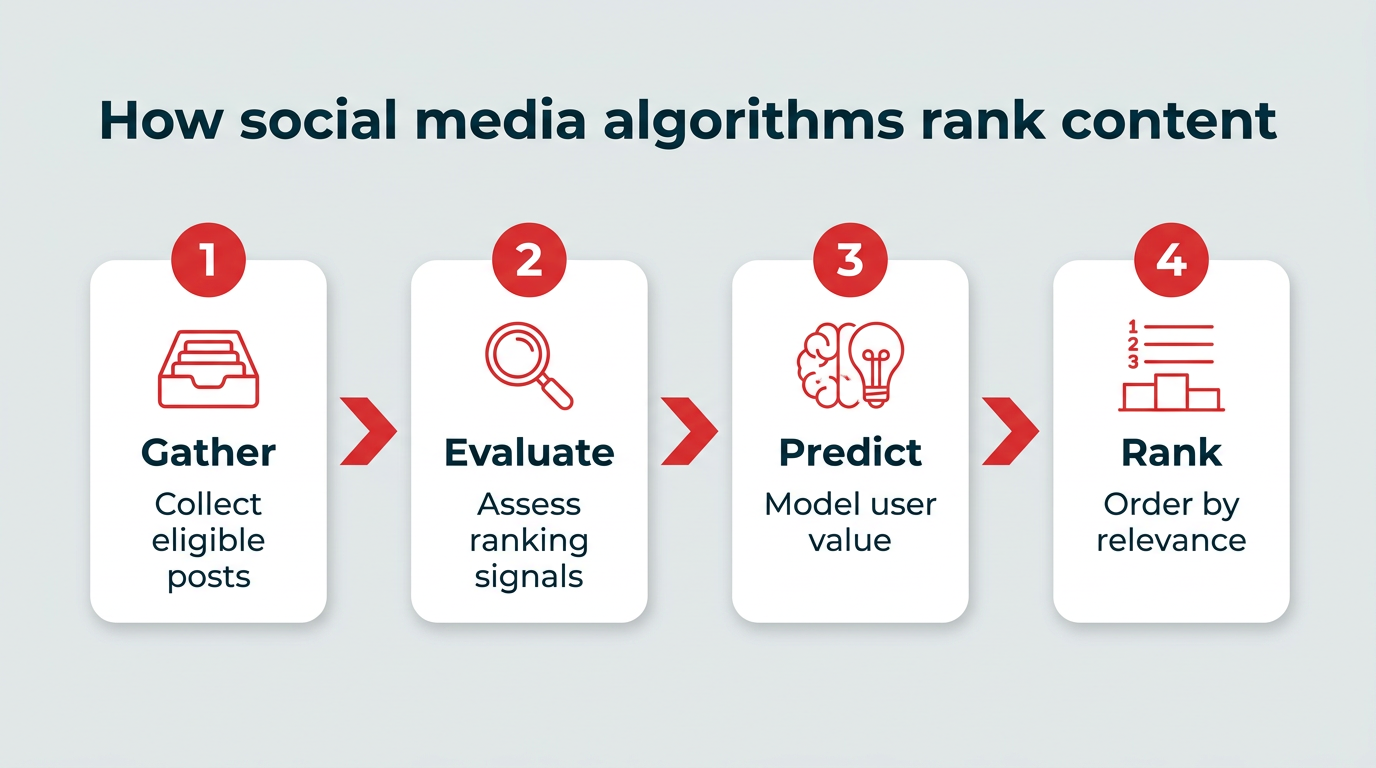
While every platform maintains its own proprietary code, the underlying logic is remarkably consistent across the industry. The process generally follows a four-stage pipeline:
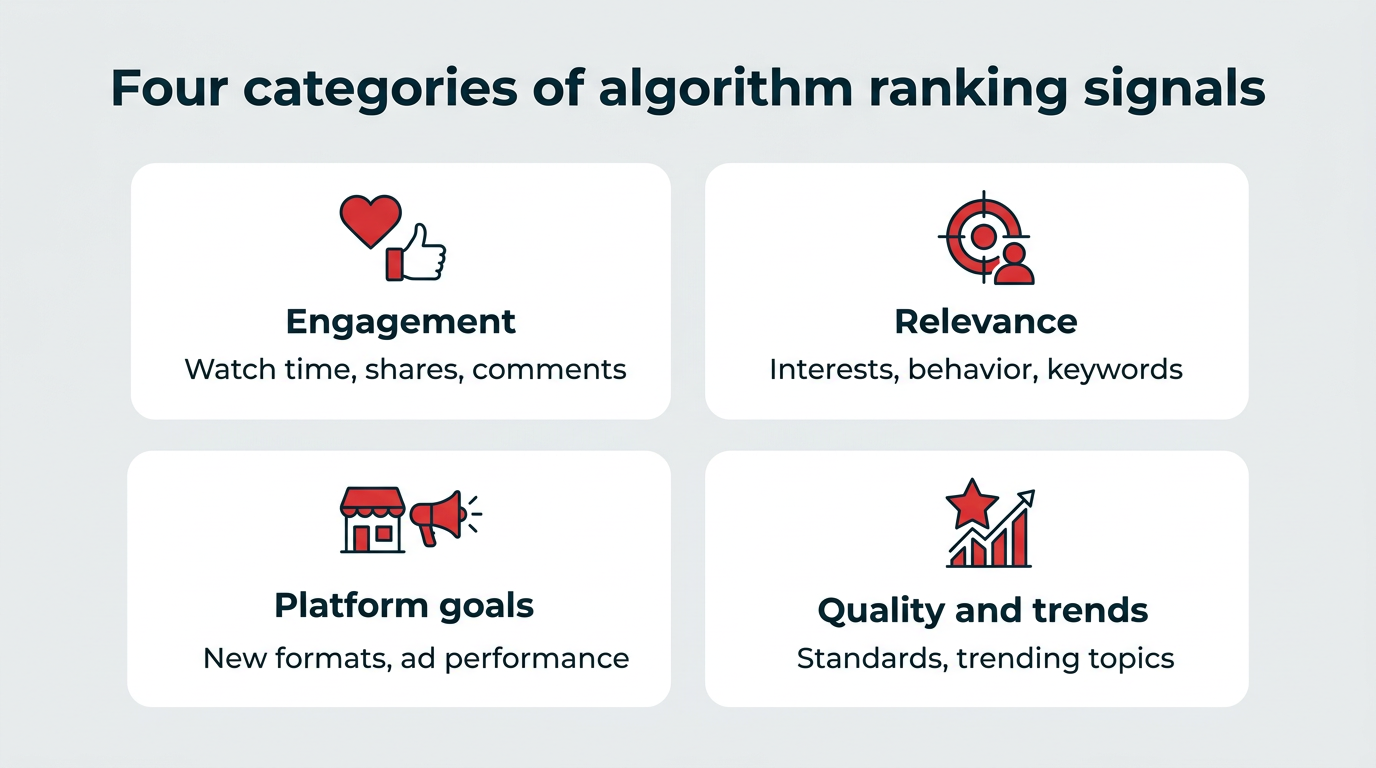
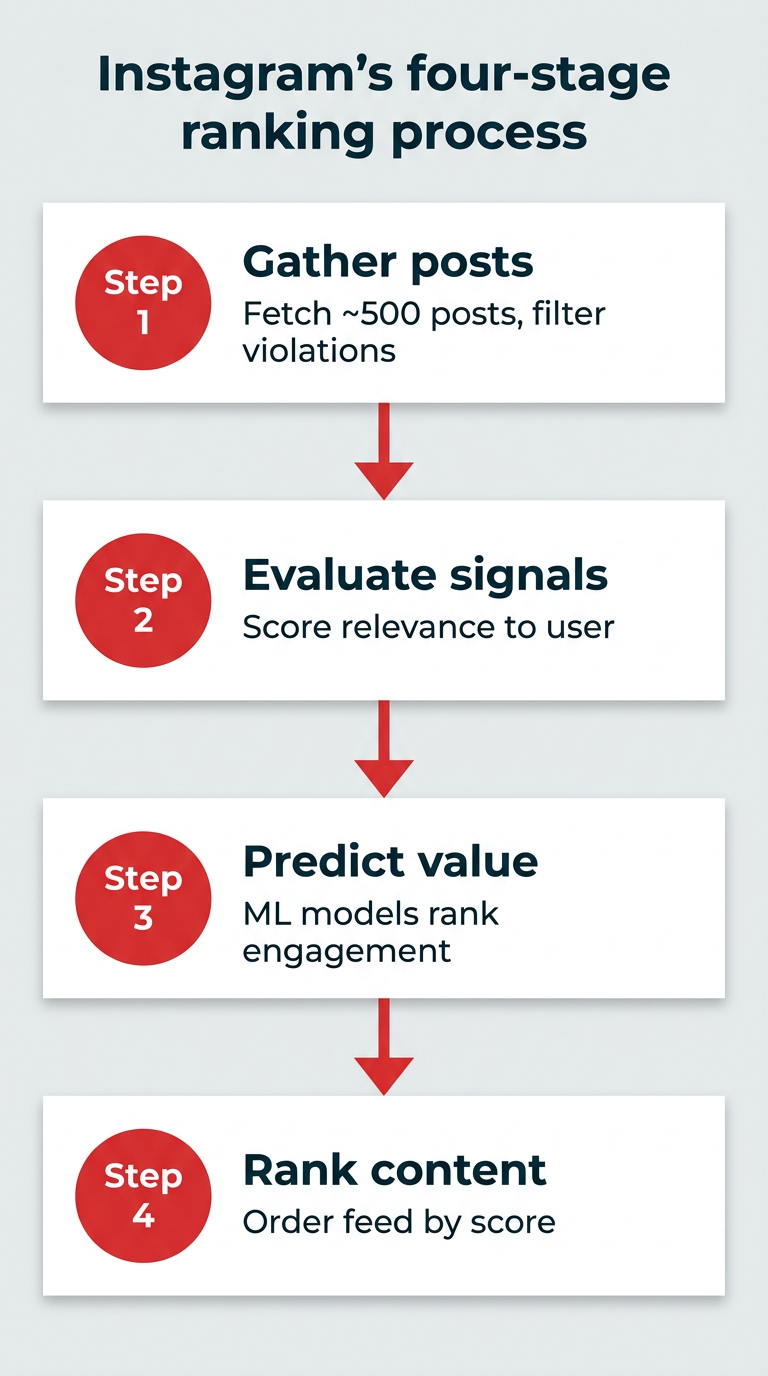
- Inventory Gathering: The platform pulls a massive pool of potential content, including posts from accounts the user follows and recommended content from accounts they do not.
- Signal Analysis: Each piece of content is scored against thousands of ranking signals, ranging from the technical (file format, video resolution) to the behavioral (the user’s historical preference for specific topics).
- Value Prediction: The AI model calculates a probability score, predicting how likely the user is to interact with, watch, or share the content.
- Final Ranking: The content is ordered and presented to the user, a process that occurs in the background within milliseconds of the application being opened.
The Importance of Platform-Specific Strategies
The mistake most frequently made by enterprise marketing teams is the application of a "one-size-fits-all" content strategy. Data from 2026 indicates that while engagement is a universal metric, its weight varies wildly by platform.
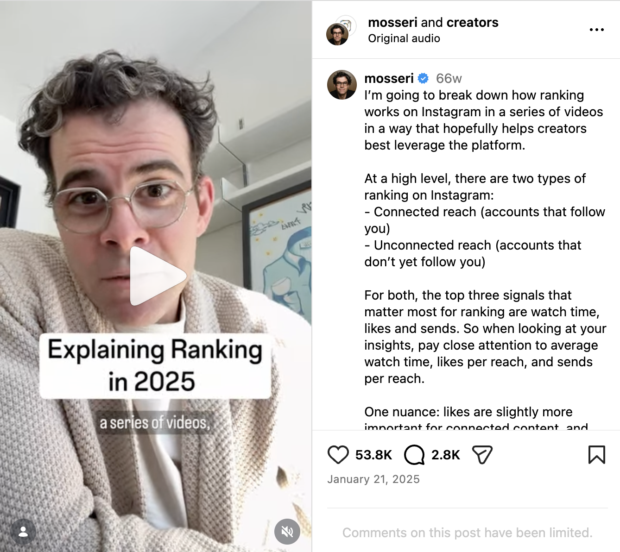
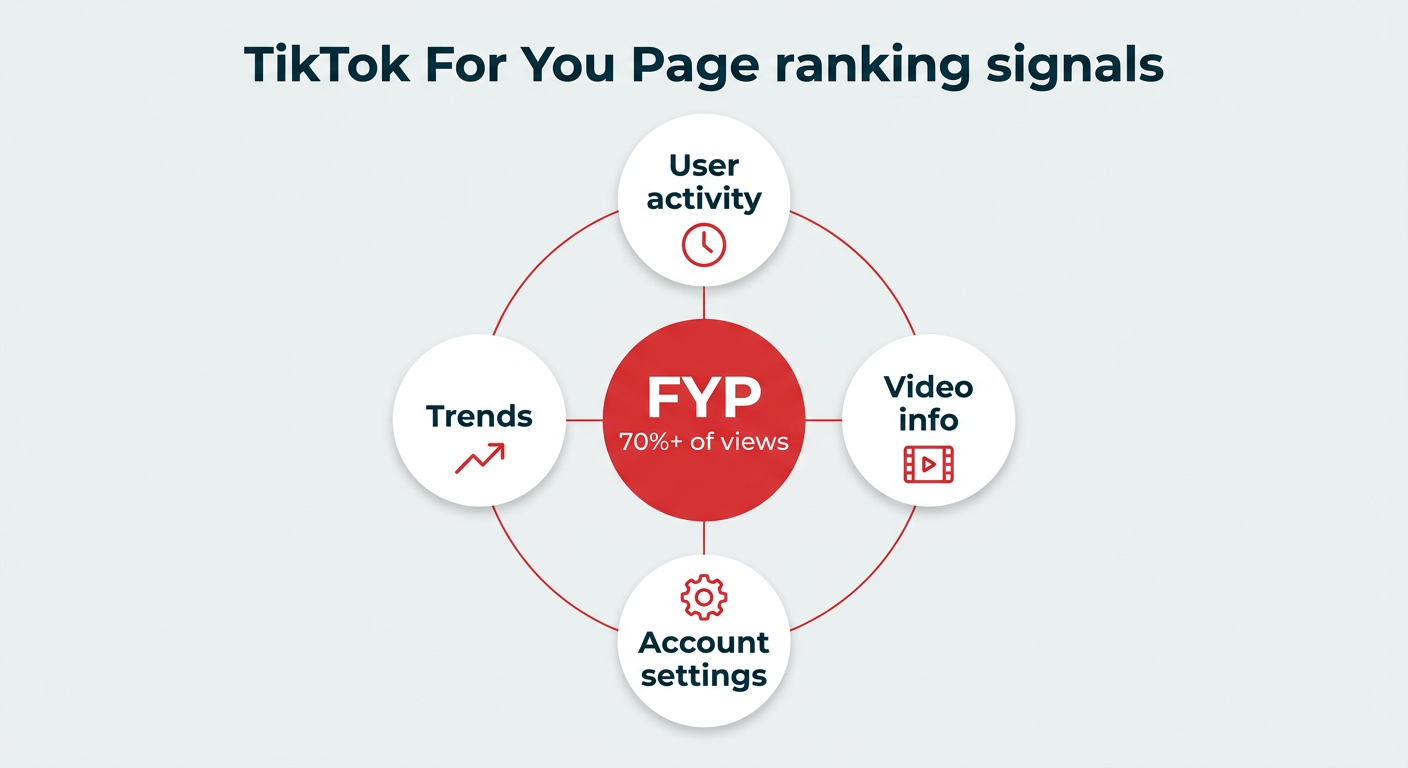
For instance, on Instagram, the shift toward "sends" as a primary metric is profound. Adam Mosseri, Head of Instagram, has publicly confirmed that the algorithm now prioritizes content that users share via Direct Message, as it signals a higher level of social utility than a simple "like." Conversely, on TikTok, the For You Page (FYP) is heavily weighted toward watch time and completion rates. A video that is watched to the end, even if it is not interacted with, is often favored over a high-engagement post that users scroll past quickly.
LinkedIn has evolved significantly, focusing on professional relevance and "early engagement." Posting content that sparks a dialogue within the first hour of publication is critical to signaling to the LinkedIn algorithm that the content is worthy of broader distribution within a professional network.
The Quantitative Impact on Business Operations
The implication of these algorithms for business is stark: organic reach is a finite resource managed by platform-controlled rationing. When an algorithm favors a brand, it results in an immediate, cost-free expansion of the audience. When it does not, the brand must compensate with paid advertising.
Data suggest that companies that align their creative strategy with algorithmic preferences—such as optimizing the first three seconds of a video to prevent "drop-off"—see significantly higher conversion rates. This is because algorithmic recommendations act as a form of social proof. When a platform recommends a product video to a user, it carries the implicit weight of the platform’s "trust" in that content, which often translates into higher consideration and purchase intent.
Strategies for Algorithmic Optimization
To remain visible in 2026, organizations must pivot from volume-based posting to quality-focused optimization. Experts recommend a multi-pronged approach:
- Prioritize Audience Retention: Focus on the "hook." Whether it is a text-based post on Threads or a 30-second Reel, the opening must deliver immediate value to prevent the user from scrolling.
- Foster Meaningful Interaction: Algorithms are increasingly designed to identify "authentic" engagement. Comments that are substantive and lead to further conversation are valued significantly higher than generic emojis.
- Leverage Native Features: Platforms consistently reward users who utilize their latest tools—such as new editing features, built-in poll stickers, or native music libraries. Using these features signals to the platform that the account is active and aware of the latest updates.
- Monitor Performance Trends: Metrics must be tracked at a granular level. A sudden drop in reach is often not a sign of a "shadowban," but rather an indication that the algorithm has shifted its priority. If video reach is declining while carousel engagement is rising, the strategy must shift accordingly.
The Role of AI and Future Outlook
Looking ahead, the influence of artificial intelligence on social media will only deepen. We are entering a phase where generative AI is not just being used to create content, but to "remix" it. Platforms are increasingly testing models where the algorithm itself modifies the presentation of content—such as changing a thumbnail or tweaking a headline—to see which version performs best for a specific subset of users.
For marketers, this shift means that the role of the social media manager is moving away from manual posting and toward analytical oversight. Success in 2026 requires the ability to interpret data, recognize patterns in algorithmic behavior, and maintain the agility to pivot creative assets in real-time.
As these systems become more adept at predicting human behavior, the barrier to entry for content creators will rise. The "noise" on these platforms is increasing, but the reward for those who can satisfy the algorithm’s demand for high-value, relevant, and engaging content remains immense. In the final analysis, the algorithm is not an enemy of creativity; it is a mirror reflecting the collective interests and habits of the global digital population. By mastering the mechanics of these systems, brands can ensure their voice is not only heard but amplified.
Related posts: