ChatGPT Approaches A Significant Milestone: Reaching One-Fifth of Google Search Query Volume

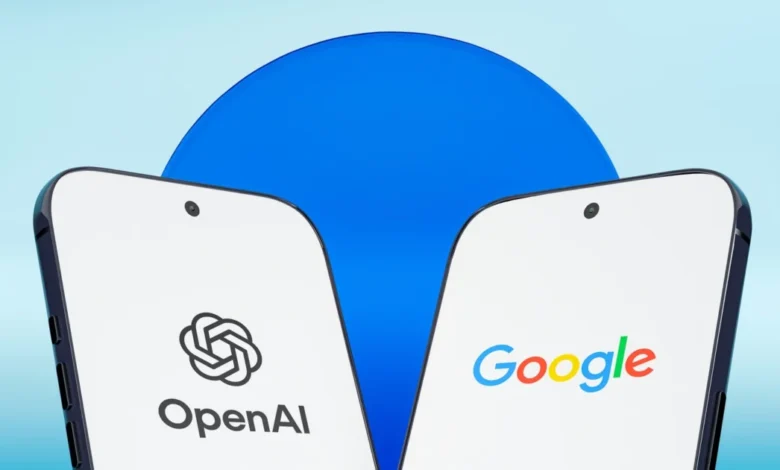
OpenAI’s flagship conversational artificial intelligence tool, ChatGPT, now handles approximately one-fifth of the search-like query volume managed by industry titan Google. This revelation, disclosed by Adam Fry, consumer product lead for ChatGPT, offers unprecedented insight into the evolving battleground between traditional search engines and generative AI platforms. The disclosure emerged during an open discussion at an exclusive Monday evening dinner hosted by OpenAI in New York City, drawing attention from industry analysts and tech journalists alike. The conversation, later transcribed and published by Alex Kantrowitz through his Big Technology publication, sheds new light on how consumer habits are shifting away from traditional keyword-based queries toward conversational, AI-driven discovery.
The discussion surrounding ChatGPT’s query volume highlights a fundamental shift in how digital information is retrieved. According to Fry, OpenAI defines a search strictly as an instance where a user’s prompt triggers ChatGPT to query the live web for up-to-date information. This specific metric separates standalone generative interactions—such as writing assistance, coding help, or creative brainstorming—from dynamic queries that require real-time web retrieval regarding people, places, current events, finance, and health.
When Kantrowitz pressed Fry during the New York dinner regarding whether an entire multi-question conversation containing a web retrieval counts as a single search or if individual prompts are tallied separately, Fry clarified the methodology. "Every time you ask a question and go search the web, that’s a search," Fry stated. This precise operational definition allows OpenAI to benchmark its platform’s utilization against established web traffic giants, though analysts note that the exact baseline figures from Google utilized by OpenAI in this comparison remain unspecified.
The Chronology of AI Search and the Evolution of User Intent
To understand the significance of OpenAI capturing 20% of Google’s search-like query volume, one must examine the rapid evolution of ChatGPT’s user base and functional capabilities. When OpenAI initially introduced ChatGPT to the public in late 2022, the platform was predominantly utilized for static tasks. Users gravitated toward the tool for drafting emails, debugging software code, summarizing documents, and engaging in creative writing. These use cases required little to no real-time internet connectivity, as they relied primarily on the large language model’s pre-trained parametric knowledge.
Over the subsequent years, however, OpenAI systematically integrated web-browsing capabilities into ChatGPT, transforming the tool from a static text generator into a dynamic research assistant. By the time academic researchers from institutions like Harvard University collaborated with OpenAI to study usage patterns—publishing data showing an estimated 2.5 billion daily prompts by mid-2025—the nature of user interaction had fundamentally transformed. Approximately 65 percent of those daily prompts were classified as the exact type of informational queries that users would have historically routed through traditional search engines like Google or Bing.
This behavioral shift accelerated dramatically throughout late 2025 and early 2026. According to industry reports from Big Technology, ChatGPT’s weekly active user count surged by 20 percent over a two-month period, climbing from 1 billion to 1.2 billion users. As more consumers integrated the AI platform into their daily routines for complex research, localized queries, and real-time fact-checking, the overlap between traditional search behavior and generative AI interactions grew increasingly pronounced.
Contrasting Metrics: Internal Classifications Versus External Observations
While OpenAI’s internal metrics point to a 20 percent ratio relative to Google, external analytics firms and web trackers employ entirely different methodologies to measure digital traffic, yielding a more nuanced picture of market share.
In February, digital marketing and SEO software provider Ahrefs published an independent study estimating ChatGPT’s search volume at approximately 12 percent of Google’s total. Ahrefs arrived at this figure by analyzing the 2.5 billion daily prompt baseline established by Harvard and OpenAI researchers. By filtering those prompts through a strict taxonomy, Ahrefs determined that roughly 65 percent constituted search-intent queries. They then compared this volume against Google’s milestone announcement from March 2025, in which Alphabet disclosed that Google processes over 5 trillion searches annually.
The discrepancy between OpenAI’s 20 percent claim and Ahrefs’ 12 percent estimate underscores a fundamental challenge in the digital media ecosystem: the lack of a standardized definition for an "AI search." Whereas Fry’s calculation specifically counts the programmatic triggers where ChatGPT accesses the live web to fulfill a request, Ahrefs categorized prompts based on semantic intent, evaluating what a user would have searched for on a traditional engine regardless of whether a live web retrieval was programmatically executed.
Furthermore, a stark contrast emerges when analyzing referral traffic—the actual volume of human visitors directed from a platform to external websites. While search queries measure user intent, referral traffic measures economic and navigational impact for publishers across the web.
According to Ahrefs’ tracking data across more than 118,671 websites utilizing its free Web Analytics tool, traditional search engines continue to dominate referral pathways. In tracking updates released in late 2025, Google accounted for a commanding 24.74 percent of all tracked website traffic. In sharp contrast, ChatGPT accounted for just 0.36 percent of referral traffic. This immense gap highlights that while users increasingly turn to conversational AI to answer questions directly within the chat interface, they are significantly less likely to click through to external publisher websites compared to traditional search engine results pages, which are explicitly designed to direct outbound traffic.
Google’s Counter-Strategy and Record Query Growth
As conversational AI platforms like ChatGPT, Microsoft Copilot, and Perplexity carve out substantial segments of the search market, Alphabet and Google have aggressively integrated generative artificial intelligence directly into their own core products.
During Alphabet’s third-quarter earnings release, Google CEO Sundar Pichai addressed the competitive landscape by highlighting the company’s financial and operational resilience. Rather than reporting absolute search query counts, Google emphasizes growth trajectories. Pichai revealed that Google’s year-over-year query growth rate reached its highest level in five years, driven heavily by the rapid deployment of AI-powered search features, such as AI Overviews and conversational search modalities integrated into the core Google Search experience.
Financial analysts point out that Google’s record-setting query growth indicates that the expansion of the digital information retrieval market is not a zero-sum game. Rather than losing absolute volume to competitors, Google is absorbing the broader secular expansion of AI-assisted queries while simultaneously defending its core advertising-driven ecosystem. However, the emergence of a competitor handling one-fifth of its query volume represents a structural challenge to Google’s historical monopoly over online intent data.
Implications for Digital Marketers, SEO Professionals, and Publishers
The revelation that ChatGPT commands roughly 20 percent of Google’s search-like query volume carries profound implications for digital marketing strategies, search engine optimization (SEO), and content publishers worldwide. For decades, digital marketing has been anchored around keyword targeting, ranking on Google’s first page, and optimizing for click-through rates.
The rise of generative AI search mechanics disrupts this paradigm. Because tools like ChatGPT often synthesize information and present comprehensive answers directly to the user—frequently without requiring a click to an underlying source—traditional metrics such as organic traffic and referral shares are undergoing a radical reassessment. As evidenced by Ahrefs’ tracking data, where ChatGPT currently drives a fraction of a percent of outbound referral traffic compared to Google’s nearly 25 percent share, publishers face an existential question regarding monetization and visibility.
If conversational AI continues to capture a larger share of informational queries without driving corresponding traffic back to creator websites, content creators may need to rethink how they distribute information, license data, or engage with AI companies directly. Concurrently, digital marketers must expand their channel planning beyond traditional search engine results pages to account for AI-driven discovery, brand mentions within LLM outputs, and the semantic context in which AI models cite web sources.
Unresolved Questions and Future Outlook
Despite the significant publicity surrounding Adam Fry’s statements at the New York dinner, several critical variables remain unverified. Industry experts have pointed out that OpenAI’s comparison lacks granular context: Fry did not specify which exact Google baseline figure was utilized, what geographic regions were included in the comparison, or over what precise timeframe the data was aggregated. Without these parameters, drawing a direct, apples-to-apples equivalency between ChatGPT’s web-fetching queries and Google’s trillions of annual searches remains methodologically complex.
Moreover, analysts are closely monitoring whether ChatGPT’s search queries represent a net-new expansion of digital searching behavior or a direct substitution for queries that would have otherwise gone to Google, Bing, or other legacy platforms. Neither Fry’s internal metrics nor Google’s year-over-year growth data definitively prove cannibalization, suggesting that both markets may be expanding concurrently as global reliance on digital assistants deepens.
As the boundary between conversational intelligence and traditional information retrieval continues to blur, the metrics used to measure digital dominance will inevitably evolve. Moving forward, industry observers, enterprise strategists, and marketing professionals will require standardized definitions of query volume, intent classification, and referral impact to accurately gauge the true market share of AI search platforms. Until OpenAI provides further clarification regarding its comparative methodology, the one-fifth ratio serves as a compelling benchmark—signaling that conversational AI has transitioned from a novel technological experiment into a mainstream pillar of modern information discovery.
Related posts: