Amazon Web Services Announces Public Preview of Managed Agents Powered by OpenAI Integration Amid Expanded Frontier Model Offerings

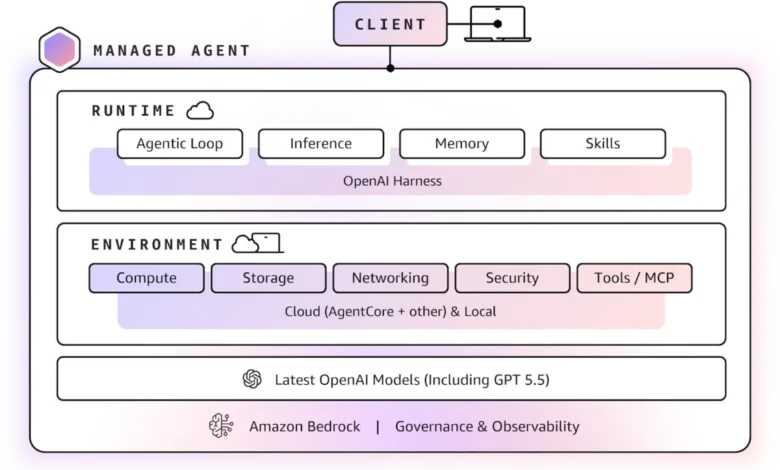
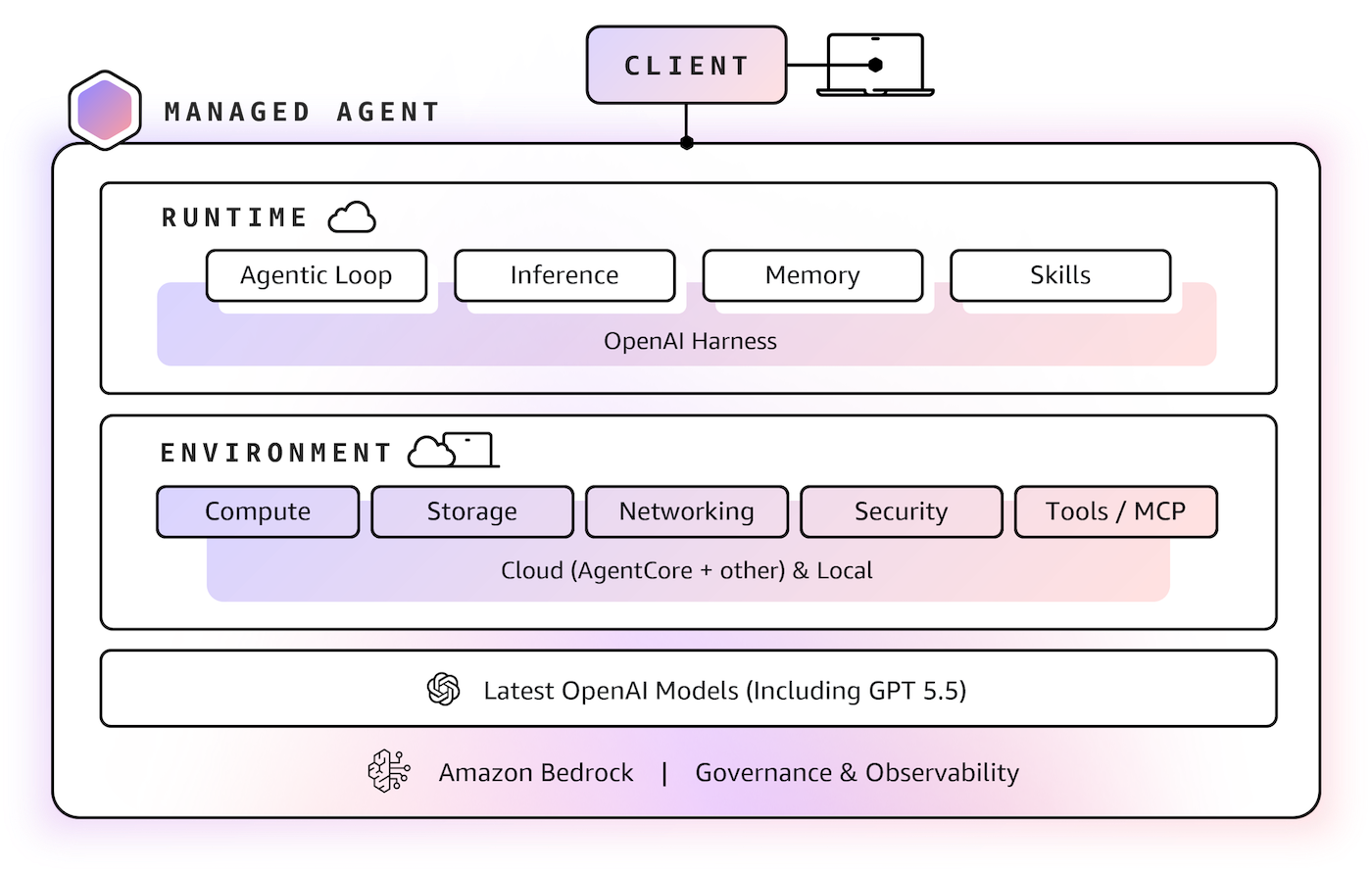
Amazon Web Services (AWS) has officially announced the public preview of Amazon Bedrock Managed Agents powered by OpenAI, marking a significant milestone in cloud-based artificial intelligence infrastructure. Built upon a customized version of OpenAI’s advanced Agents API, this new capability has been engineered from the ground up to be fully AWS-native, establishing seamless integration with pre-existing cloud resources, enterprise identity frameworks, granular permissions, and robust governance controls.
The newly introduced preview enables enterprise customers and independent developers alike to construct sophisticated, AI-driven agents optimized specifically for OpenAI models. These systems are designed to operate securely and efficiently entirely within the perimeter of the AWS cloud environment. By leveraging existing organizational security paradigms, companies can deploy advanced automation and autonomous workflows without compromising compliance, data privacy, or internal administrative protocols.
Technical Architecture and Execution Environments
To accommodate diverse development pipelines and operational requirements, AWS has engineered flexible deployment architectures for the new managed agents. Users can select between two primary execution environments depending on their specific infrastructure needs.
The first option involves self-hosted compute, which allows developers to utilize existing development machines, custom containers, or established compute environments to run and test their workloads. This provides maximum flexibility for teams wishing to integrate agent development into their current CI/CD pipelines.
Alternatively, developers can leverage the Amazon Bedrock AgentCore Runtime. This managed service provides fully hosted runtime sessions alongside highly configurable storage solutions operating directly within the user’s designated AWS account. This managed route significantly reduces the operational overhead associated with provisioning infrastructure, managing container lifecycles, and scaling stateful agent interactions. Comprehensive documentation and architectural guides have been made available via the official Amazon Bedrock developer portal to assist early adopters with initial setups.
Expanding Frontier Model Choices on Amazon Bedrock
The introduction of the OpenAI-powered managed agents coincides with a broader strategic push by AWS to diversify and expand the selection of frontier models available through the Amazon Bedrock ecosystem. As enterprise adoption of generative artificial intelligence accelerates, organizations increasingly demand multi-model strategies that allow them to pair specific use cases with the most capable underlying architecture.
By incorporating customized versions of industry-leading models, Amazon Bedrock continues to position itself as a comprehensive hub for enterprise AI development. This flexibility empowers engineering teams to experiment with, evaluate, and deploy various foundational models without migrating data across disparate cloud ecosystems or managing multiple fragmented vendor contracts.
Lifecycle Updates and Service Availability Management
Alongside these technological advancements, AWS has updated its product lifecycle policies, issuing critical guidance regarding service availability, maintenance schedules, and sunset timelines. Effective September 29, 2026, these adjustments are designed to help enterprise IT departments plan their cloud architecture roadmaps well in advance to prevent operational disruptions.

According to the updated product lifecycle announcements, specific legacy services and features are transitioning into a maintenance phase, after which they will no longer be accessible to new customers starting October 29, 2026. Furthermore, a secondary tier of older services has officially entered the sunset phase, signaling their eventual retirement. Concurrently, select tools have reached their definitive end-of-support status as of late September 2026.
AWS leadership has emphasized that while such lifecycle changes are a standard part of platform evolution, the company is committed to minimizing friction for its customer base. Detailed migration paths, alternative service recommendations, and technical documentation have been published to assist migrating organizations. Enterprise clients requiring tailored assistance are encouraged to consult their designated AWS account teams or open support tickets through the AWS Support portal.
Broader Industry Implications and Market Analysis
The integration of OpenAI-powered managed agents into the AWS ecosystem reflects a broader industry trend toward interoperability and platform consolidation. Historically, enterprises frequently found themselves siloed within specific vendor ecosystems, forced to choose between the proprietary application layers of model providers and the underlying infrastructure of major hyperscalers.
By bridging OpenAI’s advanced agent capabilities with AWS’s enterprise-grade security, identity management, and storage infrastructure, this release addresses a major friction point for enterprise software architects. Organizations no longer need to build custom, fragile middleware to connect external AI APIs with internal cloud databases and microservices. Instead, they can utilize native IAM roles, VPC configurations, and auditing tools to oversee autonomous agent behaviors.
Industry analysts note that this development could significantly accelerate the enterprise deployment of autonomous agents. While proof-of-concept projects have flourished over the past several years, production-grade deployment has often lagged due to governance, security, and data residency concerns. By baking these controls directly into the Bedrock Managed Agents runtime, AWS and OpenAI are directly targeting the compliance departments of Fortune 500 companies, financial institutions, and healthcare providers.
Community Engagement and Upcoming Developer Events
As the cloud computing landscape continues to evolve rapidly, AWS maintains an active calendar of in-person and virtual events designed to educate builders, share best practices, and preview upcoming technological innovations. These initiatives include specialized developer workshops, startup-focused networking sessions, and regional community gatherings.
Anticipation is also mounting for upcoming flagship gatherings, including the annual AWS re:Invent conference and various global AWS Community Day events. These conferences serve as primary venues for major product announcements, deep-dive technical sessions, and peer-to-peer collaboration among cloud architects and software engineers.
Developers interested in collaborating, sharing open-source solutions, and accessing ongoing technical resources are encouraged to participate in the AWS Builder Center. The platform serves as a centralized hub for community-driven innovation, providing documentation, reference architectures, and forums for builders working across the entire AWS service catalog.
With continuous updates to the What’s New with AWS page and regular weekly roundups curated by engineering leaders, AWS continues to maintain transparent communication channels with its global user base. As the public preview of Amazon Bedrock Managed Agents progresses, enterprise feedback will undoubtedly shape the final general availability release, paving the way for the next generation of secure, cloud-native artificial intelligence applications.