Bluesky’s Rapid Ascent and Strategic Integration with Buffer Reshaping Decentralized Social Media Management

Bluesky, a prominent player in the evolving landscape of decentralized social networks, has rapidly grown to over 40 million registered users, establishing itself as one of the fastest-growing platforms in recent memory. Its appeal stems from a clean, intuitive interface that has attracted a diverse community of creators, spanning interests from scientific discourse to K-pop fandom. This accessibility, coupled with its foundational principles, positions Bluesky as a significant contender among the new wave of fediverse and decentralized platforms.
The Genesis and Vision of a Decentralized Future
Bluesky’s origins are deeply intertwined with the quest for a more open and user-controlled social internet. Conceived by former Twitter CEO Jack Dorsey, the platform emerged from a vision to decentralize social media, moving away from the concentrated control of a few corporate entities. It is built upon an open-source framework known as the Authenticated Transfer Protocol (AT Protocol), a distinct technological backbone designed to empower users and foster innovation. The core mission articulated by Bluesky is to "create an open foundation for the social internet so that we can all shape its future," driven by the conviction that "social media is too important to be controlled by a few corporations." This philosophical stance resonates deeply with a growing segment of internet users disillusioned with the perceived limitations and corporate governance of traditional platforms. The company’s vision for a more democratic online space was eloquently illustrated in a comic by artist Davis Bickford, which Bluesky shared on its platform, simplifying the complex technical and ideological underpinnings for its burgeoning user base.
Chronology of Growth and Public Unveiling
Initially operating as an invite-only network, Bluesky cultivated an exclusive community, allowing it to refine its protocol and user experience in a controlled environment. This strategic rollout built anticipation and curiosity, contributing to its eventual explosive growth. The pivotal moment arrived in February 2024 when Bluesky opened its doors to the public, shedding its invite-only status. The immediate response was staggering, with the platform welcoming over one million new users in a single day. This surge not only underscored the demand for alternative social media experiences but also validated Bluesky’s user-friendly approach and the inherent appeal of its decentralized model. The continued expansion to over 40 million users since then highlights its sustained momentum and successful transition from a niche, experimental platform to a mainstream contender.
Navigating the Decentralized Landscape: AT Protocol vs. ActivityPub
A crucial aspect distinguishing Bluesky within the broader decentralized ecosystem is its use of the AT Protocol, which sets it apart from the "fediverse" in a technical sense. While often grouped with fediverse platforms, Bluesky is not technically part of the traditional fediverse because it does not utilize ActivityPub, the open protocol that underpins networks like Mastodon, Threads, and Pixelfed. ActivityPub enables seamless interoperability between different instances (servers) that use the protocol, allowing users on one platform to follow and interact with users on another.
The AT Protocol, by contrast, offers a different architectural approach. It focuses on account portability, meaning users can migrate their accounts, including their data and followers, between different "PDS" (Personal Data Servers) without losing their online identity. This design emphasizes user agency and data ownership, allowing for a more resilient and flexible social graph. While both protocols aim for decentralization, their distinct implementations lead to different interoperability models. The AT Protocol aims to create a "network of networks" where independent services can federate and interoperate, offering a vision of a more flexible and customizable social internet. This divergence presents both opportunities for innovation and challenges in achieving seamless cross-platform communication. For users and content creators, understanding these technical distinctions becomes increasingly important as they strategize their multi-platform presence.
Strategic Content Management with Buffer: Bridging the Divide
In the dynamic and increasingly fragmented social media landscape, managing a consistent and effective online presence across multiple platforms, including decentralized ones like Bluesky, presents a significant challenge. This is where third-party social media management tools like Buffer become indispensable. Buffer offers a comprehensive suite of features designed to streamline content planning, publishing, and crossposting, effectively simplifying the complex task of maintaining engagement across diverse networks.
The decision to integrate another platform into one’s social media mix is a strategic one, often weighed against the demands of time and resources. Buffer aims to alleviate this burden by enabling users to manage their Bluesky presence alongside other major platforms such as X (formerly Twitter), Threads, Mastodon, and LinkedIn, all from a single, intuitive composer. This capability is particularly valuable for Bluesky users, as the platform does not currently offer built-in scheduling tools.
Why Schedule Bluesky Posts with Buffer?
- Consistency: Scheduling posts ensures a steady stream of content, maintaining audience engagement even when creators are occupied or offline. This is critical for brand building and community growth.
- Efficiency: Centralizing content creation and scheduling saves considerable time and effort, allowing creators to focus on strategy and content quality rather than manual posting.
- Strategic Timing: Posts can be meticulously timed to reach target audiences during peak activity hours, optimizing visibility and engagement.
- Multi-Platform Presence: Buffer’s crossposting feature is a game-changer for creators active on various networks. It allows content tailored for Bluesky to be simultaneously adapted and published to other platforms, maximizing reach without redundant effort. This is especially crucial for bridging the technical gap between AT Protocol and ActivityPub networks, enabling users to maintain a presence across both decentralized ecosystems.
Connecting Bluesky to Buffer: A Step-by-Step Guide
To leverage Buffer’s capabilities for Bluesky, users must first connect their Bluesky account as a channel within Buffer. The process is designed to be straightforward and secure, typically taking only a few minutes.
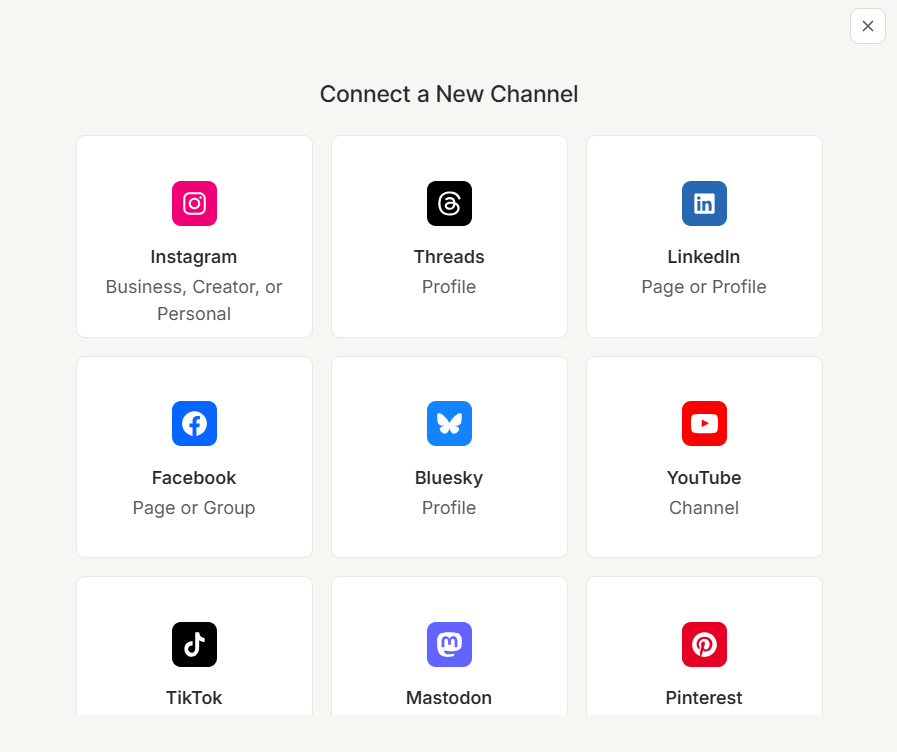
- Initiate Connection: Within the Buffer interface, users navigate to the "Connect a New Channel" option. Bluesky will appear as a selectable profile option, signaling Buffer’s direct integration.
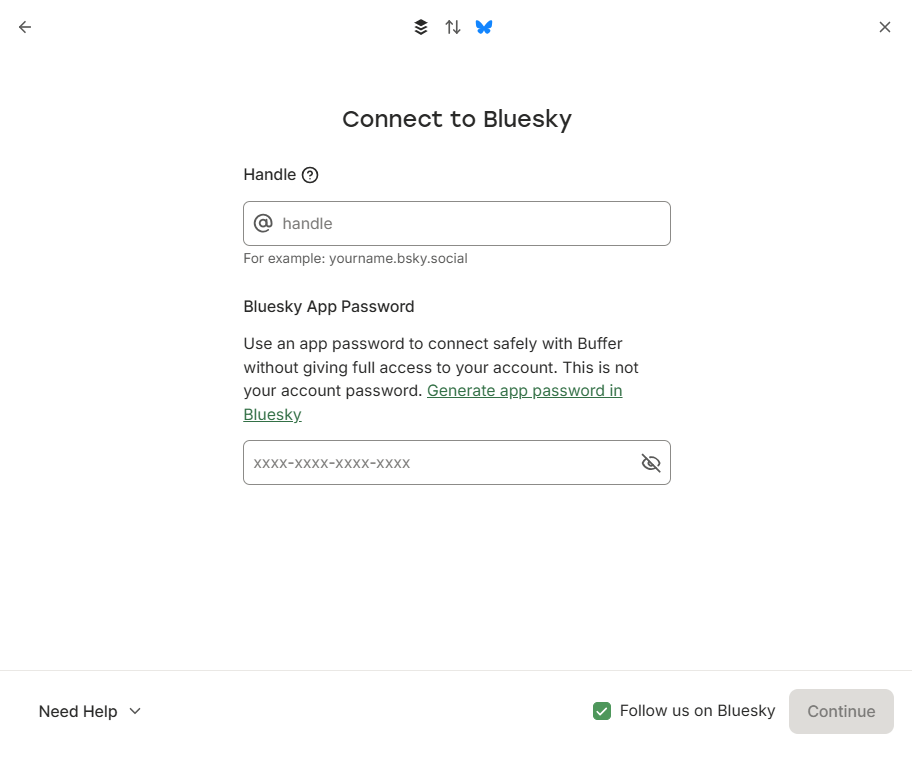
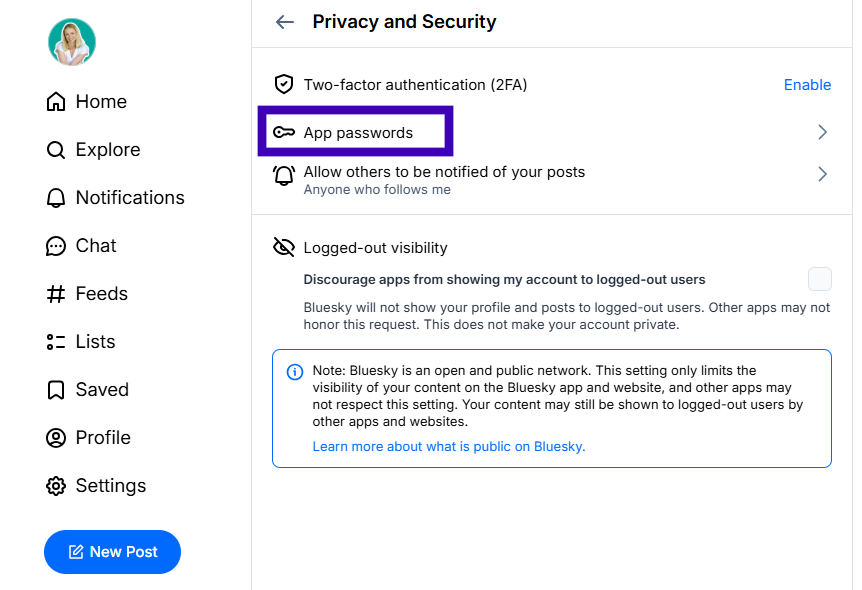
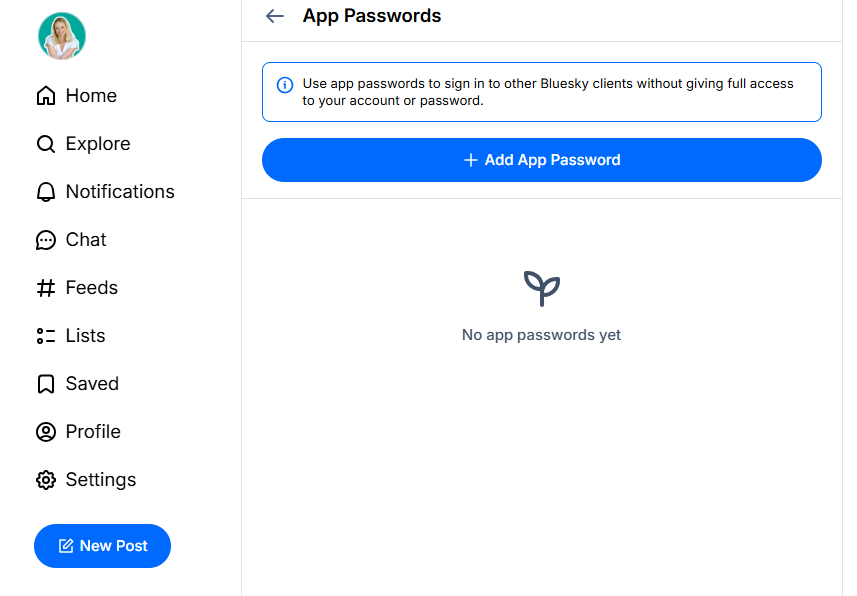
- Authentication: Users will be prompted to enter their Bluesky handle and an app password. Crucially, Buffer recommends using a dedicated app password rather than the primary account password for enhanced security. This practice minimizes risk by providing Buffer with limited access credentials.
- Generating an App Password: To obtain an app password, users must access their Bluesky Privacy and Security settings. Here, an option to "Add App Password" will be available. Generating a unique password for Buffer ensures that even if compromised, it does not grant full access to the Bluesky account. This step underscores a commitment to user security, a vital consideration in the decentralized space.
- Completion: Once the app password is generated and entered into Buffer, the connection is established, and the Bluesky account is ready for scheduling and management.
Scheduling and Crossposting Your Bluesky Content
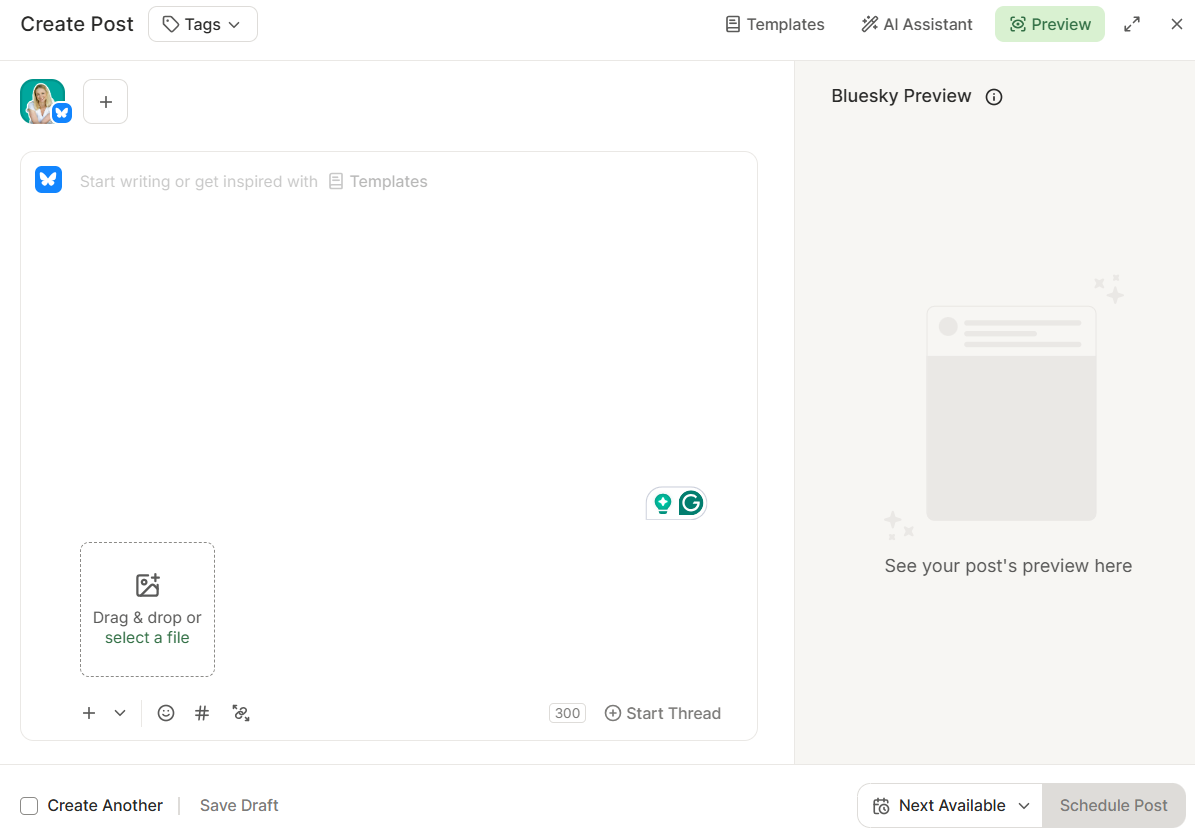
Once connected, Buffer’s composer becomes the central hub for managing Bluesky content. The process is intuitive:
- Create a New Post: Users can initiate a new post using the "+ New" button, selecting their Bluesky channel (and any other desired platforms) from the list.
- Compose and Customize: The composer allows for text entry, media uploads (images and video), and the addition of alt text for accessibility—a small yet significant step towards inclusive content.
- Crossposting and Customization: For users wishing to crosspost, they can select multiple channels (e.g., Bluesky, X, Mastodon). Buffer intelligently allows for platform-specific customizations, ensuring content is optimized for each network’s nuances, character limits, and audience expectations.
- Scheduling or Publishing: Posts can be scheduled for a specific date and time, added to a pre-defined queue, or published immediately. Buffer then automatically deploys the content to the chosen platforms at the designated times.
Advanced Features: Bluesky Threads and Community Engagement
Bluesky’s support for threads, allowing users to connect multiple posts into a cohesive narrative, is a powerful feature for storytelling and in-depth discussions. While Bluesky itself lacks native thread scheduling, Buffer seamlessly integrates this functionality. Users can click "Start thread" in the composer, add each individual post within the thread using the "+" button, and then schedule the entire sequence to be published in order, right on time. This capability is invaluable for creators who rely on narrative arcs to convey complex information or engage audiences over extended topics.
Beyond publishing, Buffer extends its utility to community management and analytics. The "Community tool" allows users to view and reply to Bluesky comments directly from the Buffer dashboard, eliminating the need to constantly switch between applications. This centralized approach enhances responsiveness and fosters stronger community ties. Furthermore, Buffer’s analytics dashboard provides insights into engagement metrics and follower growth, enabling users to track the performance of their Bluesky content and refine their social media strategies based on data-driven insights.
Self-Hosting and Accessibility
Bluesky’s design, rooted in decentralization, also supports self-hosting. This means users have the option to run their Bluesky account on a server they control, rather than relying solely on Bluesky’s default servers. This choice offers enhanced control over personal data and infrastructure, appealing to users seeking maximum autonomy. Buffer fully supports custom servers, ensuring that self-hosting Bluesky users can still connect their accounts and utilize the platform’s scheduling and management features. This flexibility further underscores Buffer’s commitment to supporting the diverse technical architectures emerging within the decentralized social media space.
In terms of accessibility, Buffer ensures that scheduled Bluesky posts can include not only text and rich media (images, video) but also alt text for all images. This small but critical feature allows content creators to describe visual elements for users with visual impairments, making content more inclusive and compliant with accessibility standards.
The Broader Impact on Social Media
Bluesky’s rapid rise, powered by the AT Protocol and bolstered by strategic integrations like Buffer, signifies a pivotal moment in the evolution of social media. It represents a tangible step towards a more open, user-centric internet, challenging the long-standing dominance of centralized platforms. The emergence of distinct decentralized protocols like AT Protocol and ActivityPub suggests a future where the social internet is not a monolithic entity but a diverse ecosystem of interconnected networks.
Tools like Buffer are not merely conveniences; they are essential enablers in this new frontier. By simplifying cross-platform management and bridging protocol differences, they empower individuals and organizations to navigate this complex landscape effectively. They allow users to embrace the philosophical benefits of decentralization—user control, data portability, and open standards—without sacrificing the practical necessities of efficient content delivery and audience engagement. As Bluesky continues its trajectory, its interplay with innovative third-party tools will undoubtedly shape how we connect, share, and interact in the decentralized social media era.