AI’s Transformative Influence Forces Marketers to Re-evaluate Foundational Assumptions and Best Practices

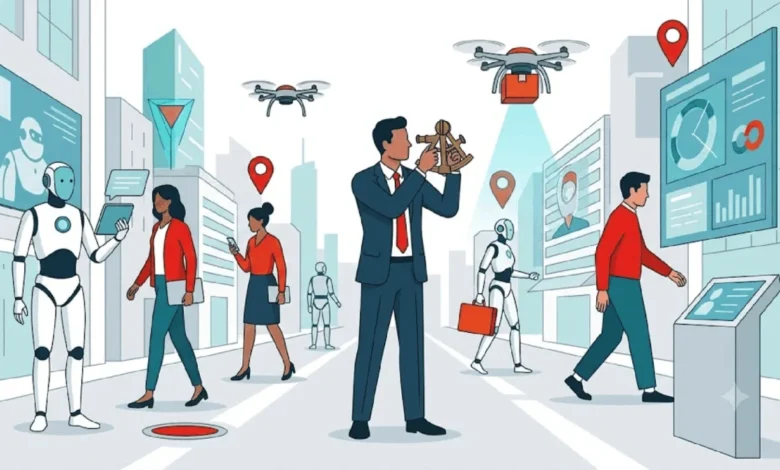
Artificial intelligence is compelling the marketing industry to fundamentally re-examine decades of established best practices, as the core assumptions underpinning these methodologies are undergoing a profound and rapid transformation. This critical insight emerges from new research by Professor Rajan Varadarajan of the Mays Business School at Texas A&M University, published in the esteemed Marketing Strategy Journal. The paper highlights that AI is reshaping decision-making processes on both the supply and demand sides of the marketplace, leading to an unprecedented era of "knowledge decay" for instrumental marketing tactics.
The Dawn of a New Era in Marketing Strategy
The advent of AI represents more than just another technological upgrade; it signifies a paradigm shift in how information is created, consumed, evaluated, and utilized throughout the entire buying process. Businesses are increasingly entrusting marketing decisions to sophisticated AI systems, automating tasks ranging from campaign optimization and content generation to customer segmentation and predictive analytics. Globally, the AI in marketing market size was valued at approximately USD 15.8 billion in 2023 and is projected to grow substantially, indicating a widespread and accelerating adoption across industries. Simultaneously, buyers are leveraging AI tools—such as conversational agents, recommendation engines, and intelligent search platforms—to conduct product research, compare vendors, and receive personalized purchase recommendations. The increasing use of platforms like ChatGPT, Google Gemini, and various virtual assistants by consumers to gather information and make choices underscores this shift. This dual evolution means that decisions once exclusively made by humans are now more likely to be the result of intricate human-AI collaborations, fundamentally altering the traditional marketing landscape.
This phenomenon is aptly termed "knowledge decay," a state where long-held marketing knowledge and strategies become less effective, or even obsolete, because the operational environment for which they were designed no longer functions in the same manner. AI’s pervasive integration into both corporate strategy and consumer behavior is accelerating this decay, compressing the "knowledge relevance lifespan" of many established practices at a rate far exceeding previous technological disruptions like the internet or social media. While the internet revolutionized information access and e-commerce transformed purchasing channels, AI is unique in its ability to actively participate in and influence decision-making processes, both for businesses and consumers, simultaneously.
Distinguishing Enduring Principles from Ephemeral Tactics

Professor Varadarajan’s research draws a crucial distinction between marketing principles and marketing tactics. This differentiation is vital for marketers navigating the current upheaval, enabling them to discern what remains foundational and what requires urgent adaptation.
Marketing principles, often referred to as conceptual knowledge, are rooted in fundamental human psychology and behavior. These are the enduring truths that transcend technological shifts. For instance, customers will always seek solutions to their problems, brands must consistently differentiate themselves in crowded markets, and trust remains an indispensable currency in any transaction. The desire for value, convenience, and emotional connection are intrinsic human drivers that AI, despite its capabilities, cannot fundamentally alter. These core tenets of marketing — understanding customer needs, building brand equity, fostering loyalty, and delivering compelling value propositions — continue to hold true, regardless of the tools used to achieve them. The basic human need for belonging, self-actualization, or problem-solving, as outlined by theories like Maslow’s hierarchy, remains untouched by AI; it merely changes the pathways to fulfilling these needs.
Conversely, marketing tactics, or instrumental knowledge, are the specific playbooks, methodologies, and operational procedures built upon these principles. These tactics are highly dependent on the prevailing market conditions, technological infrastructure, and consumer behavior patterns of a given moment. It is this instrumental knowledge that is experiencing rapid knowledge decay under the influence of AI.
Consider the evolution of Search Engine Optimization (SEO). For years, marketers meticulously optimized web pages around anticipated human search queries and keyword usage, striving for higher rankings in search engine results pages (SERPs) to drive organic traffic. The focus was on understanding human search intent and algorithms designed to serve human users. Today, the landscape is far more complex. Marketers must now also contend with how AI systems retrieve, interpret, summarize, and even generate information. An AI-powered search assistant might not present a list of links but rather a synthesized answer, drawing from multiple sources and potentially bypassing direct website visits. This shift demands a re-evaluation of content strategy, technical SEO, and even the very definition of "visibility" and "ranking." According to recent data, a significant portion of online searches now involve AI-driven features, requiring content to be optimized for semantic understanding and factual accuracy, not just keyword density.
Similarly, the traditional B2B buying journey, once a predictable sequence of website visits, content downloads, webinar attendance, and eventual sales conversations, is undergoing radical transformation. In an AI-augmented world, prospective buyers might deploy AI agents to conduct initial research, compile vendor shortlists, and even analyze product specifications before a human ever directly engages with a vendor’s website or sales representative. If AI agents are performing much of the initial discovery and qualification, the familiar marketing funnel, designed around human touchpoints, becomes less universal and potentially inefficient. The emphasis shifts from attracting human eyeballs to influencing AI algorithms and providing AI-digestible information. For instance, a procurement department might utilize an AI tool to identify suitable suppliers based on predefined criteria, significantly streamlining the initial stages of vendor selection and reducing the human touchpoints typically targeted by early-stage marketing campaigns.
The Four Imperative Questions for Modern Marketers

In light of this accelerated knowledge decay and the blurring lines between human and AI decision-making, Professor Varadarajan’s research posits that marketers must critically examine their underlying assumptions by asking four fundamental questions. While the original article did not enumerate these questions, their essence can be inferred from the context of the paper’s findings. These questions serve as a crucial "stress test" for existing marketing frameworks, allowing organizations to ascertain whether their current understanding aligns with contemporary customer buying behaviors.
-
Who is gathering information and how?
- Marketers must ascertain whether information gathering is primarily a human endeavor, an AI-driven process, or a hybrid. Are prospects actively searching and clicking through traditional channels, or are AI assistants compiling summaries and recommendations on their behalf? This influences content format, distribution channels, and the type of data marketers need to provide. If AI agents are the primary information gatherers, content must be structured and tagged for machine interpretability, emphasizing clear, factual data points over persuasive rhetoric alone. This might mean prioritizing structured data, semantic markup, and clear, concise answers to common queries over long-form, narrative content for initial discovery.
-
Who is evaluating options and by what criteria?
- This question probes whether traditional human biases and emotional responses are still the primary drivers of evaluation, or if AI algorithms are now heavily influencing selection based on objective (or algorithmically defined) criteria. If AI is comparing products, factors like technical specifications, unbiased reviews, and transparent pricing may gain precedence over brand storytelling or aesthetic appeal in the initial evaluation phase. Marketers need to understand what metrics AI systems prioritize, such as verifiable performance data, customer satisfaction scores derived from sentiment analysis, or compliance with specific industry standards.
-
Who is making the final decision, and what factors are most influential?
- Is the purchase decision a direct human choice, or is it heavily swayed by an AI-driven recommendation? While the ultimate purchase often remains human, the degree of AI influence can vary dramatically. Understanding this allows marketers to tailor their messaging and touchpoints to address both the human decision-maker and the AI intermediary. For instance, providing concise, comparative data for AI while also offering compelling narratives for human validation. For high-value B2B purchases, the human decision-maker might still require personal interaction and relationship building, even if an AI system has already narrowed down the options significantly.
-
How are marketing messages being consumed and interpreted?
- Are marketing messages reaching human eyes and minds directly, or are they being summarized, filtered, and potentially rephrased by AI agents before consumption? This question has profound implications for creative strategy. A captivating headline or a visually rich advertisement might be less effective if an AI system is merely extracting key facts for a user. Marketers need to consider how their messages will be processed by both human and artificial intelligence, potentially requiring new forms of "AI-friendly" content that are easily digestible by algorithms while still resonating with human recipients. This could involve creating highly structured FAQs, comparative tables, and clear value propositions that AI can readily extract and present.
These questions highlight that every marketing framework is built upon specific assumptions about who performs key roles in the buying process: who gathers information, who evaluates options, and who ultimately makes decisions. As AI progressively assumes more of these roles, marketers are compelled to reassess whether their foundational assumptions still accurately reflect the market dynamics they aim to influence.

For example, an SEO strategy meticulously crafted around earning direct clicks to a website may prove less effective if a significant portion of potential buyers receive AI-generated comparisons and summaries without ever visiting the site. Similarly, in B2B lead generation, if an AI agent is responsible for researching vendors, constructing a shortlist, and recommending products before any human interaction, the traditional buyer journey assumed by many sales funnels becomes outdated. The focus shifts from merely attracting leads to actively engaging AI agents with relevant, data-rich content.
This exercise is applicable across all facets of marketing. If a strategy implicitly assumes prospects conduct all product research, vendor comparisons, or marketing message evaluations themselves, it risks becoming disconnected from reality. Likewise, if campaign planning presupposes that human marketers make every targeting, budgeting, or creative decision, it overlooks AI’s rapidly expanding role in execution and optimization. The core insight is not that humans vanish from the process, but rather that AI now exerts influence over decisions that traditional marketing frameworks have long treated as exclusively human domains. The report strongly advocates for revisiting these foundational assumptions before attempting to merely revise existing tactics.
The New Competitive Imperative: Agility and Skepticism
Professor Varadarajan’s paper draws parallels between the current AI revolution and previous transformative shifts such as the rise of the internet, the advent of e-commerce, and the explosion of social media. Each of these eras necessitated a fundamental rethinking of accepted marketing practices. However, AI presents a unique challenge: it is simultaneously transforming both marketing execution and purchasing behavior at an unprecedented pace. This synchronous disruption significantly shortens the "knowledge relevance lifespan" of many previously effective practices, demanding a level of agility and adaptability that many organizations are still struggling to cultivate.
For marketers, the overarching lesson is not to discard all accumulated wisdom but rather to cultivate a profound skepticism towards assumptions that once appeared immutable. The next significant competitive advantage in the marketplace may not solely stem from being the earliest adopter of the latest AI tool. Instead, it will increasingly arise from an organization’s acute ability to recognize when yesterday’s "best practice" no longer accurately describes how customers genuinely buy, and then to adapt its strategies accordingly. This requires continuous learning, experimentation, and a willingness to dismantle and rebuild existing playbooks. Industry analysts, such as those from Gartner and Forrester, consistently emphasize that strategic adaptation to AI, rather than mere tactical deployment, will differentiate market leaders in the coming years. Many CMOs are reportedly re-evaluating their entire technology stacks and talent acquisition strategies to align with this new reality.
Broader Implications and the Evolving Role of the Marketer

The implications of AI’s transformative impact extend beyond just tactical adjustments. They touch upon organizational structure, skill development, ethical considerations, and the very definition of marketing success.
Organizational Restructuring and Skill Development: Marketing departments will need to evolve. The human marketer’s role will shift from primarily executing repetitive tasks to becoming strategists, data interpreters, AI trainers, and ethical auditors of automated systems. Skills in prompt engineering, data science literacy, AI governance, and strategic thinking will become paramount. Universities and corporate training programs will need to rapidly adapt curricula to prepare the next generation of marketing professionals for this human-AI collaborative environment. The demand for "AI-fluent" marketers is already growing, with many companies investing heavily in upskilling their existing workforce.
Ethical Considerations and Trust: As AI plays a greater role in influencing consumer decisions, ethical considerations become more critical. Questions around data privacy, algorithmic bias, transparency in AI recommendations, and potential manipulation will demand careful attention. Building and maintaining customer trust in an AI-driven world will require robust ethical frameworks and clear communication about how AI is being used. Marketers will need to ensure that AI-driven personalization does not cross the line into intrusive or exploitative practices. Regulatory bodies worldwide are beginning to draft guidelines for AI use, and marketers must remain abreast of these developments to ensure compliance and maintain brand integrity.
New Metrics and Attribution Models: Traditional marketing metrics and attribution models, often built around direct human interactions (clicks, conversions, website visits), will need to be re-evaluated. How does one measure the impact of an AI agent’s recommendation that bypasses a website visit? New Key Performance Indicators (KPIs) might emerge focusing on AI "influence scores," the quality of AI-generated shortlists, or the efficiency of AI-driven lead qualification. Multi-touch attribution will become even more complex, requiring sophisticated analytical tools to understand the combined human and AI journey. The focus may shift from "last-click" attribution to more holistic models that account for AI-mediated touchpoints.
From Digital Transformation to AI Transformation: The previous decade was dominated by digital transformation initiatives, centered on digitizing existing processes and leveraging digital channels. The current era demands an "AI transformation," which is broader and more profound. It’s not just about digitizing existing processes but rethinking the very nature of interaction, decision-making, and value creation with AI at the core. This requires a cultural shift within organizations, fostering an environment of continuous learning, experimentation, and comfort with iterative adaptation. Companies that successfully navigate this transformation will likely redefine industry standards.
The Imperative for Continuous Learning and Strategic Foresight

The essence of Professor Varadarajan’s research is a call for strategic foresight and intellectual humility within the marketing profession. It challenges marketers to move beyond merely adopting new tools and instead to deeply understand the systemic shifts that AI engenders. The rapid evolution of AI means that what is considered cutting-edge today could be standard, or even obsolete, tomorrow. Therefore, continuous learning, a proactive approach to understanding emerging technologies, and a willingness to constantly question and validate assumptions will be the hallmarks of successful marketing organizations in the AI era.
Ultimately, the competitive edge will belong to those who not only embrace AI technologies but also possess the strategic acumen to critically assess their implications, differentiate between timeless marketing principles and transient tactics, and adapt their entire operational playbook to a marketplace increasingly shaped by intelligent machines. The future of marketing is not about replacing humans with AI, but about redefining the symbiotic relationship between them, ensuring that the fundamental goals of marketing — connecting with customers and creating value — remain at the forefront.
The full paper, titled "Dawn of the AI era in marketing strategy and twilight of the conglomerates era in corporate strategy: Knowledge decay, knowledge relevance lifespan and new knowledge creation," by Professor Rajan Varadarajan, University Distinguished Professor and Regents Professor of the Mays Business School, Texas A&M University, is available for download, with no registration required, offering deeper insights into these critical shifts.