Radaris Domain Seizure Marks a Watershed Moment in the Battle Over Data Broker Accountability


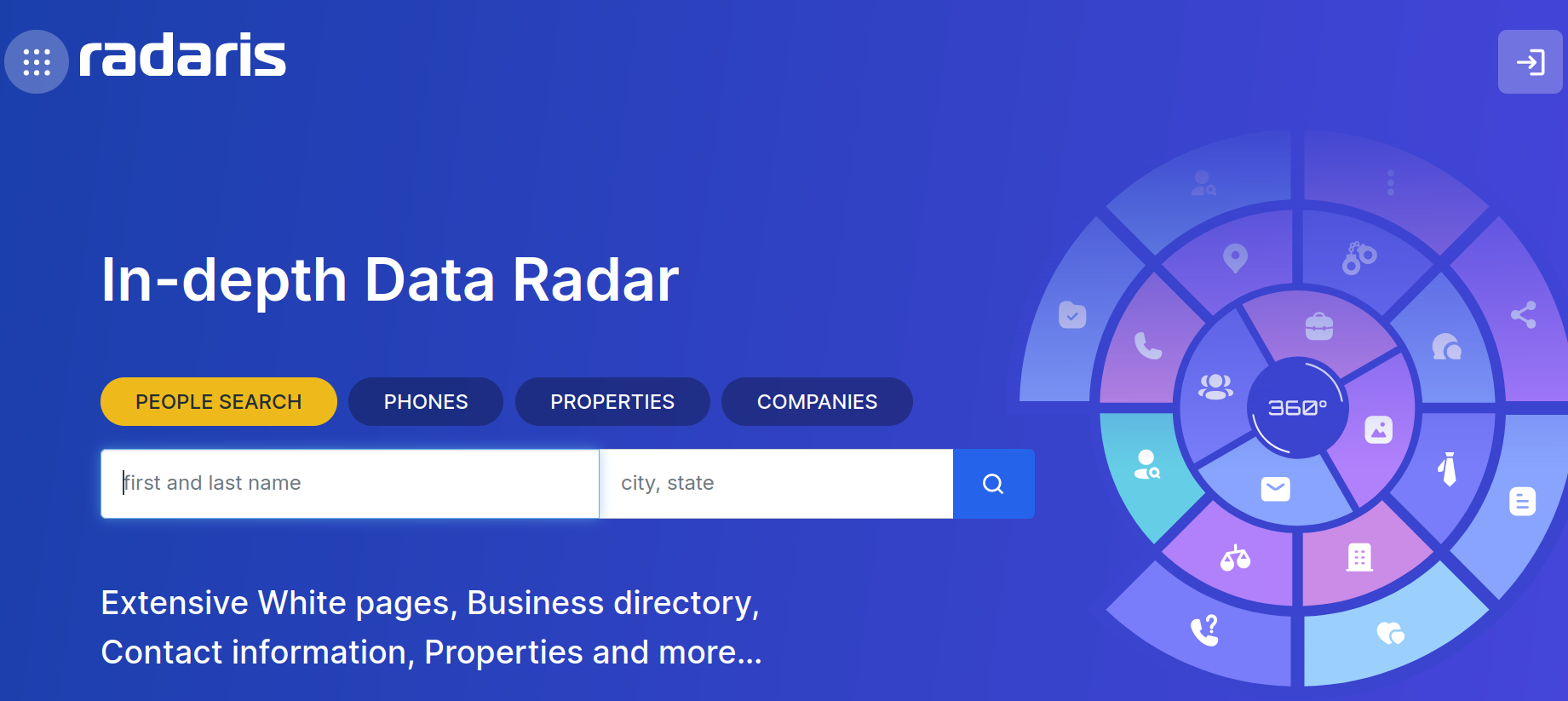
The consumer data broker Radaris.com has finally faced a significant legal reckoning, resulting in a court-ordered transfer of its flagship domain to the plaintiffs in a high-stakes privacy lawsuit. For years, Radaris operated as a prominent player in the people-search industry, notoriously ignoring or obstructing requests to remove personal information from its extensive databases. This pattern of non-compliance ultimately collided with Daniel’s Law, a stringent New Jersey statute designed to protect the privacy of law enforcement officials, judges, and their families. The resulting legal victory for Atlas Data Privacy Corp—which saw not only Radaris.com but over a dozen affiliated domains transferred to their control—represents a rare and aggressive enforcement action against the opaque data broker ecosystem.
A History of Evasion and Shell Games
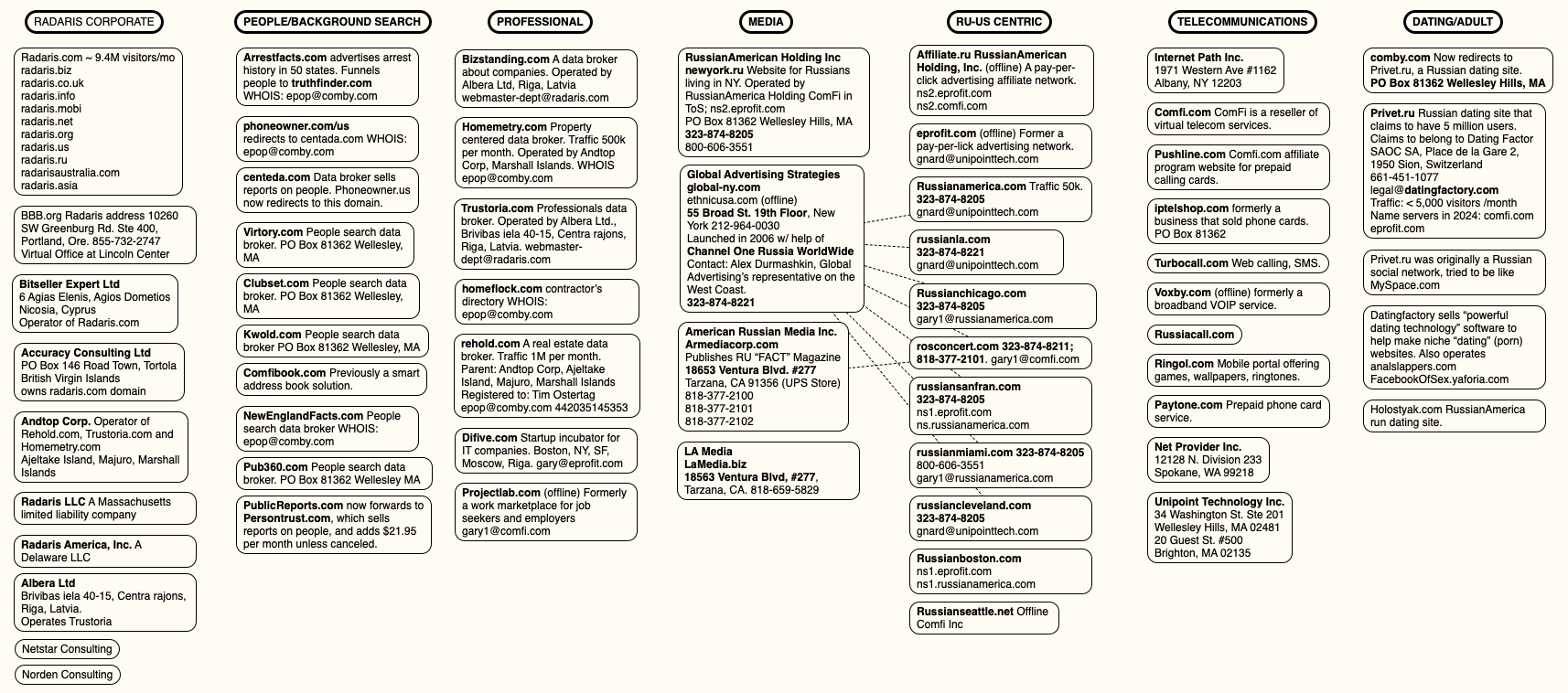
The downfall of Radaris was not an overnight occurrence but the culmination of years of calculated procedural maneuvering. The company’s operational history is characterized by a "shell game" of corporate entities, designed to shield its true owners from accountability. Investigative reporting previously identified the co-founders as Igor and Dmitry Lubarsky, Massachusetts-based brothers who allegedly managed a vast network of people-search sites, dating services, and affiliate programs.
Throughout their tenure, the Lubarsky brothers utilized a sophisticated infrastructure to mask their involvement. This included the use of a fictitious CEO, "Gary Norden," a persona that Radaris leveraged in press releases and investor solicitations to project an image of legitimate corporate governance. When confronted with allegations of operating these sites, the brothers’ legal representatives—most notably Val Gurvits of the Boston Law Group—frequently resorted to threats of defamation litigation, claiming that the true owners were, in fact, Ukrainian nationals.
This obfuscation extended to the corporate structure itself. As legal pressure mounted, the company engaged in what observers call "island-hopping." Through constant updates to terms of service and the shifting of management to entities registered in the Marshall Islands, the British Virgin Islands, and the Seychelles, Radaris sought to render itself untouchable by U.S. courts. Even when challenged, the company’s defense strategy involved claiming that the specific entity named in a lawsuit was not the actual owner, effectively forcing plaintiffs to start from scratch whenever a judgment appeared imminent.
The Rise of Daniel’s Law and the Atlas Litigation
The legal tide began to turn in February 2024, when Atlas Data Privacy Corp initiated a series of lawsuits against Radaris and other brokers. Daniel’s Law, the legislative instrument at the heart of this conflict, was born out of tragedy. Named after Daniel Anderl, the son of U.S. District Judge Esther Salas, who was murdered by a disgruntled attorney who had tracked the family’s home address online, the law mandates the removal of personal information for protected government personnel.
The statute carries teeth: fines of $1,000 per violation for companies that fail to honor removal requests. Atlas, led by CEO Matt Adkisson, adopted a strategy of persistent, well-funded litigation to overcome the defense’s tactics of delay and attrition. By June 2025, Atlas had filed an expanded complaint, targeting a wider array of the Radaris corporate family. During the discovery process, Atlas obtained over 10,000 internal documents and emails, providing a clear map of the operation’s financial and technical infrastructure.
These documents revealed that regardless of the registered entity—be it Bitseller Expert Limited, Andtop Company, or various other "solutions" groups—the entire empire was managed by a small group of individuals using a consolidated set of administrative tools and payment systems. This internal data confirmed that Radaris and at least 25 other websites functioned as a single, highly lucrative operation, generating tens of thousands of dollars in monthly revenue.

The Judicial Intervention
The turning point occurred when the New Jersey court, having exhausted the defendants’ opportunities to appear and contest the allegations, issued a default judgment. On August 26, the court ordered the transfer of 14 domain names to Atlas. Currently, Radaris.com serves as a notice board for the legal outcome rather than a search engine for personal data.
The defense, now represented by attorney Victor Worms, has filed a motion to vacate the judgment. Their argument rests on the claim that "Radaris.com" is not a legal entity and therefore lacks the capacity to be sued, and that the transfer of the domain constitutes an unconstitutional forfeiture. Despite these appeals, the current status of the domain remains under the control of the plaintiffs, a development that has sent a tremor through the data broker industry.
Broader Industry Implications and the Constitutional Challenge
The implications of the Radaris case extend far beyond a single domain transfer. The data broker industry has mobilized a massive legal counteroffensive against Daniel’s Law. Approximately 150 data broker firms are currently embroiled in litigation with Atlas, with at least 70 of these cases moved to federal court. The industry’s primary argument is that such privacy laws are overly broad and infringe upon First Amendment rights regarding the dissemination of public information.
The constitutional validity of these statutes remains in flux. While the U.S. Court of Appeals for the Third Circuit weighs the New Jersey challenge, a federal district court in West Virginia ruled that a similar law was facially unconstitutional in August 2025. This sets the stage for a likely showdown at the U.S. Supreme Court, which will eventually have to reconcile the right to public access of records with the fundamental right to personal safety and privacy.
The Data Privacy Void
Experts like Justin Sherman, author of The Middlemen, argue that these legal battles are symptomatic of a deeper failure in American legislative policy. The current patchwork of state laws is fraught with exemptions for "public" records—including voter registries, property filings, and court documents—which are precisely the data points that fuel the people-search industry.
The lack of comprehensive federal privacy legislation leaves the average citizen vulnerable to the exact same surveillance mechanisms that target police and judges. The absence of strict mandates on how entities store and process data, such as information harvested from driver’s licenses, has led to catastrophic security failures, including the recent breach at IDScan.net, which exposed the sensitive data of 153 million Americans.
For now, the Radaris case serves as a cautionary tale for the industry. The era of total impunity for data brokers may be waning, but as long as the underlying "public record" exemption exists, the business model of selling personal dossiers remains structurally protected. Without a federal privacy law that treats digital footprints with the same rigor as medical or financial records, the battle between privacy advocates and the data brokerage industry will continue to play out in courtrooms, one domain at a time.
The case of Radaris is not merely a legal dispute; it is a manifestation of the growing friction between the 20th-century legal definition of "public information" and the 21st-century reality of mass surveillance and automated data aggregation. As states continue to pass privacy legislation in the absence of federal action, the legal landscape will likely remain chaotic and volatile, leaving both the companies and the individuals they track in a state of permanent litigation.