Massive 0ktapus Phishing Campaign Compromises Over 130 Organizations and Nearly 10,000 Accounts via Sophisticated MFA Spoofing


The cybersecurity landscape has been rocked by the revelation of a sprawling, highly coordinated phishing campaign dubbed "0ktapus," which successfully breached more than 130 organizations and compromised 9,931 user accounts worldwide. This sophisticated threat campaign, which heavily leveraged the spoofing of identity and access management systems, notably targeted prominent technology firms such as Twilio and Cloudflare before rippling outward into a diverse array of global industries. Security researchers have spent months analyzing the fallout of the breaches, uncovering a calculated strategy designed to harvest corporate credentials and multi-factor authentication (MFA) codes.
As investigations continue to unfold, the 0ktapus campaign has emerged as a watershed moment in modern enterprise security, exposing profound vulnerabilities in traditional multi-factor authentication models and highlighting the relentless adaptability of modern threat actors.
Anatomy of the 0ktapus Operation
The campaign, tracked extensively by threat intelligence researchers at Group-IB, primarily centered around the targeted abuse of identity infrastructure provided by Okta. The primary objective of the cybercriminals was remarkably straightforward yet devastatingly effective: intercept corporate identity credentials and real-time multi-factor authentication codes from employees of targeted organizations.
To achieve this, the threat actors deployed SMS-based phishing—often referred to as smishing—sending text messages directly to the personal or work mobile devices of targeted personnel. These messages contained malicious hyperlinks directing victims to meticulously crafted phishing portals that were near-identical replicas of their respective employers’ Okta authentication pages. Unsuspecting employees, believing they were logging into legitimate internal networks or software-as-a-service (SaaS) platforms, willingly surrendered their usernames, passwords, and the accompanying MFA security tokens.
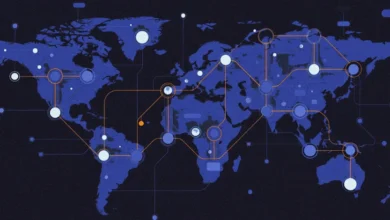
According to Group-IB’s telemetry, the geographic scope of the attack was vast. While the epicenter of the operation focused heavily on the United States—impacting 114 US-based firms—the blast radius extended across 68 additional countries, ensnaring companies operating in sectors ranging from telecommunications and cloud computing to financial services and retail.
Roberto Martinez, a senior threat intelligence analyst at Group-IB, emphasized the sheer difficulty in determining the true magnitude of the incident. "The 0ktapus campaign has been incredibly successful, and the full scale of it may not be known for some time," Martinez noted, pointing to the clandestine nature of credential theft and the prolonged dwell times often associated with sophisticated identity-based attacks.
Chronology and Phased Methodology
The 0ktapus threat group did not simply strike at random; security analysts have reconstructed a methodical, multi-phase attack chain that began months before the broader public became aware of the campaign.
Phase one of the operation is believed to have targeted mobile network operators and telecommunications companies. By infiltrating these telecom providers, the threat actors reportedly harvested extensive databases of phone numbers. Security researchers theorize that these purloined phone numbers formed the essential contact directory utilized in subsequent waves of targeted smishing attacks against enterprise employees.
Once the mobile numbers were secured, the threat actors transitioned to phase two: launching waves of personalized text messages containing the Okta-spoofing URLs. The primary targets during this phase were predominantly software-as-a-service (SaaS) providers and cloud infrastructure companies, organizations chosen deliberately for their privileged access to broader digital supply chains.
The ultimate ambition of the 0ktapus operators extended far beyond initial access. Armed with valid corporate credentials and intercepted MFA codes, the attackers sought to breach internal mailing lists, customer relationship management (CRM) platforms, and customer-facing systems. By gaining a foothold within these environments, the threat actors positioned themselves to execute high-impact supply-chain attacks, leveraging trusted vendor relationships to cascade compromises downstream to countless other enterprises.
The Collateral Damage: DoorDash and Beyond
The theoretical risks of the 0ktapus campaign materialized rapidly in the real world. Within hours of Group-IB publishing its comprehensive technical report, food delivery giant DoorDash publicly disclosed a security incident that bore all the unmistakable hallmarks of an 0ktapus-orchestrated attack.
In an official corporate blog post detailing the breach, DoorDash revealed that an unauthorized third party utilized the stolen credentials of vendor employees to pierce its perimeter defenses and gain unauthorized access to internal administrative tools. Once inside, the threat actors exfiltrated sensitive consumer and delivery personnel data, including full names, telephone numbers, email addresses, and physical delivery locations.
The DoorDash incident underscored a terrifying reality for modern corporations: securing one’s own internal perimeter is no longer sufficient if third-party vendors and external partners maintain lax cybersecurity postures. Because enterprises are inextricably linked through shared software ecosystems and vendor access agreements, a single compromised vendor employee can open the floodgates to an entire corporate network.
Group-IB’s technical analysis further revealed the raw quantitative impact of the campaign, noting that the threat actors successfully intercepted and compromised 5,441 unique MFA codes during the height of the operation. This staggering figure served as a stark wake-up call to an industry that had long heralded multi-factor authentication as a silver bullet against credential-based attacks.
The Illusion of Security: The MFA Bypass Debate
For years, cybersecurity professionals have aggressively pushed organizations to move away from legacy, easily guessable passwords and mandate the adoption of multi-factor authentication. However, the 0ktapus campaign dramatically illustrated that traditional MFA mechanisms—particularly SMS-based one-time passwords (OTPs) and standard push notifications—are fundamentally vulnerable to real-time adversary-in-the-middle (AiTM) phishing attacks.
When an employee is directed to a sophisticated phishing portal that mirrors their corporate login page, entering an MFA code in real-time allows the attacker to simultaneously relay that code to the legitimate service provider. In the eyes of the authentication server, the login appears entirely legitimate, rendering standard MFA ineffective against targeted social engineering.
Roger Grimes, a data-driven defense evangelist at security awareness firm KnowBe4, pulled no punches when evaluating the industry’s overreliance on flawed authentication models. "This is yet another phishing attack showing how easy it is for adversaries to bypass supposedly secure multifactor authentication," Grimes stated in an email interview. "It simply does no good to move users from easily phish-able passwords to easily phish-able MFA. It’s a lot of hard work, resources, time, and money, not to get any benefit."
Grimes argued that the cybersecurity industry has committed a fundamental educational error: while users are routinely trained on how to select strong passwords and spot basic phishing emails, they are rarely taught how modern threat actors attack specific forms of multi-factor authentication or how to recognize advanced MFA manipulation techniques.
Industry Recommendations and Defensive Imperatives
In the wake of the 0ktapus revelations, cybersecurity researchers and standards bodies have accelerated calls for a fundamental overhaul of enterprise authentication strategies. Defending against modern AiTM and credential-harvesting campaigns requires moving beyond vulnerable MFA implementations and adopting hardware-backed, phishing-resistant security standards.
Among the primary technical recommendations issued by Group-IB and independent security experts is the universal adoption of FIDO2-compliant security keys, such as physical hardware tokens utilizing WebAuthn protocols. Unlike SMS codes or push notifications, FIDO2 keys cryptographically bind the user’s authentication session to the specific origin URL, making it mathematically impossible for a phishing site to trick a user into authenticating to a malicious domain.
Organizations are also strongly advised to implement strict URL hygiene policies, enhance monitoring of anomalous login locations and device fingerprints, and conduct rigorous security awareness training that specifically educates personnel on the mechanics of adversary-in-the-middle phishing kits. Furthermore, strict enforcement of the principle of least privilege can help contain the blast radius if an employee’s credentials are successfully compromised, preventing lateral movement across sensitive internal databases and supply-chain infrastructure.
Broader Implications for the Global Threat Landscape
The 0ktapus campaign serves as a grim milestone in the evolution of cybercrime, demonstrating a level of organizational sophistication, operational scale, and targeted persistence that rivals advanced persistent threat (APT) nation-state groups. By weaponizing identity and access management systems against the very companies that build them, the threat actors behind 0ktapus exposed systemic weaknesses in the digital trust framework.
As enterprises continue to digitize operations and embrace remote work models, identity has effectively become the new corporate perimeter. The lessons learned from the 0ktapus breaches must compel organizations to re-evaluate their reliance on outdated security assumptions. Without a decisive migration toward phishing-resistant authentication and a holistic approach to third-party vendor risk management, campaigns of this magnitude will likely remain a recurring and disruptive fixture of the modern threat landscape.