OpenAI Introduces Codex Pets: Animated Desktop Companions Designed to Enhance Developer Workflow and Ambient Monitoring

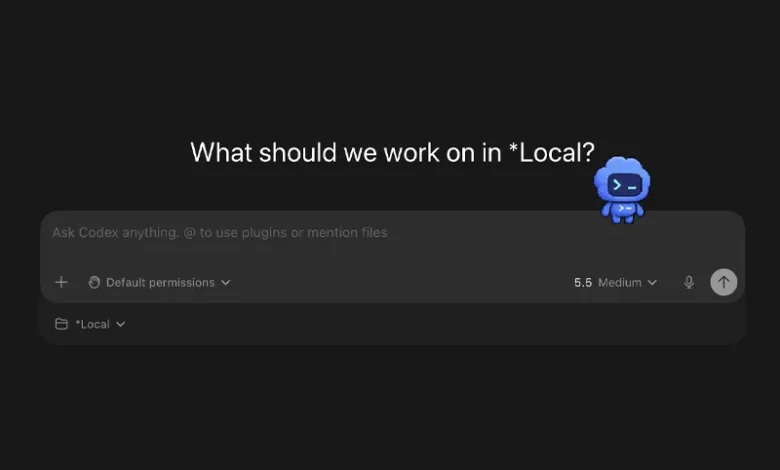
The evolution of software engineering toolkits has taken a surprisingly whimsical turn as artificial intelligence laboratories increasingly focus on developer ergonomics and user experience. OpenAI has officially introduced "Codex Pets" to its desktop development application, offering users optional, floating animated avatars that dynamically mirror the current status of background coding tasks. While the feature initially presents as a lighthearted novelty reminiscent of late-1990s desktop companions, industry analysts and software developers are discovering that these animated overlays serve a legitimate functional purpose by providing ambient visual cues that reduce context-switching fatigue.
Background Context of the Feature and the Shift Toward Ambient User Interfaces
The introduction of Codex Pets arrives at a time of intense competition within the AI-assisted software development sector. As platforms like Codex, Claude Code, and various integrated development environment (IDE) extensions vie for developer mindshare, the primary bottleneck in productivity has shifted from raw code generation capabilities to workflow friction. Historically, developers utilizing autonomous or semi-autonomous coding agents faced a persistent usability challenge: monitoring asynchronous processes required constantly toggling between windows, checking terminal logs, or monitoring subtle application badges.
Ambient computing and peripheral interface design have long sought to solve this problem by communicating system states without demanding active user focus. By translating complex operational states—such as compiling, executing tests, awaiting user authorization, or signaling task completion—into animated character states, OpenAI is leveraging human peripheral awareness. This design philosophy posits that developers can maintain a state of deep "flow" while processing subtle visual updates from the edge of their screens, minimizing the cognitive load associated with managing multiple asynchronous AI threads.
Chronology of Deployment and Integration Mechanics
The rollout of Codex Pets is integrated directly into the core architecture of the desktop application, reflecting a streamlined deployment strategy designed to minimize friction for existing users. The feature can be activated through multiple pathways depending on developer preference. Users can access the functionality via the application settings menu by navigating to Settings, selecting Appearance, and opening the Pets submenu. Alternatively, power users can invoke the feature directly within the composer interface by typing the dedicated command /pet, or by utilizing the global command menu via the standard keyboard shortcut of Cmd + K on macOS or Ctrl + K on Windows.
To address the diverse aesthetic preferences of its user base, OpenAI implemented a dual approach: providing a curated selection of default built-in companions while simultaneously offering an advanced generative pipeline for custom creations. The mechanism for custom pets relies on a specialized package known as the hatch-pet skill, hosted within OpenAI’s official developer repository. By installing this skill directly into the local Codex environment via the terminal interface using the command $skill-installer hatch-pet, developers gain the ability to generate bespoke sprite sheets and animations derived entirely from natural language prompts, reference imagery, or a combination of both.
Technical Implementation and the Hatching Pipeline
The creation of a custom Codex Pet demonstrates a practical application of generative multimodal AI within software tooling. Once the hatch-pet skill is installed and the user forces a skill reload via the command menu, developers can input descriptive parameters such as "$hatch-pet create a tiny desk goblin" or "$hatch-pet turn my dog into a Codex pet."
The underlying skill architecture automates several complex digital asset creation phases that traditionally require manual graphic design effort. These phases include conceptual layout planning, state-based animation framing, sprite sheet compilation, structural validation, and local asset packaging. Because these avatars function as small screen overlays, technical constraints require deliberate artistic economy. OpenAI’s technical documentation advises developers to prioritize clear silhouettes over intricate details, complex backgrounds, or excessive textual elements, ensuring the sprites remain legible at small resolutions and across various display scaling settings. Furthermore, a community-driven ecosystem has emerged around the feature, highlighted by independent galleries such as Codex Pets, where users exchange design concepts, aesthetic themes, and effective prompting strategies.
Analysis of Implications for Developer Ergonomics and Productivity
The release of Codex Pets invites a broader evaluation of how software interfaces mediate human-AI collaboration. In professional software engineering environments, tool fatigue and notification overload are well-documented stressors. Traditional software alerts rely on intrusive interruptions—such as modal dialog boxes, audible chimes, or flashing taskbar icons—which invariably break concentration and force a disruptive shift in cognitive focus.
In contrast, the Codex Pets implementation utilizes passive visual feedback. By mapping operational states to distinct animations, the software communicates whether an agent is actively processing, blocked by a dependency, or prepared for code review without demanding direct interaction. While skeptics may view the feature as an unnecessary gimmick, productivity analysts suggest that humanizing asynchronous tools can foster a more engaging and less monotonous development environment. By lowering the psychological barrier to monitoring long-running processes, developers may be more inclined to delegate complex, multi-step refactoring tasks to background agents.
Industry Response and the Future of Peripheral AI Assistants
Initial reactions from the software development community reflect a mixture of amusement and practical appreciation. Early adopters on developer forums have noted that while the visual companions do not inherently improve the underlying code synthesis or algorithmic accuracy of the Codex engine, they successfully bridge a psychological gap in human-agent interaction. As coding agents evolve from simple autocomplete mechanisms into autonomous background collaborators capable of managing entire repositories, the methods by which humans oversee these systems will require continuous innovation.
OpenAI’s integration of animated desktop pets illustrates a growing recognition that developer tools must account for emotional engagement alongside raw computational performance. Whether this trend inspires other major AI laboratories to incorporate ambient avatars into their enterprise development suites remains to be seen. However, as the boundaries between software utility and playful user experience continue to blur, features like Codex Pets highlight a shifting paradigm in how developers share their workspace with artificial intelligence.