Google Unlocks Billions in New Ad Inventory with AI Max, Redefining Search Monetization

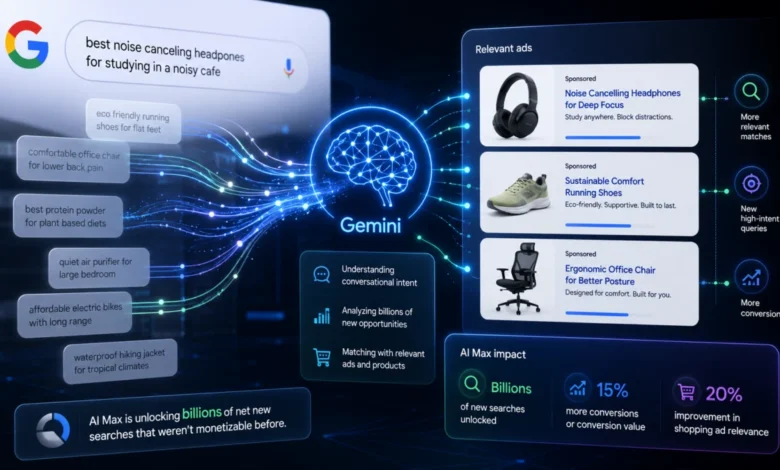
Google has announced a significant shift in its advertising strategy, unveiling AI Max as a powerful new tool designed to unlock billions of previously unmonetized searches and provide Alphabet with a more robust pathway for expanding Search revenue. This development comes as search queries increasingly become longer and more conversational, a trend that traditional keyword-based advertising struggles to effectively capture. The announcement was made during Alphabet’s Q2 2026 earnings call, signaling a strategic pivot towards leveraging advanced artificial intelligence to enhance advertising capabilities and market reach.
AI Max Transitions from Beta to Full Deployment
The core of Google’s strategy revolves around AI Max, a sophisticated system that has now officially exited its beta phase. According to Google, the platform has already garnered adoption from over 500,000 advertisers. During the earnings call, Philipp Schindler, Google’s SVP and Chief Business Officer, elaborated on the transformative impact of AI Max. He stated that the system is instrumental in matching advertisements to search queries that were previously deemed too complex or ambiguous for conventional keyword targeting methods. This capability represents a significant leap forward, allowing Google to bridge the gap between intricate user needs and relevant advertiser offerings.
The company further highlighted the tangible benefits for advertisers. Those utilizing AI Max or its predecessor, Performance Max, are reporting an average uplift of 15% in conversions or conversion value. Crucially, this improvement is being achieved while maintaining a comparable return on ad spend (ROAS), suggesting a more efficient allocation of advertising budgets. This data point underscores the effectiveness of AI Max in driving measurable business outcomes for its users.
Gemini Enhances Ad Relevance for Complex Queries
Underpinning the advancements of AI Max is Google’s powerful Gemini AI. The company revealed that Gemini has significantly improved the relevance of Shopping ads for complex queries, demonstrating an approximate 20% enhancement. Gemini’s advanced natural language processing capabilities allow it to better comprehend the nuances of longer, conversational search queries. It can more accurately interpret the underlying commercial intent of a user’s search, thereby facilitating a more precise match with relevant advertisements. This move away from an exclusive reliance on exact keyword matches is a critical development, enabling Google to transform a broader spectrum of searches into potential ad opportunities.
Strategic Implications for the Advertising Ecosystem
The implications of Google’s AI-driven expansion are far-reaching for advertisers and the broader digital marketing landscape. From Google’s perspective, the primary objective is not merely to optimize existing ad campaigns but to fundamentally expand the universe of searches that can accommodate advertising. This expansion promises new traffic opportunities for advertisers, potentially leading to increased reach and customer acquisition. However, this evolution also presents a potential trade-off: advertisers may experience diminished visibility into the granular mechanics of how their ads are matched to specific queries. As AI takes a more central role in this matching process, the reliance shifts from explicit keyword definition to a more implicit understanding of user intent, mediated by Google’s AI models.
The Emerging Landscape of AI Mode Ads
Google also provided crucial insights into its plans for monetizing AI-powered Search experiences, often referred to as "AI Mode" ads. While specific details on the ad formats and their integration within the AI-generated search summaries are still emerging, the underlying principle is clear: Google is actively developing new advertising products that are intrinsically linked to the AI-driven search journey. This suggests a future where ads are not just appended to search results but are more seamlessly integrated into the AI’s synthesized answers and recommendations.
Shifting Focus: From Keywords to Intent-Driven Advertising
The series of announcements from Google underscores a significant strategic shift in its advertising product development. The company is increasingly building ad solutions around user intent rather than solely relying on explicit keyword matches. As Gemini and other AI models become more adept at handling complex, natural language searches, the success of advertising campaigns will likely become more dependent on factors beyond keyword selection. This includes the quality and comprehensiveness of advertiser product feeds, the appeal and relevance of creative assets, and the effectiveness of landing pages. These elements will provide Google’s AI with the necessary signals to accurately match ads to evolving user needs and the context of their searches.

A New Era of Ad Inventory Creation
The overarching message from Alphabet’s Q2 2026 earnings call is that AI Max represents more than just an incremental improvement to existing campaign management tools. It is being positioned as a fundamental mechanism for Google to actively create new ad inventory within its Search ecosystem. This proactive approach to inventory generation, driven by AI’s enhanced understanding of user behavior and intent, has the potential to significantly reshape the digital advertising market. It signals Google’s commitment to evolving its monetization strategies in lockstep with advancements in artificial intelligence and the changing ways users interact with search engines.
Background Context: The Evolution of Search and Advertising
For years, the digital advertising industry, particularly within search, has been dominated by keyword-based auction systems. Advertisers bid on specific keywords, and their ads are displayed when a user’s search query precisely matches those keywords. This model, while highly effective for transactional searches, has faced challenges with the rise of more nuanced and conversational queries. Users are increasingly typing longer, more descriptive questions into search engines, seeking comprehensive answers and solutions rather than just specific product links. This shift has created a gap between user intent and the ability of traditional advertising systems to capture that intent.
Google’s investment in AI, particularly in large language models like Gemini, is a direct response to this evolving search landscape. The goal is to equip search engines with the ability to understand the context, intent, and complexity of natural language queries. This enhanced understanding is then leveraged to provide more relevant search results and, crucially for Google’s business model, to identify new opportunities for advertising.
Chronology of AI Integration in Google Search
Google’s journey towards AI-powered search advertising has been a gradual but accelerating process. While the specific term "AI Max" and its full implications are recent developments, the underlying technological advancements have been building for some time.
- Early AI Integration: Google has long utilized AI and machine learning for search ranking and ad relevance. Early efforts focused on improving keyword matching and understanding user search history.
- Development of Performance Max: Performance Max, launched in November 2021, represented a significant step towards automated campaign management, leveraging AI to optimize ad delivery across Google’s various channels. It aimed to simplify campaign creation and management for advertisers by automating bidding, targeting, and creative optimization.
- Advancements in Large Language Models: The rapid progress in large language models (LLMs), such as Google’s own LaMDA and subsequently Gemini, has been a critical catalyst. These models enable a much deeper understanding of natural language, paving the way for AI to interpret complex, conversational queries.
- Beta Testing of AI Max: The recent announcement of AI Max exiting beta suggests a period of extensive testing and refinement. During this phase, Google likely gathered crucial data on its performance, advertiser adoption, and impact on ad revenue. The "billions" of previously unmonetized searches being unlocked is a direct outcome of this developmental period.
- Q2 2026 Earnings Call Announcement: The formal unveiling of AI Max’s capabilities and its strategic importance during the Q2 2026 earnings call signifies its full integration into Google’s advertising ecosystem and its role in future revenue growth.
Supporting Data and Projected Impact
While specific financial projections for AI Max’s contribution to Alphabet’s revenue were not detailed, the company’s emphasis on unlocking "billions" of new ad opportunities suggests a substantial revenue uplift is anticipated. The reported 15% increase in conversions or conversion value for advertisers using AI Max or Performance Max provides a quantitative measure of its effectiveness. This data point, if extrapolated across the vast number of searches and advertisers on Google’s platform, points towards a significant increase in advertising efficiency and, consequently, ad spend.
Furthermore, the improvement in Shopping ad relevance for complex queries by approximately 20% due to Gemini is a critical metric. This indicates that AI is not only expanding the reach of ads but also enhancing their effectiveness by ensuring they are presented to users with a higher likelihood of commercial intent. This enhanced relevance can lead to higher click-through rates (CTR) and conversion rates, further boosting the value proposition for advertisers.
Broader Impact and Implications for the Digital Marketing Landscape
The strategic shift by Google has profound implications for various stakeholders in the digital marketing ecosystem:
- Advertisers: While AI Max offers the promise of expanded reach and improved conversion rates, it also necessitates a recalibration of advertising strategies. Advertisers will need to focus more on providing rich, detailed product information, compelling creative assets, and optimized landing pages. Understanding how to effectively signal intent to AI systems will become paramount. The reduced visibility into keyword matching may require advertisers to adopt a more holistic approach to campaign measurement and optimization, focusing on overall business outcomes rather than granular keyword performance.
- Search Engine Optimization (SEO) Professionals: The increasing complexity of search queries and the rise of AI-generated answers in search results will undoubtedly impact SEO. Professionals will need to adapt their strategies to optimize for conversational queries, semantic search, and the informational needs that AI is designed to fulfill. Understanding how content is interpreted and utilized by AI models will be crucial.
- Google’s Competitors: This move by Google intensifies the competition in the AI-driven search and advertising space. Competitors will likely accelerate their own AI development efforts to match or surpass Google’s capabilities in understanding complex queries and monetizing them effectively.
- Consumers: For consumers, the ultimate benefit should be more relevant and helpful search results, coupled with ads that are less intrusive and more aligned with their immediate needs. However, concerns about data privacy and the potential for algorithmic bias in ad targeting will remain critical considerations.
In conclusion, Google’s introduction of AI Max signifies a pivotal moment in the evolution of search advertising. By leveraging advanced AI capabilities, the company is not only adapting to the changing nature of user queries but is also proactively creating new avenues for revenue growth. This strategic pivot underscores the increasing importance of artificial intelligence in shaping the future of digital marketing, demanding a corresponding evolution in how advertisers approach their online presence and engagement strategies. The industry will be closely watching how this new era of intent-driven advertising unfolds and what further innovations Google will introduce to maintain its leadership in this dynamic landscape.