Anthropic’s latest advancement in its Claude Cowork platform allows users to train the AI by recording their screen while performing a task. This innovative feature, dubbed "Record a Skill," enables Claude to learn and replicate those actions, effectively creating a digital doppelganger capable of executing the recorded workflow independently. This development marks a significant step in the evolution of AI-driven task automation and has sparked widespread discussion regarding its potential impact on the workforce.
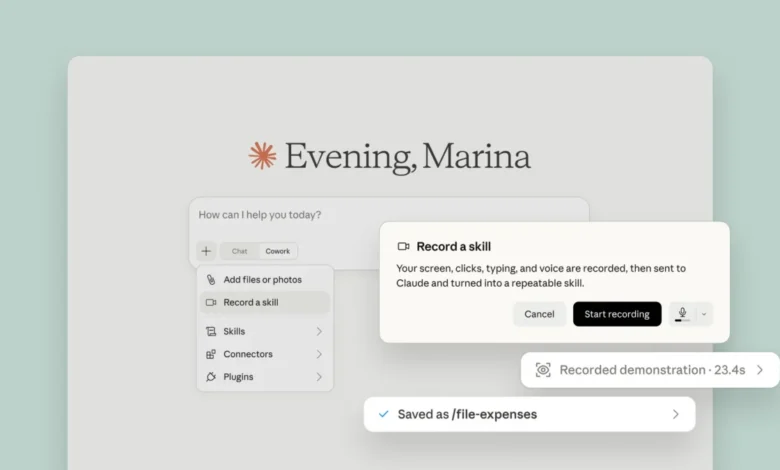
The "Record a Skill" functionality is currently available to users subscribed to Anthropic’s Pro, Max, and Team plans. The process is straightforward: users initiate a screen recording, narrate their actions as they complete a specific task, and then submit the recording. Claude processes this visual and auditory input, extracting the steps and logic to build a new, executable "skill." This skill can then be invoked by Claude to perform the same task autonomously in the future.
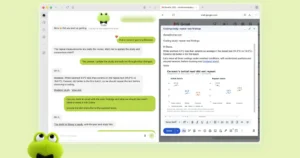
Anthropic announced this new capability via a post on X (formerly Twitter), stating: "New in Claude Cowork: teach Claude a skill. Record your screen while you do a task, talk through it as you go, and Claude turns it into a skill it can run again. Find it under Record a skill in the + menu of the Claude desktop app. Available on Pro, Max, and Team plans." This announcement, accompanied by a screenshot illustrating the "Record a Skill" interface, quickly garnered attention from tech enthusiasts and industry professionals alike.
This development by Anthropic echoes a similar feature introduced by OpenAI for its Codex platform. OpenAI’s "Record and Replay" function, available since June 18, offers Mac users (excluding those in the European Economic Area, Switzerland, and the United Kingdom) the ability to train AI models through recorded task demonstrations. The timeline for Windows users remains unspecified. The parallel introduction of such capabilities by leading AI research companies underscores a growing trend towards intuitive AI training methods that leverage human demonstrations.
Implications for the Workforce: A Double-Edged Sword?
The introduction of "Record a Skill" has inevitably ignited conversations about job displacement. Many have voiced concerns that this technology could accelerate the automation of tasks previously performed by humans, potentially leading to job losses. Online reactions to Anthropic’s announcement frequently highlighted this apprehension. For instance, user @alfredversa tweeted, "This has to be the easiest way to be replaced and lose your job man." This sentiment reflects a broader anxiety about the increasing capacity of AI to perform complex, multi-step tasks with minimal human oversight.
The ability of AI to learn directly from human demonstrations presents a compelling case for enhanced productivity and efficiency. For businesses, this could translate into significant cost savings and the ability to scale operations without proportional increases in human capital. Tasks that are repetitive, time-consuming, or prone to human error could be offloaded to AI, freeing up human employees to focus on more strategic, creative, or complex problem-solving endeavors.
However, the counterargument posits that human expertise, nuanced judgment, and adaptability are qualities that AI, even with advanced learning capabilities, may struggle to fully replicate. While an AI can learn to execute a recorded sequence of actions, it may lack the contextual understanding, critical thinking, and emotional intelligence that human professionals bring to their roles. The value of a human worker, in this view, lies not just in the execution of tasks but in the experience, intuition, and strategic decision-making that inform those actions.
Anthropic’s "Record a Skill" in Context
Anthropic, known for its focus on AI safety and beneficial AI development, positions "Record a Skill" as a tool to augment human capabilities rather than replace them entirely. The company’s stated mission often emphasizes creating AI systems that are helpful, harmless, and honest. In this light, "Record a Skill" can be interpreted as a method to streamline workflows, reduce the burden of mundane tasks, and empower individuals to leverage AI as a powerful assistant.

The development of such features is part of a broader trend in the AI landscape. Companies are increasingly exploring ways to make AI more accessible and user-friendly, moving beyond complex coding and data science expertise. The ability to "teach" an AI through intuitive, human-like interactions, such as screen recordings, democratizes access to powerful automation tools. This shift signifies a move towards AI that can integrate more seamlessly into existing human workflows and adapt to specific organizational needs.
Technical Underpinnings and Future Potential
While the exact technical architecture behind "Record a Skill" is proprietary, it likely involves a combination of computer vision, natural language processing, and machine learning techniques. The AI would need to:
- Analyze Visual Input: Process the screen recording to identify user interactions with graphical user interfaces (GUIs), such as mouse clicks, keyboard inputs, and scrolling.
- Interpret Spoken Instructions: Transcribe and understand the user’s narration to grasp the intent and context of each action.
- Build a Sequential Model: Construct a logical sequence of steps based on the visual and auditory data.
- Generalize and Adapt: Develop the ability to execute the learned skill in potentially slightly varied contexts or environments.
The effectiveness of this feature will depend on the AI’s ability to handle variations in screen layouts, software updates, and unexpected user actions. The more robust the AI’s learning and generalization capabilities, the more reliable and widely applicable the "Record a Skill" feature will become.
The potential applications are vast, ranging from automating data entry and report generation to streamlining customer support processes and assisting with software development tasks. For example, a marketing professional could record themselves generating a social media report, and Claude could then automate this process daily. A software tester could record a bug reproduction sequence, allowing an AI to repeatedly test the fix.
Challenges and Limitations
Despite the exciting potential, several challenges and limitations are inherent to this technology:
- Accuracy and Reliability: The AI’s ability to perfectly replicate human actions is not guaranteed. Errors in recording, unclear narration, or complex software interactions could lead to imperfect skill execution.
- Contextual Understanding: AI may struggle with tasks that require nuanced decision-making or an understanding of implicit rules and social cues.
- Security and Privacy: Recording sensitive workflows raises concerns about data security and privacy. Anthropic would need to ensure robust safeguards are in place to protect user data.
- Over-reliance and Skill Atrophy: An over-reliance on AI to perform tasks could lead to the atrophy of human skills in those areas. Continuous learning and upskilling will be crucial for the workforce to adapt.
- Accessibility: As noted with OpenAI’s feature, geographical restrictions and platform limitations can hinder widespread adoption.
Broader Impact on the AI Ecosystem
The introduction of "Record a Skill" by Anthropic, alongside similar innovations from OpenAI, signifies a maturation of the AI field. It points towards a future where AI tools are not just powerful but also intuitive and adaptable, capable of learning from human experience in a more direct and accessible manner. This trend is likely to fuel further innovation in areas such as:
- Personalized AI Assistants: AI that can be tailored to individual work styles and specific job functions.
- Low-Code/No-Code AI Development: Tools that enable non-programmers to create and deploy AI solutions.
- Human-AI Collaboration: Enhanced frameworks for seamless interaction and task sharing between humans and AI.
As AI continues to evolve, the discourse surrounding its impact on employment will remain critical. While the potential for job displacement is a valid concern, it is equally important to recognize the opportunities for enhanced productivity, new job creation in AI management and development, and the potential for AI to augment human capabilities, leading to more fulfilling and impactful work. Anthropic’s "Record a Skill" feature is a compelling example of this ongoing transformation, inviting both excitement and careful consideration of its role in the future of work. The coming months and years will likely reveal the true extent of its impact and how effectively individuals and organizations can adapt to this new era of AI-powered task automation.