Family Dollar Agrees to Strict Overhaul of Pricing Practices Following Multi-State and Federal Deceptive Pricing Investigations

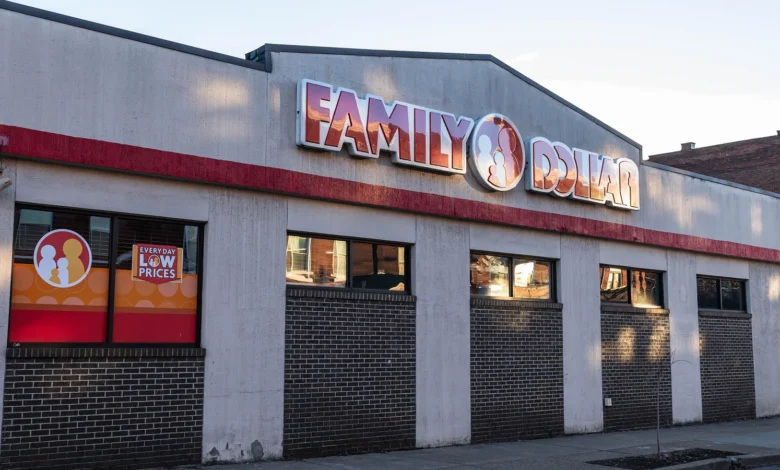
Family Dollar has officially agreed to a comprehensive legal settlement with federal regulators and a coalition of 17 states, resolving allegations that the discount retail chain systematically overcharged customers at checkout compared to the prices advertised on store shelves. The settlement, announced in mid-November 2026, marks a major enforcement action within the discount retail sector, emphasizing heightened scrutiny from consumer protection advocates over pricing accuracy, digital scanning discrepancies, and the overall reliability of shelf tags versus point-of-sale systems.
Under the terms of the newly finalized agreement, Family Dollar is subjected to stringent operational mandates. The discount retailer must adhere to pricing practices that will be independently assessed and annually certified by an outside auditor. Furthermore, the company is required to institute robust internal monitoring systems, train store-level and corporate employees annually, and guarantee that shoppers are honored the lowest advertised price whenever a discrepancy arises between the shelf display and the cash register scanner.
The Scope of the Problem and Regulatory Crackdown
The deceptive pricing practices utilized across numerous Family Dollar locations cost everyday shoppers millions of dollars, disproportionately impacting financially constrained consumers who rely on discount stores for essential household goods. According to extensive court documents and investigations spearheaded by the Federal Trade Commission (FTC) alongside attorneys general from a broad coalition of states—including Alabama, Arkansas, Colorado, Florida, Illinois, Iowa, Kansas, Louisiana, Mississippi, Nebraska, Ohio, Oklahoma, Pennsylvania, South Carolina, Tennessee, Utah, and Wisconsin—the discrepancies were not isolated incidents but rather a widespread systemic failure.
State and federal consumer protection laws explicitly prohibit retailers from inducing purchases through lower shelf prices only to charge a higher price at the point of sale. For consumers operating on tight weekly budgets, even minor overcharges of fifty cents to a few dollars per item accumulate rapidly, straining household finances during periods of persistent economic pressure and high inflation. The FTC’s Bureau of Consumer Protection emphasized that maintaining baseline price transparency is fundamental to a fair marketplace, allowing consumers to make informed purchasing decisions without falling victim to hidden register markups.
Christopher Mufarrige, director of the FTC’s Bureau of Consumer Protection, highlighted the gravity of the regulatory action in a public statement. "The FTC is committed to ensuring price transparency and fairness so consumers can make informed choices," Mufarrige stated. "Today’s order will ensure Family Dollar stops deceiving consumers about its prices and returns money to consumers harmed by these practices."
Comprehensive Compliance and Corrective Mandates
The consent order imposes a rigorous framework that fundamentally alters how Family Dollar manages pricing data across its thousands of storefronts nationwide. To ensure compliance and restore consumer trust, the retailer must implement a multi-layered corrective protocol.
Among the core requirements of the settlement, Family Dollar must:
- Prominently display its official pricing policy directly next to all store registers so consumers are acutely aware of their rights and store procedures regarding price discrepancies.
- Institute ironclad technical procedures ensuring that point-of-sale (POS) database systems do not update to higher prices until those prices are fully, accurately, and properly advertised on the sales floor.
- Establish continuous, proactive monitoring mechanisms to regularly check shelf tags against central database pricing for accuracy.
- Conduct mandatory annual training for store-level employees, store managers, and corporate supply chain personnel regarding the execution of accurate pricing protocols.
- Immediately honor the lowest advertised price when a customer brings a discrepancy to the attention of store staff, and correct the inaccurate price instantly within the system.
- Submit to independent, third-party assessments of its pricing practices, culminating in annual certifications submitted to regulatory authorities.
A corporate spokesperson for Family Dollar addressed the settlement by affirming the company’s cooperation with regulators and its renewed commitment to institutional integrity. "The discounter said it’s cooperating and focused on strengthening pricing accuracy across our stores and maintaining our customers’ trust," the spokesperson noted in an official statement.
"Family Dollar prides itself on providing convenient, close-to-home stores where customers can shop for everyday essentials at affordable prices," the spokesperson added. "We take our responsibility to deliver a positive shopping experience seriously."

Broader Industry Context: A Wave of Retail Scrutiny
The regulatory crackdown on Family Dollar does not occur in a vacuum. It follows closely on the heels of a similar high-profile legal action brought forward just a month prior by the FTC and a coalition of 20 states against Dollar General, another giant in the domestic discount retail sector. That lawsuit similarly alleged that Dollar General regularly charged consumers higher prices at checkout than the figures displayed on promotional signs and shelf tags.
While Dollar General has previously acknowledged "occasional price discrepancies" and asserted its objective to achieve absolute pricing accuracy, the simultaneous targeting of the nation’s largest dollar store chains signals a coordinated, aggressive posture by federal and state regulators. Consumer advocacy groups have long argued that understaffed discount retail environments are particularly vulnerable to pricing errors, as overburdened employees struggle to manually update hundreds or thousands of weekly price changes across store shelves while managing inventory, stocking, and register operations.
Simultaneously, the broader retail landscape is experiencing heightened tension regarding pricing strategies. While traditional discount stores grapple with basic register-to-shelf accuracy failures, other major retail corporations are actively exploring advanced technological methods, such as electronic shelf labels and dynamic pricing models. These digital pricing systems allow retailers to fluctuate prices in real-time based on demand, inventory levels, or time of day.
Although dynamic pricing is utilized heavily in travel, hospitality, and e-commerce, its tentative creep into brick-and-mortar retail has unnerved financially stressed consumers who are already sensitive to the rising cost of living. Government consumer protection advocates at both state and federal levels are closely monitoring these technological shifts, ensuring that modernization does not become a vehicle for deceptive or predatory pricing practices.
Economic Implications and Future Outlook for Discount Retailers
The resolution of the Family Dollar investigation carries profound implications for the operational models of discount retailers across the United States. Historically, the business model of dollar stores has relied on lean operating structures, minimal staff overhead, and rapid inventory turnover to maintain razor-thin profit margins while offering deeply discounted goods. However, the legal and financial costs of systemic pricing inaccuracies demonstrate that operational cost-cutting cannot come at the expense of legal compliance and consumer trust.

With independent assessments and annual third-party certifications now mandated under the court order, Family Dollar faces permanent operational oversight. If the company fails to maintain the required standards of pricing accuracy, it could face severe legal penalties, contempt of court charges, and escalating financial liabilities. Furthermore, the mandatory requirement to immediately refund harmed consumers and prominently display customer rights at registers will likely increase consumer awareness, empowering shoppers to actively audit their own receipts and hold cashiers accountable.
For the wider retail industry, the message from regulators is unmistakable. Whether errors stem from outdated manual pricing workflows, sluggish software synchronization between central servers and local cash registers, or deliberate corporate negligence, retail organizations will be held strictly accountable for discrepancies between advertised and charged prices. As federal regulators and state attorneys general continue to prioritize consumer protection, retailers must invest heavily in automated pricing verification technologies, staff training, and rigorous internal audits to ensure complete transparency. Ultimately, restoring and maintaining consumer confidence will require discount chains to prove that their low-price value proposition is matched by absolute honesty at the checkout counter.