UK Sanctions Target Cryptomus and Heleket in Crackdown on Russian Financial Evasion Networks

The United Kingdom has officially imposed sweeping economic sanctions against the cryptocurrency platform Cryptomus, a move that marks a significant escalation in Western efforts to dismantle the financial infrastructure facilitating Russia’s wartime economy. The sanctions, issued on October 8, 2026, explicitly target Cryptomus—an entity known by various aliases including Certa Payments and Xeltox Enterprises—as well as associated platforms such as VexPay, TokenSpot, and the Tsunami Payments service. By freezing assets within British financial institutions and prohibiting domestic companies from engaging in any business with these platforms, the UK government has effectively declared them pariahs within the global regulated financial system.
The Anatomy of an Evasive Financial Network
Cryptomus has long functioned as a "chameleonic" entity, frequently rebranding itself to evade regulatory scrutiny. The platform emerged in 2022 as a primary payment processor for illicit actors, including ransomware gangs, narcotics traffickers, and darknet marketplace operators. Its operational model was designed to bypass traditional financial oversight, providing a crucial bridge for Russian entities to convert cryptocurrency into fiat currency while circumventing international sanctions.
The platform’s history is a study in tactical avoidance. Following a record-breaking CAD $176 million fine levied by Canadian regulators in October 2025 for systemic anti-money laundering (AML) violations, the organization did not cease operations. Instead, it pivoted. It launched "Heleket," a parallel service designed to operate without "know your customer" (KYC) requirements, allowing the firm to maintain its flow of illicit funds despite the massive legal blow from Canadian authorities. This strategy of serial incorporation and rebranding has been a hallmark of the platform’s survival, allowing it to navigate a regulatory landscape that often struggles to keep pace with decentralized digital assets.
A Chronology of Escalation
The trajectory of Cryptomus reflects the broader struggle between global regulators and decentralized, bad-faith financial actors.

- 2022: Cryptomus is launched, quickly establishing itself as a preferred payment processor for Russian cybercrime syndicates and crypto-exchanges.
- December 2024: Investigative reports reveal that Cryptomus is a primary hub for converting criminal crypto-proceeds into cash within Russian banks, highlighting its role as a systemic threat.
- October 2025: Canada imposes a CAD $176 million fine on Cryptomus for egregious AML violations. The company appeals the fine and continues operations.
- Late 2025: The platform launches "Heleket," a no-KYC payment service, to circumvent the impact of the Canadian penalties.
- April 2026: Blockchain intelligence firm TRM Labs reports that Cryptomus has processed over $7 billion in transactions since inception, including those linked to human trafficking, terrorist financing, and child sexual abuse material (CSAM).
- October 8, 2026: The UK government issues formal sanctions, freezing assets and barring business with Cryptomus, Heleket, VexPay, TokenSpot, and Tsunami Payments.
Data-Driven Analysis of Illicit Flows
The scale of the operations conducted by Cryptomus and its derivatives is staggering. According to blockchain analysis firm Chainalysis, the platform’s illicit transaction volume soared throughout 2025. In late 2025, the number of illicit counterparties—entities identified as sources or recipients of criminal funds—surged to more than 900 in a single month. Chainalysis noted that these services collectively received more illicit funds across tracked categories than traditional, well-known mixers, cementing their status as the primary "payment hub" for digital criminal activity.
TRM Labs, which conducted a deep-dive analysis in April 2026, provided further insight into the platform’s reach. Their research revealed that Cryptomus served as a pipeline for some of the most heinous criminal activities imaginable, including the financing of terrorism and the sale of CSAM. While the platform did implement some KYC measures after pressure mounted, the subsequent launch of the Heleket platform effectively nullified these efforts, creating a "safe haven" for transactions that did not require verification of identity.
The "Five Eyes" Regulatory Challenge
One of the most notable aspects of the UK sanctions is their geopolitical significance. Richard Sanders, a blockchain investigator who spent months mapping the infrastructure of Cryptomus, emphasizes that this is the first documented instance of a "Five Eyes" nation (Australia, Canada, New Zealand, the UK, and the US) sanctioning a cryptocurrency entity incorporated in another Five Eyes jurisdiction.
Sanders notes that the previous Canadian fine, while historic in its amount, was ultimately unenforceable. "A fine doesn’t stop a cryptocurrency payment processor from processing payments," Sanders wrote. "Sanctions kill the operation. The distinction matters." By freezing assets and legally compelling British businesses to sever ties, the UK has moved beyond mere punitive fines to active, operational disruption. This coordinated approach is essential in an era where digital assets can be moved across borders in seconds, rendering traditional, localized legal actions largely ineffective.
The Illusion of Legitimacy: A Web of Deception
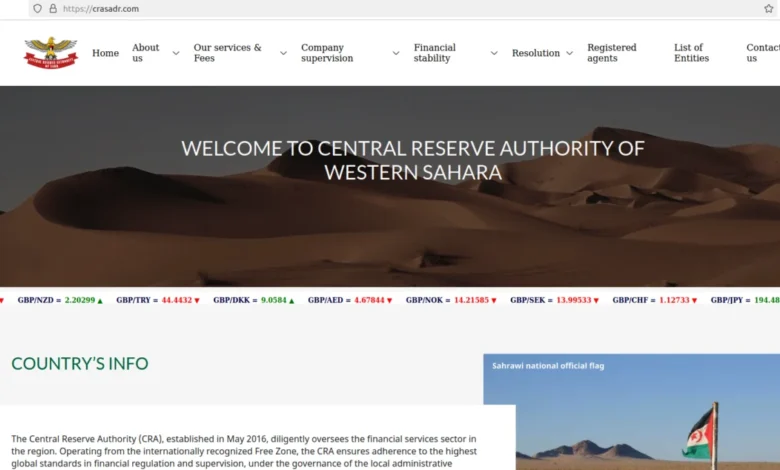
The operational legitimacy of Cryptomus has always been predicated on a house of cards. Investigations have uncovered that the parent company, Certa Payments, was linked to a 25-year-old Ukrainian national who served as the primary shareholder for a network of shell companies. This network included the "WS Management and Advisory Corporation," which presented itself as a sovereign regulatory body for the "Western Sahara."

The website crasadr.com served as the digital facade for this self-appointed regulator, granting fake licenses to crypto-exchanges and gaming firms. The site claimed to oversee "financial stability" in a region that is not globally recognized as a sovereign nation, providing a veneer of official compliance to entities that were, in reality, operating in a regulatory vacuum. This strategy allowed Cryptomus to present itself to unsuspecting partners as a regulated entity, even as it was facilitating massive money laundering operations. The overlap in server infrastructure between Certa Payments and the fake Central Reserve Authority of the Western Sahara provided definitive proof of the interconnected nature of this fraud.
Broader Implications for Global Financial Security
The sanctions against Cryptomus and its associated platforms represent a shift in how Western nations are responding to the weaponization of cryptocurrency. As the Russian government continues to utilize decentralized financial networks to bypass traditional banking sanctions, these platforms have become front-line targets for national security agencies.
The implication for the broader crypto industry is clear: the era of "no-questions-asked" payment processing is reaching a forced conclusion. As regulators move from fines to asset freezes and blacklisting, the cost of doing business as an illicit payment processor is becoming prohibitively high. Furthermore, the cooperation between intelligence firms like Chainalysis and TRM Labs with governmental bodies demonstrates the growing effectiveness of blockchain forensics.
The downfall of Cryptomus also serves as a warning to other platforms that utilize similar shell-company structures and fake regulatory certifications. The ability of analysts to map these networks—connecting domain hosting, corporate filings, and transaction flows—has made it increasingly difficult for such platforms to hide behind layers of digital anonymity.
As the UK and its allies continue to tighten the noose, the future of platforms like Heleket remains precarious. With assets frozen and the threat of further legal action looming, these platforms are finding that the "borderless" nature of cryptocurrency is no match for a coordinated, international regulatory response. The closure of these conduits does not end the threat of illicit crypto-financing, but it significantly raises the difficulty level for the criminal networks that depend on them to sustain their operations. For the crypto industry, the message is unambiguous: compliance is no longer optional, and the days of unchecked, illicit financial infrastructure are rapidly coming to an end.