FBI Issues Urgent Warning Over AI-Powered ARTEX Framework Driving Automated Global Cyberattacks


The Federal Bureau of Investigation (FBI) has issued a joint security advisory alerting organizations across the globe to the rapid weaponization of an autonomous, artificial intelligence-driven penetration testing framework known as ARTEX. According to the Bureau’s official warning, state-sponsored hackers and opportunistic cybercriminal syndicates are leveraging the open-source software to orchestrate highly scalable, lightning-fast digital assaults against critical infrastructure, financial institutions, government agencies, and major corporate networks. The tool’s ability to seamlessly chain complex attack vectors has fundamentally compressed the timeline of modern breaches, transforming multi-day intrusions into hyper-efficient campaigns that can escalate from initial reconnaissance to privileged administrator access in a matter of hours.
Anatomy of an AI-Driven Cyber Weapon
Developed primarily in the Go programming language, ARTEX operates as an autonomous agentic framework designed to simulate advanced penetration testing activities. However, rather than functioning as a defensive evaluation tool, malicious threat actors have repurposed its core architecture to automate the entire lifecycle of a cyberattack. The framework performs target reconnaissance, vulnerability discovery, exploit execution, privilege escalation, and data exfiltration with minimal human intervention.
Crucially, ARTEX does not rely on a standalone proprietary artificial intelligence model. Instead, it features modular integration capabilities that interface directly with some of the world’s most powerful commercial and open-source large language models (LLMs). Threat actors supply high-level operational objectives and specific tactical tasks to the framework, which automatically translates these human instructions into precise, machine-executable commands carried out by specialized AI agents. This backend integration includes compatibility with prominent AI systems such as Anthropic’s Claude, OpenAI’s GPT models, DeepSeek, GLM, Grok, and Kimi.
Security researchers note that this architecture allows individuals possessing minimal technical proficiency to execute sophisticated, multi-pronged operations against hundreds of targets simultaneously. The framework excels at discovering overlooked security gaps within corporate perimeters, specifically targeting third-party vendor integrations, partner portals, legacy administrative services, and forgotten employee applications. While the sheer volume of automated requests generated by ARTEX agents can sometimes trigger traditional security alerts, the unprecedented speed of execution often leaves security operations centers (SOCs) with virtually no time to mount an effective defense before core networks are compromised.
A Chronology of the ARTEX Threat Landscape
The emergence of ARTEX as a dominant vector in modern cyber warfare represents a significant escalation in the commercialization and weaponization of generative artificial intelligence. The timeline of its deployment highlights how rapidly open-source tools can be co-opted by sophisticated threat groups:

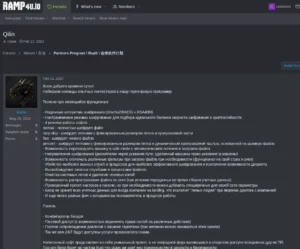
- July 2026: A software developer operating under the GitHub alias "Autumn-27" publicly releases the initial iteration of the ARTEX penetration testing framework.
- August 2026: Multiple advanced persistent threat (APT) groups and financially motivated cybercrime syndicates begin weaponizing the open-source tool for live-fire reconnaissance and exploitation operations across international financial and defense sectors.
- October 8, 2026: Following widespread reports of malicious abuse, the original developer removes the ARTEX code repository from GitHub. Despite this removal, the software persists via decentralized community forks, localized archives, and a commercialized spin-off variant known as ARTEX PRO.
- Mid-October 2026: Major cyberattacks linked to ARTEX surface publicly, including a high-profile supply-chain intrusion targeting ConnectWise cloud backup services and Microsoft 365 customer environments, alongside extensive campaigns against South Korean financial institutions.
- Early November 2026: Threat intelligence researchers discover more than 1,600 publicly exposed ARTEX control consoles connected to the internet, though actual deployment figures are widely suspected to be significantly higher.
- November 13, 2026: The FBI releases a comprehensive 13-page Flash Advisory detailing indicators of compromise (IOCs), threat actor tactics, and mitigation strategies. Simultaneously, independent security collective MalwareMustDie publishes an open-source detection signature pack to assist defenders in identifying ARTEX network signatures.
Documented Campaign Case Studies and Global Impact
The FBI advisory underscores several devastating campaigns that have successfully utilized ARTEX to penetrate enterprise environments, demonstrating the framework’s cross-sector versatility and destructive potential.
The ConnectWise and Microsoft 365 Supply-Chain Compromise
In October, a state-sponsored Chinese cyberespionage group tracked by Microsoft as Storm-0940 launched a sophisticated supply-chain attack targeting ConnectWise cloud backup infrastructure—formerly known as SkyKick Cloud Backup. By compromising application identities authorized within the ConnectWise ecosystem, the attackers leveraged ARTEX to automate password spraying and cloud permission abuse.
Once inside, the AI-driven agents attempted unauthorized authentication against more than 2,250 downstream Microsoft 365 tenant environments. Cybersecurity firm Huntress confirmed that at least 162 unique customer tenants were successfully breached, with ARTEX automating the process of modifying credentials and establishing persistent remote access before defenders could isolate the compromised application tokens.
South Korean Financial Sector Incursions
Concurrently, a separate Chinese-speaking threat actor utilized ARTEX paired with Claude Code agents to target prominent South Korean banking institutions, including Shinhan Bank, KB Kookmin Bank, and Hana Bank. CrowdStrike researchers subsequently uncovered abandoned infrastructure containing raw ARTEX configuration files and extensive session histories detailing the intrusions. The attacks ultimately exposed the personal data of approximately 67,000 banking customers.
In a related domestic enforcement action, South Korean law enforcement authorities arrested seven suspects accused of utilizing ARTEX-enabled toolsets to target over 90 organizational networks, successfully exfiltrating 8.2 million sensitive records from educational institutions, hospitals, and commercial enterprises.
Vapor Panda Global Espionage Campaign
More recently, threat intelligence analysts at CrowdStrike tracked a prolific Chinese cyberespionage collective designated as Vapor Panda. This group deployed ARTEX in a sweeping, automated campaign targeting more than 200 distinct organizations spanning 14 separate countries. The operation successfully compromised at least nine high-value entities, utilizing autonomous AI agents to conduct adaptive reconnaissance, discover unpatched vulnerabilities, drop web shells, harvest user credentials, and dynamically alter attack paths when initial exploitation efforts encountered security controls.

Defensive Countermeasures and Industry Response
In response to the proliferation of autonomous threat frameworks, the cybersecurity community and law enforcement agencies have mobilized to provide actionable defensive guidance. Independent researcher MalwareMustDie released a comprehensive open-source detection signature pack designed for integration into Security Information and Event Management (SIEM) and Endpoint Detection and Response (EDR) platforms. The package includes precise behavioral rules to detect anomalous network traffic, identity abuse, suspicious cloud administration activities, and automated machine-generated request patterns.
Concurrently, the FBI has outlined a series of mandatory defensive hardening steps for organizations seeking to mitigate the risks posed by agentic AI cyberattacks:
- External Surface Hardening: Organizations must aggressively audit and secure all internet-facing applications, legacy services, and partner portals, ensuring that multi-factor authentication (MFA) is enforced across every administrative tier.
- Cloud Permission Reviews: Regular audits of third-party application integrations and OAuth permissions are critical to preventing supply-chain token abuse similar to the ConnectWise exploitation vector.
- API Rate Limiting: Implementing stringent rate-limiting controls on sensitive application programming interfaces can effectively slow down automated reconnaissance and brute-force password-spraying attempts executed by AI frameworks.
- Behavioral Monitoring: Security teams should configure alerts to detect unusual spikes in automated transactional requests, anomalous privilege modifications, and large-scale data transfers characteristic of autonomous exfiltration scripts.
Broader Implications for Enterprise Security
The weaponization of frameworks like ARTEX signals a profound paradigm shift in the economics of cyber conflict. Historically, launching sophisticated, multi-target cyberattacks required substantial human capital, specialized expertise, and significant operational time. By automating the most tedious phases of the cyber kill chain—such as enumeration, vulnerability mapping, and privilege escalation—agentic AI tools lower the barrier to entry for malicious actors while dramatically multiplying the operational capacity of elite threat groups.
As artificial intelligence continues to mature, security analysts warn that human-driven incident response models may prove too slow to counter fully automated, adaptive threat architectures. Consequently, the future of enterprise defense will likely necessitate the widespread adoption of AI-driven defensive orchestration, capable of mirroring the speed and autonomy of modern offensive cyber weapons. Organizations that fail to modernize their security posture to account for agentic AI threats face an increasingly asymmetrical operational environment where attackers operate at machine speed while defenders struggle to catch up.