The Strategic Imperative of Content Moderation: Balancing AI Efficiency with Human Oversight in the Modern Digital Landscape

In an era where social media serves as the primary storefront and customer service desk for global enterprises, content moderation has evolved from a simple "delete" function into a sophisticated, high-stakes operational discipline. As user-generated content (UGC) continues to proliferate at an exponential rate, brands face a complex challenge: maintaining a safe, welcoming, and compliant digital environment while simultaneously fostering genuine, real-time engagement with their audience.

The modern content moderation landscape is no longer defined merely by the removal of spam or offensive material. It is a critical component of brand reputation management, customer loyalty, and legal compliance. Whether it involves monitoring public comments, addressing direct messages, or tracking brand sentiment across third-party forums, the ability to curate online interactions determines a brand’s long-term viability in the digital public square.
The Evolution of Moderation Strategies
Historically, content moderation was a manual, labor-intensive process, often relegated to junior staff members or outsourced agencies who combed through comment queues chronologically. However, as the volume of social media interactions soared, this approach became untenable. The contemporary strategy relies on a symbiotic relationship between artificial intelligence (AI) and human expertise.

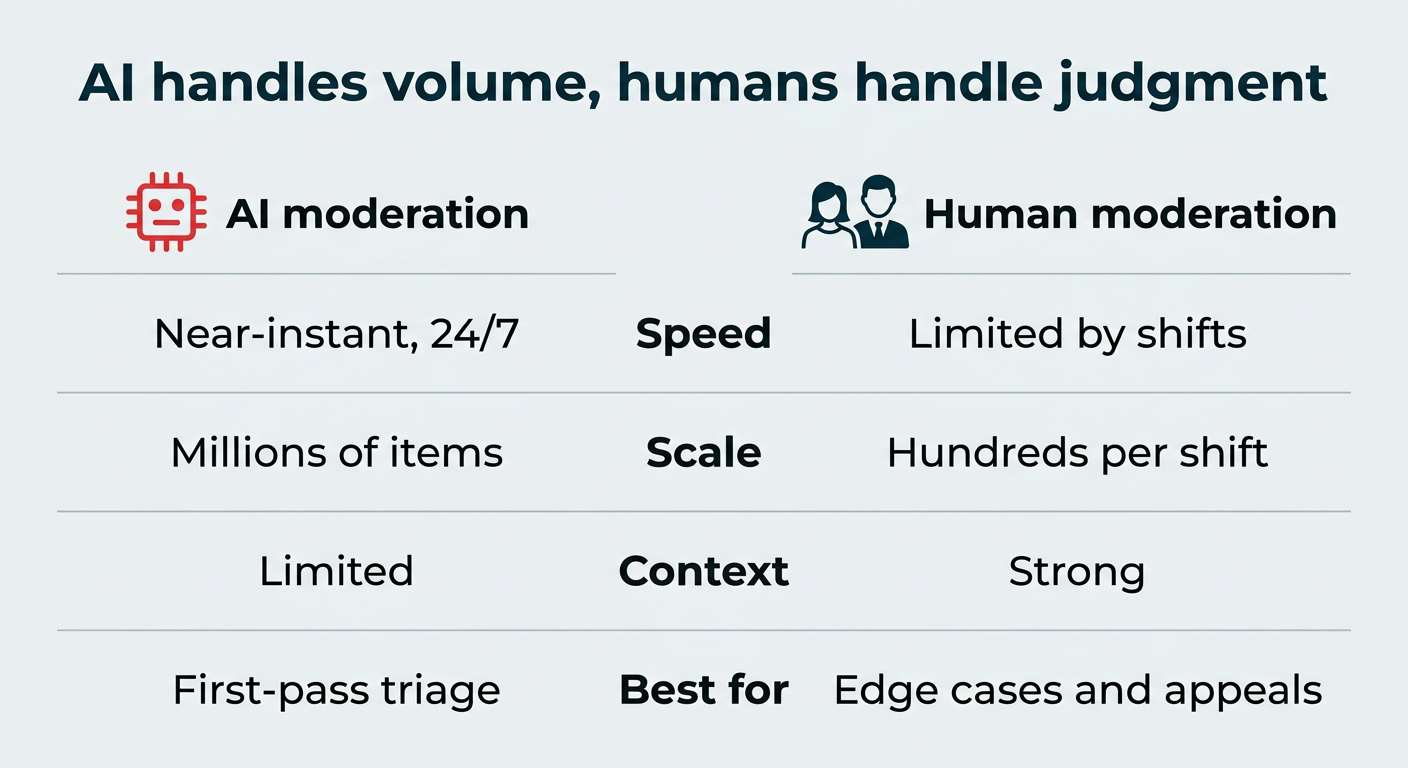
Today, AI serves as the first line of defense. By utilizing sophisticated Natural Language Processing (NLP) and computer vision, automated systems can scan millions of posts in seconds. According to recent industry transparency reports, such as those published under the European Union’s Digital Services Act (DSA), platforms and enterprise tools now handle over 90% of enforcement actions—such as the removal of spam, bot-generated content, and explicit material—without human intervention.
However, automation has its limits. AI often struggles with the intricacies of human communication, including sarcasm, regional slang, coded language, and shifting cultural norms. This is where human moderators remain indispensable. The industry consensus is that AI should manage the volume of clear-cut violations, while human teams focus on the "grey areas" where nuance, empathy, and judgment are required to preserve the brand’s voice and consumer trust.
Why Moderation is a Business Critical Function
The importance of effective content moderation can be categorized into three primary pillars: customer service, brand protection, and crisis mitigation.
-
Customer Service Integration: Social media has become the preferred channel for consumer grievances. A robust moderation workflow ensures that legitimate customer concerns are not buried under spam. When a brand ignores a public complaint, it often results in the customer escalating the issue, potentially creating a PR crisis. By triaging incoming messages, moderators ensure that support teams can respond to genuine issues promptly, turning potentially negative interactions into opportunities for customer retention.
-
Reputational Resilience: A feed riddled with toxicity, hate speech, or irrelevant spam signals to potential customers that a brand is either negligent or unconcerned with its community. Furthermore, for brands relying on influencer marketing or UGC, maintaining a safe environment is essential. Content creators are significantly less likely to partner with a brand if their contributions become magnets for harassment.
-
Crisis Management: Moderation teams are often the "early warning system" for PR disasters. A sudden, coordinated influx of negative comments or the spread of misinformation can be detected by monitoring tools long before it hits mainstream news. By identifying patterns—such as a surge in specific complaints about a product defect—moderators enable leadership, legal, and PR departments to craft a strategic response before the issue spirals.
The Five Pillars of Moderation Methodology
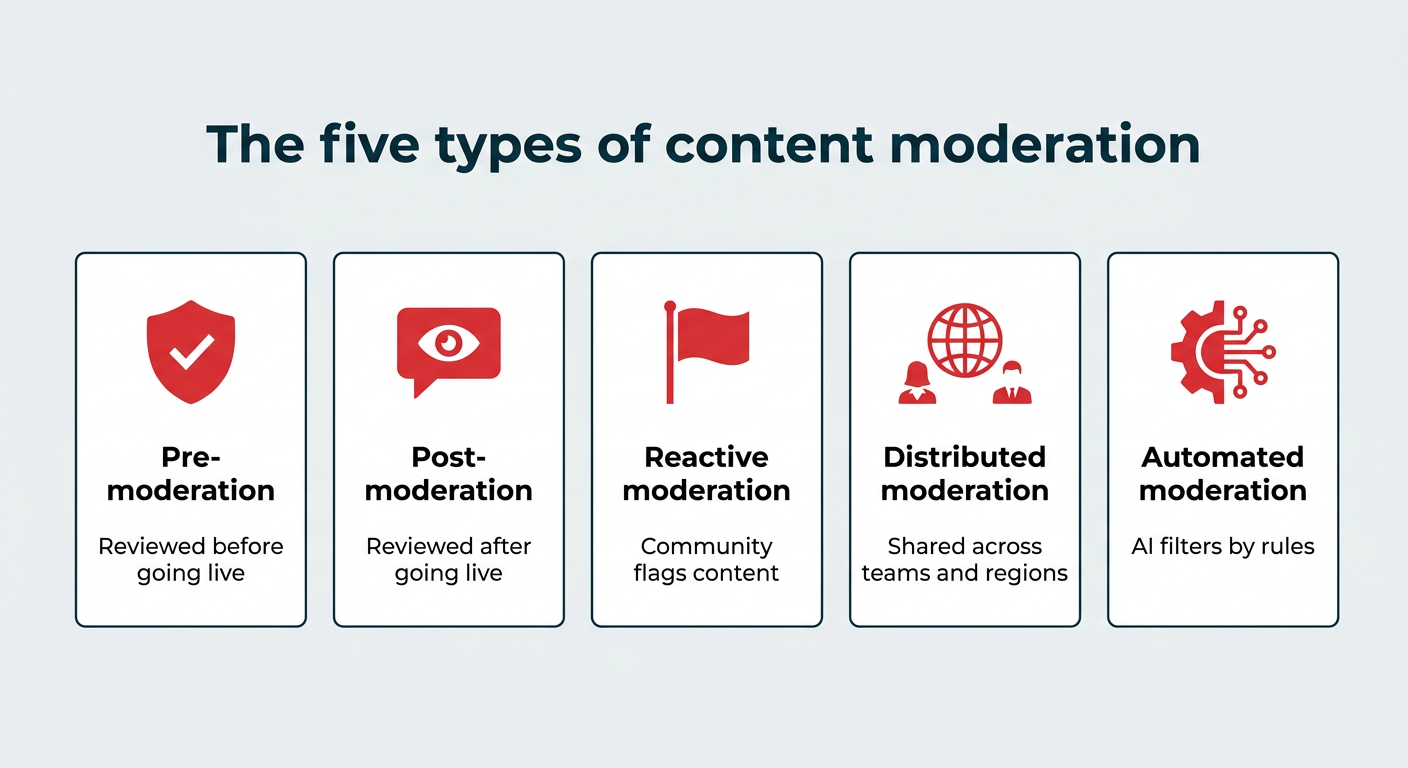
To manage these challenges, organizations typically implement one or a combination of five distinct moderation models, each tailored to specific operational needs:
- Pre-moderation: This involves reviewing content before it is published. While it provides the highest level of safety and compliance—often required in regulated industries like healthcare or finance—it inherently slows down the speed of interaction.
- Post-moderation: Content is published immediately and reviewed afterward. This is the industry standard for most consumer-facing brands, as it prioritizes real-time engagement, though it carries a slight risk of harmful content appearing briefly before removal.
- Reactive Moderation: This model relies on the community to flag inappropriate content. It is a cost-effective solution for massive, user-driven platforms, though it places the burden of safety on the users themselves.
- Distributed Moderation: Responsibility is divided by region, time zone, or language. This is the preferred model for multinational corporations, as it ensures that moderators understand local cultural nuances and language-specific slang.
- Automated Moderation: Leveraging AI to filter content based on predefined rules or machine-learned patterns. This is the foundation of modern, scalable moderation, but it must be continuously updated to adapt to evolving forms of online abuse.
Governance and Compliance in a Regulated World
As of 2026, the regulatory environment surrounding digital content has become significantly more stringent. Legislation like the EU’s Digital Services Act (DSA) has forced a shift toward greater transparency. Brands are now expected to maintain auditable, consistent records of their moderation decisions. This is particularly vital for companies in regulated sectors where an unapproved claim or a failure to moderate protected information can lead to severe legal penalties.

Effective governance requires a centralized approach. This involves establishing a clear, written moderation policy that is shared with all team members, ensuring that the decision-making process is consistent regardless of who is handling the account. Many enterprises now utilize governance layers—such as the "Vigil" framework found in advanced social operating systems—to manage permissions, approvals, and the traceability of every moderation action.
The Human Toll and Ethical Responsibility
While the technical aspects of moderation are often highlighted, the human element carries the greatest weight. Content moderators are frequently exposed to graphic, traumatic, or hateful material. Enterprise-level moderation programs must prioritize the mental health and well-being of their teams.

This includes providing regular training, clear boundaries, and robust mental health support. A sustainable moderation strategy treats these professionals not as expendable labor, but as skilled gatekeepers of the brand’s digital integrity. A high-turnover environment in a moderation team is a red flag that can lead to inconsistent application of policies and increased exposure to liability.
Conclusion: The Future of Moderated Engagement
The future of content moderation lies in the integration of "Wisdom and Vigil"—the combination of intelligent AI for volume and human judgment for high-stakes decision-making. As the digital landscape continues to evolve with generative AI and new forms of social interaction, the brands that succeed will be those that view moderation not as a cost center, but as a strategic asset.
By investing in the right tools—such as centralized social operating systems—and pairing them with well-trained, supported human teams, companies can protect their reputation, comply with global regulations, and foster a community where their customers feel heard and respected. The goal is no longer to silence the conversation, but to cultivate a space where that conversation can flourish safely and productively. As we look toward the latter half of the decade, the ability to manage this balance will remain a defining trait of successful, brand-centric organizations.