The long-standing tenet of modern web development, "Never block the main thread," is a mantra that resonates through performance guides and developer discussions alike. The core of this advice stems from the browser’s main thread being a single, sequential processor responsible for rendering the user interface, handling user interactions, and executing JavaScript. Any significant delay on this thread can lead to a frozen or unresponsive user experience, a cardinal sin in the pursuit of fluid and performant web applications. This has led to a prevailing architectural pattern where computationally intensive tasks are offloaded to background workers, creating a distinct separation between UI and background processing. However, this seemingly inviolable rule may not always be the most efficient approach, as demonstrated by a practical use case involving a Chrome screenshot extension.
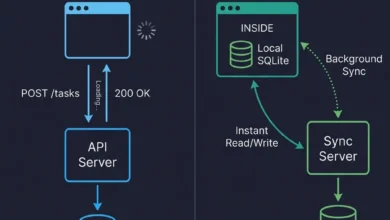
In a scenario encountered during the development of "Fastary," a Chrome extension designed for taking screenshots, a persistent latency issue emerged. Despite employing an Offscreen Document—a dedicated background process within Chrome extensions designed for handling canvas operations and other intensive tasks—the screenshot process consistently took between two to three seconds. This delay was antithetical to the user’s expectation of an instant, lag-free experience. The irony of the situation was that the very act of moving a task away from the main thread, ostensibly to prevent UI freezing, introduced its own set of performance bottlenecks. The serialization, transfer, and deserialization of data between different browser contexts, while intended to be a robust solution, proved to be slower than performing the operation directly on the main thread. This experience highlights a critical nuance: sometimes, the overhead of context isolation and data transfer can outweigh the benefits, particularly when the task itself is not exceptionally long-running or computationally demanding.
The Architecture of Browser Context Isolation
To understand why this dilemma arises, it’s crucial to grasp the concept of browser context isolation. Modern browsers operate with multiple isolated environments, each possessing its own memory space, access privileges, and execution rules. These include the main thread, web workers, and Offscreen Documents. This "shared-nothing" architecture ensures that different parts of the browser’s operation do not interfere with each other. However, this isolation necessitates explicit communication between these contexts, typically achieved through messaging APIs like postMessage().
The Structured Clone Algorithm (SCA) is central to this inter-context communication. When data is passed between isolated environments using postMessage(), the browser employs SCA to serialize the data, transfer it, and then reconstruct it on the receiving end. While SCA is more powerful and versatile than JSON.stringify(), it is a synchronous, blocking operation. Its performance is generally imperceptible for small, simple data structures. However, when dealing with large or complex data, the cost of SCA scales linearly with the data size. For instance, if an 8MB image payload needs to be sent to a background worker for processing, the main thread must pause to execute the serialization and copying process. If the time spent on this serialization, transfer, and deserialization is greater than the time it would take to perform the actual processing on the main thread, the efficiency of offloading is called into question.
Consider a scenario where a user clicks a button to capture a screenshot. Internally, the browser might initiate a process to capture the visible tab, returning a Base64 URL. On a standard 1080p screen, this string can easily exceed 1MB, and on high-density displays like Retina screens, it can double due to increased pixel density. If this large data payload is then sent to an Offscreen Document for a simple operation like cropping, the main thread must first serialize this substantial string. This serialization, followed by the transfer to the Offscreen Document, and subsequent deserialization, can collectively take a significant amount of time. If the cropping operation itself is relatively quick, the overhead of moving the data might dominate the total execution time.
The question then becomes: if the cumulative cost of packing, shipping, and unpacking the data exceeds the cost of performing the operation directly, why not bypass the isolation altogether?
What About Transferable Objects?
A common counter-argument in performance-critical applications is the use of Transferable Objects. These objects, such as ArrayBuffer, ImageBitmap, or MessagePort, are designed to bypass the Structured Clone Algorithm. Instead of creating a copy, transferring an object involves a direct hand-off of data ownership from the sending context to the receiving context. This process is exceptionally fast. Benchmarks by Chrome Developers have shown that transferring a 32MB ArrayBuffer can take under 7 milliseconds, a stark contrast to the approximately 300 milliseconds required for cloning using SCA – a speed improvement of over 40 times.
However, Transferable Objects come with their own set of limitations. Crucially, the sending context loses access to the data immediately upon transfer. This means that if the original data is still needed on the sending side, or if multiple contexts require access to the same data, Transferable Objects are not a viable solution. Furthermore, not all data types are transferable, and the API can add complexity to the development process. In the context of the Fastary screenshot extension, where the original screenshot data might still be referenced or where the processing involves complex image manipulation that benefits from direct access, Transferable Objects were not a suitable alternative.
Why We Isolate Contexts Anyway
The fundamental reason for isolating browser contexts remains paramount: maintaining a responsive user experience. The browser aims to render new frames every 16.6 milliseconds to ensure visual fluidity. Any task exceeding 50 milliseconds is generally classified as a "long task" and can lead to noticeable jank or unresponsiveness. Offloading these long-running, CPU-bound tasks to background threads is indeed the correct strategy. The problem arises when this principle is applied rigidly without considering the cost of data transfer. The focus has often been on the "never block the main thread" aspect, overlooking the crucial question: "Is this task more expensive to process or more expensive to move?"
The realization then dawns that the rule might be better articulated as "never block the main thread for too long," rather than an absolute prohibition. This nuanced understanding allows for more context-aware architectural decisions.
When the Right Architecture Is the Wrong Architecture
The ambition for the Fastary extension was to deliver a user experience akin to a native application—instantaneous and seamless. The initial architectural choice was to leverage the Offscreen Document API, a recommended approach for handling DOM manipulation and canvas operations in the background. This involved creating a hidden document that could perform tasks like cropping, stitching, or watermarking images without affecting the main UI thread.
The intended workflow was as follows:
- The background script captures the visible tab, returning a Base64 URL of the screenshot.
- This Base64 URL is serialized and sent to the Offscreen Document.
- The Offscreen Document deserializes the data, performs the cropping operation.
- The processed image data is then serialized and sent back to the background script.
- The background script might then pass it to a content script for display or further action.
However, this multi-step process introduced the aforementioned 2-3 second lag. The bottleneck was not the image processing within the Offscreen Document, which was relatively quick, but the overhead associated with transferring the data. As noted, a Base64 screenshot can be 1MB or more, especially on high-resolution displays. With extension messaging relying on JSON serialization, this resulted in substantial synchronous communication. The image data was serialized at least twice: once when sent to the Offscreen Document and again when sent back. This round-trip cost, coupled with the inherent latency of inter-context communication, proved to be the primary performance drain.
The Retina High-DPI Problem
Adding to the latency issue was a subtle but significant bug related to high-density displays (Retina screens). When a user selected a region to crop, the coordinates were captured using getBoundingClientRect(), which operates in CSS pixels. However, the browser captures the full screen in physical hardware pixels. The devicePixelRatio (DPR) is the key to reconciling these two measurement systems. On a standard monitor, DPR is 1. On a Retina display, DPR is typically 2 or 3, meaning that one CSS pixel corresponds to multiple physical pixels.
If a user on a Retina display (DPR = 2) selected a 400×300 CSS pixel area, the actual captured image would contain 800×600 physical pixels. For an accurate crop, the CSS pixel coordinates needed to be scaled by the DPR. The challenge was that Offscreen Documents, lacking a physical display, operate with a default DPR of 1. To rectify this, it would have been necessary to capture the active tab’s devicePixelRatio, serialize it, pass it along with the image data to the Offscreen Document, and then manually perform the scaling calculations. This added considerable complexity to an already inefficient process.
The question then became: what if the "golden rule" of not blocking the main thread was broken, and the work was performed directly on the main thread?
Working On the Main Thread
While some developers adhere strictly to the notion that only UI tasks should reside on the main thread, a more pragmatic perspective suggests that user-invoked actions requiring immediate feedback can be permissible on the main thread, provided the work is exceptionally fast, typically within a second. This was the path taken to resolve the performance issues in Fastary.
The architecture was re-engineered to eliminate the Offscreen Document and its associated data transfer overhead. Instead of the complex multi-step process involving serialization and multiple context hops:
Background Script -> [serialize] -> Offscreen Document -> [serialize] -> Background Script -> Content Script

The new workflow was simplified to:
- The background script captures the visible tab, generating a Base64 screenshot URL.
- This screenshot URL and the user’s crop selection data are then injected directly into the active tab as a content script using
chrome.scripting.executeScript(). - The content script, running within the context of the active tab, performs the image processing (cropping) and handles the scaling based on the tab’s actual
devicePixelRatio.
This approach drastically reduced inter-context communication. The only significant data transfer was from the background script to the content script. The Retina DPI issue was naturally resolved because the content script operated within the actual browser tab, possessing direct access to the monitor’s devicePixelRatio.
The critical point here is that the image processing now occurred on the main thread within the active tab. This technically involves blocking the main thread. However, the amended rule became "never block the main thread for too long." For a user-initiated action like taking and cropping a screenshot, a delay of approximately one second is often acceptable. The principle here is that if the cost of data transfer and context switching between isolated processes is greater than the cost of performing the task directly on the main thread, then isolation is counterproductive.
Conclusion: When to Isolate and When Not To
The decision of whether to isolate a task or perform it on the main thread hinges on the nature of the task itself. A useful mental model categorizes tasks into two primary types:
-
Compute-Heavy Tasks (CPU-Bound): These are tasks where the primary bottleneck is the computational effort required, rather than the size of the data being processed. Examples include complex image compression, audio processing, physics simulations, or cryptographic operations. In these scenarios, the time spent on calculations or transformations significantly outweighs the time it takes to transfer data. Offloading these tasks to background workers or Offscreen Documents is highly beneficial, as it prevents the main thread from being bogged down by intensive computations, ensuring UI responsiveness. The transfer cost for these tasks is typically minuscule in comparison to the actual processing time.
-
Data-Heavy Tasks (Data-Bound): These tasks are characterized by large data volumes where the processing itself is relatively simple or quick. Examples include image cropping, filtering a large array, or performing shallow data copies. In these cases, the cost of serializing, transferring, and deserializing the data can become the dominant factor in the overall execution time. If this transfer overhead exceeds the time it would take to perform the operation directly on the main thread, then isolation becomes inefficient, leading to what can be termed "negative-sum efficiency."
A helpful framework for evaluating this is to consider the total time equation:
Total Time = Serialization Cost + Transit Time + Background Processing Time + Deserialization Cost
If the Background Processing Time is the most significant component, then isolation is the clear winner. However, if the sum of Serialization Cost, Transit Time, and Deserialization Cost approaches or exceeds the Background Processing Time, then the benefits of isolation diminish, and performing the task on the main thread might be more performant.
For developers struggling to determine whether a task is CPU-heavy or data-heavy, empirical measurement is the most reliable approach. Utilizing browser performance APIs like performance.mark() and performance.measure() around postMessage() calls can provide precise data on transfer costs, enabling informed architectural decisions. Ultimately, the "never block the main thread" rule serves as a crucial guideline, but its application requires a nuanced understanding of task characteristics and the inherent costs of data transfer and context isolation.