The Architecture of Inquiry: How Brian Grazer Built a Career on the Art of the Question

Brian Grazer’s professional ascent, marked by cinematic triumphs such as Apollo 13 and A Beautiful Mind, is frequently attributed to his creative instincts. However, the foundational element of his success is a rigorous, decades-long discipline of intellectual exploration that predates his work in Hollywood. Long before he became a household name in film production, Grazer was a young man struggling with dyslexia, navigating a world that felt fundamentally designed for those who could process information through traditional textual methods. His response to this limitation was not to retreat, but to develop an aggressive, systematic approach to curiosity.
The genesis of this method is often traced back to a singular, humbling encounter with Dr. Jonas Salk, the virologist who achieved global renown for developing the first successful polio vaccine. Grazer, then a determined young professional, spent months orchestrating a meeting with Salk, viewing him as a titan of human advancement whose perspective was essential to his own growth. When they finally met in the lobby of the Beverly Hills Hotel, the pressure of the moment proved overwhelming for Grazer, who suffered an acute physical reaction. Salk’s response—attending to Grazer’s immediate physical needs with grace and subsequently inviting him to his home for an eight-hour dialogue—became a transformative moment. That day, Grazer realized that the most profound insights often lie outside the boundaries of one’s own professional sphere.
The Evolution of the Curiosity Conversation
Following his tenure as a law clerk at Warner Brothers—a role he leveraged by inventing a pretext that required him to hand-deliver documents to high-ranking executives just to gain entry into their offices—Grazer institutionalized his search for knowledge. He formalized a practice he termed "curiosity conversations." For over thirty-five years, he has committed to meeting one person per week from a field entirely disparate from his own.

This practice is characterized by a strict set of protocols: the meeting must be unrelated to any film project, and the objective is not to gather facts, but to understand the internal cognitive landscape of an expert. His interlocutors have included luminaries such as astrophysicist Carl Sagan, science fiction writer Isaac Asimov, former CIA directors, and physicist Edward Teller. This systematic outreach eventually required the creation of a dedicated role within his organization, often referred to as a "cultural attaché," tasked solely with identifying and securing these encounters. The labor involved is significant, with some meetings requiring over a year of persistent communication to materialize.
Cognitive Science and the Mechanics of Reward
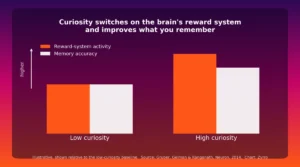
The psychological impact of such inquiries is supported by modern neuroscientific research. Studies conducted at the University of California, Davis, by researchers including Matthias Gruber and Charan Ranganath, have utilized fMRI scanning to observe brain activity during moments of heightened curiosity. The findings indicate that when subjects are engaged in answering questions they are deeply motivated to resolve, the midbrain and the nucleus accumbens—regions central to the brain’s reward circuitry—exhibit significant activity.
This biological response, typically associated with primary rewards like food or monetary gain, suggests that curiosity is a fundamental driver of neurological engagement. Furthermore, the data indicates that this state of heightened curiosity facilitates superior memory retention, not only for the information being sought but also for incidental information encountered during the same period. This provides a physiological basis for the idea that intellectual exploration can broaden an individual’s cognitive capacity and improve overall learning efficiency, as the brain becomes primed for broader information synthesis.
The Paradox of Algorithmic Narrowing
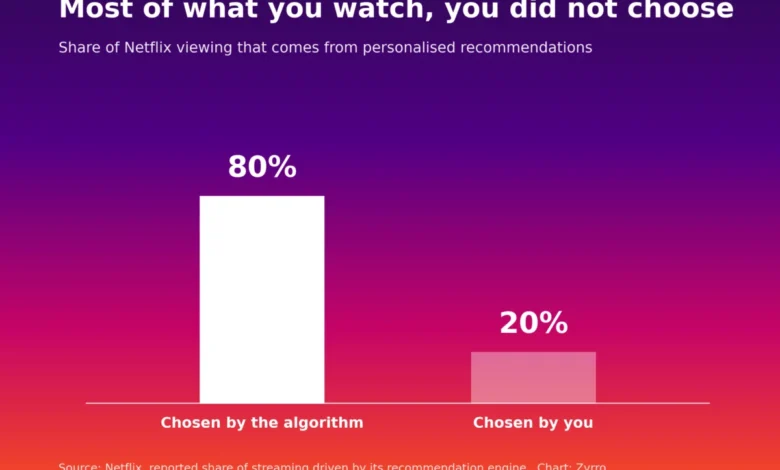
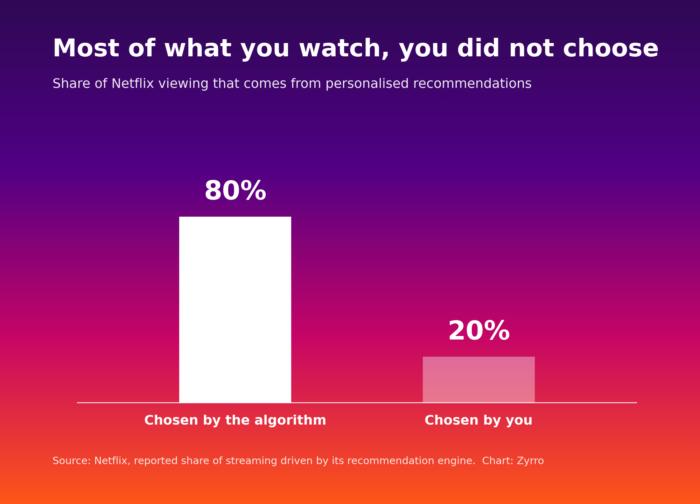
While the value of curiosity is well-documented, modern digital environments often exert a counter-pressure. Data from industry reports, including insights into streaming platforms like Netflix and YouTube, reveal that a vast majority of user content consumption is mediated by recommendation engines. Approximately 80% of hours viewed on platforms such as Netflix are driven by algorithmic selection, which is designed to optimize for engagement by surfacing content similar to a user’s established preferences.
This phenomenon creates a "filter bubble" effect that stands in stark contrast to the methodology employed by Grazer. While algorithms operate on the principle of efficiency—providing the user with more of what they have already demonstrated an interest in—this process inherently restricts exposure to atypical or challenging ideas. In a professional context, this narrowing of the information diet can lead to a decline in creative output. Research published in the journal Science by Brian Uzzi and his colleagues, which analyzed nearly 18 million research papers over five decades, found that the most impactful scientific work consistently featured "atypical combinations." These were papers that maintained a solid foundation in traditional field knowledge while incorporating a singular, unexpected reference from a completely different discipline.
Professional Engagement and the Fit Problem
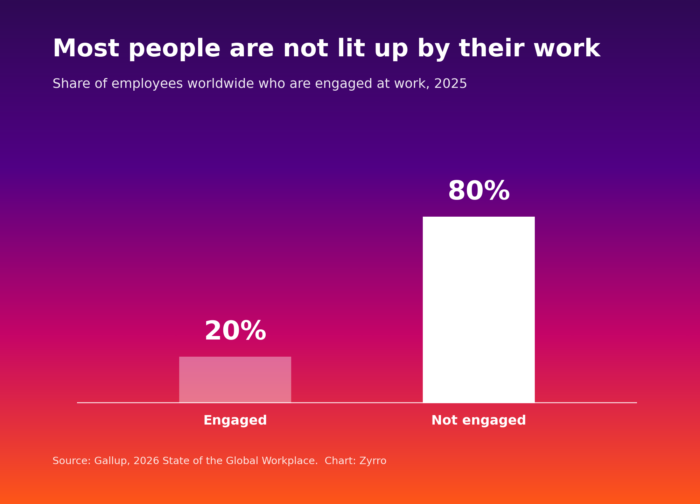
The lack of engagement in the modern workplace—with Gallup’s 2026 State of the Global Workplace reporting that four out of five employees globally are not engaged—can be interpreted as a systemic failure to align personal curiosity with professional function. When individuals operate within rigid structures that do not permit or encourage the "atypical combination" of interests, the internal reward system remains dormant.
The implication for organizational management is clear: motivation is not a resource that can be imposed from the top down; rather, it is a byproduct of alignment. When individuals are encouraged to follow their curiosity, they effectively create a feedback loop. This was the case for the author of this framework, who moved from a failed retail business to a sustainable career by integrating diverse inputs—such as the marketing strategies of software firms and the productivity insights of fitness experts—into a new professional identity.
Strategic Implementation for Intellectual Growth
For those seeking to emulate the trajectory of cross-disciplinary success, the following framework is proposed:
- Identify the Outlier: Seek engagement with professionals outside one’s primary industry. This avoids the echo-chamber effect inherent in peer-to-peer networking.
- Prioritize Inquiry over Utility: Approach these conversations without a specific transactional goal. The objective is to understand the "unthinkable" questions within that field, rather than to secure a contract or a favor.
- Document the Pattern: Maintain a systematic repository of questions, articles, and observations. Over time, these data points reveal an individual’s "curiosity trail"—a map of interests that often precedes conscious career shifts.
- Accept the Resistance: Understand that the most valuable insights often come from sources that may initially appear irrelevant or even contradictory to one’s current work.
The transition from a passive consumer of information to an active investigator of the world requires a departure from the comfort of the "feed." It demands the recognition that while a CV provides a historical account of where an individual has been, the curiosity trail serves as a predictive indicator of where they are capable of going.
The history of innovation, from the development of the polio vaccine to the evolution of modern cinema, suggests that the capacity to cross-pollinate ideas from disparate worlds is the primary driver of professional and scientific breakthroughs. As the world moves at an accelerating pace, the ability to step outside of established silos and engage with the "stranger"—whether that be an individual or a new field of study—is not merely a soft skill; it is a vital competitive advantage. The information required to solve the most pressing professional challenges of the coming decade is likely already within reach, waiting only to be identified through the deliberate, persistent application of one’s own curiosity.
Related posts: