Current Trends in Python Programming and Artificial Intelligence Implementation Strategies for Modern Data Science Workflows

The landscape of software engineering and artificial intelligence is undergoing a significant transition as of mid-2026, characterized by a shift from monolithic conditional logic to dynamic design patterns and a heightened focus on the operational efficiency of Large Language Models (LLMs). Recent industry reports and technical syntheses highlight a growing consensus among developers that scalability in AI-driven systems requires a departure from traditional coding practices in favor of more modular, extensible architectures. This evolution is driven by the need to manage increasingly complex agentic workflows and the rising costs associated with high-latency inference in production environments.
Technical Innovations in Python Architecture and Infrastructure
A primary focus of current software development discourse is the optimization of Pythonic codebases to support extensibility. The "Registry Pattern" has emerged as a critical alternative to long-standing if-else chains. Engineering teams are increasingly adopting this pattern to adhere to the Open/Closed Principle, which dictates that software entities should be open for extension but closed for modification. By utilizing a central lookup table where components register themselves dynamically, developers can replace hardcoded dispatch logic. This approach allows system behavior to be driven by external configurations, which is essential for building maintainable pipelines in data science.
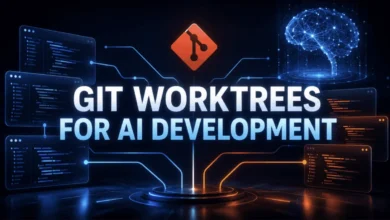
Parallel to these architectural shifts is the adoption of Git worktrees as a standard infrastructure layer for AI development. As organizations move toward multi-agent systems, the need for isolated workspaces has become paramount. Git worktrees enable multiple AI agents to operate simultaneously on a single repository without the risk of file collisions or context loss. This capability is particularly vital in 2026, where automated coding agents are frequently tasked with concurrent feature development and bug resolution.
Chronology of Technical Developments: July 13 to July 17, 2026
The third week of July 2026 saw a concentrated release of methodologies and frameworks designed to bridge the gap between theoretical AI and production-ready systems.
On July 13, the focus was split between data engineering foundations and LLM reliability. Industry experts emphasized the importance of real-world SQL projects—such as banking segmentation and healthcare data modeling—to demonstrate data cleaning and actionable insight generation. Simultaneously, the introduction of the Outlines library signaled a move toward "deterministic certainty" in LLM outputs. By masking syntactically illegal tokens during inference, the library allows practitioners to enforce strict JSON schemas, a necessity for integrating LLMs into existing software APIs.
July 14 marked a pivot toward operational efficiency. Documentation was released outlining twelve specific strategies to reduce LLM latency and inference costs. These strategies emphasized model routing and multi-layered caching over the brute-force approach of using larger context windows. On the same day, the concept of "Context-Driven Development" (CDD) was advanced through the Conductor for Gemini CLI, which persists project specifications within repository files to maintain architectural consistency across AI-assisted coding sessions.
By July 15, the conversation shifted to local orchestration and design patterns. The "Registry Pattern" was formally advocated as a replacement for brittle conditional chains in Python. Furthermore, seven distinct Python frameworks were identified for orchestrating local AI agents, reflecting a broader industry trend toward data privacy and cost reduction by running models on local infrastructure rather than relying solely on cloud-based APIs.
On July 16 and 17, the focus turned to educational resources and minimalist agentic design. The "Pi Coding Agents" philosophy was introduced, arguing that reducing injected context and built-in complexity leads to more efficient workflows. The week concluded with the release of comprehensive guides on agentic AI, focusing on multi-agent system theory and evaluation techniques, providing a structured path for developers to move from experimental demos to robust production agents.
Optimizing LLM Operations: Latency and Cost Management
As LLM integration becomes ubiquitous, the economic reality of inference costs has forced a reevaluation of production workflows. Data from mid-2026 indicates that organizations failing to optimize their LLM calls face a 40% higher operational overhead compared to those utilizing advanced routing and caching.
Key strategies currently being implemented include:
- Model Routing: Directing simple queries to smaller, specialized models while reserving high-parameter models for complex reasoning tasks.
- Context Budgeting: Instead of utilizing the maximum available context window, developers are now managing "budgets" to prevent token bloat and reduce latency.
- Multi-layered Caching: Implementing semantic caches to store and reuse responses for similar queries, significantly cutting down on redundant computation.
- Structured Generation: Using libraries like Outlines to prevent malformed outputs, which reduces the need for costly retries and post-processing validation.
The Rise of Local AI Agent Orchestration
Security concerns and the desire for lower latency have spurred the development of frameworks dedicated to local AI orchestration. In the current market, seven Python frameworks have gained prominence for their ability to coordinate agents directly on local hardware. These frameworks provide the necessary abstraction layers to manage tool calling, memory persistence, and inter-agent communication without data leaving the corporate firewall.
Industry analysts suggest that the move toward local orchestration is a reaction to the volatility of cloud API pricing and the increasing stringency of data residency regulations. By running agents locally, developers can iterate faster and maintain a higher degree of control over the execution environment, which is particularly beneficial for sensitive tasks like internal code auditing or proprietary data analysis.
Professional Development and the Data Portfolio in 2026
The requirements for data science and AI professionals have evolved to include a mastery of both traditional data engineering and modern agentic frameworks. A strong portfolio in 2026 is no longer defined by generic Kaggle competitions but by "Real-World SQL Projects" that mimic actual business environments. These projects include:
- Customer Churn Analysis: Demonstrating the ability to clean messy behavioral data.
- Data Warehousing: Modeling systems that can handle high-velocity updates.
- Sales Analysis and Banking Segmentation: Applying statistical methods to derive actionable business intelligence.
- Healthcare Systems: Navigating the complexities of sensitive data and regulatory compliance.
Furthermore, the proliferation of educational content on platforms like YouTube has democratized access to high-level machine learning theory. Professionals are now expected to stay ahead of the curve by following channels that provide deep-dives into paper analysis, LLM application development, and industry trend tracking.
Broader Impact and Industry Implications
The trends observed in July 2026 suggest a maturing AI industry that is moving away from the "hype" phase and into a period of rigorous engineering. The emphasis on the Open/Closed Principle via the Registry Pattern and the adoption of Git worktrees for parallel agent development indicate that AI is being integrated into the standard software development lifecycle (SDLC) rather than being treated as a standalone experimental silo.
The shift toward "Context-Driven Development" (CDD) is perhaps the most significant implication for the future of work. By persisting architectural context within repositories, organizations are creating a "living documentation" that both human developers and AI agents can utilize. This reduces the "onboarding tax" for new developers and ensures that AI-generated code aligns with established project constraints.
Moreover, the focus on minimalist architectures, as seen in the Pi Coding Agents approach, suggests a counter-movement against "over-engineering." By explicitly documenting what a system does not do, developers are finding they can create more reliable and cost-effective AI workflows. This philosophy of "less is more" is expected to influence the next generation of AI tools, prioritizing precision and efficiency over raw model size.
In conclusion, the developments of mid-2026 point toward a future where AI development is defined by deterministic outputs, local orchestration, and highly optimized inference strategies. For the practitioner, this means a transition from being a "prompt engineer" to becoming a "system architect" who understands the intricate balance between model capability, operational cost, and code maintainability. As these patterns continue to solidify, they will form the foundation for the next decade of intelligent software systems.