Google Unveils Gemini Omni: A Major Leap Forward in Multimodal AI Creation and Conversational Video Editing

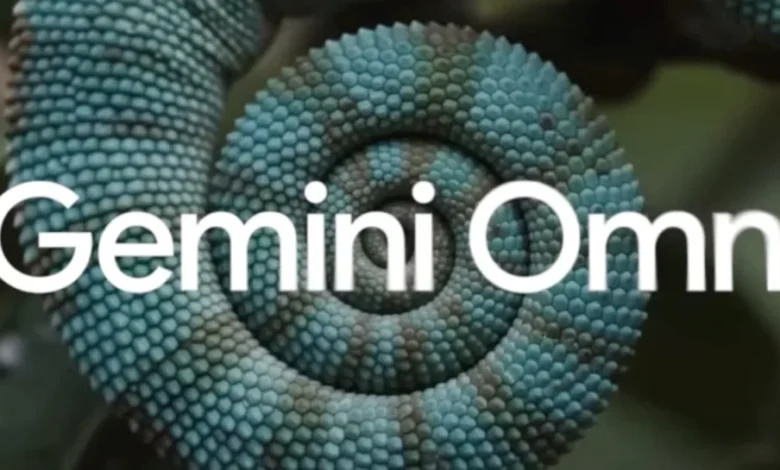
Google has officially introduced Gemini Omni, its most ambitious multimodal model family to date, designed to bridge the gap between advanced artificial intelligence reasoning and high-end media creation. Unveiled during the Google I/O 2026 conference, Gemini Omni represents a definitive shift away from traditional, one-shot AI video generators toward an integrated, conversational system capable of processing mixed inputs—including text, audio, images, and video—to generate and meticulously edit complex media assets.
The launch marks a crucial evolution in Google’s overarching generative AI strategy, moving past isolated modality tools into a unified ecosystem. The first model rolling out under this new architecture is Gemini Omni Flash, which initially targets video generation and editing workflows across Google’s consumer and creator platforms.
The Evolution of Multimodal AI and the Genesis of Gemini Omni
For years, Google has pursued a vision of a unified AI architecture under the Gemini orbit, systematically integrating text, code, images, audio, and search capabilities into a cohesive core. While early breakthroughs proved the viability of multimodal understanding, creative workflows remained fragmented. Users frequently had to navigate separate tools for text-to-video generation, image formatting, audio syncing, and timeline editing.
Gemini Omni directly addresses this friction. Rather than treating generation as a singular, isolated event, Google has engineered the model to act as a collaborative creative partner. By combining the system’s underlying analytical reasoning with generative output capabilities, Omni allows users to synthesize disparate reference materials—such as product sketches, moodboards, existing footage, and audio tracks—into a single, cohesive visual output.
Industry analysts note that this capability positions Google to compete more directly with advanced video generation systems like OpenAI’s Sora, while carving out a distinct niche focused on iterative, conversational editing rather than pure text-to-video novelty.
Gemini Omni Flash Rollout and Platform Availability
Google is executing a phased release strategy for Gemini Omni Flash, prioritizing consumer touchpoints and creator ecosystems ahead of developer-facing enterprise integrations.
Beginning immediately following the Google I/O 2026 announcement, Gemini Omni Flash is being rolled out globally to subscribers of Google AI Plus, Pro, and Ultra tiers via the primary Gemini application and Google Flow. In a move designed to capture the massive creator market, the model is also being made available at no additional cost to users aged 18 and older through YouTube Shorts Remix and the standalone YouTube Create application.
Enterprise customers and independent developers, however, will have to wait for programmatic access. Google has confirmed that dedicated API support for Gemini Omni Flash will become available in the coming weeks, allowing third-party software developers to integrate the model into external creative applications, marketing platforms, and educational tools.
Core Capabilities: Conversational Editing and Advanced Physics
The standout feature of Gemini Omni Flash is its emphasis on prompt-based video editing. Traditional AI video tools have long frustrated users because any minor desired change—such as adjusting a camera angle, altering a character’s wardrobe, or removing an environmental object—typically required regenerating an entire clip from scratch, often ruining consistency in the process.
Gemini Omni introduces a conversational revision workflow. Users can upload an existing video clip and use natural language prompts to execute specific modifications. Google’s demonstration showcases the model’s ability to maintain scene continuity, object permanence, and character consistency across multiple sequential editing turns.
Furthermore, Google has emphasized the model’s enhanced understanding of physical principles, including kinetic energy, gravity, and fluid dynamics. Early iterations of AI video generators frequently struggled with basic physical logic, resulting in floating objects, morphing anatomy, and breaking scene rules after the first few frames. Omni attempts to mitigate these issues by factoring real-world physics into its generation pipeline, functioning simultaneously as a virtual director, editor, and physics simulator.
Practical Applications Beyond Entertainment: Explainers and Education
While much of the initial industry attention has focused on cinematic and surreal video generation, Google is actively positioning Gemini Omni as a practical tool for technical, educational, and professional communication.
During the I/O presentation, Google highlighted the model’s ability to generate accurate visual explainers from minimal text prompts. Demonstrations included stop-motion animations explaining complex biological processes like protein folding and the neural mechanisms of the hippocampus.
For educators, scientific researchers, corporate training departments, and technical marketers, the ability to rapidly produce clear visual aids without specialized animation skills represents a substantial efficiency gain. Nevertheless, domain experts have raised concerns regarding factual accuracy. Because generative models can occasionally output visually convincing yet scientifically flawed representations, Google has stressed that human oversight remains mandatory for any educational, medical, or legal applications.
Addressing Content Integrity, Identity, and Safety
The capability to seamlessly edit existing video footage, transform speech, and generate hyper-realistic personal avatars brings significant safety and ethical challenges. Impersonation, deepfakes, and the spread of misinformation remain acute concerns across the technology sector.
To address these vulnerabilities, Google has embedded rigorous provenance and attribution measures directly into the Gemini Omni infrastructure. All video content created or modified using Gemini Omni within the Gemini app, Google Flow, or YouTube tools will automatically incorporate SynthID digital watermarking developed by Google DeepMind. In addition, the platform supports C2PA Content Credentials, allowing media platforms, journalists, and consumers to verify the origin and editing history of digital files.
Google’s Avatars feature, which allows users to generate videos utilizing their own verified voices and digital likenesses, is similarly restricted by identity verification protocols. While broader speech-editing features remain in a restricted testing phase, the inclusion of standardized watermarking underscores the company’s attempt to balance creative utility with platform accountability.
Strategic Distinctions: Gemini Omni Versus Google Veo
Industry observers have frequently questioned how Gemini Omni differentiates itself from Google’s existing dedicated video generation model line, Veo.
Company executives have clarified that while Veo functions primarily as a specialized text-to-video generation model, Gemini Omni is a comprehensive multimodal architecture. Omni utilizes reasoning capabilities derived from the core Gemini family to coordinate multiple input and output modalities. While Omni currently launches with video as its primary generation output, future updates are expected to expand native generation to include complex image and audio modalities within the same continuous workflow.
Market Implications and Future Outlook
The introduction of Gemini Omni signals a maturing market for generative artificial intelligence. The initial novelty phase of text-to-video tools—characterized by stunning one-second clips that lacked practical utility—is rapidly giving way to a demand for professional-grade control and integration.
By shifting the paradigm from generation to conversation, Google is attempting to redefine how digital media is produced. If Gemini Omni performs reliably outside of controlled demonstration environments, it could permanently alter the software landscape for video editing, social media content creation, and digital marketing.
As developers await API availability and creators test the limits of Gemini Omni Flash on YouTube, the ultimate test for the model will be its real-world reliability, cost-efficiency, and adoption rate. For now, Google has set a high benchmark for the next generation of creative AI systems, shifting the industry’s focus toward seamless workflow integration, physical accuracy, and conversational control.
Related posts: