Beyond the Vault: How Advanced Users Maximize 1Password for Security and Convenience

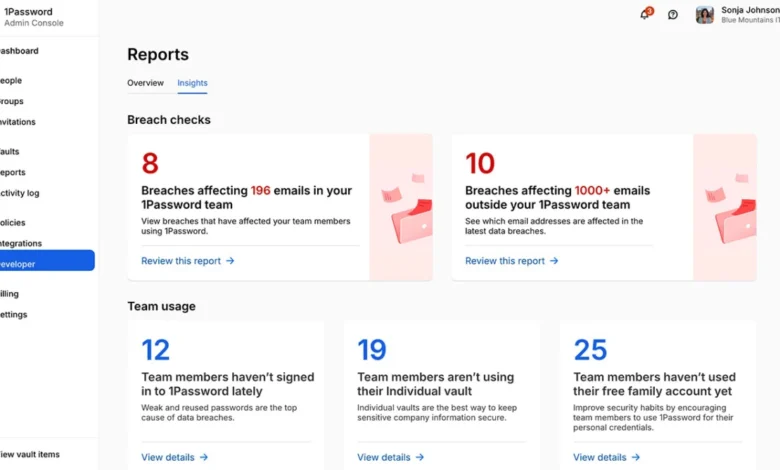
For the vast majority of digital consumers, password management software serves a single, transactional purpose: generating a complex credential, auto-filling a login form, and fading immediately into the background. While this core functionality remains the bedrock of modern digital hygiene—protecting users from credential stuffing, brute-force attacks, and phishing—treating a modern password manager strictly as an encrypted digital notebook leaves a significant array of advanced cybersecurity and organizational features underutilized. As cyber threats evolve and the average individual manages dozens, if not hundreds, of online accounts, the ecosystem surrounding password management has expanded exponentially. Modern platforms now incorporate encrypted document storage, secure data sharing protocols, payment masking, physical location mapping, and emergency succession planning.
To understand the full scope of a modern digital vault, users must look past basic login credentials and explore the structural mechanisms designed to safeguard sensitive data across borders, during financial transactions, and in emergency scenarios. Cybersecurity analysts and consumer data protection advocates increasingly emphasize that digital safety is no longer just about stopping unauthorized access to a single website; it is about holistic management of an individual’s entire digital footprint. This comprehensive guide examines how users can configure and optimize advanced 1Password features to transition from basic credential storage to comprehensive digital asset management.
The Evolution of Digital Vaults and Consumer Security Demands
The digital landscape has shifted dramatically over the past decade. According to recent data compiled by cybersecurity research firms, the average enterprise and consumer now interacts with upwards of 100 distinct digital applications, services, and portals. This proliferation of accounts has created a psychological bottleneck known as password fatigue, historically leading to poor security habits such as credential reuse and the use of easily guessable passwords. The advent of master-password-protected vaults largely solved this initial dilemma, but it introduced a secondary challenge: the concentration of sensitive, highly personal data into a single, centralized database.
Recognizing that users store far more than just usernames and passwords—ranging from tax documents and cryptocurrency seed phrases to healthcare directives and Wi-Fi credentials—password manager developers have engineered specialized sub-features. These tools address specific threat vectors, such as physical device inspections at international borders, the vulnerability of sharing multi-factor authentication codes via unencrypted messaging apps, and the risks associated with exposing primary credit card numbers to unverified e-commerce merchants.
Integrating these features requires a deliberate configuration process, shifting the user’s relationship with their password manager from passive storage to active, strategic deployment. Below is an analytical breakdown of ten advanced capabilities, detailing their operational mechanics, security implications, and practical implementation.
1. Border Security and Digital Minimalism: Activating Travel Mode
International travel presents unique cybersecurity and privacy challenges, particularly for journalists, corporate executives, activists, and frequent flyers crossing national borders where electronic device searches by customs authorities are legal and routine. When a device is unlocked or subjected to forensic extraction during border crossings, all data resident on that hardware is potentially exposed.
Travel Mode addresses this vulnerability by leveraging a cloud-synchronization override. When activated via the web management console, Travel Mode temporarily removes designated vaults from local devices, leaving only those vaults explicitly marked as "safe for travel."
- Operational Mechanism: The user pre-selects specific vaults containing essential travel documents—such as flight confirmations, hotel bookings, and transit passes—and designates them as safe. All other vaults, containing sensitive financial records, personal notes, or secondary business credentials, are instantly purged from the local application cache.
- Reversibility: Upon reaching the destination or clearing customs, the user simply disables Travel Mode via the secure web portal, prompting the application to resynchronize and restore the hidden vaults.
- Security Implications: This feature mitigates the risk of coerced decryption or casual observation during physical inspections. Security experts note that while Travel Mode does not prevent sophisticated hardware-level forensic extraction, it successfully removes low-hanging fruit from devices during routine administrative checks.
2. Financial Masking: Integrating Virtual Cards for E-Commerce
Financial fraud and data breaches at online retail outlets continue to cost consumers billions of dollars annually. Traditional e-commerce transactions require exposing primary credit or debit card numbers, expiration dates, and security codes (CVV) to merchants, who then store that data on servers that may be vulnerable to compromise.
Through strategic integrations with financial technology platforms such as Privacy.com, modern password managers allow users to generate virtual, single-use, or merchant-locked payment cards directly within the browser extension environment.
- Operational Mechanism: When checking out on an unfamiliar or subscription-based website, the password manager prompts the user to generate a masked virtual card. This card features a unique card number, distinct expiration date, and randomized CVV.
- Spending Controls: Users can configure these virtual cards with strict financial parameters, such as a one-time use limit or a monthly spending cap, ensuring that a compromised merchant cannot initiate unauthorized recurring charges.
- Consumer Impact: According to digital commerce analysts, virtual card adoption significantly reduces the fallout from retail data breaches, as a compromised merchant token is useless if applied to another vendor or if spending limits have already been exhausted.
3. Proactive Asset Lifecycle Management: Expiry Alerts
The modern digital ecosystem is governed by expiring credentials, official documents, and software licenses. Passports, driver’s licenses, professional certifications, SSL certificates, API keys, and credit cards all feature finite lifespans. Failing to monitor these dates can result in catastrophic travel delays, service interruptions, or administrative penalties.
While traditional calendar applications require manual data entry and often lack contextual security, embedding these items directly inside an encrypted vault allows automated monitoring systems to track impending deadlines.
- Operational Mechanism: By associating specific expiration dates with non-login items—such as identification documents, payment cards, and software licenses—the platform’s internal security scanner (often styled as a Watchtower feature) evaluates these dates against the current calendar.
- Notification Protocols: Users receive automated warnings well in advance of a deadline, transforming the password manager from a static archive into an active administrative assistant.
- Risk Mitigation: This systematic approach eliminates the reliance on memory or fragmented physical filing systems, ensuring critical documents are renewed before operational friction occurs.
4. Streamlining Multi-Factor Authentication for Shared Access
Multi-factor authentication (MFA) is widely recognized as a critical barrier against unauthorized account access, typically requiring a password combined with a time-based one-time password (TOTP) generated via an authenticator application. However, shared family accounts or collaborative enterprise tools create a logistical paradox: how multiple users can access a single account without constantly texting six-digit verification codes back and forth.
Modern vault architectures solve this by decentralizing TOTP generation directly within shared vault structures.
- Operational Mechanism: When a shared login is saved within a collaborative vault, the associated TOTP secret key can be stored alongside the credentials.
- Automated Injection: Upon request, the password manager automatically generates and populates both the password and the current one-time passcode simultaneously for any authorized user with access to that vault.
- Operational Efficiency: This eliminates insecure communication channels—such as messaging apps or email—traditionally used to relay temporary codes, maintaining high security standards while restoring usability for collaborative workflows.
5. Controlled Delegation: Implementing Guest Vaults
In domestic and small-business environments, granting temporary access to specific digital assets is often necessary but historically difficult to manage securely. Whether providing a babysitter with access to smart-home controls and Wi-Fi networks or giving a contractor temporary access to specific administrative portals, traditional methods usually involve writing passwords on paper or sharing master credentials.
Guest vaults offer a granular permissioning framework designed for temporary, bounded access.
- Operational Mechanism: Administrators within a family or team plan can provision an isolated, temporary vault populated exclusively with designated items (e.g., streaming services, smart-lock PINs, Wi-Fi credentials).
- Revocation Protocols: Access is granted for a specific duration or can be manually revoked at any moment, immediately severing the guest’s access to those specific records without altering the primary administrative credentials.
- Security Analysis: This principle of least privilege ensures that temporary users are insulated from the broader, more sensitive contents of the primary digital vault, containing potential exposure risks.
6. Physical-Digital Bridging: Generating Dynamic Wi-Fi Credentials
The administrative friction of sharing home or office network credentials has long been a minor household annoyance, frequently leading to long, complex passwords being recited aloud or manually typed letter-by-letter into guest devices.
Password managers streamline physical-world connectivity by treating wireless routers as structured digital items capable of generating dynamic QR codes.
- Operational Mechanism: By saving a wireless router configuration item—including SSID, encryption type, and network password—within the vault, the application can instantly render a scannable QR code.
- User Experience: Visitors simply open their smartphone camera, scan the displayed code on the vault owner’s device screen, and join the network instantaneously without manual data entry.
- Security Integration: Advanced settings allow users to conceal sensitive fields or restrict QR code generation, balancing physical convenience with strict access control.
7. Contextual Awareness: Geolocation Item Tagging
Digital information is frequently tied to physical geography. Health insurance details are relevant at medical clinics; gym memberships apply at fitness centers; specific transit passes are required at airports or train stations. Searching through an extensive vault while standing at a service counter introduces unnecessary friction.
Modern mobile applications incorporate location-aware tagging to optimize data retrieval based on physical proximity.
- Operational Mechanism: Users can attach geographic coordinates or specific location markers to individual vault items. When the mobile application is opened within a designated radius of that location, those items automatically populate in a prioritized "Nearby" interface section.
- Efficiency Gains: This context-driven sorting reduces search times and aligns digital organization with real-world physical behavior, ensuring relevant records surface precisely when and where they are needed.
8. Relational Architecture: Linking Interdependent Records
Digital assets rarely exist in isolation. A corporate web hosting account is inherently linked to domain registrar credentials, DNS recovery codes, billing profiles, and administrative contact notes. Traditionally, users relied on cumbersome naming conventions or duplicate entries to keep related information connected.
Advanced vault structuring utilizes relational linking to connect disparate records into unified operational clusters.
- Operational Mechanism: Users can establish direct hyperlinks between separate vault items (e.g., linking a corporate debit card and associated billing profile directly to the primary banking login).
- Navigational Benefits: When viewing one item, all connected records are immediately visible in a dedicated sidebar. This mirrors relational database architecture, ensuring that administrative tasks involving multiple credentials can be executed without frantic cross-searching.
9. Preservation and Hygiene: The Strategic Value of Archiving
A common pitfall in digital organization is the binary choice between maintaining a cluttered vault of obsolete records or permanently deleting historical accounts. Permanent deletion can introduce significant complications if an old service needs to be accessed retroactively for tax verification, subscription cancellation, or identity confirmation.
Archiving provides an intermediate administrative state that cleanses active workflows without destroying historical data.
- Operational Mechanism: Moving an item to the archive removes it from primary search results, autofill suggestions, and security audit evaluations.
- Data Retrieval: The item remains fully encrypted and accessible via manual navigation or the archive folder itself, allowing users to restore it instantly if circumstances require.
- Best Practices: This mimics professional document retention policies, ensuring active vaults remain streamlined while preserving an immutable historical record for compliance and personal accounting.
10. Digital Estate Planning: Constructing an Emergency Access Framework
Perhaps the most critical, yet frequently neglected, aspect of comprehensive vault management is emergency succession planning. Because modern password managers utilize zero-knowledge architectures—meaning the service provider has no access to the user’s master password or encryption keys—the sudden incapacitation or death of a vault owner can permanently lock surviving family members out of critical financial, legal, and personal assets.
Establishing a reliable emergency access framework requires proactive offline coordination and secure documentation.
- Operational Mechanism: While automated dead-man switches carry their own security risks, users must construct reliable handoff procedures using physical "Emergency Kits"—documents containing account credentials, recovery codes, and setup instructions stored in secure physical locations like bank safety deposit boxes or home safes.
- Strategic Advisory: Estate planning attorneys increasingly recommend integrating digital asset instructions into traditional wills and trusts, ensuring designated executors possess both the legal authority and the technical roadmap required to access encrypted vaults during a crisis.
- Broader Implications: Failing to plan for digital succession can result in the permanent loss of digital photographs, cryptocurrency holdings, cloud backups, and vital legal documentation, making structured emergency planning an essential component of modern life management.
Conclusion: Redefining the Standard of Personal Cybersecurity
The transition from a passive credential repository to an active, multidimensional digital vault represents a maturation in how individuals approach personal cybersecurity and information management. By implementing advanced features such as Travel Mode, virtual payment cards, proactive expiration tracking, collaborative multi-factor authentication handling, and structured emergency planning, users can significantly mitigate digital vulnerabilities while reducing everyday friction.
Ultimately, a well-configured digital vault serves as a centralized operating system for personal security. Passports, legal directives, financial masks, and recovery codes require the same rigorous protection as login credentials. By optimizing these tools before an emergency or security incident arises, users ensure that their digital infrastructure remains resilient, adaptable, and securely aligned with the complexities of modern digital life.