AI Search Optimization: A Strategic Guide to Earning Visibility in the Era of Generative AI


The digital landscape has undergone a seismic shift as the traditional "blue link" paradigm of search engines gives way to the conversational, synthesized responses provided by Generative AI. For decades, "Googling it" served as the default gateway to the internet, but the rise of Large Language Models (LLMs) like ChatGPT, Claude, Gemini, and Perplexity has transformed search into an answer-first experience. This transition forces a fundamental evolution in how brands approach digital visibility, moving beyond traditional Search Engine Optimization (SEO) into the complex, multifaceted realm of AI search optimization.

AI search optimization is the strategic process of refining brand presence, website architecture, and digital reputation to ensure a brand is identified, referenced, and cited by AI-driven search engines. Unlike legacy SEO, which targets a high ranking on a search engine results page (SERP) to drive clicks, AI search optimization focuses on establishing "topical authority" and "credibility signals" that make a brand a reliable source for an AI’s generated response.
The Evolution of Search: From Blue Links to Generative Answers
The chronology of this shift began in earnest with the release of conversational AI models, accelerating rapidly as search giants integrated these technologies into their core products. In 2023 and 2024, the industry witnessed the emergence of "Answer Engine Optimization" (AEO) and "Generative Engine Optimization" (GEO). By late 2026, the data had become clear: when an AI Overview or a direct answer occupies the top of a query page, user behavior shifts.

According to a 2026 study conducted by Ahrefs on 300,000 search terms, the presence of an AI Overview at the top of a page resulted in a 58% decrease in click-through rates for the top-ranking traditional website. This indicates that while organic traffic remains vital, the battleground has shifted. Users are increasingly satisfied with the summary provided by the AI, meaning if a brand is not cited within that summary, it effectively ceases to exist in the user’s research phase.
Understanding the Mechanics of AI Citations
AI models do not "search" the web in the traditional sense; they ingest vast amounts of data and predict the most relevant information to answer a user’s prompt. To be cited, a brand must provide content that is deemed highly relevant, credible, and original by the model’s training data and real-time retrieval mechanisms.

Logan Freedman, a noted expert in the field, characterizes AI search optimization as the "final form of SEO." It does not replace foundational technical requirements—such as site speed, mobile-friendliness, and crawlability—but rather layers a requirement for depth and authoritative clarity on top of them. If an AI crawler cannot access or interpret a webpage due to technical errors or obscured content, that site will never appear in a citation.
The Broader Ecosystem: Why Off-Site Signals Matter
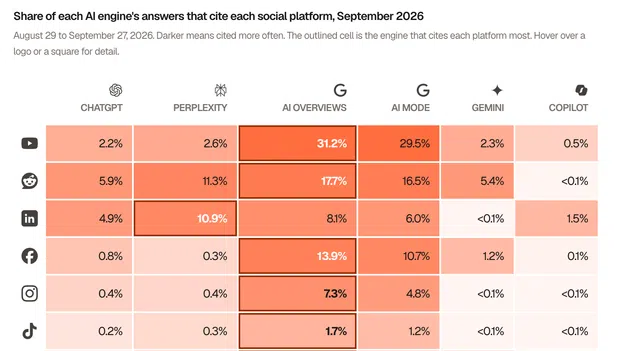
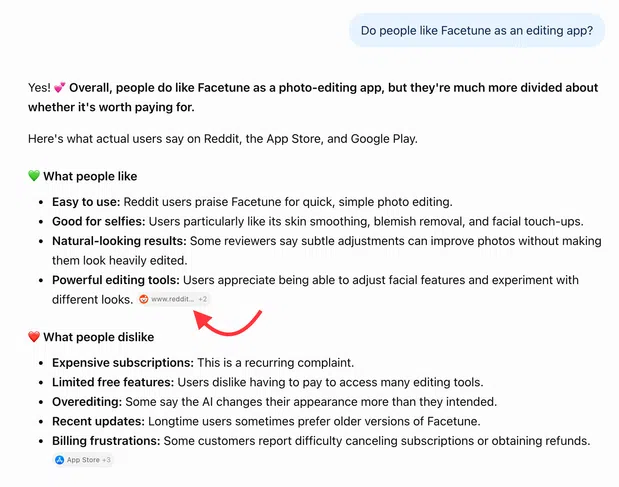
A critical, often overlooked aspect of AI search optimization is the role of off-site signals. AI models aggregate data from a wide variety of sources, including social media platforms, review sites, and community forums like Reddit. A brand’s own website is often not the primary source of truth for an AI; rather, the AI synthesizes what the "public" is saying about that brand.
Data from a 2026 Searchable study highlights this trend: ChatGPT cites LinkedIn in roughly 4.9% of its answers, while Perplexity, which emphasizes real-time web retrieval, cites social platforms in over 10.9% of its responses. This suggests that the "social proof" generated by customer conversations, reviews, and industry discourse holds significant weight. When an AI is asked to evaluate a product, it acts as a digital curator of sentiment. Brands that fail to manage their digital reputation across these third-party platforms are effectively leaving their AI-driven "first impression" to chance.
Strategic Framework for AI-Ready Content
To thrive in this new environment, content strategies must pivot toward directness and structural clarity. Modern AI models prioritize content that answers questions succinctly before providing deeper analysis.
- Direct Answer Architecture: For every piece of content, the answer to the likely user query should be provided in the opening paragraph. AI models are programmed to extract concise answers, so headers should be framed as direct questions (e.g., "How does AI search optimization work?") followed by a clear, factual response.
- Structural Optimization: The use of HTML tables, lists, and clear heading hierarchies (H1, H2, H3) is essential. AI models process structured data more effectively than long-form prose. A well-organized table comparing product features is significantly more likely to be pulled into an AI summary than a long paragraph of marketing copy.
- Credibility and Sourcing: AI models are increasingly tuned to favor content that cites its own sources. By linking to original research, industry data, and primary sources, a brand establishes a "chain of trust" that the AI can verify.
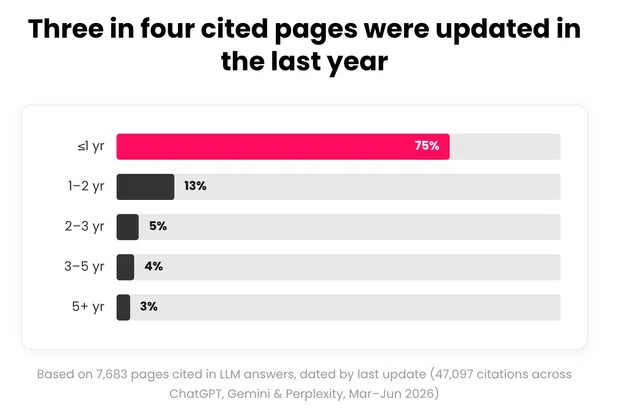
- Originality and Firsthand Experience: As AI models become saturated with generic content, they are prioritizing "high-value" signals. This includes proprietary data, unique survey results, and expert quotes. Content that simply mirrors existing web information will eventually be filtered out, whereas content that provides a unique angle or new data becomes a high-value asset for an AI’s training and retrieval data.
Measuring Visibility in the AI Era
Measuring the success of these efforts requires a departure from traditional keyword rankings. Marketers should focus on:
- Prompt Testing: Manually testing 20 to 50 relevant industry questions across various LLMs to determine if the brand appears in the citations.
- Referral Traffic Analysis: Monitoring Google Analytics for traffic specifically from AI-associated domains like
chatgpt.com,perplexity.ai, andgemini.google.com. - Sentiment Monitoring: Utilizing social listening tools to track how the brand is discussed on forums, which directly correlates to the tone and information the AI will associate with the brand in its responses.
Implications and Future Outlook
The industry is currently experiencing a transition where "hacks" and "black-hat" SEO tactics are being rapidly devalued. Data from 2026 indicates that search engines are becoming increasingly sophisticated at identifying and discounting "thin" content, such as generic listicles that were once the bread and butter of SEO strategies.
The long-term implication for marketing teams is a return to brand-centric fundamentals. As AI models become the primary gateway for information, the brands that win will be those that have successfully built a "reputation footprint." This involves a holistic approach: creating a robust, crawlable website, fostering authentic community engagement, and ensuring that the brand’s messaging is consistent across every digital channel.
Ultimately, AI search optimization is less about "gaming" a machine and more about ensuring that the digital identity of a brand accurately reflects its real-world authority. As the reliance on generative answers grows, the bridge between high-quality content and algorithmic visibility will only continue to narrow, making a thoughtful, consistent, and user-focused strategy the only viable path forward in the age of intelligent search.