Elevating AI Coding Agents: 10 Essential Design Skills and Directories to Transform Machine-Generated Code

Artificial intelligence coding agents have fundamentally transformed software development, making the generation of functional code faster and more accessible than ever before. Yet, a persistent challenge remains: while these systems can effortlessly write complex algorithms and robust backend logic, producing user interfaces that possess genuine aesthetic appeal and visual hierarchy is remarkably difficult. Out-of-the-box outputs from models integrated into popular coding environments frequently default to predictable styling choices—overusing generic purple gradients, uniform rounded corners, and ubiquitous typefaces like Inter—resulting in functional layouts that ultimately lack distinct character or creative conviction.
This limitation is not indicative of an inherent flaw in the agent’s processing capabilities, but rather a reflection of a fundamental absence: the agent inherently lacks human taste, contextual design intuition, and an internalized understanding of artistic direction. However, the emergence of modular AI skills is beginning to bridge this gap, transforming how AI coding assistants approach front-end development and visual design.
Understanding the Evolution of AI Design Integration
The integration of specialized design frameworks into AI environments represents a paradigm shift in how machine-learning models interpret visual directives. Historically, developers relied heavily on manual prompt engineering, painstakingly instructing an agent on color theory, typography, and spacing with every new query. This iterative process was inefficient and yielded inconsistent results across different sessions.
The introduction of lightweight markdown-based configuration files—commonly referred to as AI skills—has streamlined this process. These files can be seamlessly integrated into advanced development environments and coding agents such as Claude Code, Codex, Cursor, and Windsurf. Once installed, these skills act as localized rulebooks, endowing the underlying large language models with specialized aesthetic frameworks, ranging from classical Swiss typographic grids to advanced mathematical color spaces. By shifting design knowledge from static human-read guidelines into executable parameters for machine agents, developers can systematically elevate the visual standard of AI-generated applications.
To address the widespread aesthetic homogeneity in AI-generated software, a growing ecosystem of specialized tools, repositories, and directories has emerged. Below is an exhaustive breakdown of ten pivotal design-focused AI skills and directories that significantly enhance an agent’s design vocabulary.
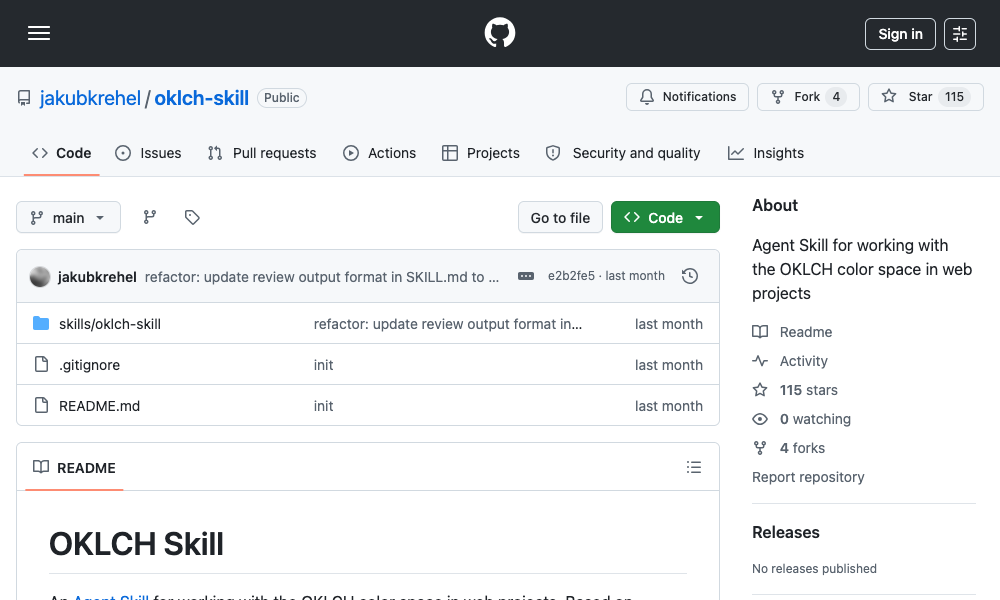
- OKLCH Color Skill
The OKLCH Color Skill addresses one of the most persistent hurdles in digital design: color predictability. Traditional color models like HSL often suffer from hue drift, where adjustments to lightness unintentionally alter the perceived color hue, making systematic palette generation unreliable.
This skill equips coding agents with the capability to leverage the OKLCH color space—a perceptually uniform alternative that maintains consistent visual weight across different lightness and chroma values. Once integrated via simple package management commands, the agent learns to automatically convert color formats, generate cohesive palette scales ranging from 50 to 950, derive accessible dark-mode variations through precise lightness manipulation, and rigorously check contrast ratios against stringent WCAG 2 and APCA standards. Furthermore, it natively constructs Tailwind CSS v4 themes utilizing accurate OKLCH tokens, ensuring that color implementations remain robust across light and dark interfaces alike.
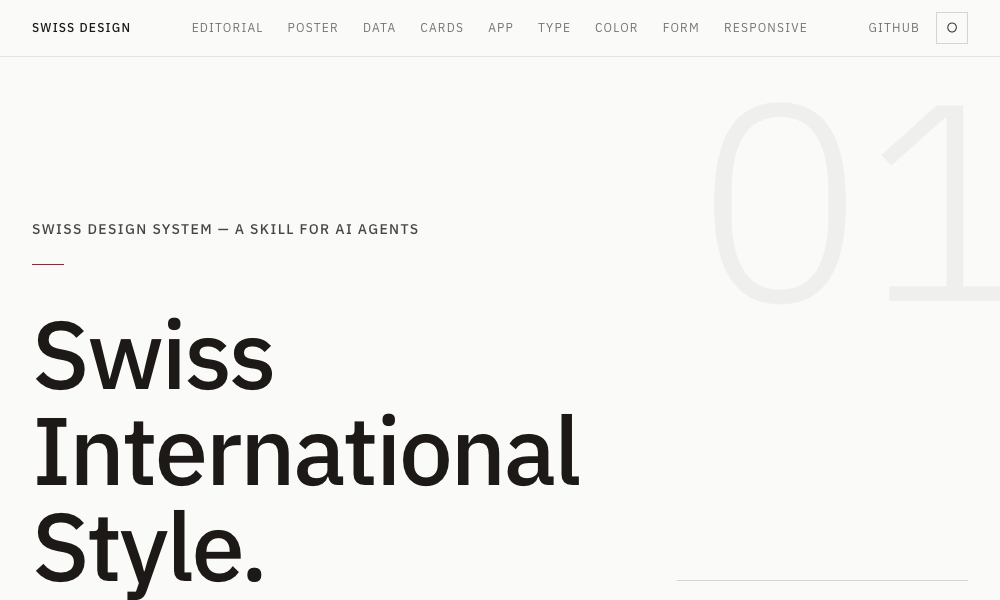
- Swiss Design System Skill
For projects requiring strict structural clarity, minimalist layouts, and uncompromising readability, the Swiss Design System skill introduces the foundational principles of the Swiss International Style to AI agents. Characterized by the extensive use of grotesque sans-serif typography—including timeless typefaces like Helvetica, Univers, and Neue Haas Grotesk—this design language prioritizes grid-based alignment, generous whitespace, and restrained color palettes.
The skill integrates comprehensive font specimen rankings, historical grid system references inspired by pioneering typographer Josef Müller-Brockmann, and architectural guidelines derived from both the Zurich and Basel schools of thought. By translating these historical principles into practical Tailwind CSS utility classes, the coding agent can autonomously design landing pages, editorial layouts, and complex data dashboards that maintain a rigorous visual hierarchy without relying on decorative excess.
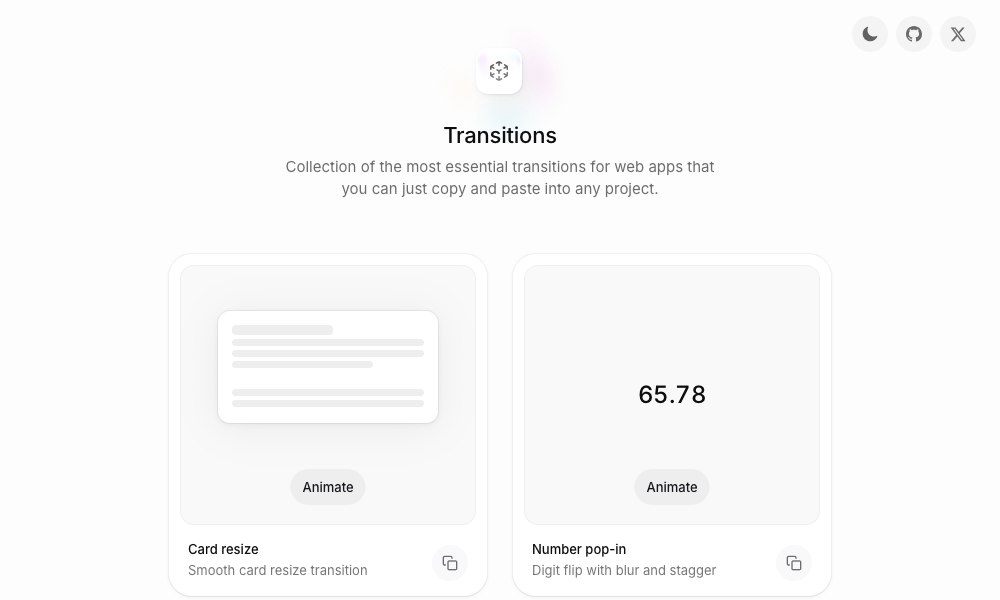
- Transitions.dev
Interface fluidity is frequently overlooked by standard AI coding agents, which often generate static components that abruptly appear or disappear without spatial context. Transitions.dev provides a curated collection of micro-interactions and UI transitions packaged as both a visual showcase and an installable agent skill.
Covering essential motion patterns—such as dynamic card resizing, number pop-ins featuring digit-flip and blur effects, and diagonal sliding notification badges—the skill supplies production-ready CSS code derived directly from real-world UI implementations. By referencing these optimized patterns, developers can instruct their coding assistants to apply smooth, context-aware animations to modals, dropdowns, and interactive elements, significantly enhancing the tactile feel of the application.
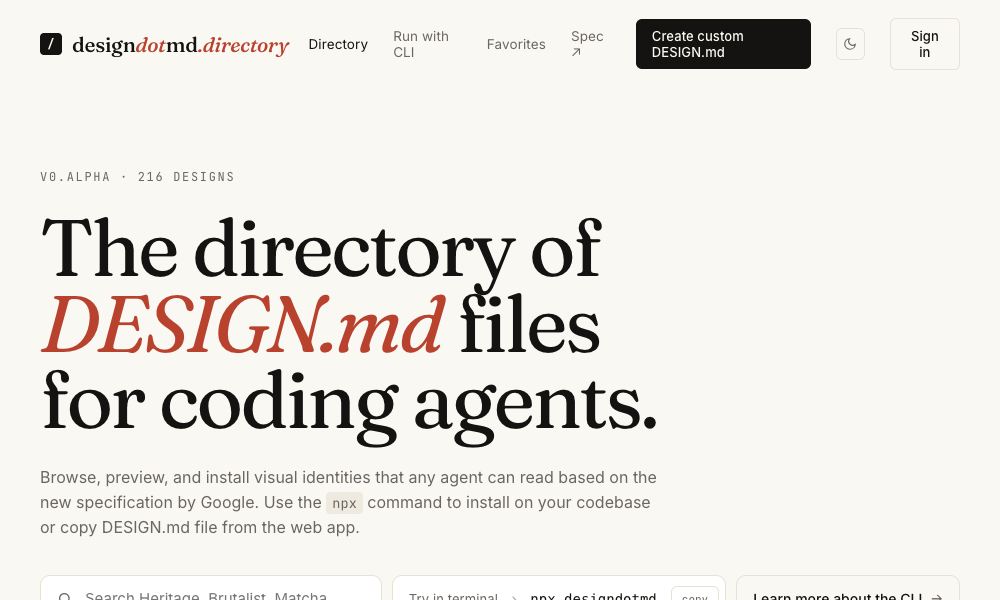
- DESIGN.md Directory
For teams seeking a frictionless method to standardize aesthetic guidelines without complex command-line installations, the DESIGN.md directory offers a streamlined solution. This growing collection of modular markdown files outlines comprehensive design systems, detailing specific color palettes, typography scales, spacing tokens, component specifications, and overarching layout principles.
Implementing a design language from this directory requires minimal effort: developers simply download or copy a preferred style configuration, place it directly into the root directory of their project as a DESIGN.md file, and allow the coding agent to parse it automatically. Because modern development agents natively read project-level documentation, the assistant immediately adopts the specified aesthetic framework for every subsequent component and page layout it generates, ensuring consistent brand compliance across the codebase.
- Agents with Taste
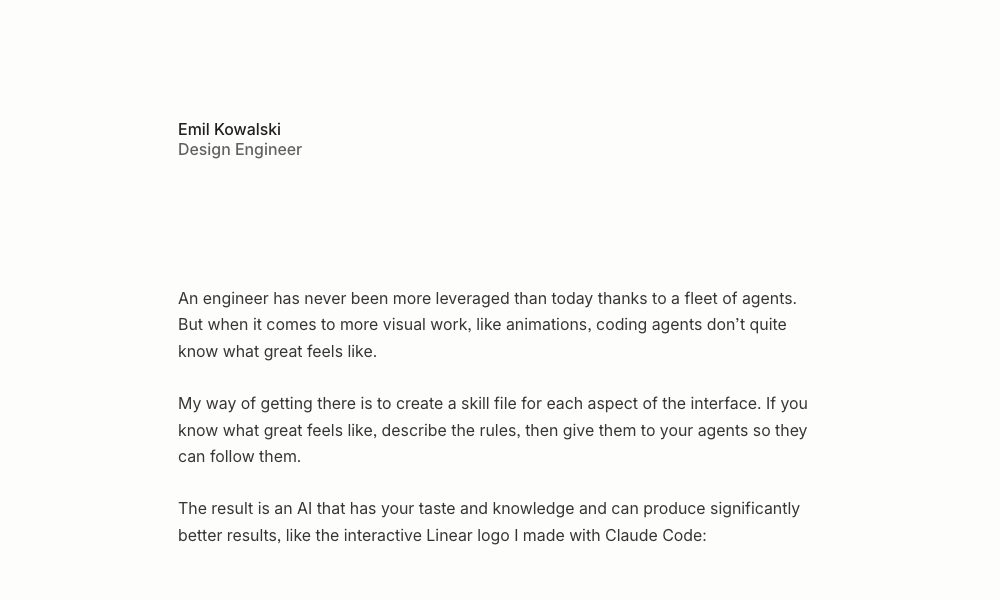
Developed by prominent design engineer Emil Kowalski, Agents with Taste is an advanced installable skill that encapsulates professional-grade animation principles, easing curve selections, duration guidelines, and strict typography rules.
The skill provides agents with an actionable decision flowchart for determining appropriate easing curves based on specific interaction contexts, alongside explicit duration benchmarks—such as 100 to 150 milliseconds for micro-interactions and 200 to 300 milliseconds for modal transitions. Additionally, it enforces readability best practices, such as capping body text width at 65 characters. By integrating this skill, developers ensure that their AI assistants move beyond basic functionality to deliver polished, professionally timed user experiences.
- Hue
Matching an existing brand identity has historically required extensive manual token configuration. The Hue open-source skill, developed by Dominik Martin, solves this challenge by enabling an AI agent to analyze a specific brand via a URL, company name, or reference screenshot, subsequently generating a complete, production-ready design system.
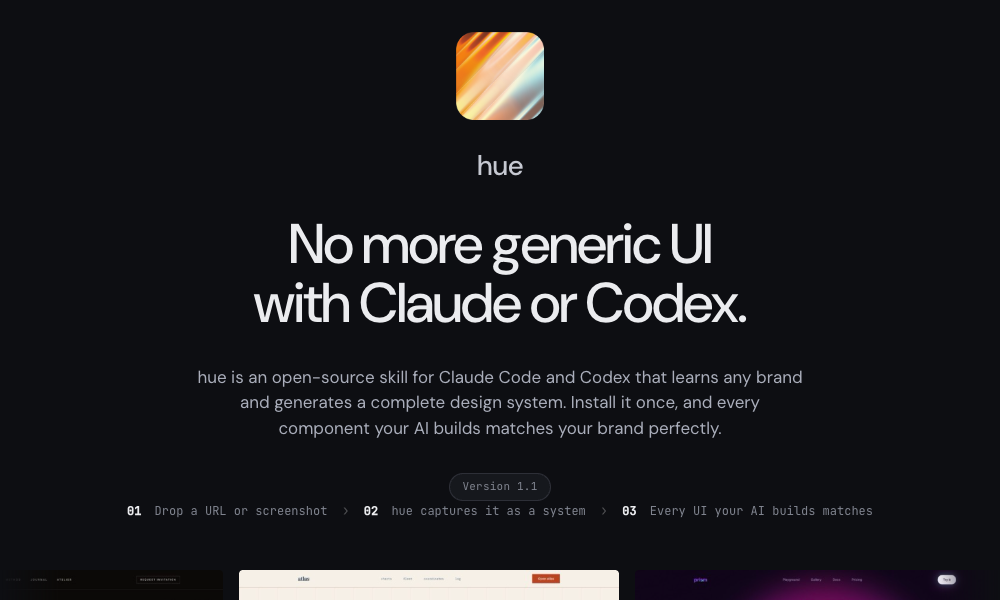
Hue builds comprehensive design models complete with color tokens, typography scales, spacing frameworks, component guidelines, dark-mode configurations, and icon recommendations. Featuring 17 built-in brand archetypes ranging from classical maritime aesthetics to modern editorial fragrance houses, the tool utilizes structured YAML configurations and HTML landing page specimens to demonstrate the generated system in action. This enables development teams to rapidly prototype applications that accurately reflect existing corporate identities.
- Refero Styles
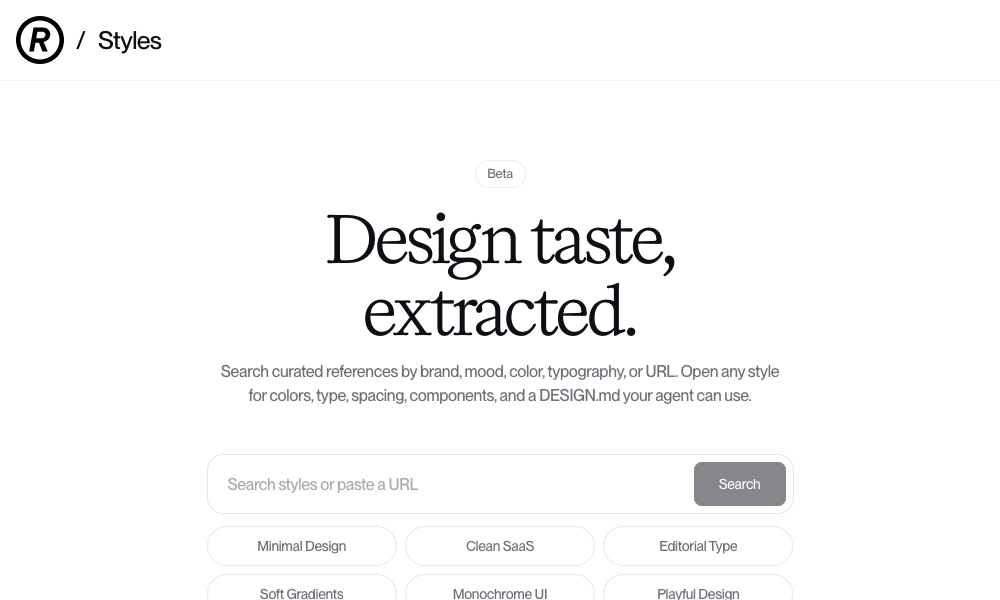
Refero Styles bridges the gap between massive visual design libraries and automated coding agents. Operating as an extensive visual search engine containing over 150,000 real application screens and 6,000 user flows from industry-leading products like Stripe, Linear, Notion, and Figma, Refero provides granular style breakdowns for virtually any design pattern.
Through its installable agent skill and accompanying Model Context Protocol (MCP) server, developers can grant their coding assistants direct access to this expansive reference library. The agent can dynamically query real product interface patterns on demand during development, extracting precise color palettes, typographic hierarchies, and layout structures to replicate proven design architectures within new software projects.
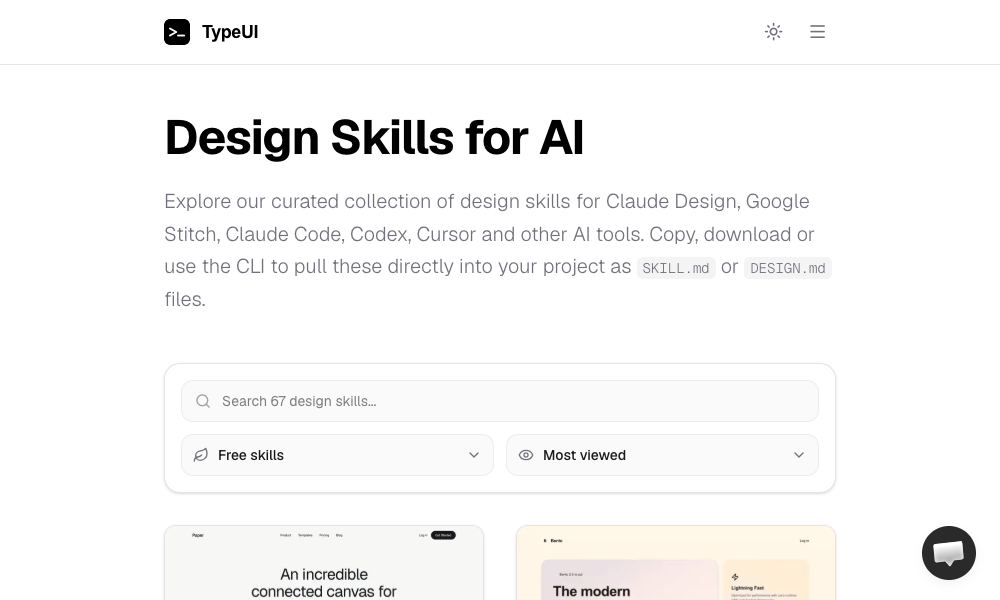
- TypeUI Design Skills
TypeUI Design Skills offers a diverse gallery of optimized configuration files designed to integrate seamlessly across multiple AI coding platforms, including Claude Code, Cursor, and Codex. Each skill package is structured to instill a distinct, high-end visual aesthetic into the underlying model.
Utilizing straightforward package management commands or direct file integration, developers can pull specific design styles directly into their local development environments. TypeUI also maintains compatibility with local agent ecosystems such as OpenClaw, ensuring that development teams utilizing decentralized or self-hosted AI models can easily enforce standardized aesthetic guidelines.
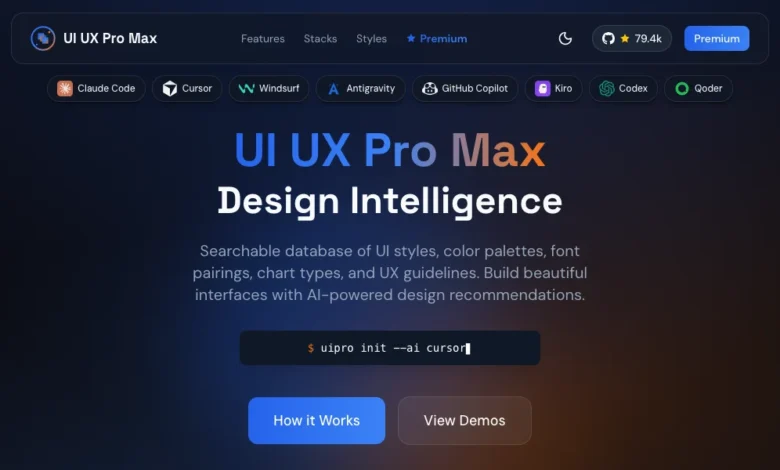
- UI/UX Pro Max Skill
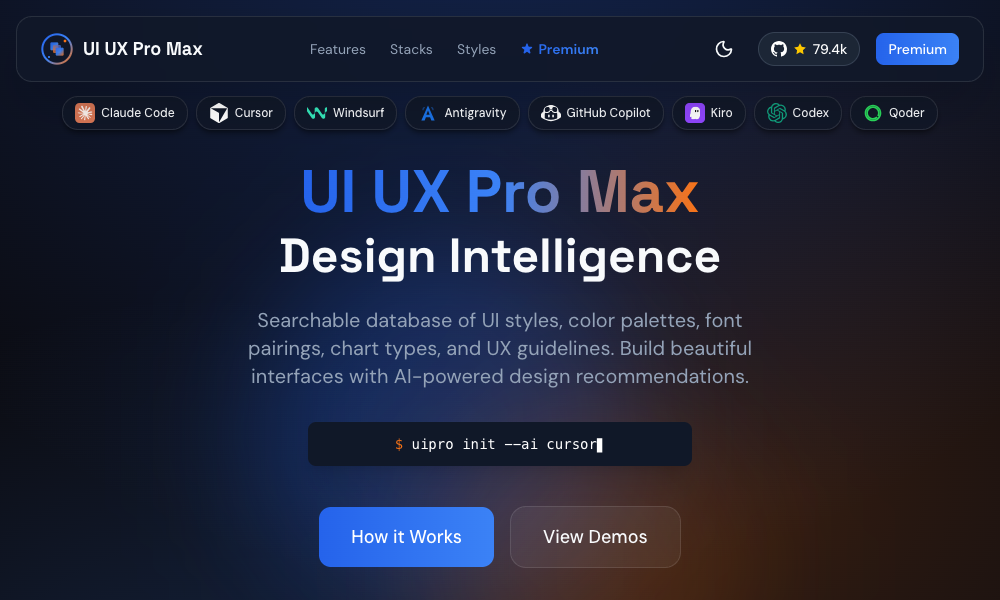
Representing one of the most comprehensive frameworks available, the UI/UX Pro Max skill incorporates 161 distinct reasoning rules and 67 unique UI styles. At its core is a sophisticated Design System Generator that analyzes project requirements—such as a specialized domain description—and formulates a complete design architecture covering layout patterns, color harmonies, typography, visual effects, and explicit anti-patterns to avoid.
Supporting a wide array of technology stacks including React, Next.js, and HTML paired with Tailwind CSS, the skill integrates smoothly with prominent development environments like Visual Studio Code, Cursor, and Windsurf. By handling the entire design workflow from initial requirements analysis to final component generation, this framework serves as an all-in-one solution for teams seeking robust, end-to-end aesthetic governance.
- AI UX Playground
As conversational interfaces and specialized agentic products proliferate, the design requirements for AI-driven software have evolved significantly. AI UX Playground provides a dedicated library of UX design patterns specifically tailored for products interacting with large language models, including ChatGPT, Claude, Perplexity, and Google Gemini.
Rather than focusing purely on visual cosmetics, this resource documents specialized interaction patterns, use cases, and platform-specific implementation guidelines. It empowers developers to construct intuitive, user-friendly interfaces tailored specifically to the unique constraints and capabilities of conversational and agent-based applications.
Broader Implications and Future Outlook
The rapid proliferation of design-focused AI skills signals a fundamental evolution in software engineering and digital design. Historically, design expertise has been encapsulated within static design systems, human-readable documentation, and design-to-code handoff tools that frequently resulted in translation errors during implementation.
By converting design philosophy into executable machine-readable rules, the industry is moving toward a model where aesthetic governance is automated at the code generation level. This shift empowers engineers to build sophisticated, visually striking applications without requiring dedicated front-end design resources for every iteration. However, it also redefines the role of the human designer: rather than manually drawing individual buttons and screens, modern designers are increasingly becoming authors of executable design systems—defining the logical rules, constraints, and taste parameters that govern how autonomous coding agents construct digital experiences. As these tools continue to mature, the gap between functional code and exceptional visual design will narrow substantially, setting a new baseline standard for software craftsmanship across the industry.