The digital landscape is undergoing a profound structural shift that is fundamentally rewriting the rules of website optimization, traffic acquisition, and data governance. For decades, search engine optimization (SEO) professionals operated within a relatively straightforward binary framework regarding automated web traffic: crawlers were either permitted to index a site, or they were blocked via standard server configurations. This simplistic model—primarily reliant on the robots.txt file and basic IP filtering—was historically sufficient for managing the handful of major search engines that dominated the internet.
However, the rapid maturation of artificial intelligence, large language models (LLMs), and autonomous software agents has rendered traditional bot management obsolete. Today’s websites are no longer visited solely by traditional search engine crawlers indexing pages for algorithmic ranking. Instead, digital properties face a relentless influx of AI training crawlers, real-time retrieval-augmented generation (RAG) bots, user-initiated fetches, and autonomous AI agents acting on behalf of individual consumers. Because these disparate entities serve vastly different functions, the historical practice of lumping them together under the monolithic label of "AI bots" creates severe risks for digital visibility, brand monetization, and website security.
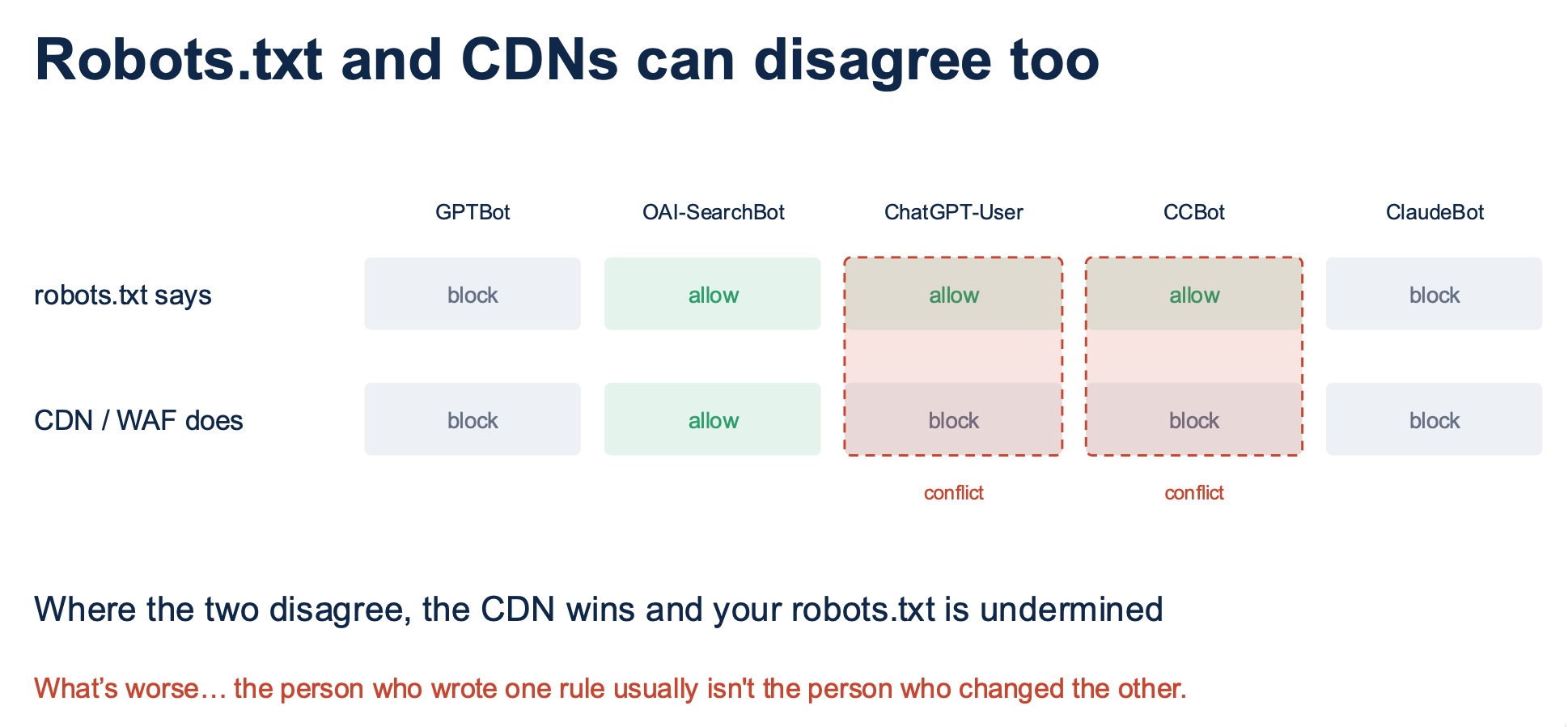
The growing disconnect between search engine optimization strategies and technical infrastructure has created a blind spot for many corporate digital teams. While SEO specialists meticulously craft policies within robots.txt files, actual enforcement of these rules is increasingly handled at the infrastructure level by Content Delivery Networks (CDNs), Web Application Firewalls (WAFs), and third-party bot mitigation services. Crucially, these security layers frequently operate independently of marketing and SEO departments, sometimes enforcing rigid block lists that directly contradict an organization’s commercial goals without the knowledge of the search marketing team.
The Evolution of Web Crawlers and the Death of the Binary Model
To understand the current crisis in bot management, one must examine how the web has evolved from a static document repository into a dynamic, agent-driven ecosystem. Historically, web crawlers functioned as passive indexers. They downloaded HTML documents, parsed links, and stored data in centralized databases to serve static blue links to human users. The relationship between web publishers and search engines was governed by a tacit social contract: publishers allowed indexing in exchange for referral traffic.

The advent of generative AI broke this contract. AI companies now deploy massive crawler infrastructures designed not merely to index pages for referral traffic, but to ingest vast corpuses of text, imagery, and code to train proprietary foundation models. Simultaneously, retrieval bots fetch real-time information to answer conversational queries directly within AI interfaces, often bypassing the traditional website click entirely.
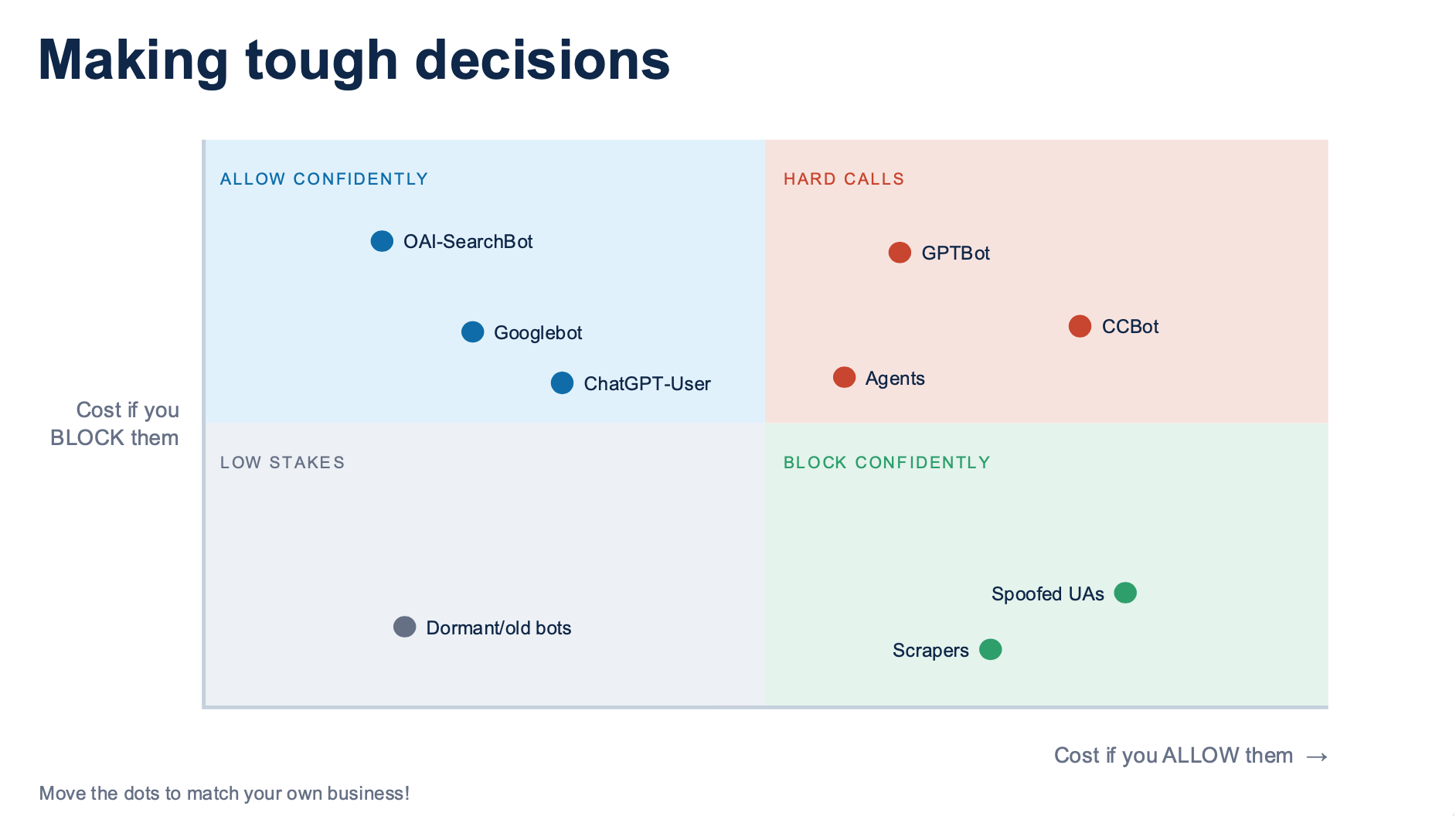
This creates a complex strategic dilemma for website owners. Blocking an AI crawler utilized exclusively for foundational model training prevents a company’s intellectual property from being co-opted without compensation, a priority for many legal and executive teams. Conversely, blocking a retrieval bot or an autonomous consumer agent can result in the complete erasure of a brand from AI-generated answers, causing catastrophic drops in organic visibility and downstream conversions. Lacking granular management tools, many organizations implement blunt, blanket bans that sacrifice valuable search and discovery opportunities in the name of data protection.
The Infrastructure Disconnect: Robots.txt vs. CDN Enforcement
One of the most pressing operational vulnerabilities in modern digital management is the growing chasm between content directives and security enforcement. The robots.txt protocol—long the foundational cornerstone of search engine governance—is fundamentally voluntary. It relies on the ethical compliance of crawling entities to respect instructions specified within the text file.
As malicious web scraping, DDoS attacks, and aggressive AI data harvesting have surged, enterprises have increasingly turned to robust infrastructure-level defenses. CDNs and advanced bot mitigation platforms now sit between the open internet and origin servers, automatically intercepting and filtering incoming traffic based on behavioral heuristics, browser fingerprinting, and threat intelligence feeds.
These security systems are typically managed by IT, cybersecurity, or DevOps teams whose primary Key Performance Indicators (KPIs) are system stability, mitigation of malicious traffic, and server cost reduction. Consequently, security engineers may implement aggressive bot-blocking rules that inadvertently lock out legitimate AI retrieval agents or emerging search crawlers. Because SEO teams rarely possess deep visibility into CDN log files or firewall configurations, these critical blocks often occur silently, leaving marketers baffled by sudden declines in organic performance and visibility metrics.
The Rise of Autonomous Agents and the Threat of Digital Invisibility
Compounding these technical challenges is the rapid emergence of autonomous AI agents. Unlike traditional crawlers that follow predictable, programmatic paths, modern personal assistants and commercial agents can browse the web with behavior that closely mimics human users. They can execute JavaScript, render dynamic pages, trigger analytical tracking pixels, and interact with web forms.
This behavioral sophistication makes autonomous agents exceptionally difficult to distinguish from genuine human visitors using standard web analytics or basic bot-detection scripts. As consumers increasingly delegate tasks—such as product research, price comparison, itinerary planning, and contract negotiation—to personal AI agents, these software programs are becoming the primary gatekeepers of consumer choice.
If an organization’s bot management policy mistakenly identifies an advanced consumer agent as a malicious scraper or automated threat, the consequences extend far beyond traditional SEO metrics. An enterprise blocked from an agent’s consideration set does not merely lose a search ranking; it vanishes entirely from the transactional loop. In a hyper-competitive digital economy where AI intermediaries broker an ever-growing share of consumer decisions, digital invisibility equals commercial irrelevance.
Shifting from Block Lists to Comprehensive Bot Policies
Industry experts argue that the traditional reliance on reactive block lists is no longer viable. Enterprises must transition toward sophisticated, deliberate bot policies that account for the nuanced realities of modern web traffic. Crafting these policies requires answering three fundamental questions regarding every category of automated visitor: Who is accessing the content, what is their explicit purpose, and what are the commercial and technical consequences of permitting or denying access?
Achieving this level of granular control requires breaking down traditional organizational silos. Bot management can no longer be delegated solely to SEO specialists or isolated within IT security departments. Instead, successful digital governance demands cross-functional collaboration involving:
- SEO and Marketing Teams: To evaluate the value of referral traffic, brand visibility within generative engines, and the SEO implications of various crawler restrictions.
- Engineering and DevOps Teams: To configure CDNs, WAFs, and server-level rules that accurately differentiate between benign crawlers, valuable AI agents, and malicious scrapers.
- Legal and Compliance Teams: To establish clear guidelines regarding intellectual property rights, data scraping, copyright protection, and compliance with emerging global AI regulations.
- Commercial and Executive Leadership: To align technical bot management strategies with broader business models, monetization goals, and competitive positioning.
Broader Implications and Future Outlook
The maturation of AI bot management marks a turning point in how organizations interact with the digital ecosystem. As generative search models and autonomous agents continue to capture market share from traditional search engines, the boundary between cybersecurity, legal compliance, and search marketing will continue to blur.
Organizations that fail to modernize their approach risk falling into one of two damaging extremes: either exposing their proprietary assets to uncompensated harvesting through lax controls, or inadvertently rendering themselves invisible to the next generation of digital consumers through heavy-handed, uncoordinated blocks.
Ultimately, mastering bot management in the age of artificial intelligence requires treating web traffic not as a binary technical challenge, but as a strategic asset requiring ongoing oversight, cross-departmental alignment, and dynamic policy enforcement.