Bridging the Gap Between AI Speed and Business Intent in Marketing Technology Development

The rapid integration of artificial intelligence into marketing technology has fundamentally altered the software development landscape, democratizing the ability to build applications and automate complex workflows. While generative AI tools can produce functional code in seconds, the sheer velocity of production has created a paradox: faster output often leads to higher rates of technical debt and misaligned business outcomes. The ease of "vibe coding"—the practice of using natural language prompts to generate software solutions—frequently bypasses the essential rigor of requirements gathering, resulting in projects that function technically but fail to deliver strategic value. To harness the true potential of AI, marketing teams must pivot from viewing AI as a "magic button" to treating it as a specialized, albeit literal-minded, technical partner that requires structured, deliberate instruction.
The Evolution of Requirements in the Era of Automation
Historically, the development of marketing software was a gated process. Business analysts, product managers, and developers worked in silos, moving through a linear lifecycle: requirement discovery, documentation, development, testing, and deployment. This structure was designed to mitigate risk, ensuring that the final output matched the initial business objective. Today, AI has collapsed these stages. A marketer with little technical background can now prompt a large language model (LLM) to build a landing page, a lead-scoring algorithm, or an automated email trigger.
The industry has seen a massive shift in the last 24 months. According to recent surveys by the Technology Services Industry Association, over 60% of marketing departments are now using AI-assisted tools for daily technical tasks. However, internal performance data from enterprise IT departments indicates that nearly 40% of these AI-generated projects require significant manual remediation before they can be safely integrated into a production environment. The primary cause is not the lack of AI capability, but the absence of predefined, high-fidelity project specifications.
Establishing a Chronology of Development Success
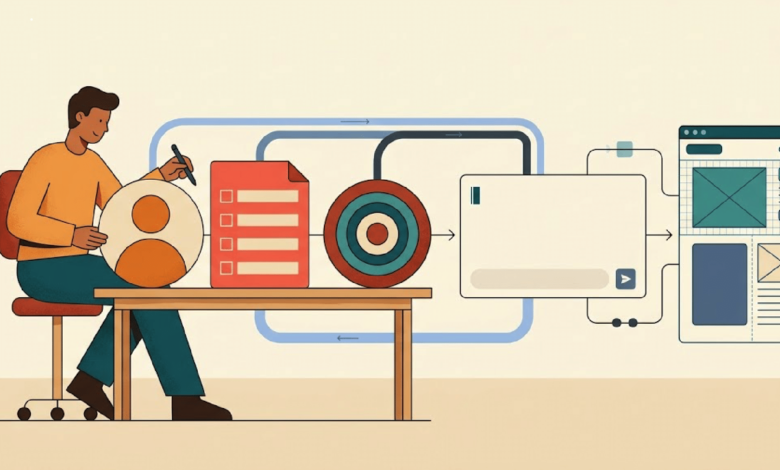
For teams looking to transition from reactive, prompt-heavy development to a proactive framework, the process must mirror traditional software engineering disciplines. The transformation begins before a single prompt is typed into an interface.
- Strategic Intent (Weeks 1-2): Before initiating a project, leadership must define the "Why." This involves drafting a Business Requirements Document (BRD) that outlines the overarching business goal and the specific key performance indicators (KPIs) that define success.
- Decomposition (Week 3): Complex initiatives are broken down into Epics and User Stories. This ensures that the AI is not tasked with a monolithic request, but rather a series of discrete, manageable logic blocks.
- Criteria Definition (Week 4): Establishing Acceptance Criteria (AC) serves as the "source of truth." These criteria define the boundaries and constraints, effectively acting as a checklist for the AI to follow.
- Iterative Execution (Ongoing): The development phase follows a sprint cadence, where small segments of code are generated, tested against the AC, and validated before moving to the next requirement.
Leveraging Proven Development Artifacts
The reliance on formal documentation may seem antithetical to the "instant" nature of AI, yet these artifacts are the most effective guardrails against project failure.
Business Requirements Documents remain the bedrock of large-scale initiatives. By forcing stakeholders to articulate success metrics early, they prevent "scope creep"—a frequent issue in AI development where the model begins to hallucinate features that were never requested. When a developer or a marketer uses a BRD as a foundational prompt, the resulting code remains anchored to the business’s high-level objectives.
User stories, popularized by Kent Beck in the context of Extreme Programming, provide the necessary granular focus. A user story follows the standardized syntax: "As a [user persona], I want to [action], so that [value/benefit]." By using this format, marketers provide the AI with the context of the end-user’s motivation, which in turn influences how the AI prioritizes technical logic. For example, a prompt asking for "an address autofill feature" is prone to errors; a prompt containing a user story—"As a customer checking out, I want my address to autofill so that I can complete my purchase 30% faster"—gives the AI the necessary intent to optimize for speed and UX.
The Rise of Prompt Engineering Frameworks
To move beyond trial-and-error, industry leaders are adopting structured prompt frameworks. One of the most effective, the TAG framework, forces the user to define three elements: Task, Audience, and Guardrails. By explicitly stating who the audience is and what the technical constraints are (e.g., "Must be GDPR compliant," "Must utilize existing API documentation"), the user drastically reduces the likelihood of generating unusable or insecure code.
Furthermore, the emergence of "Prompt Logs" has become a critical management practice. These logs serve as a library of successful prompts and patterns that have proven effective for specific organizational needs. By codifying these patterns, organizations build a repository of "institutional memory," preventing team members from reinventing the wheel and ensuring that security and reliability standards are consistently applied across all AI-generated assets.
Expert Analysis: The Role of the Human Editor
The implication of this shift is clear: the marketer of the future is not just a content creator, but an editor of AI-generated systems. As technical roles become more fluid, the responsibility for quality control rests on the shoulders of the project owner. The AI acts as a tireless junior developer, but the human remains the architect.
Industry analysts suggest that the "vibe coding" phase—the honeymoon period of AI adoption—is coming to a close. We are entering a phase of "professionalized AI operations." Companies that treat AI as a partner in a disciplined development cycle are seeing a 30% to 50% increase in development velocity without sacrificing project stability. Conversely, those that continue to use AI in an ad-hoc, unstructured manner are finding that the cost of "technical cleanup" is beginning to outweigh the efficiency gains of the initial code generation.
Broader Implications and Strategic Outlook
The shift in how requirements are gathered represents a broader democratization of technology. As the barrier to entry for building software lowers, the premium on strategic thinking increases. The technical execution is becoming a commodity, while the ability to clearly define, articulate, and manage business requirements is becoming the primary differentiator for successful marketing teams.
For enterprise organizations, the path forward involves integrating AI-driven development into the existing project management lifecycle. This does not mean abandoning agility; it means augmenting it. By utilizing AI to assist in drafting BRDs, refining user stories, and identifying gaps in requirements, teams can maintain the speed of modern development while ensuring that every line of code serves a defined business purpose. The challenge is no longer about how to write code—it is about how to define the right problem for the machine to solve. As organizations continue to refine these workflows, the focus must remain on the intersection of human strategic intent and machine-led execution, ensuring that the speed of innovation never outpaces the clarity of the organizational vision.