Amazon S3 Storage and Advanced Analytics Capabilities Arrive on Vercel Marketplace and v0

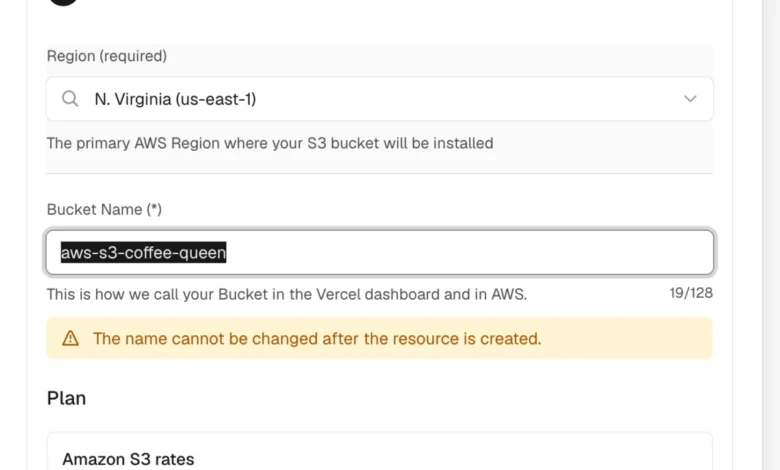
The modern architecture of web and artificial intelligence applications has taken another significant step toward operational unification as Amazon Web Services (AWS) brings its foundational storage infrastructure directly to the Vercel ecosystem. Developers working within Vercel can now provision and manage Amazon Simple Storage Service (Amazon S3) resources—including specialized S3 Tables and S3 Vectors—directly from the Vercel Marketplace and the AI-driven development environment, v0.
This integration bridges the gap between high-performance frontend deployment workflows and enterprise-grade cloud storage. Historically, provisioning robust cloud storage required developers to context-switch away from their primary application environments, navigating complex IAM (Identity and Access Management) console settings, manual credential generation, and intricate security policy configurations. By embedding S3 capabilities directly into the Vercel dashboard and v0, AWS and Vercel have streamlined the creation of secure, scalable data backends for everyday object storage, big data analytics, and generative AI applications.
Background and Strategic Evolution
The collaboration between Vercel and AWS reflects a broader industry trend toward developer-experience (DevEx) consolidation. Over recent years, Vercel has emerged as a premier platform for deploying serverless web applications, particularly those built on Next.js. However, as web applications increasingly evolve into intelligent, data-intensive systems, the demand for adjacent cloud services—databases, vector stores, and object repositories—has surged.
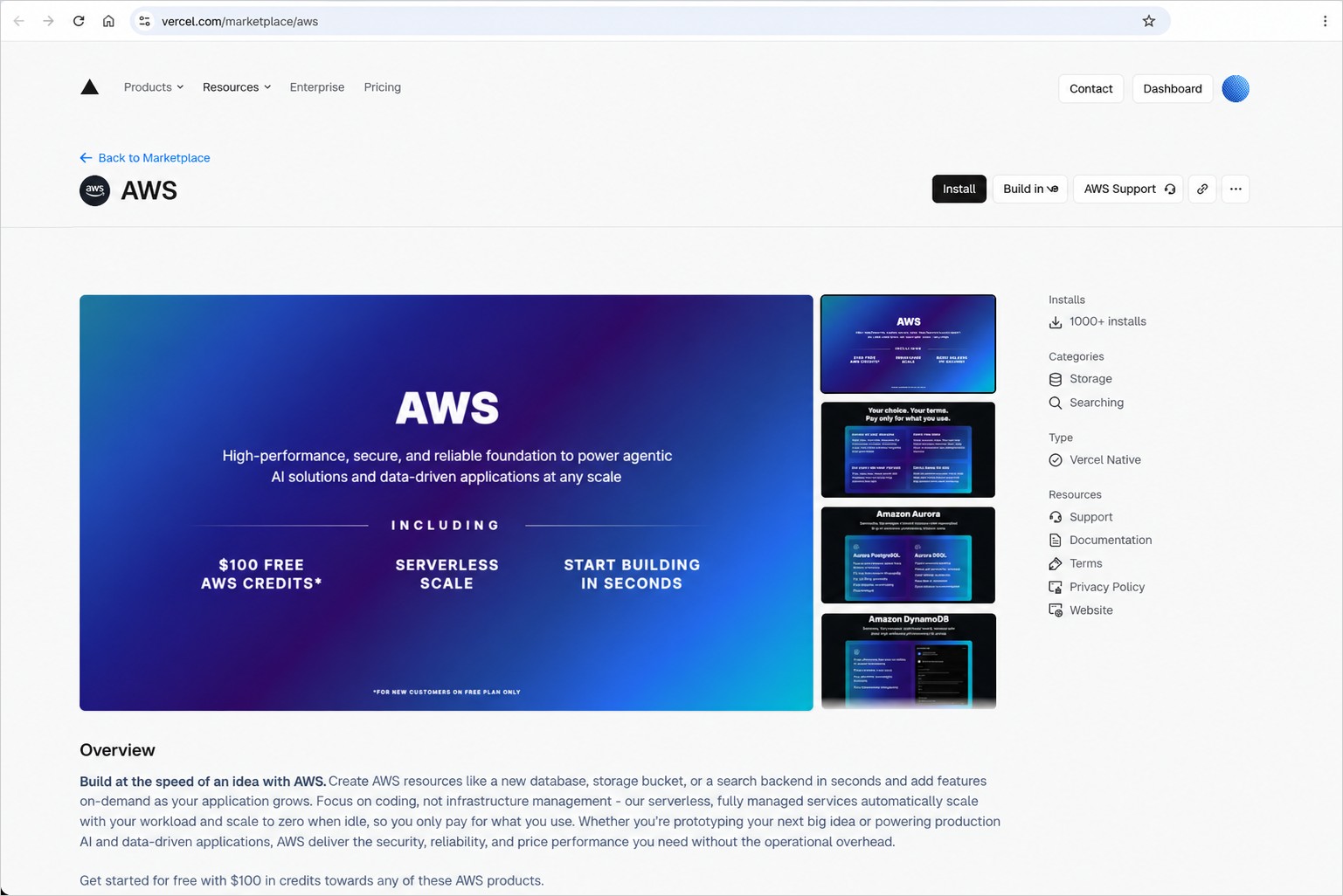
AWS has systematically addressed this by integrating its key database and backend services into the Vercel Marketplace. Prior to the introduction of S3, developers could already provision Amazon Aurora for relational database needs, Amazon DynamoDB for NoSQL scalability, and Amazon OpenSearch Serverless for search functionalities. The missing link was object storage, which underpins file uploads, media management, data lakes, and modern retrieval-augmented generation (RAG) pipelines for AI agents.
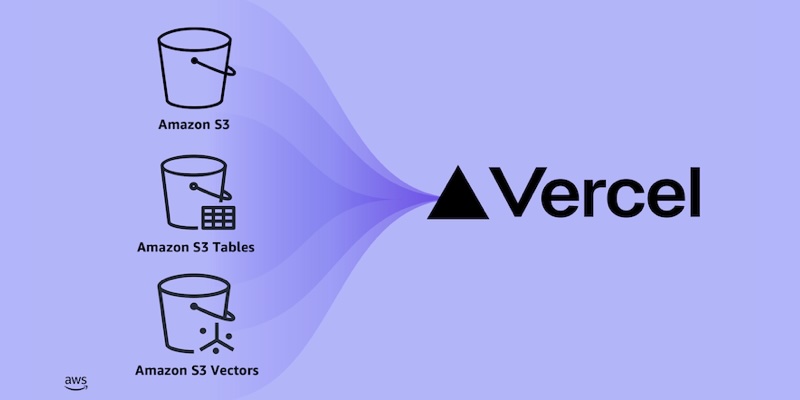
By introducing Amazon S3, S3 Tables, and S3 Vectors to the platform, Vercel now offers a comprehensive, end-to-end application stack managed under a single AWS account with consolidated billing. This strategic alignment reduces friction for engineering teams ranging from early-stage startups to enterprise organizations, allowing them to focus on feature delivery rather than infrastructure plumbing.
Three Distinct Workloads: General Purpose, Analytics, and AI
The integration covers three specialized storage workloads, addressing the diverse computational and data requirements of contemporary software engineering.
First, standard Amazon S3 general-purpose buckets provide highly durable, scalable object storage tailored for traditional web assets, media libraries, and file-upload pipelines. Developers can seamlessly integrate object storage into serverless functions using standard AWS SDKs alongside Vercel’s secure authentication providers.
Second, Amazon S3 Tables introduce purpose-built object storage optimized for analytics. As data volumes expand, maintaining analytical query performance can become a bottleneck. S3 Tables solve this by providing fully managed Apache Iceberg tables featuring automated maintenance and compaction. This allows lightweight query engines, such as DuckDB running within Vercel Functions, to execute complex aggregations and analytical queries over large data lakes directly from serverless endpoints without managing dedicated cluster infrastructure.
Third, Amazon S3 Vectors cater directly to the surging demand for generative AI and semantic search architectures. Modern AI applications—such as support bots, intelligent document processors, and semantic search engines—rely on vector embeddings to retrieve relevant contextual data. S3 Vectors provide native storage and querying capabilities for high-dimensional vectors directly within S3, eliminating the mandatory requirement to provision and maintain a separate, dedicated vector database for many use cases.

Streamlined Provisioning and Secure OIDC Authentication
The architectural implementation of the S3-Vercel integration prioritizes robust security without adding operational overhead. Traditionally, connecting an external application to AWS required generating and storing static access keys and secret keys within environment variables—a practice that carries inherent security risks if credentials are leaked or improperly rotated.
The new integration bypasses static keys entirely by leveraging OpenID Connect (OIDC). When a developer provisions an S3 resource through the Vercel dashboard or v0, the platform establishes a secure trust relationship. At runtime, Vercel’s awsCredentialsProvider utility exchanges a short-lived OIDC token with the AWS Security Token Service (AWS STS) to acquire temporary, highly scoped security credentials.
The integration automatically injects essential configuration parameters into the project environment, including AWS_REGION, AWS_ROLE_ARN, AWS_RESOURCE_ARN, and resource-specific bucket identifiers. Developers can pull these variables locally using the Vercel CLI (vercel link and vercel env pull) and immediately begin writing server-side logic using official AWS SDKs.
Natural Language Infrastructure Provisioning with v0
One of the most innovative aspects of the release is its deep integration with v0 by Vercel, the company’s generative user interface and application development tool. Rather than manually clicking through configuration menus, developers can use natural language prompts to describe the functionality they want to build.
For instance, a developer prompting v0 to create "a photo gallery where users upload images using AWS" will automatically trigger the provisioning of a general-purpose S3 bucket alongside the necessary frontend and backend code. Similarly, requesting "a support bot that answers questions from my PDFs" provisions an S3 Vector bucket configured for semantic retrieval, while requests for analytics dashboards automatically spin up S3 Tables. The AI assistant constructs the user interface, establishes the backend data connections, and generates production-ready code in a unified preview environment.
Deployment and Account Management Flexibility
Flexibility is a core design principle of the integration. Engineering teams can choose to create an entirely new, isolated AWS account directly through the Vercel platform to facilitate rapid prototyping and testing. To incentivize adoption, new AWS accounts created via Vercel include $100 in promotional AWS credits valid for six months.
Alternatively, established organizations can link their existing enterprise AWS accounts to the Vercel Marketplace. This allows teams to leverage their current enterprise discount programs, maintain centralized billing structures, and utilize existing security baselines. When an existing account is linked, Vercel confines its automated provisioning scope to new buckets created explicitly through the platform, preserving the integrity of legacy cloud infrastructure while granting developers modern workflow efficiencies.
Implications for the Developer Ecosystem
Industry analysts view the deep coupling of cloud infrastructure with serverless deployment platforms as the logical evolution of cloud computing. As platform-as-a-service (PaaS) and serverless environments mature, the competitive differentiator is increasingly shifting toward developer velocity and architectural completeness.
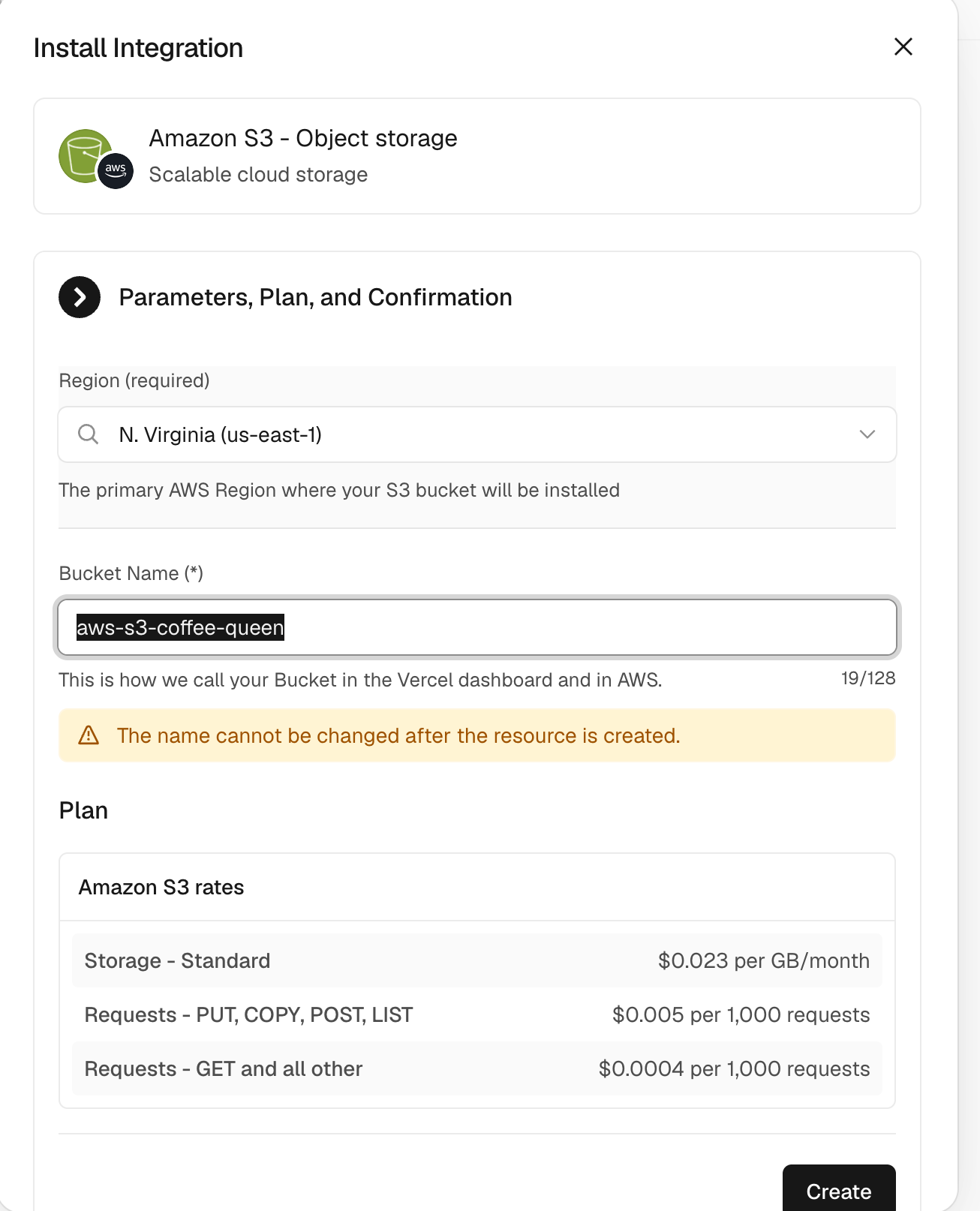
By unifying object storage, relational databases, NoSQL repositories, analytical tables, and vector stores under a singular provisioning layer, Vercel and AWS are significantly lowering the barrier to entry for building complex, AI-driven web architectures. Engineering teams are no longer required to build bespoke infrastructure management pipelines or maintain disparate configuration scripts across multiple dashboards.
Availability
Amazon S3, S3 Tables, and S3 Vectors integrations are available immediately across all commercial AWS regions supported by Vercel. Developers can begin exploring the capabilities by navigating to the Storage tab within the Vercel dashboard, visiting the AWS partner page on the Vercel Marketplace, or initiating a project build within v0. Feedback and technical discussions can be directed to community forums such as AWS re:Post for Amazon S3, ensuring ongoing collaboration between cloud infrastructure providers and the developer community as these tooling patterns continue to mature.