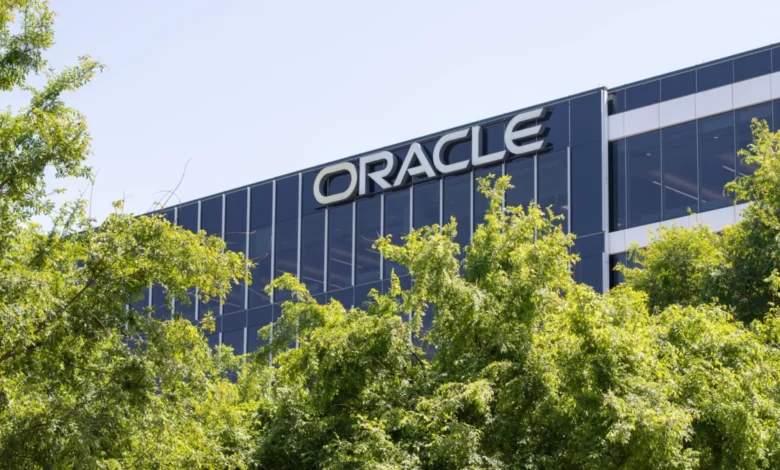
The rapid proliferation of generative AI in the enterprise has created a persistent challenge for CIOs: how to bridge the gap between massive, unstructured data lakes and the high-precision requirements of automated decision-making. At its recent annual AI World conference, Oracle announced a significant architectural expansion to its Autonomous AI Lakehouse, introducing a new Business Semantic Layer and a Business Simulation Engine. These additions, coupled with deepened support for the Apache Iceberg open table format, are designed to transform the lakehouse from a passive storage environment into an active, intelligent hub for enterprise operations.
The Strategic Shift Toward Semantic Consistency
The core of Oracle’s new strategy is the Business Semantic Layer, which aims to solve the "hallucination" and inconsistency problems that often plague AI agents. In many enterprise environments, AI models struggle to interpret data because they lack context; a "profit" metric, for instance, might be calculated differently by the finance department than by the sales operations team.
By utilizing catalog annotations, SQL annotations sourced from the Oracle AI Database, and AI-suggested analytic views, the Business Semantic Layer acts as a "source of truth" translator. It captures dimensions, hierarchies, complex calculations, and standardized Key Performance Indicators (KPIs) into reusable models. When these models are integrated with Oracle’s existing Select AI and natural-language query capabilities, the AI can interpret data with the same business definitions that human analysts use.
This approach is intended to reduce the "reconciliation tax"—the time and resources teams spend verifying AI-generated reports against manual spreadsheets. Industry observers have noted that standardizing these metrics before deploying AI is a best practice. For example, similar initiatives at global firms have demonstrated that establishing a robust semantic foundation can reduce investigation and reconciliation time by as much as 70%.
Enhancing Planning with the Business Simulation Engine
Beyond data interpretation, Oracle is aiming to capture more of the corporate performance management (CPM) market by integrating its legacy Essbase technology directly into the Autonomous AI Lakehouse. The new Business Simulation Engine allows users to perform multidimensional planning—the ability to view data across various hierarchies and variables—without the need to move data out of the lakehouse environment.
This engine supports sophisticated operations, including write-back capabilities, dynamic hierarchy rollups, and advanced allocations. For finance and operations teams, this represents a shift away from disconnected "what-if" analysis tools. Because the simulation engine operates directly on the lakehouse data, it eliminates the latency inherent in moving large datasets between an object store and a dedicated planning application. Users can interact with the engine using natural language, allowing non-technical stakeholders to generate reports and run stress tests on various business scenarios through familiar interfaces like Excel.
Advancing Data Interoperability with Apache Iceberg
As enterprises move toward "open" data architectures to avoid vendor lock-in, Oracle’s commitment to Apache Iceberg has become a centerpiece of its storage strategy. By enabling the creation, modification, and deletion of Iceberg tables using standard SQL, Oracle is positioning its lakehouse as a flexible, multi-platform environment.
This update allows data engineers to maintain a single copy of their data in an open format while using Oracle’s autonomous features to manage it. The implication is significant: data professionals can access the same Iceberg tables via Oracle while simultaneously using open-source tools like Apache Spark, or third-party platforms like Snowflake or Databricks. This interoperability reduces data duplication, lowers storage costs, and simplifies the governance overhead that typically accompanies complex, multi-cloud data estates.
Industry Implications and Market Context
The move by Oracle reflects a broader industry trend toward the "Agentic Lakehouse." Companies like Microsoft with its Fabric platform and Databricks with its Unity Catalog are also racing to unify data management and AI orchestration. The competitive landscape is forcing vendors to move beyond simple storage and compute capabilities to provide the "governance glue" that allows AI to function reliably in regulated sectors.
Analysts suggest that the success of these new capabilities will hinge on how well they integrate into existing, often fragmented, enterprise workflows. While the technical promise is high, the practical implementation requires a disciplined approach to data modeling. As Amit Kumar Jena, AI development head at Kanerika, noted, the burden of governance remains with the enterprise. "The Business Semantic Layer requires significant upfront work to define and maintain metrics. If the underlying models are not rigorously validated, the AI agents will simply scale inconsistent or misleading insights at a faster rate."
Similarly, Pareekh Jain, principal analyst at Pareekh Consulting, highlighted that while bringing analytics and planning together is a major efficiency win, it also puts Oracle in direct competition with established, specialized planning software vendors like Anaplan, OneStream, and SAP Analytics Cloud. The challenge for Oracle will be demonstrating that its integrated lakehouse approach provides enough depth to satisfy the complex, specific needs of global finance departments that have historically relied on best-of-breed planning tools.
The Governance Trade-off
The introduction of these features also brings to light the persistent tension between flexibility and control. While open formats like Apache Iceberg reduce vendor lock-in at the storage layer, the reliance on proprietary semantic layers and catalogs creates a new form of "soft" lock-in. If an organization builds its entire decision-making logic inside Oracle’s Business Semantic Layer, migrating that intelligence to another vendor becomes a non-trivial task.
Furthermore, the requirement for sustained data modeling means that the IT and data teams must evolve from simple custodians of storage into active curators of business logic. This shift represents a cultural and operational hurdle that many enterprises have yet to clear. Organizations that successfully implement these semantic layers will likely see a significant acceleration in decision-making cycles, but those that underestimate the governance requirement risk creating "AI debt," where automated errors become deeply embedded in the business’s analytical workflows.
Looking Ahead: The Roadmap for Adoption
Oracle has indicated that the Business Semantic Layer features will be rolled out over the next 12 months, though it has not provided a specific release timeline for the Business Simulation Engine or the expanded Iceberg functionalities.
For CIOs and technology leaders, the immediate priority should be auditing their current data metadata and KPI definitions. As these AI-driven tools move toward general availability, the organizations that have already standardized their business definitions will be best positioned to integrate these new capabilities. The transition to an autonomous, agent-driven lakehouse is not merely a software upgrade; it is a fundamental shift in how enterprises value, define, and act upon their data.
As the market waits for these features to hit the production environment, the focus will remain on the balance between performance, cost-efficiency, and the reliability of AI outputs. With competitors intensifying their efforts in the semantic and planning spaces, Oracle’s strategy of deepening the lakehouse’s utility—rather than just its capacity—signals a maturing market that is finally moving past the experimental phase of AI and into the era of operational, production-scale intelligence. The coming year will be a critical period for evaluating whether these high-level architectural improvements can deliver the promised efficiency gains while maintaining the stringent governance required for enterprise-grade decision support.
Related posts: