Decoding the Ambiguity of AI Experience in Modern Data Science and Analytics Job Postings

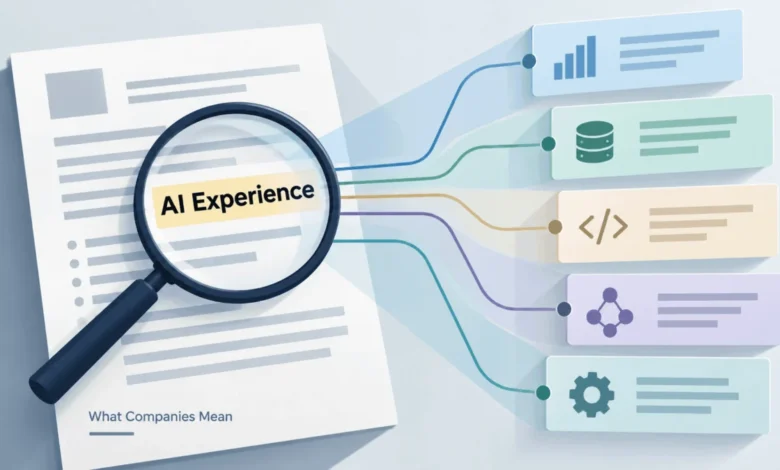
The modern recruitment landscape for data analysts, statisticians, and researchers has become increasingly dominated by a single, ubiquitous requirement: "AI experience." Whether scanning job boards for retail conglomerates, biotech pioneers, or financial services institutions, candidates encounter this phrase with rising frequency. However, a closer examination of the contemporary labor market reveals that this seemingly straightforward credential lacks any unified technical definition. Depending on the industry, the specific hiring manager, and the business problem at hand, the exact same two words can demand vastly different competencies, ranging from basic administrative tool utilization to advanced machine learning architecture development.
This linguistic ambiguity is not merely a byproduct of careless human resources documentation. Rather, it reflects a broader macroeconomic transition in how organizations view artificial intelligence integration. As corporate spending on machine learning and generative tools accelerates globally—surpassing hundreds of billions of dollars annually according to industry analysts—human resources departments struggle to codify rapidly evolving technical needs. Consequently, "AI experience" has largely functioned as a catch-all marketing term designed to signal modernization and filter for candidates attuned to recent technological shifts, rather than a precise technical competency such as proficiency in Python, R, or specific statistical modeling frameworks.
To navigate this complex hiring environment effectively, professionals must understand how to decode corporate job postings, map their existing statistical and analytical backgrounds to shifting employer expectations, and recognize the subtle signals embedded within modern recruitment literature.
The Evolution of the AI Requirement in Corporate Recruitment
The inclusion of artificial intelligence and machine learning criteria in non-engineering job descriptions represents a significant departure from historical hiring practices. Historically, analytical roles demanded clear, quantifiable competencies: specific programming languages, database management systems, and traditional econometric or statistical methodologies. The advent of accessible generative tools and enterprise machine learning platforms in the early 2020s fundamentally disrupted this paradigm.
As executive leadership began demanding AI integration across all operational verticals, human resources teams faced immense pressure to incorporate these technologies into job requirements. Because many hiring managers themselves do not fully agree internally on what operational problems artificial intelligence will solve, they rely on broad umbrella terms. This phenomenon creates a steep barrier to entry for qualified statisticians and data analysts who mistakenly believe their traditional training disqualifies them from modern data roles.
Industry analysts note that recruitment requirements generally bifurcate into two distinct eras: the pre-2023 landscape, where machine learning requirements were strictly confined to specialized data science and engineering teams, and the post-2023 environment, where generalist roles frequently demand cross-functional AI literacy. This shift has forced a reevaluation of how analytical talent is categorized, assessed, and integrated into broader corporate strategies.
Categorizing the Demands Behind the Buzzword
To successfully position oneself in the current job market, candidates must categorize the specific type of AI experience an employer seeks. Industry recruitment trends suggest that most listings fall into four distinct operational buckets.
The first category involves operational fluency with consumer and enterprise AI tools. In these roles, employers are not looking for model developers; rather, they seek professionals who can leverage existing software solutions—such as automated reporting tools, LLM-driven synthesis platforms, or intelligent workflow automation—to increase day-to-day productivity.
The second category centers on conceptual awareness and cross-functional collaboration. Here, analysts are expected to understand the capabilities and limitations of machine learning outputs, enabling them to communicate effectively with dedicated engineering teams and translate complex algorithmic results into actionable business strategies.
The third category requires hands-on modeling and implementation. These positions mandate direct experience with training, tuning, and deploying predictive models using frameworks like TensorFlow, PyTorch, or scikit-learn. While often titled as analyst roles, these positions lean heavily into traditional data science responsibilities.
The final category emphasizes domain-specific AI applications, such as natural language processing for legal document review or computer vision for retail inventory monitoring. In these instances, industry-specific context outweighs general technical prowess, requiring candidates to understand how algorithms intersect with specialized sector challenges.
Mapping Traditional Statistics to Modern AI Competency
For traditional statisticians, econometricians, and quantitative researchers, the gap between classical data analysis and modern artificial intelligence is largely one of nomenclature rather than foundational reasoning. The core principles governing supervised and unsupervised learning—such as bias-variance tradeoffs, regularization, cross-validation, and hypothesis testing—form the bedrock of both traditional statistics and advanced machine learning algorithms.
Translating a resume to reflect this continuity requires strategic reframing. For instance, an analyst who states they "built predictive regression models to forecast quarterly demand" possesses the exact foundational logic required for supervised machine learning evaluation. By framing past accomplishments around outcome-driven reasoning and rigorous model validation rather than legacy toolsets, candidates can bridge the perceived gap between traditional analytics and modern artificial intelligence.
Industry mentors and career transition specialists emphasize that hiring managers ultimately value critical thinking over tool enumeration. A candidate who can articulate the underlying assumptions and potential failure points of a statistical model demonstrates far greater value than one who simply lists numerous software frameworks without contextual understanding.
Analyzing Job Postings Through a Quantitative Lens
Evaluating a modern job description requires the same critical skepticism one would apply to a messy dataset. Headline requirements are frequently aspirational, representing an idealized wish list rather than strict compliance thresholds. When a company lists twelve distinct technical skills alongside "AI experience," the presence of that phrase in the headline often carries minimal weight compared to the operational context detailed within the role description’s body.
To accurately gauge what an employer expects, candidates should examine the day-to-day responsibilities outlined in the posting. If the description emphasizes stakeholder communication, dashboard creation, and strategic insight generation, the role likely falls into the collaboration or tool-fluency categories. Conversely, if the text focuses on pipeline architecture, algorithmic optimization, and deployment cycles, hands-on modeling expertise is undoubtedly required.
Furthermore, attention must be paid to linguistic modifiers. Requirements framed as "preferred" indicate flexibility, whereas absolute phrasing coupled with specific technical tool lists usually denotes a strict requirement for hands-on machine learning engineering capabilities.
Seniority and Strategic Expectations
The interpretation of AI experience shifts dramatically depending on the seniority of the position in question. At the junior level, employers primarily evaluate adaptability. They seek professionals who demonstrate comfort with emerging software tools, a willingness to learn proprietary internal systems, and a lack of intimidation when interpreting automated outputs.
At the mid-level, the expectation transitions to informed collaboration. Mid-level analysts must operate comfortably alongside engineering teams, actively contribute to model evaluation discussions, and effectively bridge the communication gap between technical data scientists and non-technical business stakeholders.
For senior roles, the requirement elevates to strategic judgment. Senior leaders must possess the discernment to recognize when artificial intelligence is—and is just as importantly, is not—the appropriate solution to a business problem. They are tasked with communicating algorithmic limitations to executive leadership, ensuring compliance, and helping organizations avoid the substantial financial and reputational costs associated with careless technology deployment.
Common Misconceptions in the AI Recruitment Market
Several pervasive myths continue to misguide job seekers navigating the current employment landscape. The first misconception is that candidates should list every artificial intelligence tool, platform, or language they have ever encountered. In practice, hiring managers consistently report that this approach backfires, as it often signals superficial familiarity rather than deep analytical competence. Documenting specific problem-solving methodologies and reasoning processes yields far better results, with tools mentioned strictly as supporting context.
A second major misconception is the belief that candidates are entirely disqualified if they have never built a machine learning model from scratch. For the vast majority of analyst positions utilizing the term "AI experience," end-to-end model development is not part of the daily workflow. What frequently disqualifies applicants is an inability to think critically regarding data quality, underlying statistical assumptions, and result interpretation—core competencies inherent to statistical training that organizations desperately require.
Finally, many professionals erroneously assume that obtaining a formal certificate in artificial intelligence is a mandatory prerequisite prior to submitting applications. While credentials can provide helpful foundational knowledge, hiring managers evaluating analytical talent focus heavily on reasoning capabilities during the interview process. The ability to articulate precisely when an automated system might fail, and the underlying reasons for that failure, proves far more persuasive than any online course completion badge.
Broader Economic Implications and Future Outlook
The persistent ambiguity surrounding "AI experience" highlights a transitional phase in the modern labor market. As enterprises mature in their technology adoption, recruitment practices are expected to become more rigorous, replacing generalized buzzwords with precise competency frameworks. Until that standardization occurs, job seekers must remain proactive, looking past vague marketing language to identify the core analytical challenges an organization aims to solve.
Ultimately, the integration of artificial intelligence into the corporate sector does not render traditional analytical skills obsolete; rather, it elevates their importance. By recognizing that statistical foundations and algorithmic reasoning are deeply intertwined, data professionals can confidently position themselves at the intersection of traditional analysis and modern technological innovation, transforming recruitment ambiguity into professional opportunity.