The 11 Best Social Media Management Tools Compared: Features, Pricing, and Use Cases for 2026

Navigating the modern digital ecosystem requires managing multiple social media platforms simultaneously, a challenge that extends far beyond simple content publishing. For digital creators, small business owners, and corporate marketing teams alike, daily operations demand a comprehensive approach encompassing content creation, strategic repurposing, trend analysis, and granular performance tracking. When individuals must balance core business operations alongside digital marketing, the administrative burden can quickly escalate. Consequently, organizations increasingly turn to specialized social media management tools to streamline workflows, consolidate communication channels, and extract actionable insights from complex data sets.
The market for digital asset and communication platforms has evolved significantly, offering solutions that range from free, beginner-friendly schedulers to robust enterprise suites equipped with advanced customer relationship management (CRM) integration and social listening capabilities. Understanding how these tools differ in functionality, scalability, and cost is essential for optimizing digital marketing investments.
Evolution and Core Functions of Social Media Management Platforms
Social media management tools are centralized software applications designed to allow users to plan, schedule, publish, engage with, and analyze content across multiple digital networks from a single, unified dashboard. Rather than requiring administrators to log in and out of individual applications separately, modern platforms integrate these functions into a cohesive environment.
Historically, these platforms began as basic scheduling utilities aimed at saving time for manual posters. Over time, industry demands drove software developers to incorporate unified messaging inboxes for handling direct messages and public comments, comprehensive analytics suites, and collaborative workflows. In recent years, technological advancements have introduced artificial intelligence integrations for copywriting assistance, automated chatbot deployment for lead generation, and sophisticated social listening algorithms capable of monitoring brand sentiment across the entire internet.
Comprehensive Comparison of Leading Platforms
Different platforms cater to distinct operational scales, ranging from solo entrepreneurs to multinational enterprises. Below is a comparative analysis of eleven prominent social media management tools available in the marketplace, highlighting their optimal use cases, standout features, and pricing structures.
1. Buffer
- Best For: Creators and small businesses seeking simplicity and cost-efficiency.
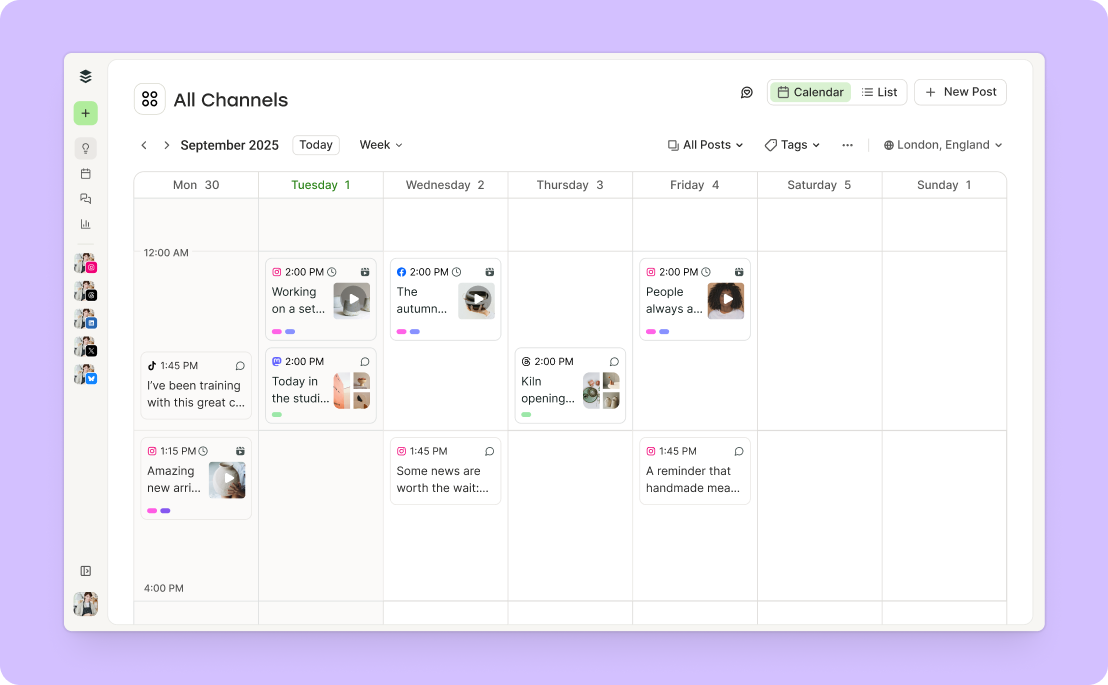
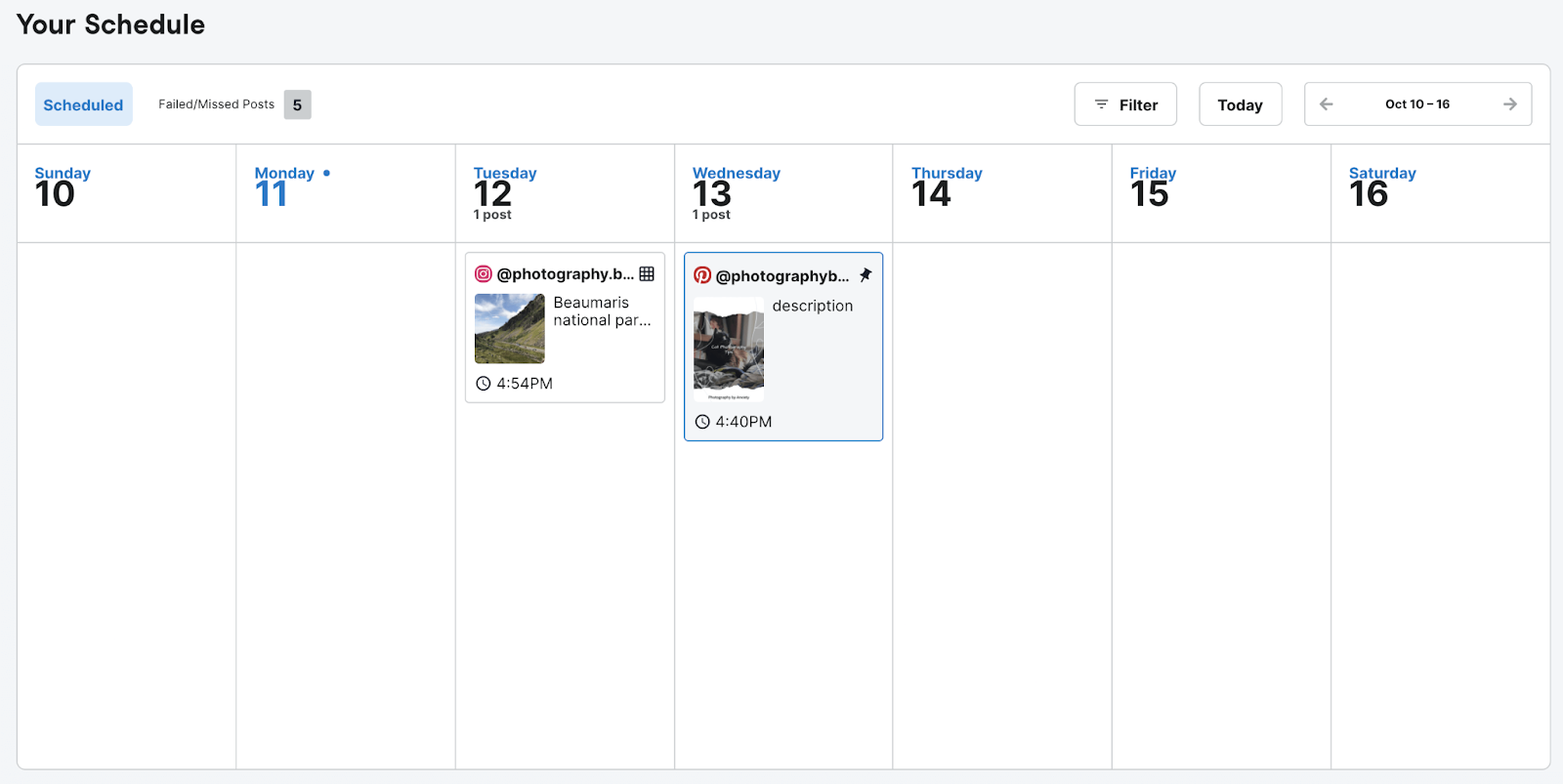
- Standout Features: Flexible drag-and-drop content calendar, smart scheduling queues, and per-channel pricing.
- Platforms Supported: Instagram, Facebook, Threads, TikTok, LinkedIn, Pinterest, YouTube Shorts, X, Bluesky, Mastodon, Substack Notes, and Google Business Profile.
- Pricing Structure: Free tier available for up to three channels; paid plans start at $6 per month per channel.
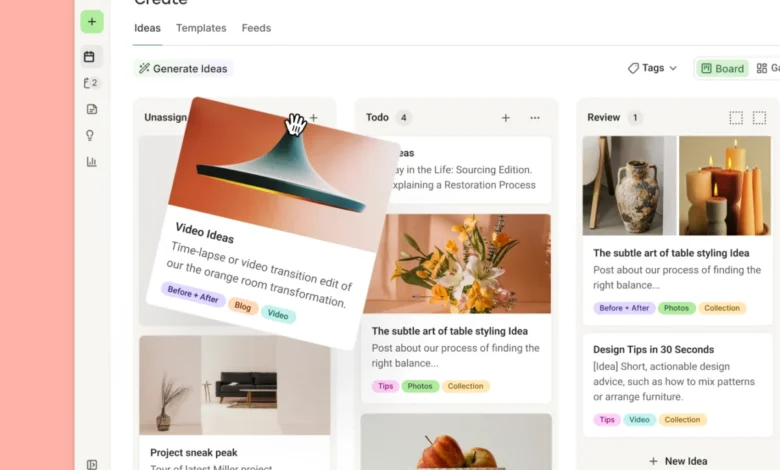
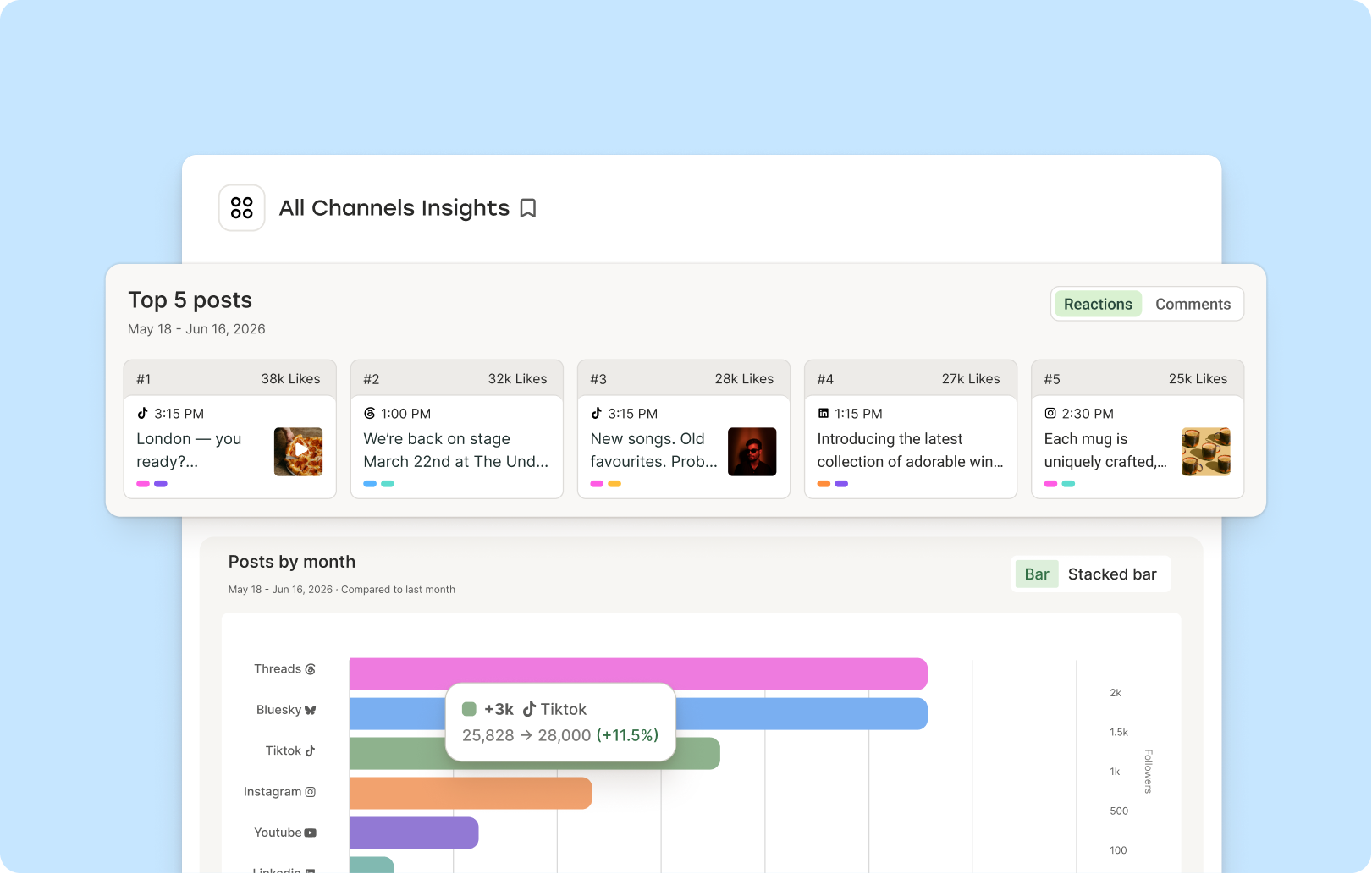
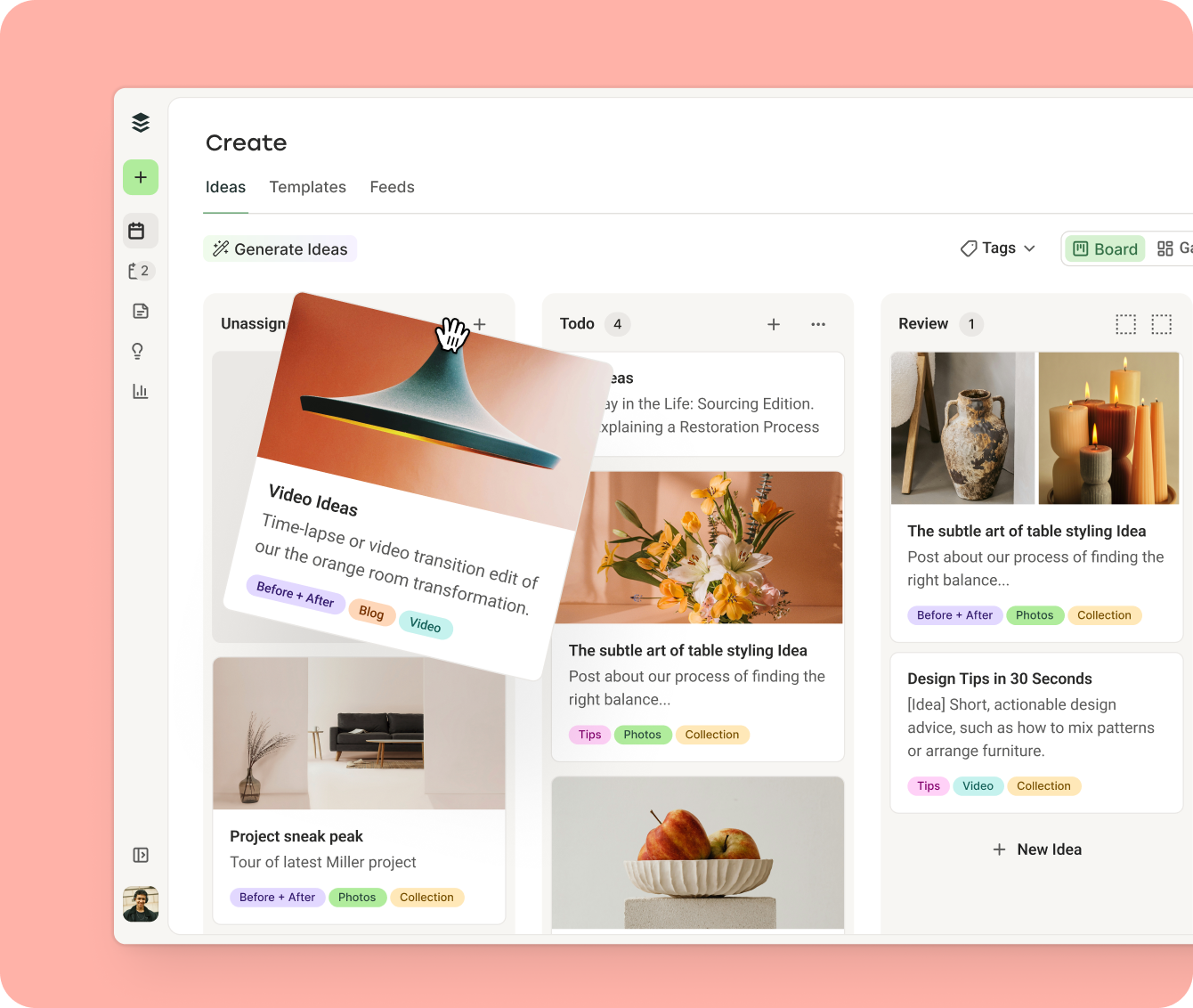
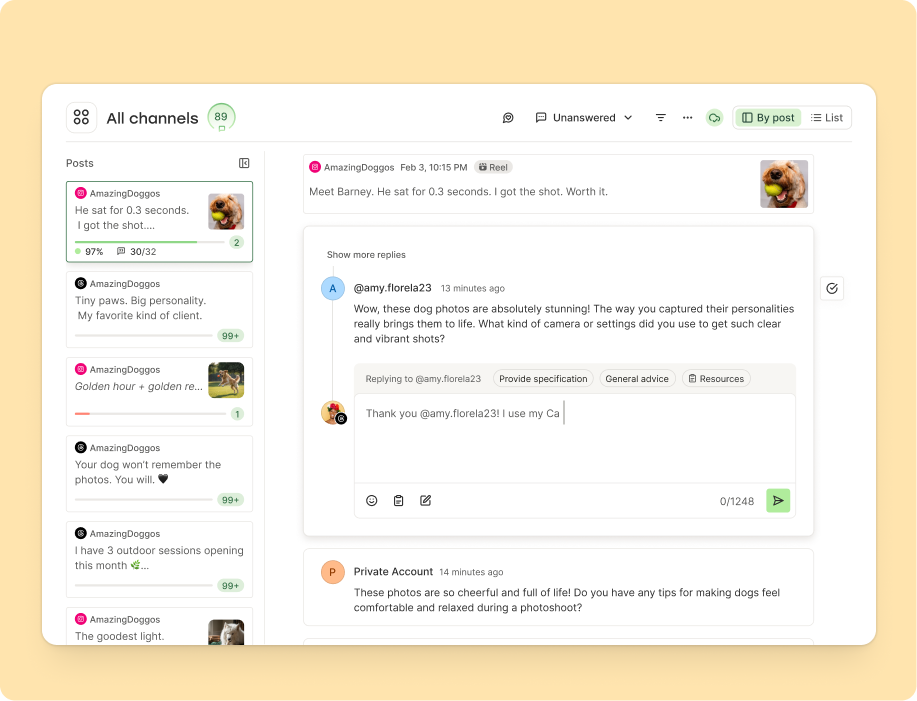
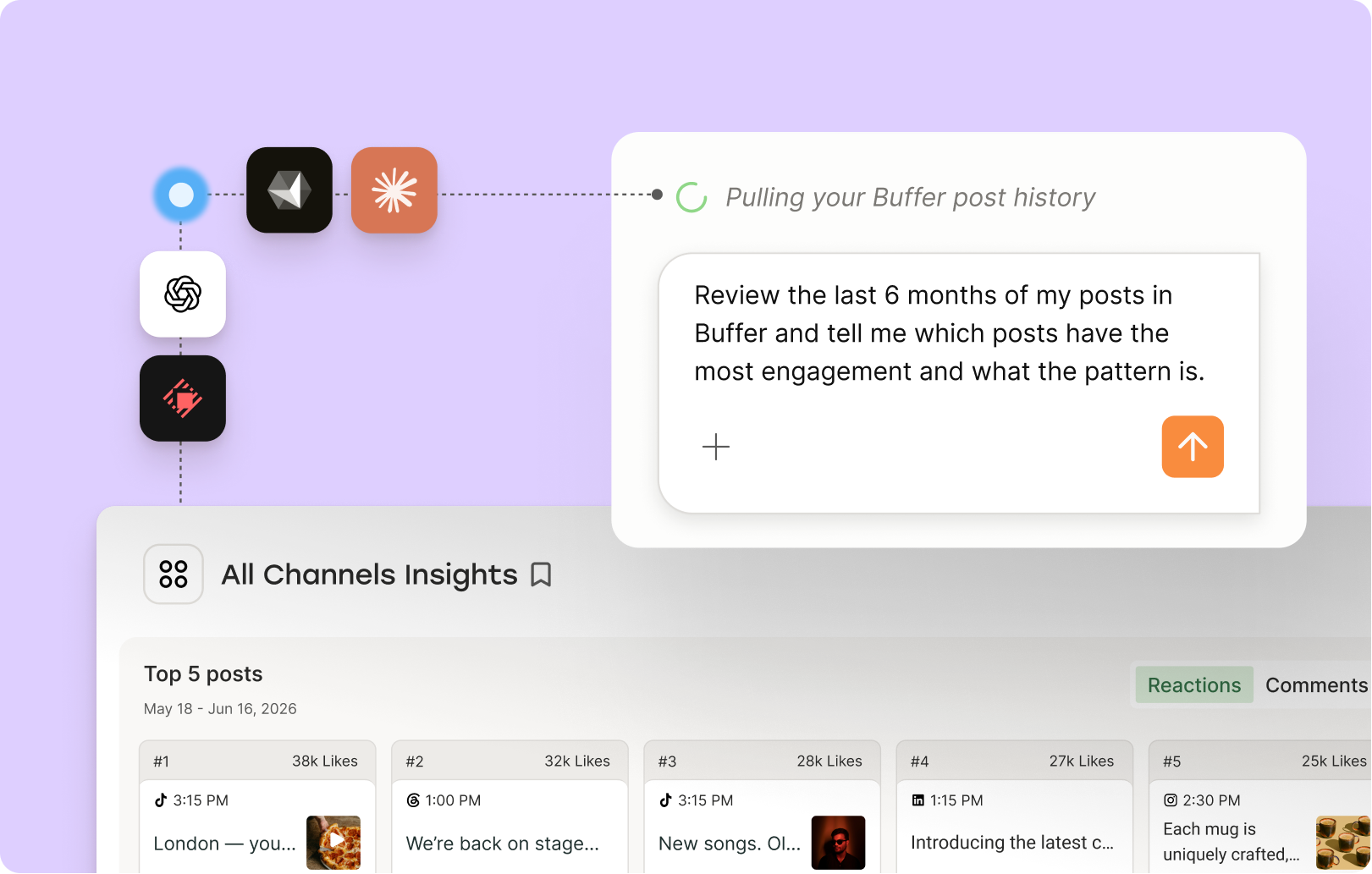
Buffer operates as a plug-and-play solution optimized for users who require reliable functionality without a steep learning curve. Its straightforward interface allows for rapid content queueing and visual calendar management. Additional capabilities include a centralized community inbox for comment management and dedicated idea storage spaces. While it lacks deep enterprise-grade social listening, its accessibility makes it a primary recommendation for solo operators and growing teams.
2. Hootsuite
- Best For: Large organizations requiring advanced social listening and granular team permissions.
- Standout Features: Talkwalker-powered social listening dashboards and multi-tier access controls.
- Platforms Supported: Instagram, Facebook, LinkedIn, TikTok, YouTube, X, and Pinterest.
- Pricing Structure: No free plan; 30-day trial available. Pricing begins at $199 per month per user.
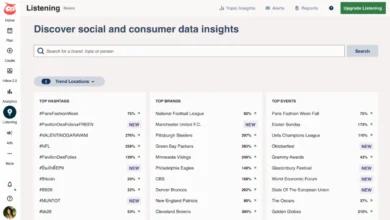
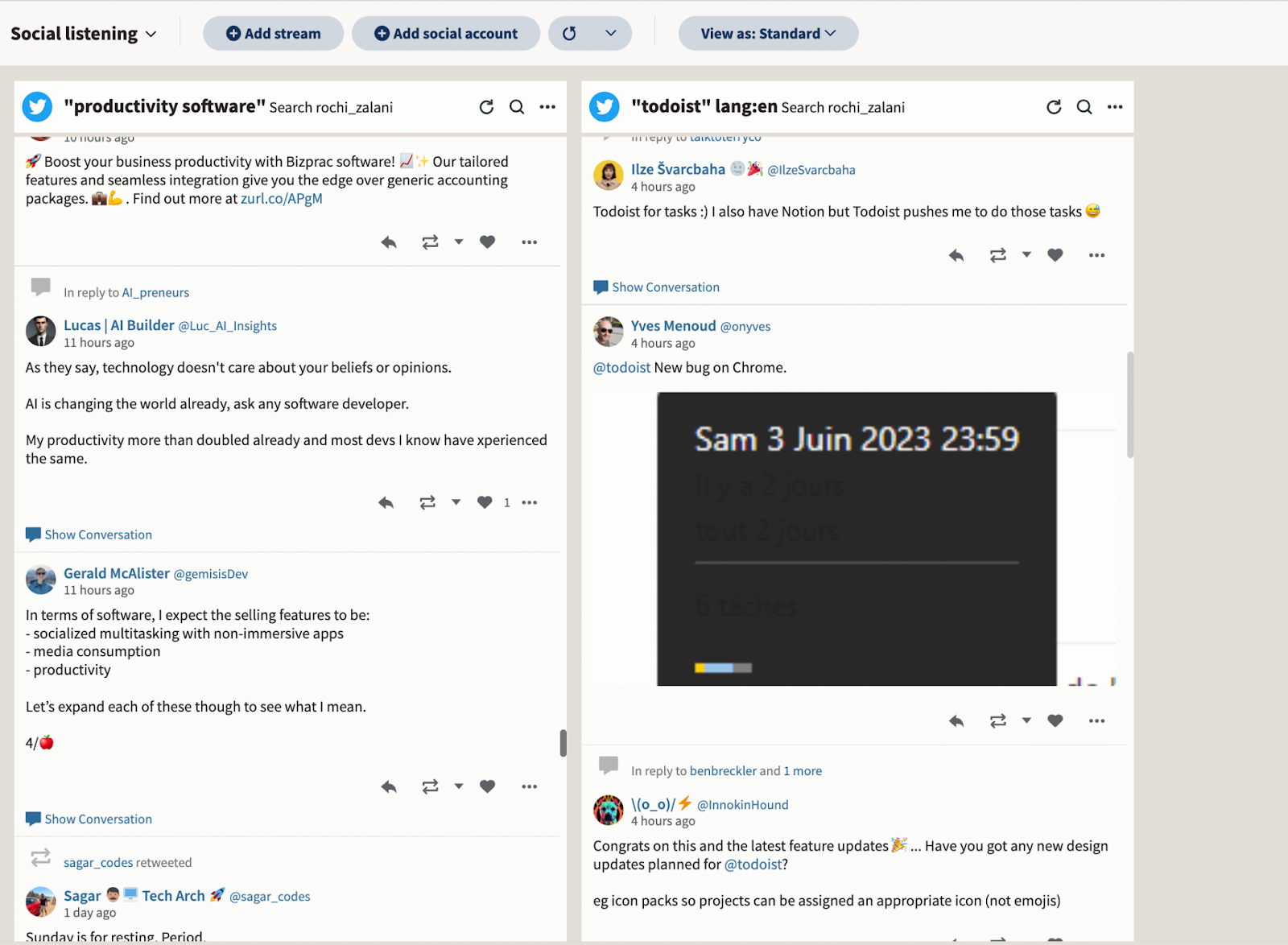
Hootsuite remains a fixture in corporate environments due to its robust monitoring capabilities. Following its acquisition of consumer intelligence platform Talkwalker, Hootsuite offers deep analytical insights into global topic discussions and brand sentiment tracking. The platform’s sophisticated team management architecture allows administrators to establish complex sub-teams and define exact operational permissions, though its dense interface presents a steeper learning curve for new users.
3. Tailwind
- Best For: Marketers executing Pinterest-first visual growth strategies.
- Standout Features: One-click pin design generation and automated interval scheduling.
- Platforms Supported: Pinterest (primary), alongside secondary support for Instagram and Facebook.
- Pricing Structure: Limited free plan (5 posts per month); professional tiers start at $29.99 per month.
Tailwind functions as an official Pinterest partner built specifically to optimize visual discovery networks. Its proprietary design tools transform standard photographs into optimized pin layouts, while algorithmic scheduling features distribute posts at optimal engagement intervals. While its free tier is restrictive, dedicated visual marketers rely on its specialized infrastructure to drive traffic from Pinterest.
4. SocialPilot
- Best For: Digital marketing agencies managing multiple external clients.
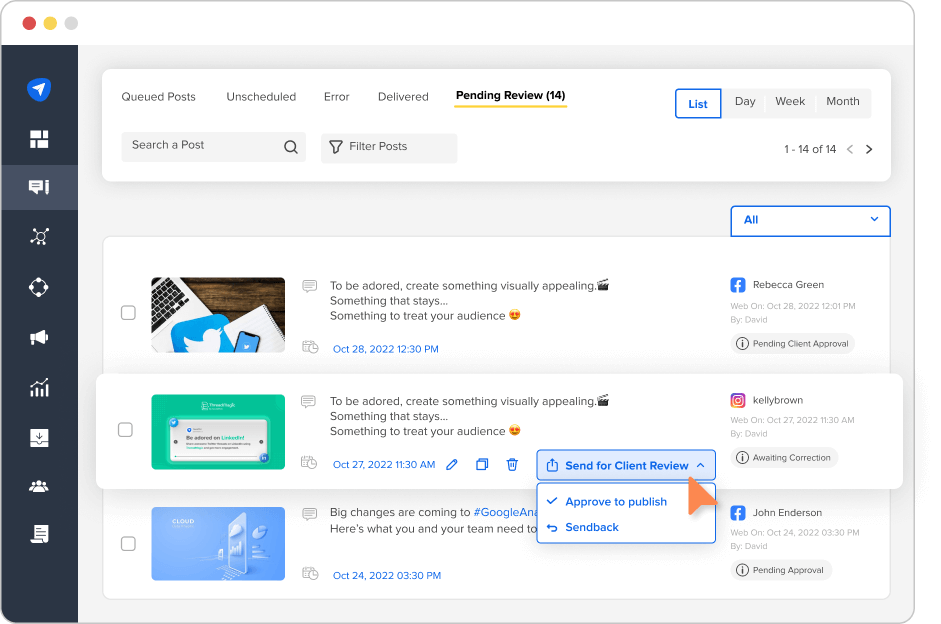
- Standout Features: White-label client dashboards and frictionless, no-signup approval links.
- Platforms Supported: Instagram, Facebook, LinkedIn, TikTok, YouTube, X, Pinterest, and Google Business Profile.
- Pricing Structure: 14-day free trial; paid plans start at $30 per month for a single user.
SocialPilot addresses the specific logistical challenges faced by agencies by enabling customized, white-labeled reporting and client review portals. Stakeholders can approve or request modifications to scheduled content via direct links without needing to create user profiles within the software. Granular user controls and client-specific sub-dashboards ensure operational separation across diverse accounts.
5. Zoho Social
- Best For: Businesses already integrated into the Zoho software ecosystem.
- Standout Features: Native integration with Zoho CRM and Zoho Desk customer service software.
- Platforms Supported: Instagram, Facebook, LinkedIn, X, TikTok, YouTube, and Google Business Profile.
- Pricing Structure: Free plan available for a single team member; paid tiers start at $15 per month.
Zoho Social provides standard scheduling and analytics while serving as a strategic extension for organizations utilizing Zoho’s broader suite of business applications. By synchronizing social media interactions directly with Zoho Desk and CRM tools, enterprises can bridge the operational gap between marketing acquisition and customer service resolution.
6. Sprout Social
- Best For: Enterprises combining traditional social marketing, influencer partnerships, and employee advocacy.
- Standout Features: Integrated employee advocacy programs and Tagger-powered influencer discovery.
- Platforms Supported: Instagram, Facebook, LinkedIn, X, TikTok, YouTube, Pinterest, and Threads.
- Pricing Structure: 30-day trial with no free tier; pricing begins at $199 per seat per month.
Sprout Social positions itself as an enterprise solution by incorporating comprehensive influencer management capabilities following its acquisition of Tagger Media. The platform excels in visual data presentation, offering interactive charts for competitor benchmarking, audience growth, and sentiment analysis. Its high cost reflects its targeted positioning toward large corporations with substantial marketing budgets.
7. Oktopost
- Best For: Business-to-Business (B2B) enterprises focused on revenue attribution and buyer journeys.
- Standout Features: Campaign-tagged publishing and multi-touch revenue tracking.
- Platforms Supported: LinkedIn, Facebook, Instagram, X, and YouTube.
- Pricing Structure: Custom enterprise pricing; no public tier or free trial available.
Oktopost diverges from consumer-focused platforms by aligning social media output directly with B2B lead generation metrics. Every published asset is categorized under specific marketing campaigns, utilizing automated UTM parameterization to trace how social engagement translates into pipeline revenue and closed deals.
8. Later
- Best For: Brands emphasizing visual planning and influencer campaign coordination.
- Standout Features: Integrated creator discovery modules and visual drag-and-drop calendars.
- Platforms Supported: Instagram, Facebook, TikTok, LinkedIn, Pinterest, YouTube, and X.
- Pricing Structure: 14-day trial; entry plans begin at $25 per month with volume caps.
Originally recognized for its visual Instagram grid planner, Later has evolved to incorporate social listening and influencer management tools. While it offers smooth media library management and scheduling interfaces, entry-level tiers impose strict monthly posting limits, making it most suitable for brands with measured, highly curated content outputs.
9. Socialinsider
- Best For: Data analysts and organizations requiring advanced performance benchmarking.
- Standout Features: Comprehensive competitor KPI comparisons and content pillar analysis.
- Platforms Supported: Instagram, Facebook, LinkedIn, TikTok, YouTube, and X.
- Pricing Structure: 14-day trial; standard analytics plans begin at $99 per month for up to 20 accounts.
Socialinsider functions purely as an analytical intelligence engine rather than a content publisher. By eliminating scheduling tools, the platform focuses entirely on cross-channel performance metrics, audience demographics, and competitive intelligence tracking, making it valuable as a specialized audit companion to traditional management software.
10. Manychat
- Best For: Automated direct message (DM) marketing and lead capture workflows.
- Standout Features: 24/7 automated comment-triggered messaging across mobile apps.
- Platforms Supported: Instagram, Facebook, TikTok (beta), and WhatsApp.
- Pricing Structure: Limited free plan available; paid tiers start at $15 per month, scaling with contact volume.
Manychat operates as an auxiliary automation tool designed to convert high-volume social engagement into direct customer conversations. By automatically dispatching resources or information in response to specific user comments on posts, brands can scale interactive marketing without manual monitoring.
11. Sprinklr
- Best For: Large multinational enterprises requiring unified customer experience management.
- Standout Features: Persona-based applications and AI-driven image detection.
- Platforms Supported: All major social networks, alongside messaging applications and customer review channels.
- Pricing Structure: Enterprise custom quotes; no public pricing models.
Sprinklr represents the upper tier of customer experience (CX) and social governance software. It is engineered to meet the stringent security, compliance, and multi-departmental collaboration standards of global corporations, integrating social listening, advertising, and conversational commerce into a single overarching infrastructure.
Strategic Framework for Selecting a Tool
Choosing the appropriate social media management system requires a methodical assessment of organizational requirements. Marketing leaders must evaluate five core criteria before committing capital:
- Network Compatibility: Ensure the software supports both established networks and emerging communication channels to future-proof digital strategies.
- Reporting Depth: Select tools that measure return on investment (ROI) and qualitative engagement rather than superficial metrics like raw follower counts.
- Collaboration Workflows: Larger teams necessitate granular permission structures and multi-layered approval chains to maintain brand security.
- Scalable Pricing Models: Organizations must calculate projected software costs factoring in future team expansion and profile additions rather than relying solely on entry-level subscription fees.
- Specialized Utility: Identify unique operational requirements, such as integrated link-in-bio builders, AI copywriting assistants, or direct CRM integrations.
By mapping these parameters against organizational goals and leveraging available trial periods, marketing professionals can implement a sustainable digital infrastructure that enhances consistency, reduces administrative friction, and supports long-term audience growth.