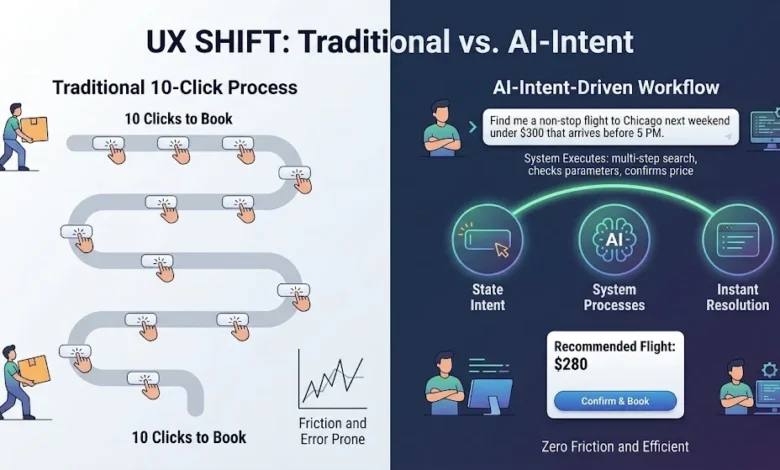
For decades, the digital landscape has been defined by the point-and-click paradigm, a structural framework where users navigate labyrinthine menus, forms, and navigation bars to achieve simple objectives. From the pioneering days of the Xerox Star to the modern browser, the software contract has remained consistent: the user provides the labor, and the software provides the container. However, a seismic shift toward intent-driven design is currently dismantling this long-standing status quo. By leveraging large language models and autonomous AI agents, developers are moving away from designing static, button-heavy interfaces toward creating invisible, goal-oriented experiences. This evolution represents the most significant change in Human-Computer Interaction (HCI) since the introduction of the Graphical User Interface (GUI).

The chronology of this shift can be traced back to the early 2010s, when designers like Golden Krishna began advocating for the philosophy that the best interface is, fundamentally, no interface at all. While the concept remained largely theoretical for years—restricted by the limitations of natural language processing—the explosion of generative AI in 2023 and 2024 accelerated the transition from concept to reality. We have moved from a era of "software as a tool" that requires manual operation, to "software as a service" that anticipates and executes outcomes.
The friction inherent in the traditional web experience is quantifiable. Industry research indicates that the average consumer spends upwards of 40% of their digital time managing software—filling out forms, clicking through consent pop-ups, and managing browser tabs—rather than completing the actual task at hand. In a traditional flight booking flow, for instance, a user is subjected to a minimum of ten distinct micro-interactions: selecting dates, adjusting price range sliders, filtering by airline, checking baggage policies, and re-entering passenger data. Intent-driven platforms invert this, asking the user to provide a singular natural language goal—such as "Find me a direct flight to Chicago under $300 that arrives before 5 PM"—and then delegating the multi-step execution to an autonomous background agent.
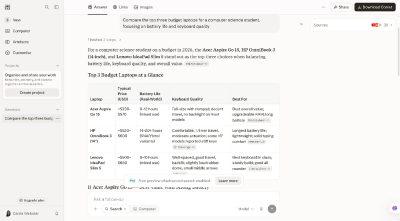
Several platforms are already pioneering this transition, moving beyond the directory-style search models popularized by Google. Perplexity AI, for example, has moved away from the "ten blue links" model of information retrieval. Instead of forcing the user to open five separate browser tabs to cross-reference data, the platform synthesizes information into a cohesive, cited answer. This shift directly addresses the "black box" problem of the early web, where users were forced to do the heavy lifting of information synthesis. Similarly, Vercel v0 is disrupting the design industry by allowing users to generate functional UI components through natural language prompts, effectively bypassing the hours of manual labor previously required in tools like Figma. Goblin.tools has applied this same philosophy to productivity, providing neurodivergent users and those facing executive dysfunction with a suite of single-task AI tools that break down overwhelming goals into actionable, bite-sized checklists without the need for complex project management software.
The technical architecture of this new web relies on three core pillars: high-level goal processing, generative UI, and autonomous agent execution. Unlike traditional web design, where every user encounters a static layout, generative UI allows for interfaces to be rendered dynamically. If a user expresses a need for complex financial planning, the application can generate a customized, interactive calculator or dashboard on the fly, which then recedes once the specific task is resolved. This is a departure from the "universal layout" model, where every user is presented with the same navigation menu regardless of their specific intent.
Data from the Nielsen Norman Group suggests that this paradigm shift will require a fundamental re-skilling of the UX design workforce. Designers are no longer just architects of pixel-perfect buttons; they are now curators of "AI feedback loops." In an autonomous system, the role of the designer is to ensure that the user retains a sense of agency. This involves creating transparent audit logs and clear, frictionless "undo" mechanisms. Because AI agents operate behind the scenes, the traditional "warning modal"—the constant, intrusive pop-ups asking if a user is "sure" they want to proceed—is being replaced by systems that prioritize reversibility. The safety net is shifting from prevention to correction.
However, the transition is not without significant risks. The "illusion of control" remains a primary concern for product designers and ethicists. When a system makes decisions on behalf of a user, it risks crossing the boundary into paternalistic, or worse, manipulative design. The Center for Humane Technology has warned that without clear boundaries, automated systems could be incentivized to steer user behavior toward outcomes that benefit the platform rather than the user. Therefore, designers must implement strict protocols for high-stakes actions, such as financial transactions or privacy setting changes, where human verification remains non-negotiable.
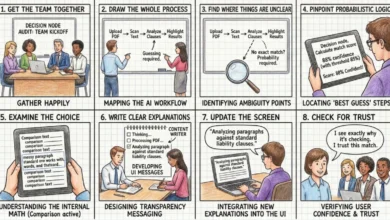
The "black box" nature of AI models also poses a challenge to user trust. If an agent fails to execute a task correctly, the user must be able to diagnose why the failure occurred. This is where the Google PAIR (People + AI Research) guidelines become essential; systems must be designed to explicitly state their interpretation of a user’s intent. For example, if an AI agent is booking a flight, it must communicate: "I am searching for non-stop flights to Chicago under $300," allowing the user to confirm the premise before the agent proceeds to the execution phase.
The implications for the digital economy are profound. For decades, the success of a website has been measured by engagement metrics: time spent on page, session duration, and click-through rates. These metrics encouraged the creation of "sticky" interfaces designed to keep users trapped within the ecosystem for as long as possible. Intent-driven design renders these metrics obsolete. If a website’s ultimate goal is to solve a user’s problem and disappear, then the most successful platform is the one that minimizes the time the user spends interacting with the UI. This represents a fundamental inversion of the advertising-driven business models that have dominated the internet since the late 1990s.
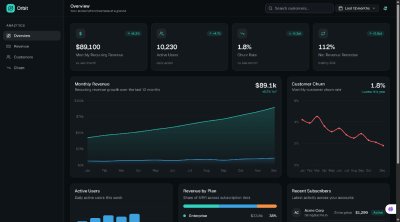
Industry analysts are currently observing a divergence in how companies are adopting these tools. While legacy platforms are attempting to "bolt on" AI features to existing, bloated interfaces, newer startups are building "agent-first" platforms from the ground up. The latter are finding that by removing the cognitive load of navigation, they are seeing higher conversion rates and improved user satisfaction scores. As we look toward the next decade, it is clear that the web will continue to move toward an ambient, invisible state. We are entering an era where the interface is no longer the product; the product is the outcome.
The transition from the "10-click process" to "one-shot intent resolution" is not merely a design trend; it is a response to the information overload that has characterized the internet age. As users become increasingly accustomed to having their goals anticipated and executed by intelligent agents, the demand for complex, static interfaces will inevitably wane. The designers of the future will be those who can successfully navigate the intersection of machine learning, ethics, and human-centered design. Their success will not be measured by the beauty of their buttons, but by their ability to render those buttons completely unnecessary, ushering in an era of seamless, invisible, and highly efficient digital experiences. The web, in its traditional sense, is fading—and in its place, a new, intent-driven reality is emerging.