The Pulse: Major Search Algorithm Shifts, Business Profile Metrics, and AI Shopping Feeds Redefine Digital Visibility


The digital marketing landscape is undergoing a profound structural evolution, marked by sweeping interface redesigns, the return of legacy metrics, and shifting paradigms in AI-driven commerce. Across Europe, regulatory pressures and algorithmic updates are rewriting the rulebook for commercial search queries. Simultaneously, Google has reintroduced long-awaited view counts for Business Profile posts, while emerging data highlights how artificial intelligence platforms like ChatGPT source product recommendations. Compounding these platform-level changes, search engine optimization (SEO) experts and platform representatives are issuing stark warnings regarding domain migrations and the lingering penalties of legacy, low-value web content.
This comprehensive briefing examines the critical developments shaping search engine optimization, local search management, and AI e-commerce integration, offering a detailed analysis of what these shifts mean for digital strategists and business owners worldwide.
Google Redesigned Commercial Search Results Across The European Economic Area
In response to ongoing regulatory scrutiny and compliance mandates under the Digital Markets Act (DMA), Google has officially rolled out a redesigned layout for commercial search queries within the European Economic Area (EEA). Documented extensively by Google Search Central on September 8, the update introduces specialized user interface units designed specifically for comparison websites—often referred to as aggregators—and direct suppliers.
Structural Changes and Chronology of the EEA Rollout
The rollout marks a significant departure from traditional search engine result page (SERP) layouts for high-intent commercial terms. Under the new framework, aggregators are granted a dedicated unit where the top-ranked provider is expanded by default. However, securing placement within this unit is not automatic; comparison sites must complete technical integrations, including specific feed or API work, to become eligible.
Direct suppliers, meanwhile, receive their own distinct unit that requires no additional data manipulation or technical feed submission. Crucially, however, this direct supplier unit is conditionally dependent: it only appears alongside an aggregator unit, establishing a symbiotic structural relationship on the SERP. In tandem with these changes, Google launched a centralized regional hub outlining a total of seven distinct features tailored to the EEA, Türkiye, and South Africa, reflecting a fragmented global search environment dictated by localized regulatory frameworks.
Analytical Implications for Regional Performance Tracking
For international digital marketing teams, this regulatory-driven redesign carries immediate operational consequences. Rank-tracking software and Google Search Console performance metrics originating from EEA member states can now diverge significantly from data returned for identical queries in non-regulated jurisdictions like the United States or the United Kingdom.
Digital analysts must exercise caution when evaluating localized performance drops. A sudden decline in organic traffic or visibility within the EEA may not signal a technical failure or a drop in content quality; rather, it can be the direct mathematical artifact of the new layout, which redistributes screen real estate and user attention away from traditional blue links toward the newly mandated aggregator and supplier modules.
Business Profile Posts Get View Counts Globally After a Three-Year Hiatus
Local search optimization received a major update in September as Google reinstated view counts for Business Profile posts on a global scale. This move addresses a prominent data blackout that persisted for more than three and a half years following the quiet discontinuation of previous post metrics in early 2023.
Background and Technical Specifications of the Metric
The official announcement was made public in the September Small Business Bulletin, published within the Business Profile Help Community by Google employee Lisa Landsman. According to the release, the new view counts appear directly on each individual post card within the merchant dashboard.
The system operates on a rolling basis, capturing and displaying cumulative views from posts published over the preceding 18 months. These metrics aggregate visibility across both Google Search and Google Maps, offering local businesses a more holistic view of how consumers interact with their local listings. Despite the global rollout of the dashboard metric, Google confirmed that the data is not yet accessible via the Business Profile API, limiting automated reporting capabilities for enterprise-level multi-location brands.
Contextualizing the Return of Local Analytics
When Google officially sunsetted post analytics on February 20, 2023, without providing a replacement metric, local SEO professionals and business owners were left operating in a data vacuum. Updates, special offers, and event announcements could be published, but their reach remained entirely unquantifiable.
While the return of view counts is a welcome development, industry analysts emphasize the importance of metric interpretation. The displayed figure represents impressions or views—it does not track clicks, conversions, or engagement actions, as Google retired click metrics years prior. Consequently, a high view count indicates that a post successfully surfaced on a user’s screen in Maps or Search, but it requires supplementary tracking to determine downstream commercial impact.
ChatGPT Shopping Relies Heavily on Feed-Integrated Product Sources
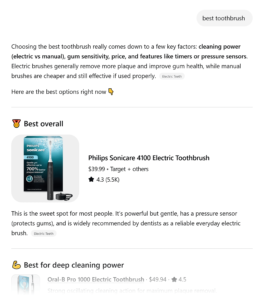
As conversational artificial intelligence increasingly intersects with e-commerce, new empirical data sheds light on how generative AI models curate commercial recommendations. Research and data processing from Profound indicate that ChatGPT Shopping overwhelmingly selects products sourced from feed-integrated ecosystems rather than relying exclusively on traditional, organic web crawling and ranking algorithms.
Data Insights and Empirical Findings
Profound’s analytical logs, tracking 1,757,723 prompt runs throughout July, revealed a dramatic surge in feed-integrated product recommendations. Specifically, the percentage of recommended products originating from structured feeds jumped from 8.26% to 61.54% on July 10 alone.
This behavioral shift created immediate volatility in AI-driven visibility. Comparing the periods of July 7–9 to July 10–12, tracking data showed that 450 out of 687 Profound customer brands experienced at least a one-third decrease in shopping visibility within the platform. Conversely, 67 brands gained an equivalent amount of visibility during the same transition window.
Broader Implications for E-Commerce Visibility
These findings suggest that optimizing for AI shopping engines requires a fundamental shift in technical strategy. While traditional SEO relies heavily on on-page keyword optimization, backlink profiles, and technical site health, AI shopping discovery appears to favor structured, reliable data feeds. Brands that fail to integrate their product catalogs into standardized feeds risk exclusion from AI-generated shopping carousels and recommendations. However, experts note that Profound’s data reflects one vendor’s tracked prompt runs rather than the aggregate behavior of all global consumer sessions, and the exact ranking mechanisms that ChatGPT applies once a product is pulled from a feed remain opaque.
John Mueller Warns That Old Low-Value Pages Impede Site Recovery
Website owners engaged in remediation efforts following algorithmic penalties or drops in organic visibility received a sobering reminder from Google Search Advocate John Mueller regarding the persistence of historical low-value content.
The Mechanics of Algorithmic Trust
In a direct response to a site owner operating a programmatic website—which automatically generated thousands of pages via combinations of domain names, technologies, and attributes—Mueller addressed the challenges of post-cleanup recovery. He suggested that when a site accumulates an extensive history of low-value, automated, or thin pages, Google’s evaluation systems may have "possibly lost faith in your site providing good value to users."
The core issue highlighted by Mueller is the distinction between technical cleanup and trust rehabilitation. Simply deleting, redirecting, or no-indexing low-value pages does not instantaneously restore an algorithmic domain’s reputation. Google’s evaluation systems maintain historical context, meaning that recovering lost organic traffic requires a sustained, long-term demonstration of unique editorial value and user satisfaction. Trust, once eroded by programmatic spam or thin content, cannot be shortcutted through technical quick fixes.
UK News Publisher Suffers 98% Visibility Collapse Following .com Domain Migration
Domain migrations remain one of the most perilous technical maneuvers in digital publishing. A recent case study shared by NewzDash founder John Shehata illustrates the catastrophic risks associated with altering established site architecture without adequate safeguards.
Chronology and Impact of the Migration
According to NewzDash tracking reports, a prominent United Kingdom-based news publisher experienced a staggering 98% collapse in visibility on trending Google News searches within just two weeks of migrating its primary web property from a established .co.uk country-code top-level domain (ccTLD) to a generic .com domain.
For the 14 months leading up to the migration, the publisher maintained a consistent search visibility score of 1% to 2% for heavily monitored trending news queries. However, following the transition, visibility plummeted to 0.02% in a fortnight and failed to show meaningful recovery even four months post-migration. Industry experts note that the publisher was concurrently navigating broader Google core updates and underlying technical challenges, rendering the domain shift part of a complex matrix of failure rather than an isolated trigger.
Strategic Takeaways for Technical Migrations
The publisher’s plight underscores a fundamental law of enterprise SEO: domain migrations are exceedingly difficult to reverse once equity and visibility are lost. While standard ranking dips following a technical migration typically resolve within weeks as search engines recrawl and reindex content, catastrophic news visibility losses compounded by algorithmic shifts require multi-month, or even multi-year, recovery horizons. Publishers and enterprise brands must budget substantial time and resources for post-migration recovery when contemplating structural domain changes.
Theme of the Week: The Priority of Access Over Traditional Ranking
Synthesizing the disparate events of the week reveals a cohesive underlying narrative across digital marketing disciplines: the battleground has shifted from traditional ranking optimization to foundational access control.
Across multiple channels, traditional ranking tactics are taking a backseat to structural prerequisites:
- In the European Economic Area, appearing in Google’s commercial search results requires direct data feed integration to populate comparison and aggregator units.
- Within AI platforms like ChatGPT Shopping, product visibility is heavily contingent on structured feed integration rather than conventional organic SERP positioning.
- In local search, the return of Business Profile post view counts provides visibility into audience reach, but relies entirely on maintaining active, verified profiles.
- Conversely, as John Mueller emphasized, automated technical fixes cannot bypass the fundamental requirement of demonstrating authentic user value when recovering from historical low-value content penalties.
Ultimately, feeds, domain strategies, and regulatory compliance frameworks are increasingly managed outside traditional SEO silos. As the digital ecosystem grows more complex, aligning technical infrastructure with platform-specific access requirements will remain a primary determinant of commercial success online.