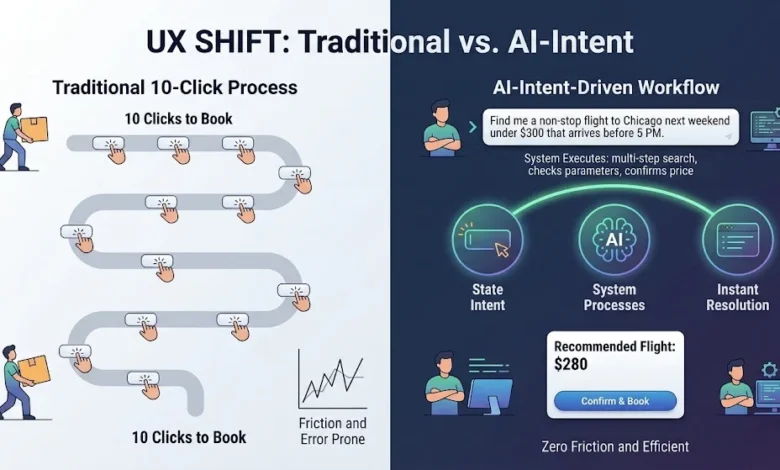
The digital landscape is currently undergoing a structural transformation that mirrors the transition from command-line interfaces to graphical user interfaces (GUI) in the 1980s. For decades, the internet has been defined by the point-and-click paradigm, a rigid architecture of menus, forms, and navigation bars that demanded constant manual input from users. However, the rise of large language models (LLMs) and advanced autonomous agents is precipitating a shift toward intent-driven design. This transition marks the end of the 10-click process, moving the industry toward a future where the most effective interface is one that effectively disappears, allowing software to anticipate and resolve human needs in the background.
A Brief History of the Click-Based Web

To understand the magnitude of this shift, one must examine the origins of the current web experience. The Xerox Star, introduced in 1981, established the template for the modern GUI, which was later refined by the Apple Macintosh. This design language turned users into manual operators of digital machinery. Throughout the 1990s and 2000s, the web grew into a labyrinthine space where users were expected to navigate multi-step sales funnels, manage cookie preferences, and juggle multiple browser tabs to cross-reference basic information.
Industry analysts have noted that this friction was once considered a feature, not a bug. By forcing users to interact with every stage of a process—selecting dates, adjusting range sliders, and confirming inputs—developers maintained control over the data flow. The metric of success for software developers for nearly forty years has been "time spent in app" and "click-through rates," incentivizing interfaces that kept users engaged in a cycle of constant interaction.
The Shift to Intent-Driven Architecture
The current movement, often referred to as "No Interface" design, posits that human-computer interaction (HCI) has reached its peak of complexity. Modern AI-driven platforms are now reversing this trend by focusing on high-level goals. Instead of requiring a user to define the parameters of a flight search—such as origin, destination, carrier, and time—an intent-driven system accepts a plain-language prompt. The software then leverages background agents to execute the granular, mechanical steps of search, comparison, and verification, presenting the user with a single, finalized solution.
This shift is supported by academic and industry pioneers like Golden Krishna and Don Norman, whose principles of human-centered design emphasize that technology should serve human intent rather than force humans to adapt to the limitations of code. The current generation of AI tools, including Perplexity AI, Vercel v0, and Goblin.tools, are serving as the vanguard for this architectural overhaul.
Chronology of the Interface Evolution
The timeline of this transition can be categorized into three distinct phases:
- The Command Era (1960s–1980s): Text-based inputs required deep technical knowledge to operate systems.
- The GUI/Interaction Era (1981–2023): Visual interfaces allowed for mass adoption but required users to learn the "language" of menus and buttons.
- The Intent Era (2024–Present): Systems prioritize natural language and ambient context, with the interface generating itself based on the specific, transient requirements of the user.
Supporting Data and Platform Case Studies
Current market data indicates a sharp decline in user tolerance for multi-step digital processes. According to recent usability benchmarks, the "time-to-resolution" for complex tasks—such as itinerary planning or data synthesis—is reduced by approximately 60% to 80% when using intent-based AI tools compared to traditional search-and-click methods.
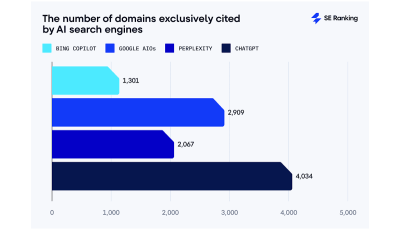
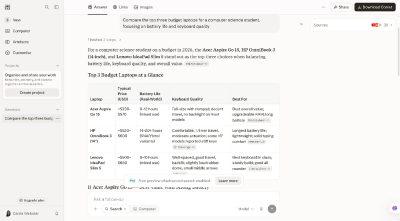
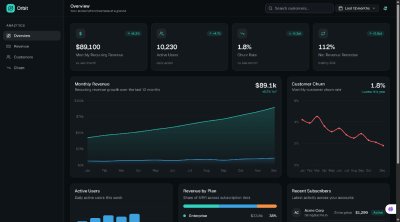
Perplexity AI serves as a primary example of this efficiency. By synthesizing information from multiple sources into a single, cohesive answer, it eliminates the "tab-switching" behavior that defined the previous decade of internet search. Similarly, Vercel v0 has automated the front-end development cycle. Instead of designers manually drafting layouts in tools like Figma or writing boilerplate CSS, users can generate functional, responsive web components through simple descriptive prompts. This removes the "technical debt" of manual drafting, allowing developers to focus on higher-level architectural decisions.
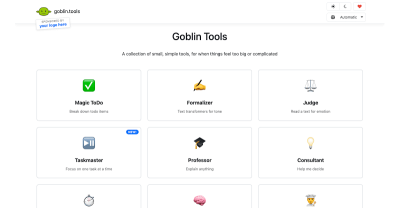
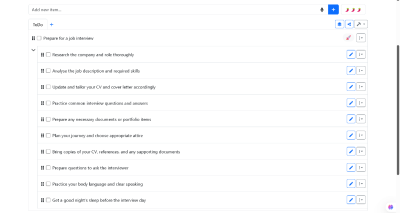
For users with cognitive differences, this evolution is particularly significant. Tools like Goblin.tools have demonstrated that breaking down large, overwhelming tasks into bite-sized, actionable steps using AI can significantly improve productivity and mental clarity. By automating the planning phase of project management, these tools remove the executive function burden that often prevents users from starting complex projects.
Official Perspectives and Ethical Implications
The transition is not without controversy. During recent tech summits, designers and ethics boards have raised concerns regarding the "black box" nature of intent-based systems. When an AI makes decisions for a user, the potential for algorithmic bias or unintended outcomes increases.
The Google People + AI Research (PAIR) team has issued guidelines stressing the importance of "feedback loops." Their research indicates that for AI to be trusted, it must provide transparent evidence of how it reached a conclusion. If an agent books a flight, it must explain why that flight was selected, allowing the user to override or correct the decision.
Furthermore, the Center for Humane Technology has warned against the "illusion of control." There is a risk that developers might use these invisible interfaces to steer user behavior toward preferred outcomes, such as pushing specific products or services under the guise of "anticipating needs." To mitigate this, experts are advocating for "radical transparency," where AI agents clearly state their rationale and offer easy, one-click reversal mechanisms for every action taken.
Broader Impact and Future Implications
The long-term implications for the UX design profession are profound. The role of the designer is shifting from a creator of static, pixel-perfect layouts to a facilitator of generative systems. Designers must now learn to map the boundaries of AI agents, design for system error recovery, and develop "ambient" interfaces that only appear when needed.
The core pillars of this new design discipline are clear:
- High-level goal recognition: Systems must leverage contextual metadata—such as time, location, and previous habits—to preemptively surface solutions.
- Generative UI: Interfaces should no longer be static pages; they should be fluid components that render on-demand to meet the immediate, specific requirement of the user.
- Frictionless Reversibility: Since autonomous agents operate with less oversight, the safety net must be shifted from preventive warnings (which annoy users) to easy, intuitive "undo" functions.
The ultimate objective of this transition is the "invisible web." If successful, the digital economy will shift away from the "attention economy," where platforms fight for the user’s time, and toward an "intention economy," where platforms succeed by how quickly they can solve a problem and disappear.
While the "death of the button" may seem like a hyperbolic concept, it represents a fundamental change in the digital contract. As the web evolves, the measure of a successful product will no longer be how many pages a user views, but how few steps they have to take to achieve their desired outcome. The future of design is not in creating more vibrant, interactive buttons, but in building the sophisticated infrastructure required to make those buttons entirely unnecessary.