ChatGPT Ads Unveils Robust Suite of Advertiser Tools to Bolster Performance Marketing Capabilities


ChatGPT Ads is strategically expanding its advertising platform with a significant rollout of new advertiser tools. This comprehensive update focuses on enhancing core functionalities, including sophisticated bidding strategies, advanced measurement solutions, precise budget pacing, and streamlined campaign management. The enhancements signal ChatGPT Ads’ commitment to maturing its offering and aligning it with the sophisticated feature sets expected by advertisers from more established advertising ecosystems, particularly in the critical areas of conversion optimization and automation.
The latest iteration of ChatGPT Ads introduces a raft of new capabilities designed to empower advertisers. While the original article snippet indicated a visual aid (a figure with an image), the absence of specific details within that placeholder necessitates a focus on the described functionalities. These updates are poised to address long-standing demands from performance marketers, aiming to elevate campaign effectiveness beyond simple click-based metrics and into the realm of tangible business outcomes.
Key Advancements in the Latest Release
The recent enhancements to the ChatGPT Ads platform can be broadly categorized into several key areas, each designed to provide advertisers with greater control, insight, and efficiency.
-
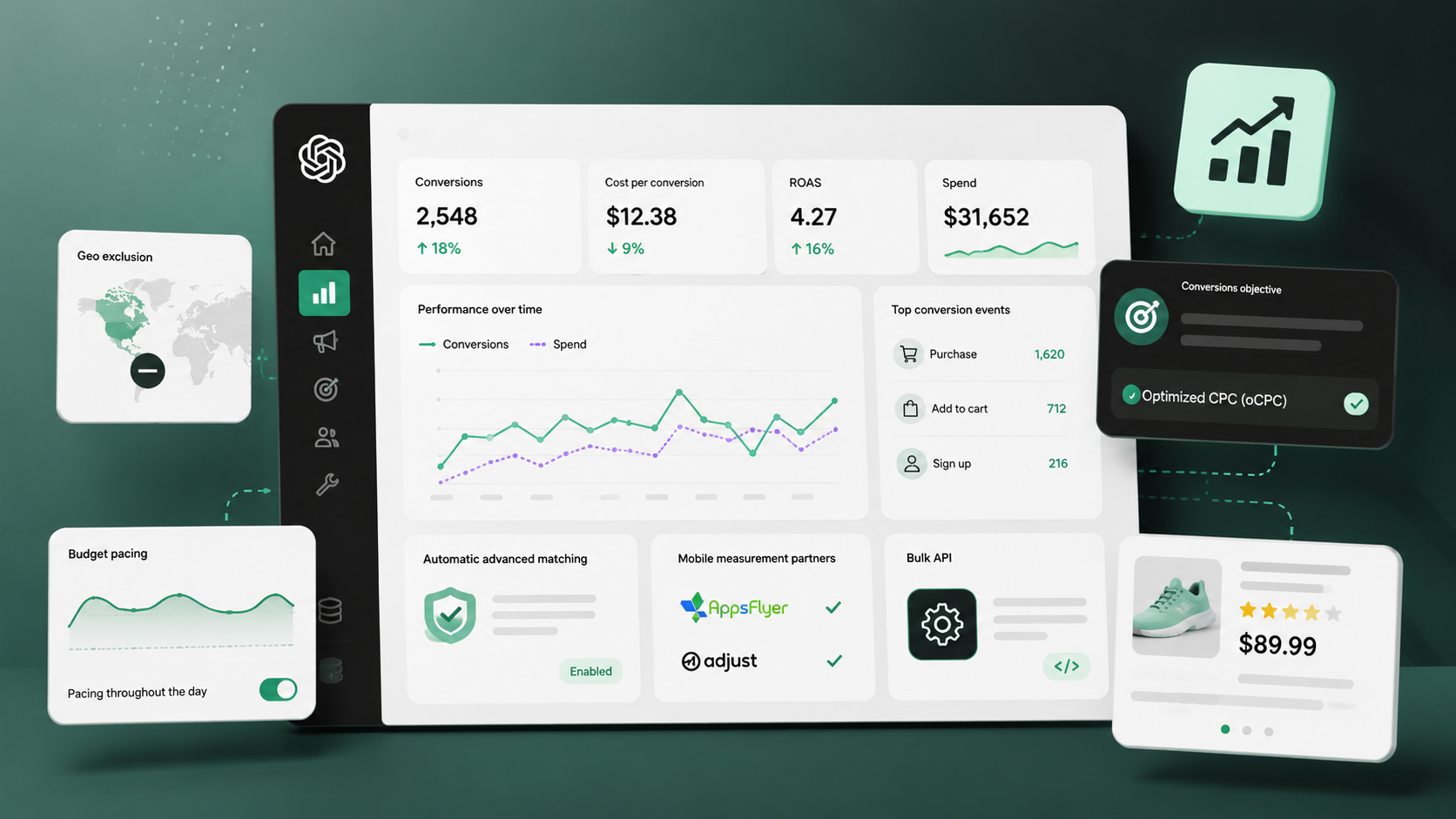
Smarter Bidding and Conversion Optimization: A cornerstone of the update is the introduction of conversion-optimized bidding. This feature moves beyond optimizing solely for clicks, allowing advertisers to direct their ad spend towards users who are more likely to complete a desired action, such as making a purchase, signing up for a newsletter, or downloading an app. This shift is crucial for performance marketers whose primary goal is to drive measurable business results. The underlying algorithms are expected to leverage ChatGPT’s advanced AI capabilities to identify patterns and predict user behavior more accurately, leading to more efficient allocation of advertising budgets.
-
Enhanced Measurement and Attribution: Recognizing the critical need for accurate performance tracking, ChatGPT Ads has integrated with leading mobile measurement partners (MMPs) AppsFlyer and Adjust. These integrations are pivotal for app-focused advertisers, enabling them to gain a more comprehensive understanding of campaign performance, user acquisition costs, and return on ad spend (ROAS) directly within the ChatGPT Ads ecosystem. The platform is also introducing improvements to its attribution modeling, likely offering more granular insights into which touchpoints in the customer journey are most effective in driving conversions.
-
Improved Budget Pacing and Management: For advertisers managing campaigns at scale, effective budget management is paramount. The new features include tools for more precise budget pacing, allowing advertisers to ensure their ad spend is distributed effectively across the campaign duration and to avoid overspending or underspending. This includes the introduction of average daily budgets, a standard feature in mature ad platforms that provides predictable spending limits.
-
Streamlined Campaign Management: To facilitate easier and more efficient campaign execution, ChatGPT Ads has enhanced its campaign management tools. This includes the addition of geo-exclusions, empowering advertisers to refine their targeting by excluding specific geographic locations from their ad delivery. Furthermore, the platform now supports bulk API functionalities, a significant development for agencies and large advertisers who need to manage numerous campaigns simultaneously. This capability allows for mass updates, creation, and reporting of campaign elements, drastically reducing manual effort.
-
Advanced Matching Capabilities: The introduction of advanced matching, a feature commonly found in platforms like Google Ads and Meta Ads, allows advertisers to connect their offline data (such as customer lists) with online ad interactions. This enhances the accuracy of conversion tracking and audience segmentation, enabling more personalized and effective ad delivery.
Why These Updates Matter: A Performance Marketing Perspective
The strategic focus of this update directly addresses several critical pain points for performance marketers. The ability to optimize bids towards specific business outcomes, rather than superficial metrics like clicks, is a fundamental shift that promises to improve return on investment significantly. This move aligns with the broader industry trend of prioritizing measurable results and demonstrating tangible value from advertising spend.
The integration with AppsFlyer and Adjust is particularly noteworthy for the mobile advertising sector. These MMPs are industry standards for tracking app installs, in-app events, and user engagement, providing the data necessary for robust campaign analysis and optimization. By bringing these capabilities directly into the ChatGPT Ads platform, the company is simplifying the workflow for app advertisers and reducing the complexity of managing data across multiple systems.
The addition of features like geo-exclusions, improved attribution, and bulk API support collectively signal a platform that is increasingly equipped to handle the demands of large-scale advertising operations. These are not nascent features but rather essential components that allow advertisers to execute complex strategies, manage budgets efficiently, and scale their campaigns effectively. The inclusion of these "table stakes" features lowers the barrier to entry for advertisers who may have previously viewed ChatGPT Ads as a less mature alternative.
ChatGPT’s Maturation: Building a Robust Advertising Infrastructure
Rather than focusing on a single, groundbreaking feature, this release underscores ChatGPT Ads’ commitment to building a solid, foundational advertising infrastructure. The emphasis is on refining and expanding the core functionalities that underpin successful digital advertising campaigns. Many of the newly introduced capabilities, such as average daily budgets, advanced matching, and bulk campaign management, are functionalities that advertisers have come to rely on in established platforms like Google Ads and Meta Ads.
This deliberate approach to platform development suggests a strategy to incrementally gain advertiser trust and adoption by offering a familiar and robust set of tools. By mirroring the essential features of its more mature competitors, ChatGPT Ads is making itself a more viable and less risky option for advertisers looking to diversify their ad spend or explore new channels. This also signifies a move beyond experimental phases into a more serious contender in the performance marketing landscape.
Timeline and Evolution of ChatGPT Ads
While specific launch dates for each individual tool within this "slate" are not provided, the rollout represents a significant phase in the ongoing development of ChatGPT Ads. The platform has been in a continuous evolution since its inception, gradually introducing features that address the needs of advertisers.
-
Early Stages: Initially, ChatGPT Ads likely focused on basic ad formats and targeting options, aiming to provide a simple entry point for advertisers looking to leverage the popularity of ChatGPT’s AI capabilities for brand awareness or introductory campaigns.
-
Mid-Stage Development: As the platform gained traction, the focus would have shifted towards enhancing campaign management and reporting tools, providing advertisers with more control over their spend and better visibility into performance. This would have included the introduction of more sophisticated targeting options and basic optimization features.
-
Current Stage of Maturation: The current rollout signifies a clear move into the performance marketing arena. The introduction of conversion-optimized bidding, advanced measurement integrations, and robust campaign management tools indicates a strategic pivot towards enabling advertisers to drive measurable business outcomes. This phase is characterized by the adoption of features that are critical for achieving ROI and scaling campaigns effectively.
The gradual build-out suggests a phased approach to development, allowing ChatGPT Ads to learn from advertiser feedback and industry best practices. This iterative process is typical of platforms aiming to establish a strong foothold in a competitive market.
Background Context: The Rise of AI in Advertising
The emergence of AI-powered advertising platforms is not a new phenomenon, but ChatGPT’s entry and subsequent development have garnered significant attention. Large language models (LLMs) like the one powering ChatGPT have demonstrated unprecedented capabilities in understanding and generating human-like text, leading to a surge of interest in their application across various industries, including marketing.
Advertisers have been increasingly looking to AI to:
- Automate repetitive tasks: From ad copy generation to audience segmentation, AI can significantly reduce the manual workload for marketing teams.
- Enhance personalization: AI algorithms can analyze vast amounts of data to deliver highly personalized ad experiences to individual users, increasing engagement and conversion rates.
- Improve targeting and optimization: AI can identify complex patterns in user behavior and market trends, leading to more precise targeting and more effective campaign optimization.
- Generate creative assets: AI tools are increasingly being used to assist in the creation of ad copy, images, and even video content.
ChatGPT Ads is leveraging this broader trend, aiming to integrate its advanced AI capabilities directly into the advertising workflow. The recent updates are a testament to this strategy, moving beyond the novelty of AI to provide practical, performance-driven tools.
Potential Reactions and Implications

The expansion of ChatGPT Ads’ toolset is likely to be met with keen interest from performance marketers, agencies, and advertisers across various sectors.
-
For Advertisers: The enhanced capabilities offer more reasons to consider ChatGPT Ads as a viable channel for their advertising efforts. The focus on conversion optimization and robust measurement means that advertisers can now more confidently allocate budget with the expectation of measurable results. The familiarity of many of the new features also lowers the perceived risk of adopting the platform.
-
For Competitors: This move intensifies the competition in the digital advertising space. Established players like Google and Meta will likely observe these developments closely, potentially accelerating their own AI-driven innovations or re-evaluating their product roadmaps to remain competitive. The growing maturity of ChatGPT Ads could siphon budget from existing platforms, particularly for advertisers seeking greater diversification or innovative AI-driven solutions.
-
For the AI in Advertising Landscape: This development reinforces the trend of AI becoming an indispensable component of advertising technology. It signals that platforms built on advanced AI are not just offering novelties but are actively building sophisticated tools that can rival established solutions. This could spur further innovation and investment in AI-driven marketing technologies.
Fact-Based Analysis of Implications
The strategic rollout of these tools has several key implications:
-
Democratization of Advanced Features: By bringing features like conversion optimization and robust measurement integrations to its platform, ChatGPT Ads is making advanced advertising capabilities more accessible. This can empower smaller businesses and emerging brands to achieve better results without necessarily requiring extensive in-house expertise or the budget for premium tools on other platforms.
-
Increased Focus on ROI: The emphasis on conversion optimization directly correlates with a greater focus on return on investment (ROI). Advertisers are increasingly pressured to demonstrate the financial impact of their marketing efforts, and tools that facilitate this are highly valued. ChatGPT Ads’ move in this direction aligns with this crucial business imperative.
-
Competitive Pressure and Innovation: The successful adoption of these tools by ChatGPT Ads will undoubtedly put pressure on its competitors to innovate and improve their own offerings. This competitive dynamic is ultimately beneficial for advertisers, as it drives better tools, more efficient pricing, and improved performance across the industry.
-
Data Privacy and Ethical Considerations: As platforms like ChatGPT Ads become more sophisticated in their data analysis and targeting capabilities, there will be an ongoing need to address data privacy concerns and ensure ethical advertising practices. The use of AI in advertising raises questions about transparency, bias, and user consent, which will continue to be important considerations for both platforms and advertisers.
Looking Ahead: The Bottom Line
ChatGPT Ads is demonstrably evolving from an emerging advertising platform into a serious contender designed to meet the rigorous demands of performance marketers. The recent introduction of tools focused on enhancing optimization, measurement, automation, and campaign scalability is a clear indicator of this strategic direction. By consistently adding and refining these essential functionalities, ChatGPT Ads is steadily building a robust and reliable advertising ecosystem that can support advertisers in achieving their business objectives. This ongoing maturation is crucial for its long-term success and its ability to capture a significant share of the digital advertising market. The platform’s commitment to providing advertisers with the tools they need to succeed in a data-driven, performance-focused environment positions it as a significant player to watch in the evolving landscape of digital advertising.