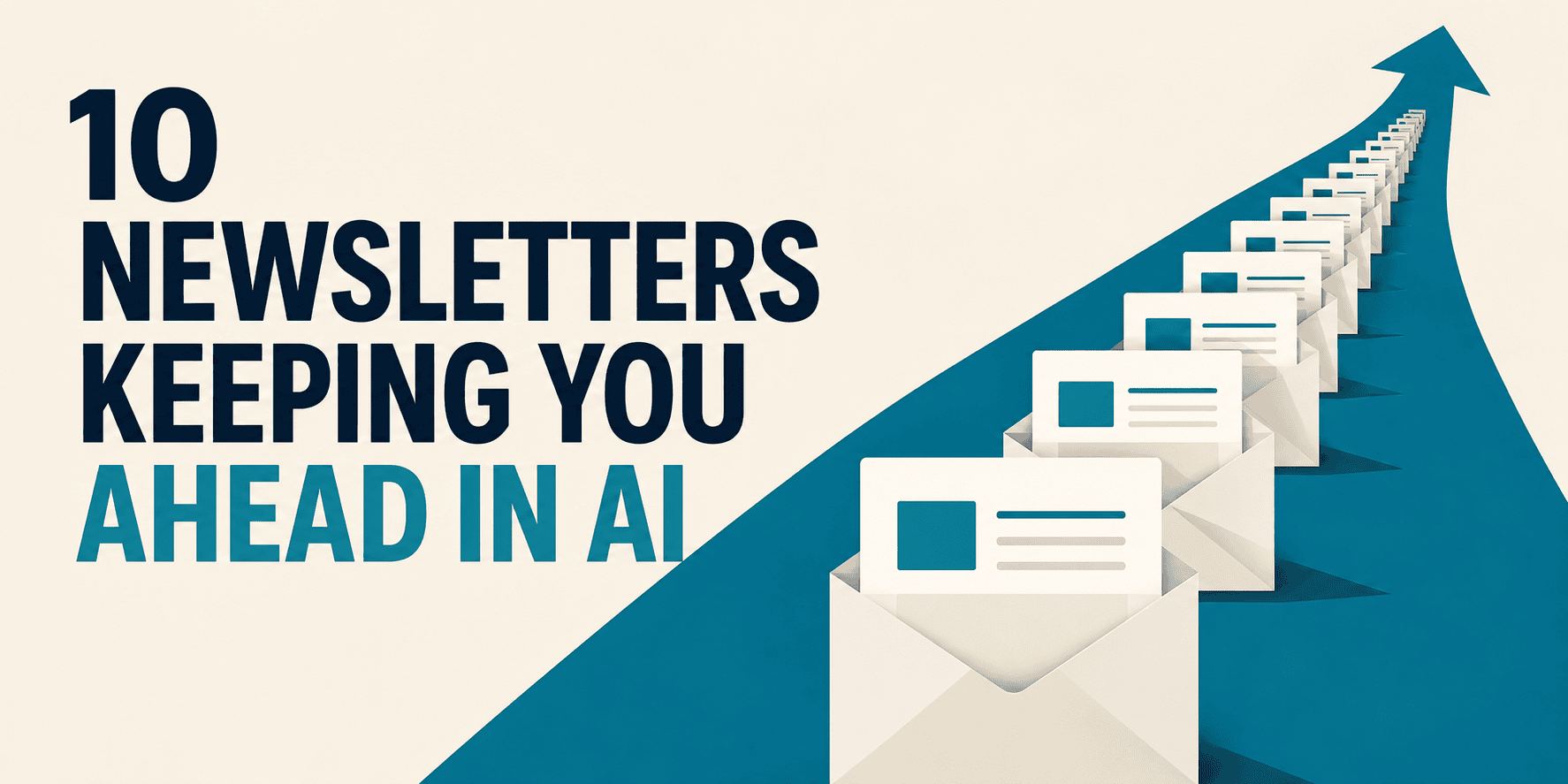
The velocity of the artificial intelligence sector has reached a point where traditional media cycles are frequently rendered obsolete before their stories reach publication. In an environment where a new generative model can be released, reverse-engineered by the open-source community, and integrated into enterprise workflows within a 72-hour window, the primary challenge for technical professionals has shifted from finding information to filtering it. For data scientists, machine learning engineers, and strategic decision-makers in 2024 and beyond, the curated newsletter has emerged as the most critical tool for maintaining professional relevance.
The current information landscape is characterized by a high signal-to-noise ratio, exacerbated by a flood of generic, automated roundups that often lack the technical depth required by practitioners. To navigate this, professionals are increasingly turning to human-curated sources that provide not just news, but context, code, and strategic foresight. This shift reflects a broader trend in the technology sector where specialized micro-publications are replacing generalist tech journalism as the primary source of truth for industry insiders.
The Evolution of AI Information Dissemination
To understand the necessity of these specialized newsletters, one must look at the timeline of AI’s transition from an academic pursuit to a global industrial driver. Prior to 2017—the year the "Attention is All You Need" paper introduced the Transformer architecture—AI news was largely confined to academic journals and specialized conferences like NeurIPS. Following the release of ChatGPT in late 2022, the volume of information exploded. According to data from ArXiv, the number of AI-related research papers has seen an exponential increase, with thousands of submissions monthly, making manual tracking impossible for even the most dedicated researchers.
The newsletters currently dominating the field have organized themselves into specific niches to address this overload: daily scans for awareness, technical dives for implementation, policy analysis for compliance, and builder ecosystems for product development.
Daily Intelligence and Real-Time Awareness
The first tier of the AI information stack focuses on breadth and speed. These publications are designed to be consumed in five to ten minutes, providing a comprehensive overview of the previous 24 hours of industry activity.
-
The Rundown AI: Founded by Rowan Cheung, this publication has scaled to over two million subscribers, making it one of the largest dedicated AI newsletters globally. Its success is attributed to its high scannability, focusing on major model releases, venture capital movements, and significant corporate partnerships. For the professional who needs to know "what happened" without getting bogged down in the "how" immediately, this serves as the industry’s daily newspaper of record.
-
TLDR AI: A specialized vertical within the broader TLDR tech ecosystem, this newsletter is recognized for its minimalist approach. It utilizes a strict format—a headline, a two-sentence summary, and a direct link—to cover a wide array of technical updates and industry news. By stripping away promotional language and editorializing, it provides a raw feed of developments that allows readers to decide which topics warrant a deeper investigation.
-
Superhuman AI: This publication differentiates itself by focusing on the intersection of AI and productivity. As enterprises move past the initial shock of generative AI and into the implementation phase, Superhuman AI addresses the practical application of tools. It focuses on how AI can be leveraged to optimize workflows, automate repetitive tasks, and enhance professional output, catering specifically to the "power user" demographic.
Deep Technical and Research Analysis
While daily scans provide awareness, technical newsletters provide the depth necessary for engineering and research roles. These publications often bridge the gap between academic theory and practical application.
-
The Batch: Published by DeepLearning.AI and led by AI pioneer Andrew Ng, The Batch is widely regarded as a benchmark for technical reporting. Its strength lies in its pedagogical approach, where complex breakthroughs in neural network architectures or training methodologies are explained with the clarity of a classroom lecture. This makes it an essential read for those who need to understand the underlying mechanics of new models without necessarily reading every 50-page whitepaper.
-
Ahead of AI: Authored by Sebastian Raschka, a prominent machine learning researcher and educator, this newsletter focuses on the "how-to" of modern AI. Raschka provides deep dives into open-source large language models (LLMs), fine-tuning techniques like LoRA (Low-Rank Adaptation), and model evaluation frameworks. In an era where open-source models are increasingly rivaling proprietary ones, Raschka’s analysis provides a roadmap for practitioners building their own infrastructure.
-
Interconnects: As the industry matures, the focus has shifted from pre-training models to the nuances of post-training. Interconnects has carved out a niche by focusing on Reinforcement Learning from Human Feedback (RLHF), Direct Preference Optimization (DPO), and the alignment of AI systems. This publication is critical for researchers and engineers who are tasked with making models safer, more controllable, and more effective for specific downstream tasks.
Geopolitical Strategy and Policy Implications
AI has transcended its status as a mere software category to become a pillar of national security and global economics. Understanding the regulatory and strategic landscape is now as important as understanding the code.
-
Import AI: Written by Anthropic co-founder Jack Clark, Import AI is one of the most respected and longest-running newsletters in the field. Clark, who also co-chairs the AI Index at Stanford University, provides a unique perspective that connects technical capabilities to geopolitical consequences. Each issue includes a "Why it matters" section that contextualizes technical news within the framework of global policy, safety, and ethics.
-
The Median: Published by the data science learning platform DataCamp, The Median focuses on the human element of the AI revolution: skills. It connects industry news to the practical reality of professional development. By pairing news with tutorials and course recommendations, it addresses the "skills gap" that many organizations face as they attempt to integrate AI into their operations.
The Builder and Startup Ecosystem
The final layer of the AI information stack is dedicated to the "application layer"—the startups and engineers building products on top of foundational models.
-
Ben’s Bites: This newsletter has become the central hub for the AI builder community. It focuses on product launches, indie hacking projects, and early-stage startup activity. For venture capitalists and entrepreneurs, Ben’s Bites serves as a real-time map of the competitive landscape, highlighting which use cases are gaining traction and which markets are becoming saturated.
-
Latent Space: Written by Swyx and Alessio Fanelli, Latent Space is the definitive publication for the "AI Engineer"—a new discipline that sits between traditional software engineering and pure machine learning research. It explores the tools, frameworks (like LangChain and LlamaIndex), and design patterns that are defining the modern AI stack. Its deep-dive podcasts and written analyses provide a look at the "meta-work" involved in bringing AI into production.
Broader Impact and Industry Implications
The proliferation of these specialized newsletters highlights a fundamental shift in professional education. We are seeing a move away from static, infrequent learning (such as annual certifications) toward a model of continuous, "just-in-time" education. This is a direct response to the "half-life of knowledge" in AI, which is currently estimated to be less than 18 months.
From a strategic perspective, the reliance on these newsletters indicates that the AI industry is currently in a state of high flux. Information is the primary currency, and the ability to synthesize disparate signals—from a research paper on ArXiv to a policy change in the EU—is what separates successful organizations from those that will eventually be disrupted.
Furthermore, the influence of these newsletter authors cannot be overstated. Figures like Andrew Ng, Sebastian Raschka, and Jack Clark act as filters for the entire industry. Their editorial choices determine which research papers get noticed and which startups receive attention, creating a feedback loop that significantly impacts the direction of AI development.
Conclusion and Strategic Recommendation
For the modern professional, the goal is not to consume all available information, but to build a robust "information diet" that covers the full stack of the AI ecosystem. A balanced approach typically involves selecting one source for daily awareness (e.g., TLDR AI), one for deep technical insight (e.g., Ahead of AI), and one for strategic or policy context (e.g., Import AI).
As the generative AI hype cycle transitions into a period of sustained industrial application, the value of high-quality, human-curated signal will only increase. By leveraging these ten newsletters, professionals can move beyond the noise of the news cycle and focus on the technical and strategic developments that will define the next decade of technology. The inbox, once seen as a source of distraction, has effectively been repurposed into a sophisticated intelligence platform for the AI era.