The Foundation of the Intelligence Age How Advanced Materials Science is Powering the Next Generation of AI Infrastructure

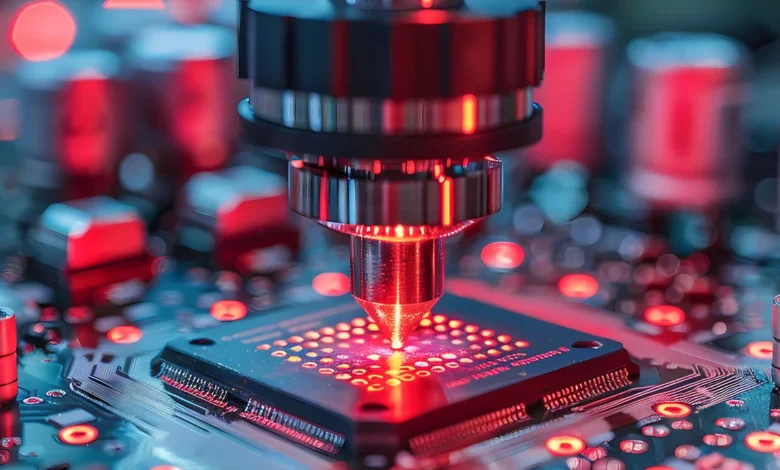
The prevailing narrative surrounding artificial intelligence frequently emphasizes the intangible: sophisticated neural networks, trillion-parameter models, and the massive capital expenditures of tech giants. However, the physical reality of AI is anchored in a complex web of hardware that is currently pushing the absolute limits of known physics. Beneath the layers of software and silicon lies a foundational tier of innovation that remains invisible to the end-user: advanced materials science. As the demand for processing power, memory density, and energy efficiency reaches unprecedented levels, the materials used to manufacture semiconductors and manage data center heat are no longer merely supporting components; they are the primary determinants of what the next generation of AI can achieve.
The Material Bottleneck in Semiconductor Fabrication
The progression of artificial intelligence is inextricably linked to the continued miniaturization and performance enhancement of semiconductor chips. For decades, the industry followed the trajectory of Moore’s Law, doubling transistor counts approximately every two years. Today, as we approach the physical limits of silicon—with process nodes moving toward 2nm and below—the engineering challenges have shifted from simple lithography to the molecular management of materials.
Manufacturing a modern AI processor, such as those used in high-performance computing (HPC), involves thousands of intricately controlled steps. At these scales, even a single atom of contamination or a minor fluctuation in chemical stability can lead to catastrophic yield losses. The industry is currently seeing a surge in demand for ultra-pure chemicals, specialized gases, and high-performance polymers that can withstand the harsh environments of Extreme Ultraviolet (EUV) lithography and plasma etching.
Syensqo, a leader in specialty materials, notes that the industry is seeking solutions that offer greater resistance to corrosive plasmas and better stability under extreme thermal cycles. This is particularly critical as chip architectures move toward 3D stacking and Gate-All-Around (GAA) FET designs. These complex geometries require sacrificial materials and structural supports that can be removed or maintained with atomic-level precision, a feat that is only possible through continuous breakthroughs in polymer chemistry and elastomer engineering.
A Chronology of Hardware Evolution: From Transistors to AI Clusters
To understand the current reliance on advanced materials, one must look at the timeline of computing infrastructure:
- The Silicon Era (1950s–1990s): The focus was on basic semiconductor properties and the development of the integrated circuit. Innovation was driven by the purity of silicon wafers and the introduction of basic dopants.
- The Mobility and Web Era (2000s–2010s): The rise of the smartphone and early cloud computing shifted focus toward low-power materials and lithium-ion battery chemistry.
- The Generative AI Boom (2020–Present): The sudden explosion of Large Language Models (LLMs) has created a "compute crunch." This era is defined by massive GPU clusters, High Bandwidth Memory (HBM), and the need for materials that can survive the intense heat and power density of AI training.
In this current phase, the performance of a data center is no longer limited by the speed of the code, but by the thermal limits of the hardware. The "thermal wall" has become a literal barrier to AI scaling, necessitating a shift from traditional air cooling to more advanced liquid-based solutions.
Thermal Management: The New Frontier of Data Center Design
As AI workloads grow more intensive, the physical infrastructure of data centers is undergoing a radical transformation. Traditional data centers were designed for general-purpose workloads with power densities of 5 to 10 kilowatts (kW) per rack. In contrast, modern AI-ready racks, housing power-hungry GPUs like the NVIDIA H100 or Blackwell series, can exceed 100 kW per rack.
This ten-fold increase in power density has rendered conventional air-cooling systems obsolete for high-end AI training. The industry is rapidly pivoting toward liquid cooling, which is significantly more efficient at conducting heat away from sensitive components. This shift has created an immediate need for specialized heat-transfer fluids and chemically resistant tubing and seals.
According to data from the International Energy Agency (IEA), data centers currently account for approximately 1% to 1.5% of global electricity consumption. Projections suggest this could double by 2026, driven almost entirely by the expansion of AI infrastructure. To mitigate this environmental and economic cost, materials like those developed by Syensqo are being adapted from other high-stress industries. For example, fluid-circulation technologies originally perfected for electric vehicle (EV) battery cooling and automotive thermal management are being redesigned for direct-to-chip liquid cooling in AI servers.
These advanced coolants must be non-conductive (dielectric) to prevent short circuits and must remain stable over years of continuous operation. Furthermore, the connectors and seals within these systems must be composed of high-performance elastomers that do not degrade or leak under the high-pressure, high-temperature conditions of a hyperscale data center.
Sustainability and the Redefinition of Performance
In the modern industrial landscape, "performance" is no longer measured solely by technical metrics like heat resistance or tensile strength. It now encompasses the environmental and social footprint of the material’s entire lifecycle. This shift is driven by both regulatory pressure—such as the tightening restrictions on per- and polyfluoroalkyl substances (PFAS) in the European Union and the United States—and corporate ESG (Environmental, Social, and Governance) commitments.
A prime example of this evolution is the production of perfluoroelastomers, which are essential for sealing semiconductor manufacturing equipment. These materials must survive aggressive chemical environments and temperatures exceeding 300°C. Historically, the manufacturing process for these elastomers relied on certain fluorosurfactants that have come under environmental scrutiny.
Syensqo has responded to this challenge by developing a new generation of perfluoroelastomers using a fluorosurfactant-free manufacturing process. This innovation demonstrates that technical excellence and environmental responsibility are not mutually exclusive. For semiconductor manufacturers, this means they can maintain high yields and equipment reliability while aligning with global sustainability targets. The industry is learning that a material is only truly high-performance if it is "future-proof" against both physical stress and regulatory changes.
AI as a Catalyst for Materials Discovery
In a symbiotic turn of events, the very AI technology that demands better materials is now being used to discover them. Traditionally, materials science was a slow, iterative process of "trial and error" in the laboratory. It could take a decade or more to move a new molecule from discovery to commercial qualification.
Today, researchers are utilizing AI-driven platforms, such as the Microsoft Discovery platform, to accelerate this timeline. By using machine learning models to simulate the properties of millions of potential molecular candidates, scientists can identify the most promising materials for specific applications—such as new heat-transfer fluids or low-loss dielectric materials—before ever stepping into a physical lab.
At Syensqo, AI tools are being used to narrow down candidates for next-generation electronic components. This allows researchers to focus their efforts on the top 1% of possibilities, potentially cutting the R&D cycle by years. This acceleration is vital because the pace of AI software development currently far outstrips the pace of hardware manufacturing. To close this gap, the materials science industry must become as agile as the software industry, using data-driven insights to solve the physical challenges of the future.
Broader Impact: The Geopolitics of Materials
The strategic importance of advanced materials extends beyond the laboratory and the data center into the realm of global economics and geopolitics. As nations compete for "AI sovereignty," the supply chains for specialized chemicals and high-performance polymers have become as critical as the supply of the chips themselves.
The U.S. CHIPS and Science Act and the EU Chips Act have highlighted the need for domestic resilience in the semiconductor ecosystem. However, most of the focus has been on the fabrication plants (fabs). Experts argue that without a robust supply of the advanced materials required to run those fabs, the infrastructure remains vulnerable. Materials science companies are thus becoming central players in the global effort to ensure a stable and sustainable AI future.
Conclusion: Progress is Earned at the Atomic Scale
The future of artificial intelligence will undoubtedly be defined by more elegant algorithms and more massive datasets. Yet, the limits of those algorithms will always be dictated by the physical substrates upon which they run. Whether it is the ultra-pure chemicals that allow for the etching of 2-nanometer transistors or the advanced fluids that keep a 100-kilowatt server rack from melting, materials are the silent enablers of the digital age.
As the industry moves forward, the collaboration between materials scientists, chip designers, and data center architects will become even more integrated. Progress in AI is not a given; it is earned through the rigorous engineering of the physical world. For companies like Syensqo, the challenge lies in anticipating the needs of a technology that is evolving at breakneck speed, ensuring that when the next breakthrough in AI software arrives, the materials are already in place to make it a reality. In the world of high-performance computing, the most advanced software is only as good as the materials that hold it together.