Apple Resolves Critical Privacy Flaw in Hide My Email Service After Year-Long Vulnerability Exposure

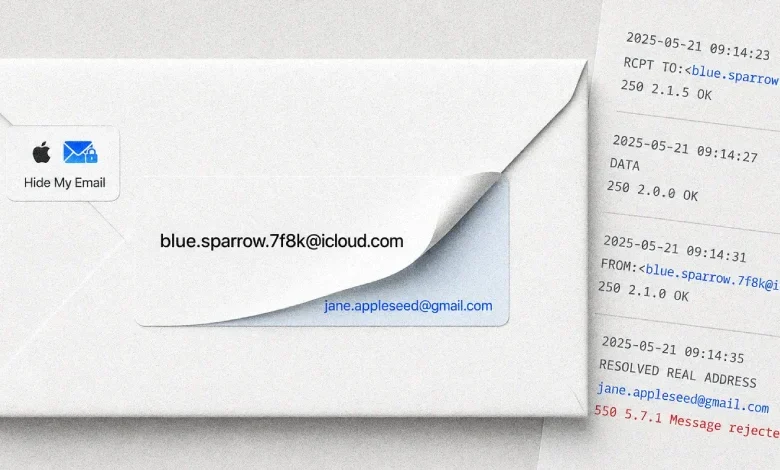
Apple has officially deployed a security patch to address a long-standing vulnerability within its Hide My Email service, a core component of its iCloud+ privacy suite. The flaw, which persisted for over a year despite multiple attempts to rectify it, allowed the real email addresses of users to be unmasked through standard email server logs. This discovery has not only raised technical concerns regarding Apple’s cloud infrastructure but has also sparked significant legal repercussions, as the company now faces a class-action lawsuit for allegedly failing to protect the privacy it markets as a premium feature.
The resolution, finalized on July 3, 2026, comes after a series of failed remediation attempts and a disclosure timeline that spans back to mid-2025. The vulnerability effectively nullified the primary utility of the Hide My Email service, which is designed to provide users with unique, random email addresses that forward messages to their personal inboxes, thereby keeping their actual identities hidden from third-party services and potential data harvesters.
Technical Analysis of the Unmasking Vulnerability
The crux of the security flaw lay in the interaction between Apple’s mail forwarding infrastructure and the Simple Mail Transfer Protocol (SMTP) used by receiving mail servers. Under normal circumstances, Hide My Email acts as a relay. When a third party sends an email to a "hidden" address (e.g., [email protected]), Apple’s servers receive it and forward it to the user’s real address.
The vulnerability was triggered when an email sent to a Hide My Email address was rejected by a recipient’s mail host—often because it was flagged as spam or failed certain security checks. When these messages were bounced or rejected, the underlying metadata within the email logs of the mail transfer agents (MTAs) would occasionally reveal the final destination address.
According to Tyler Murphy, co-founder of EasyOptOuts and the researcher who discovered the flaw, the leak was surprisingly easy to trigger. For many major email providers, a simple automatic rejection of a message as spam would cause the user’s real, private email address to appear in the system’s logs. Because these logs are often accessible to system administrators or could be intercepted in certain network configurations, the "anonymity" provided by the service was compromised. Furthermore, because these leaks occurred during the rejection phase, users were often unaware that their information had been exposed, as the problematic emails never reached their actual inboxes.
A Chronology of Disclosure and Failed Remediation
The timeline of this vulnerability highlights a significant delay in Apple’s response to a critical privacy issue. The sequence of events, as documented by security researchers and legal filings, reveals a year-long struggle to secure the service:
- June 13, 2025: Tyler Murphy of EasyOptOuts officially reports the unmasking vulnerability to Apple’s security team. The report detailed how real email addresses were being leaked in server logs during message rejections.
- Late 2025: Apple acknowledges the report and begins investigating the underlying architecture of the iCloud+ mail relay system.
- March 2026: Apple attempts its first patch to fix the leak. However, subsequent testing by Murphy and his colleague Ben Weiner revealed that the fix was incomplete and that email addresses could still be unmasked under specific conditions.
- June 30, 2026: A second attempt at a patch is deployed by Apple. This update also fails to fully resolve the issue, as researchers continue to demonstrate that real addresses remain visible in certain mail server logs.
- July 3, 2026: Apple successfully deploys a comprehensive fix that addresses the root cause of the metadata leakage during SMTP transactions.
- July 7, 2026: Internal benchmarks and external validations confirm that Hide My Email addresses created after this date are no longer susceptible to the specific unmasking bug.
- July 21, 2026: The vulnerability becomes public knowledge following investigative reporting by 404 Media and the publication of detailed findings by EasyOptOuts.
The Privacy Implications for iCloud+ Subscribers
Hide My Email was introduced in June 2021 as part of Apple’s broader "Sign in with Apple" and iCloud+ initiatives. It was marketed as a definitive solution to the problem of "email fatigue" and the erosion of digital privacy. By allowing users to create on-the-fly addresses for newsletters, e-commerce sites, and app registrations, Apple promised a layer of insulation against trackers and data brokers.

The revelation that this service was leaking the very data it was meant to hide is a significant blow to Apple’s privacy-centric branding. For users who utilized Hide My Email to avoid being tracked across different platforms, the leak meant that a persistent, real-world identifier (their primary email) was being tied to their various pseudonymous accounts in the backend logs of the services they interacted with.
Security experts note that while the bug is now resolved, the historical data remains a concern. Any Hide My Email address created and used between June 2025 and July 2026 may have already had its corresponding real address logged by third-party mail servers. This creates a permanent link in various databases that cannot be "un-leaked," even though the service is now functioning as intended.
Legal Fallout: Alvarez v. Apple Inc.
The delay in fixing the vulnerability has moved beyond the realm of cybersecurity and into the courtroom. A class-action lawsuit, Alvarez v. Apple Inc., has been filed in federal court, alleging that Apple breached its contract with consumers and engaged in deceptive business practices.
The plaintiffs argue that Apple charged a premium for iCloud+ services based on the explicit promise of enhanced privacy. The complaint asserts that Apple was fully aware of the flaw for over a year but failed to notify its customer base or disable the feature while a fix was being developed.
"Apple promised Hide My Email as a privacy feature customers paid for… and failed to deliver it," the legal complaint states. "Worse, Apple has been fully aware of this problem for over a year and has not fixed it. At no point during this period did Apple disable or pause Hide My Email, warn its customers of the flaw, or correct its privacy representations."
The lawsuit seeks damages for millions of iCloud+ subscribers, arguing that they paid for a service that did not provide the advertised security. Legal analysts suggest that the "privacy tax"—the notion that users must pay extra for basic data protection—puts a higher burden of proof and performance on companies like Apple. When a paid security feature fails, it is not merely a technical glitch but a failure of a commercial promise.
Broader Impact on the Tech Industry and Cloud Security
The Hide My Email vulnerability serves as a case study in the complexities of modern cloud security. Even for a company with Apple’s resources, securing the intersection of legacy protocols (like SMTP) and modern privacy layers is a daunting task.
The incident highlights several critical themes in the current cybersecurity landscape:

1. The Fragility of Anonymity Layers
Adding a layer of abstraction, such as a relay or a proxy, does not inherently guarantee privacy. If the underlying protocols used to transmit data are not perfectly aligned with the abstraction layer, "leaks" are almost inevitable. In this case, the standard logging practices of the global email infrastructure were at odds with Apple’s goal of total anonymity.
2. The Responsibility of Disclosure
The year-long gap between the initial report and the final fix raises questions about industry standards for responsible disclosure. While Apple often keeps security vulnerabilities under wraps until a patch is ready (to prevent exploitation), critics argue that when a core privacy promise is broken in a paid service, the company has a moral and perhaps legal obligation to warn users earlier.
3. Trust in the "Privacy-as-a-Service" Model
As Big Tech companies move toward subscription models for security features (such as VPNs, encrypted storage, and email masking), the stakes for maintaining those features become much higher. A failure in a free service is often viewed as an unfortunate oversight; a failure in a paid service is viewed as a breach of consumer trust.
Conclusion and Future Outlook
While Apple has finally plugged the hole in its Hide My Email service, the incident leaves a lingering shadow over its iCloud+ offerings. The company must now navigate the legal challenges posed by the class-action lawsuit while working to restore the confidence of its privacy-conscious user base.
For consumers, the lesson is one of caution. Even the most robust privacy tools provided by the world’s largest technology companies are susceptible to technical flaws. Moving forward, the industry may see a push for more transparent auditing of such privacy features to ensure that "hidden" truly means hidden.
As of late July 2026, Apple has not issued a formal public apology, though the technical fix is confirmed to be live globally. Users are encouraged to continue using Hide My Email for its intended purpose, but with the understanding that no digital tool is entirely infallible against the complexities of the global internet infrastructure. The outcome of the Alvarez lawsuit will likely set a major precedent for how tech companies must handle and disclose vulnerabilities in their paid privacy products in the years to come.
Related posts: