The tech recruitment landscape is witnessing a peculiar psychological phenomenon: highly competent data professionals are frequently failing technical interviews due to cognitive freezing rather than a lack of domain expertise. Candidates who effortlessly write complex window functions at their desks on a daily basis are stalling when confronted with a live interviewer and a countdown timer. This disconnect between desk capability and interview performance has become a major hurdle in the hiring process for data scientists and analysts across the globe.
To understand the mechanics of this phenomenon, industry analysts and platform developers have examined the psychological and environmental factors at play during high-stakes technical evaluations. When a candidate stares at a blinking cursor while an evaluator watches, the biological stress response triggers a temporary impairment in working memory and information retrieval. In the fast-paced ecosystem of modern data hiring, interviewers often fail to differentiate between a candidate who is momentarily paralyzed by performance anxiety and one who genuinely lacks the requisite technical knowledge, leading to missed employment opportunities for qualified individuals.
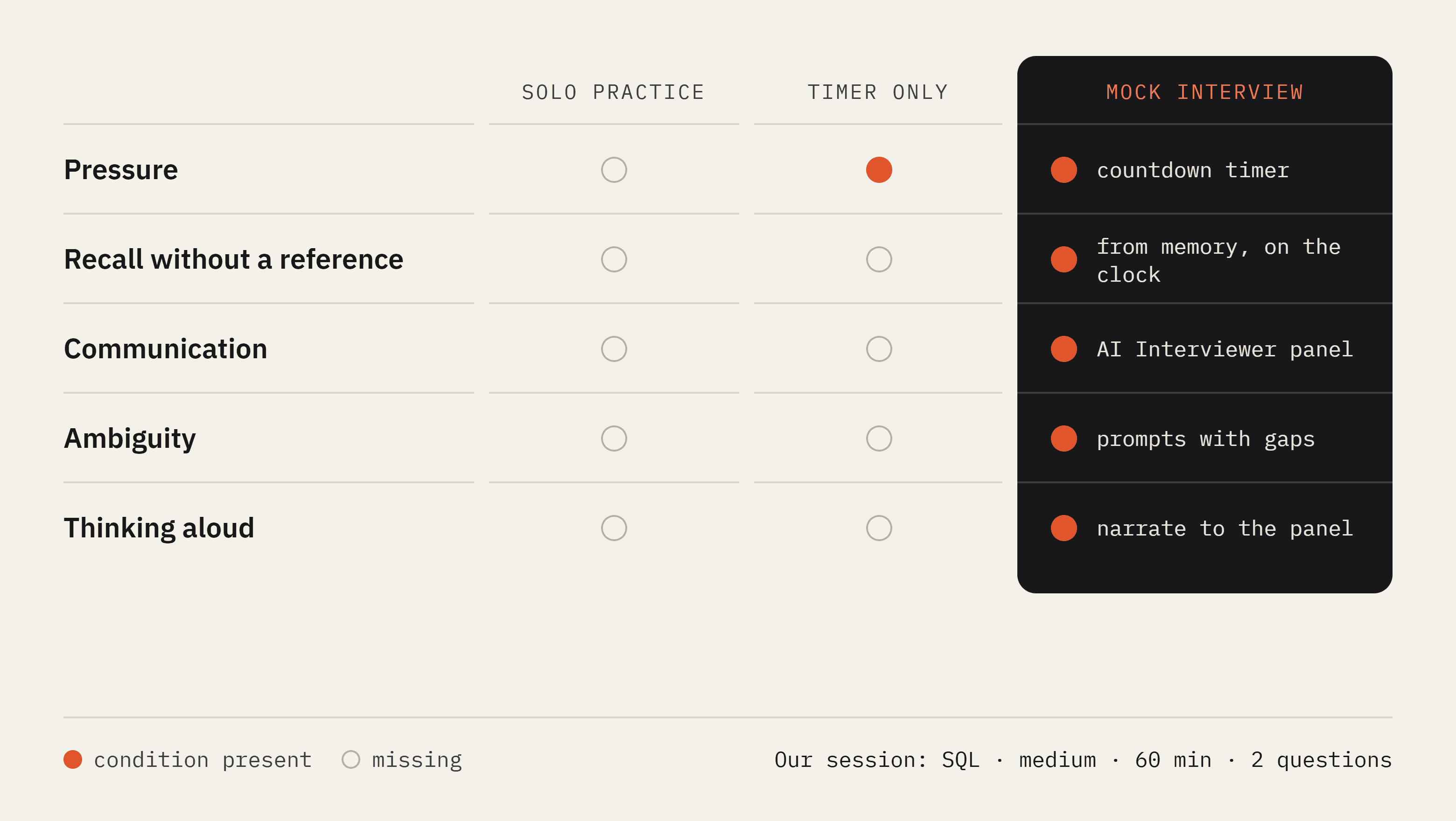
The Five Core Environmental Pressures Fueling Interview Paralysis
Industry research into mock interview environments highlights five distinct conditions that transform familiar material into insurmountable obstacles. The first major hurdle is acute pressure. The introduction of an active timer and a human or artificial intelligence evaluator significantly elevates cortisol levels, directly inhibiting the brain’s ability to recall syntax details quickly. A professional who instantly knows whether to deploy a date difference function or standard arithmetic can easily second-guess themselves under time constraints, deleting and rewriting basic code while valuable minutes tick away.
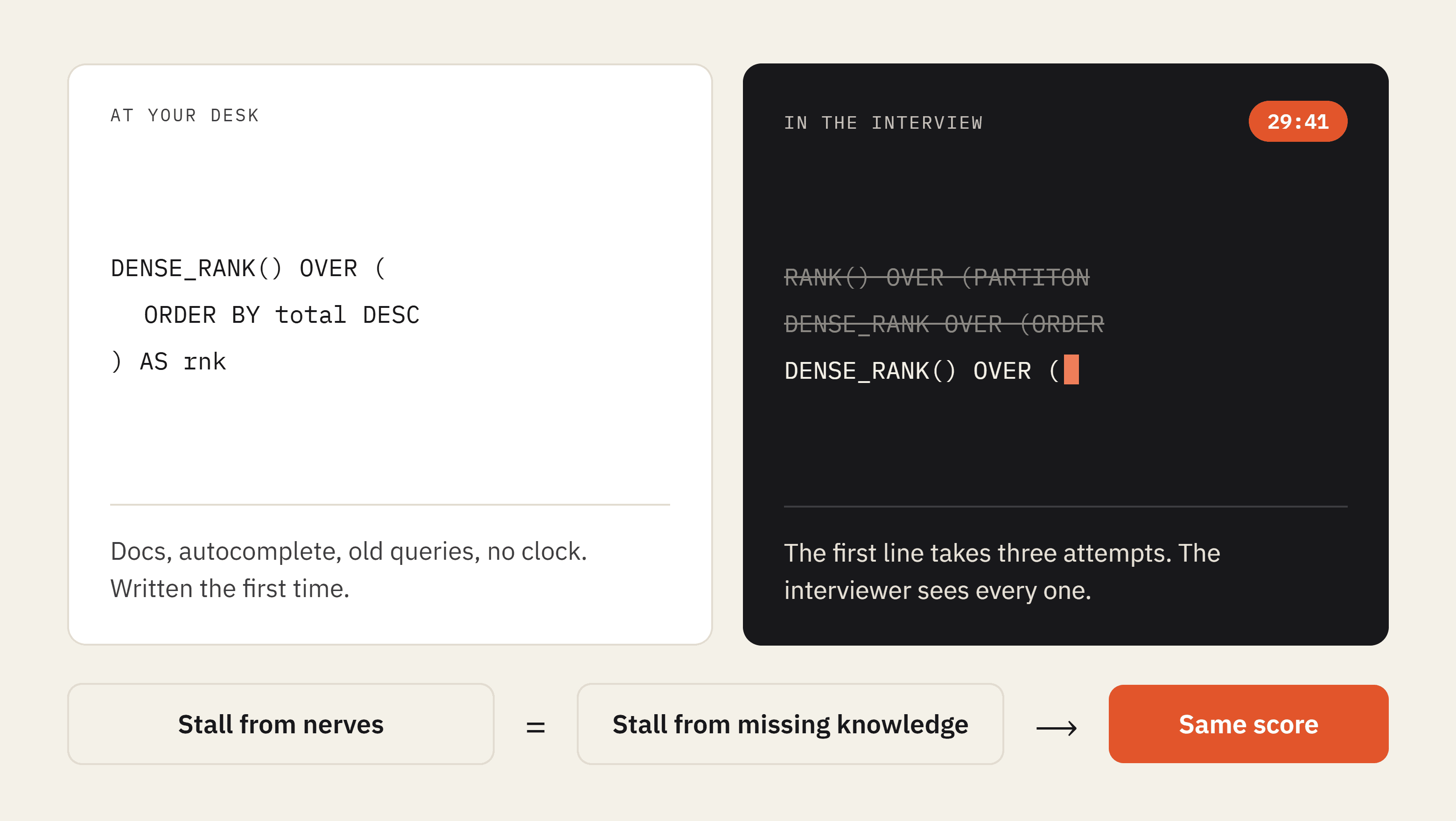
The second factor involves memory recall without reference materials. In a standard working environment, data professionals rely heavily on integrated development environment (IDE) autocomplete features, comprehensive documentation repositories, and historical query libraries. During a standard technical interview, these safety nets are stripped away, forcing candidates to rely entirely on unaided recall. Minute syntactical arguments, such as the exact ordering of parameters or frame clause specifications, suddenly become high-risk variables.
The third condition centers on the cognitive load of concurrent communication. Interview protocols typically require candidates to explain their architectural reasoning aloud while simultaneously writing production-grade code. Because both tasks draw heavily upon the same attentional resources, the system frequently bottlenecks. The candidate either continues talking while the code editor remains static or lapses into prolonged silence to write code, thereby failing to demonstrate their internal thought process to the evaluator.
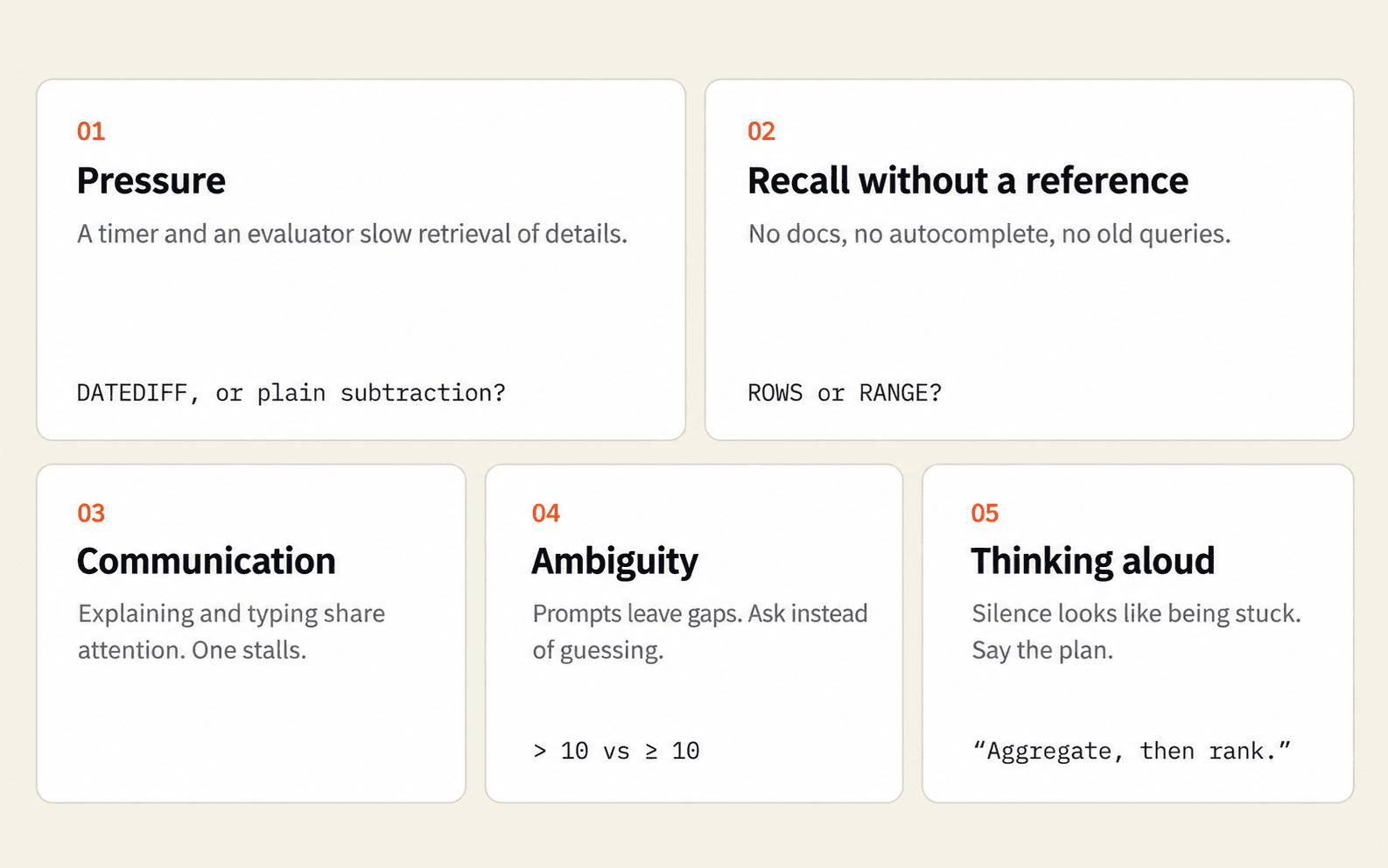
The fourth challenge is prompt ambiguity. Real-world interview prompts intentionally leave operational gaps, such as how duplicate rows should be handled or how incomplete records are defined. Candidates are forced to choose between making silent assumptions—which frequently lead to incorrect logic—or spending precious seconds asking clarifying questions. A single unaddressed ambiguity can fundamentally alter the final output of a query, turning a successful submission into a failure over a margin of a single record.
Finally, the absence of active thinking aloud creates a dangerous communication vacuum. Silence is routinely misinterpreted by evaluators as an indicator of a candidate being completely stuck. Conversely, articulating a tentative, half-formed plan gives the interviewer a structured roadmap of the candidate’s logic and provides an immediate opportunity to course-correct before fifteen lines of erroneous code are written.
Methodologies for Rehearsing Under Simulated Interview Conditions
Recognizing that private, unmonitored practice fails to replicate the psychological strain of live evaluations, career strategists advocate for comprehensive mock interview regimens. Practicing in isolation eliminates the clock, the listener, and the communication barrier, thereby building a false sense of security. True preparation requires a multi-layered approach incorporating strict time limits, conversational prompts with built-in ambiguities, and real-time performance evaluation panels.
Platforms designed to simulate these conditions—such as specialized technical assessment environments—utilize integrated countdown timers, automated or AI-driven evaluation panels, and structured coding workspaces. By selecting specific languages, difficulty levels, and durations, candidates can systematically expose themselves to the exact stressors that cause cognitive freezes. Industry experts recommend breaking down a typical 30-minute technical question into distinct phases: initial reading, verbalizing clarifying questions, outlining the structural plan aloud, writing the code, and executing final validation checks.
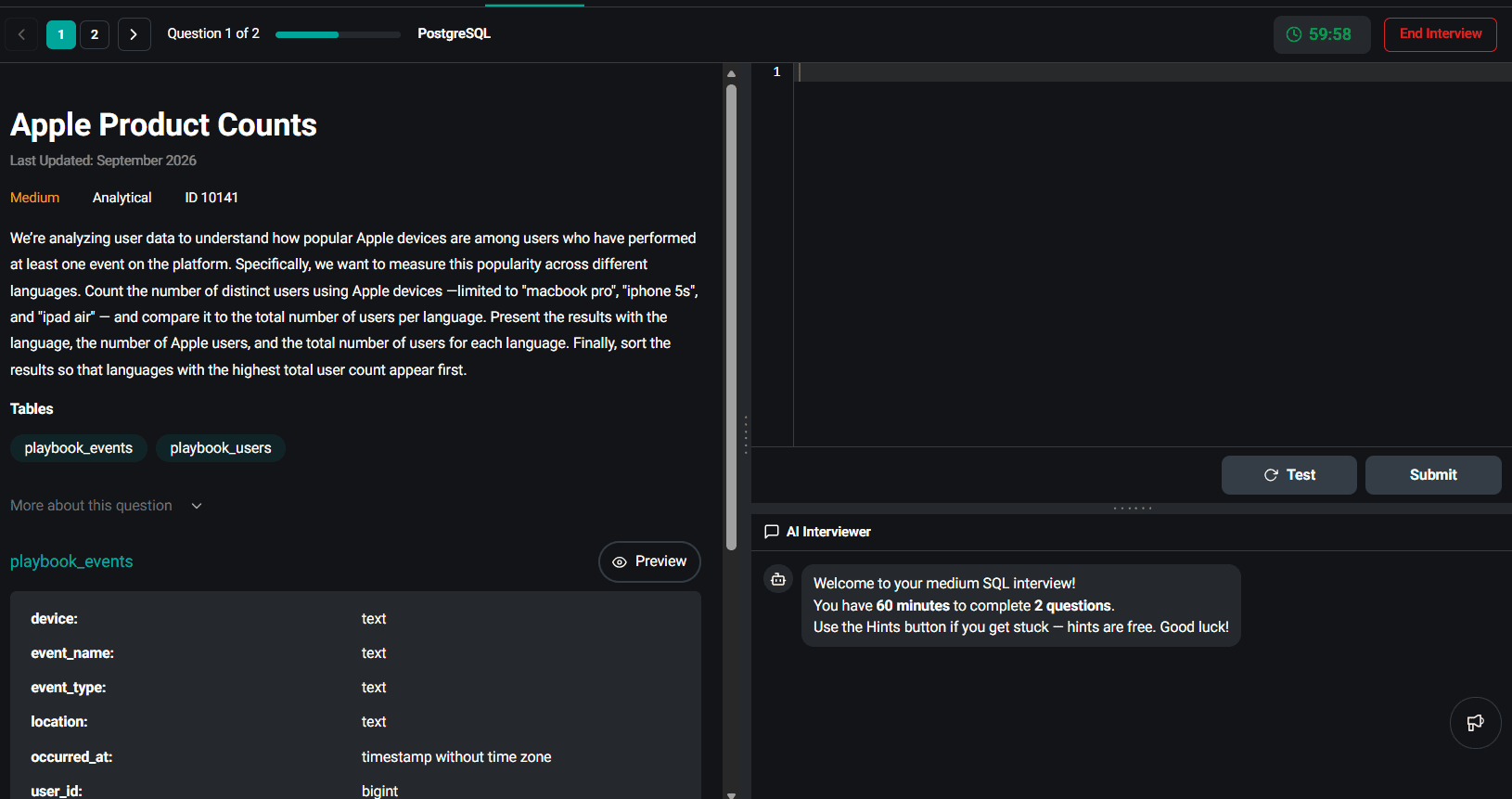
Case Studies in Technical Ambiguity: Library Checkouts and Business Metrics
To illustrate how these conditions manifest in practice, consider two medium-difficulty analytical SQL problems commonly featured in technical screenings. Both problems heavily depend on how ties are managed within ranking functions, a subtle detail that frequently trips up rushed candidates.
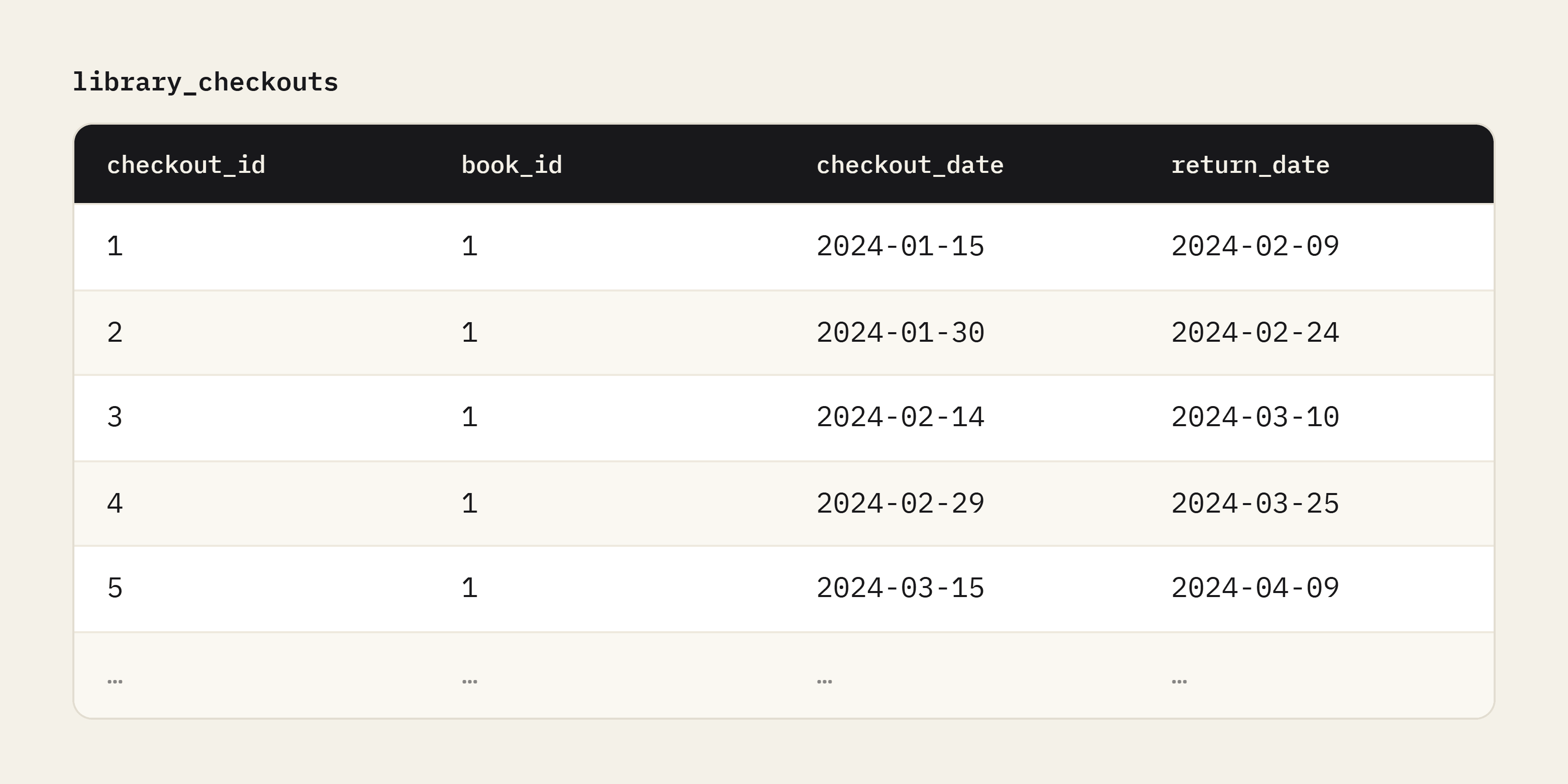
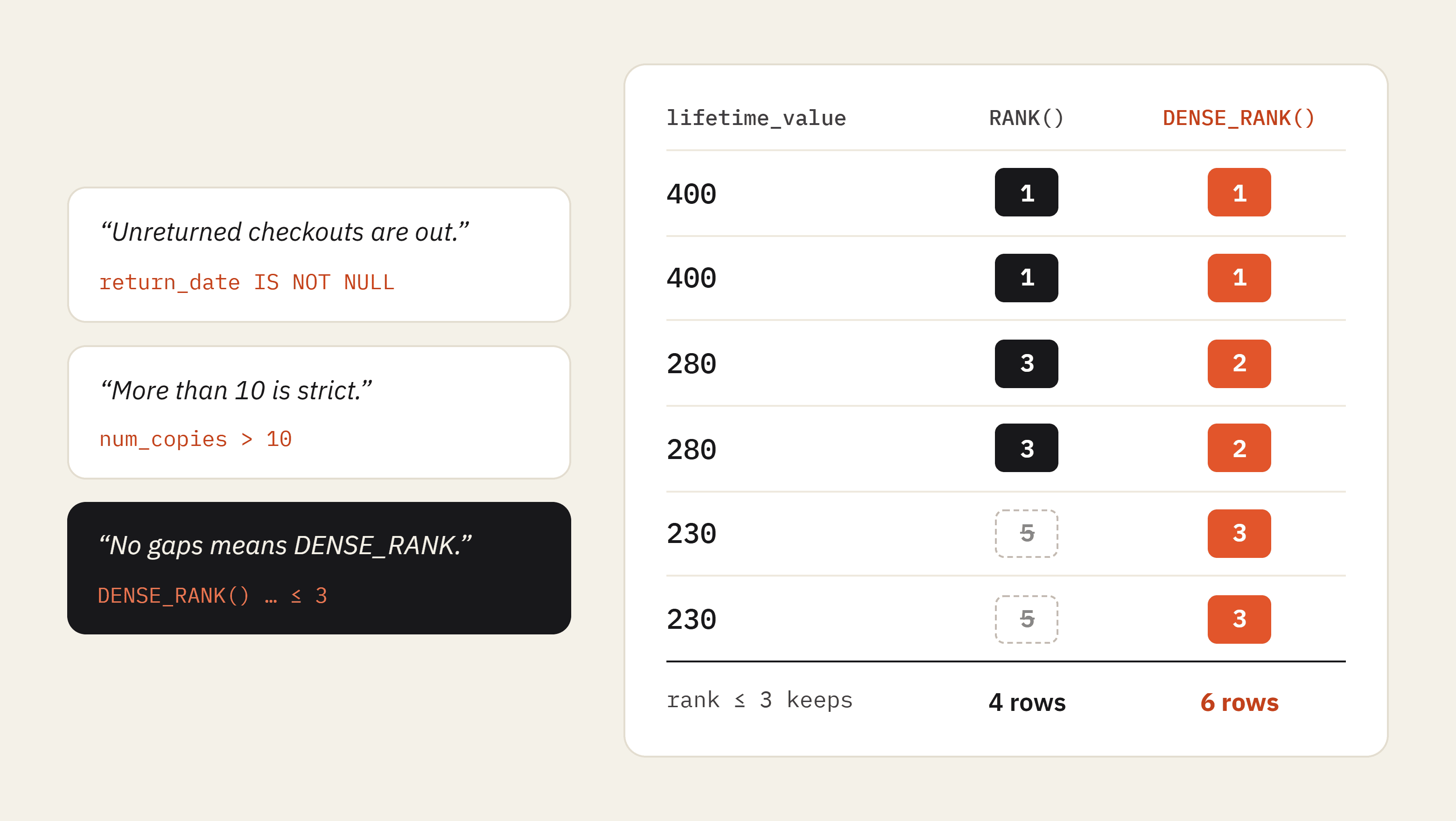
In the first scenario, a public library analytical prompt requires candidates to calculate the lifetime value—measured in days between checkout and return dates—for books with more than 10 physical copies. The dataset consists of a book inventory table and a checkout history table. The prompt explicitly demands that unreturned checkouts be excluded and that books be ranked based on their total checkout duration, assigning identical ranks to ties without leaving numerical gaps, while restricting the final output to the top three ranks.
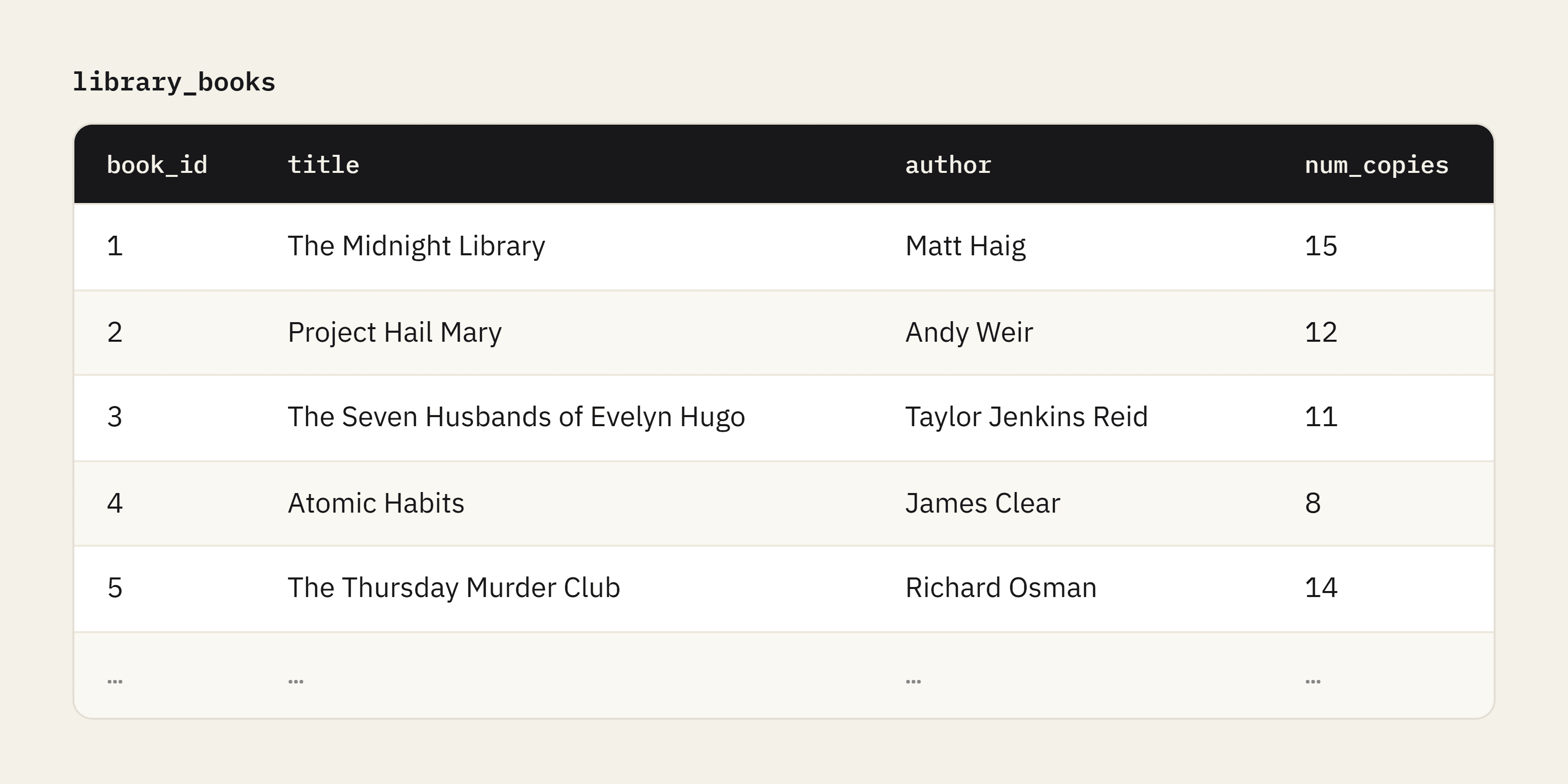
Before typing a single line of code, a prepared candidate must articulate these constraints out loud: "Unreturned checkouts are omitted by filtering for non-null return dates. The inventory threshold is strictly greater than 10 copies, meaning titles with exactly 10 copies must be excluded. The requirement for no numerical gaps dictates the use of the DENSE_RANK window function rather than standard RANK. The architectural plan is to aggregate lifetime days per book, apply the dense rank over descending totals, and filter for ranks less than or equal to three."
Translating this structured logic into SQL yields a multi-step Common Table Expression (CTE) architecture:
WITH lifetime AS (
    SELECT b.title,
           b.num_copies,
           SUM(c.return_date - c.checkout_date) AS lifetime_value
    FROM library_books b
    JOIN library_checkouts c ON c.book_id = b.book_id
    WHERE b.num_copies > 10
      AND c.return_date IS NOT NULL
    GROUP BY b.title, b.num_copies
),
ranked AS (
    SELECT title,
           num_copies,
           lifetime_value,
           DENSE_RANK() OVER (ORDER BY lifetime_value DESC) AS book_rank
    FROM lifetime
)
SELECT title, num_copies, lifetime_value
FROM ranked
WHERE book_rank <= 3
ORDER BY lifetime_value DESC, title;
In this implementation, the first CTE joins the datasets, applies the strict inventory and completion filters, and computes the aggregate duration. The second CTE applies DENSE_RANK, ensuring that ties do not skip subsequent integer values. A standard RANK function would produce gaps (e.g., 1, 1, 3, 3), inadvertently dropping valid records from the final dataset.
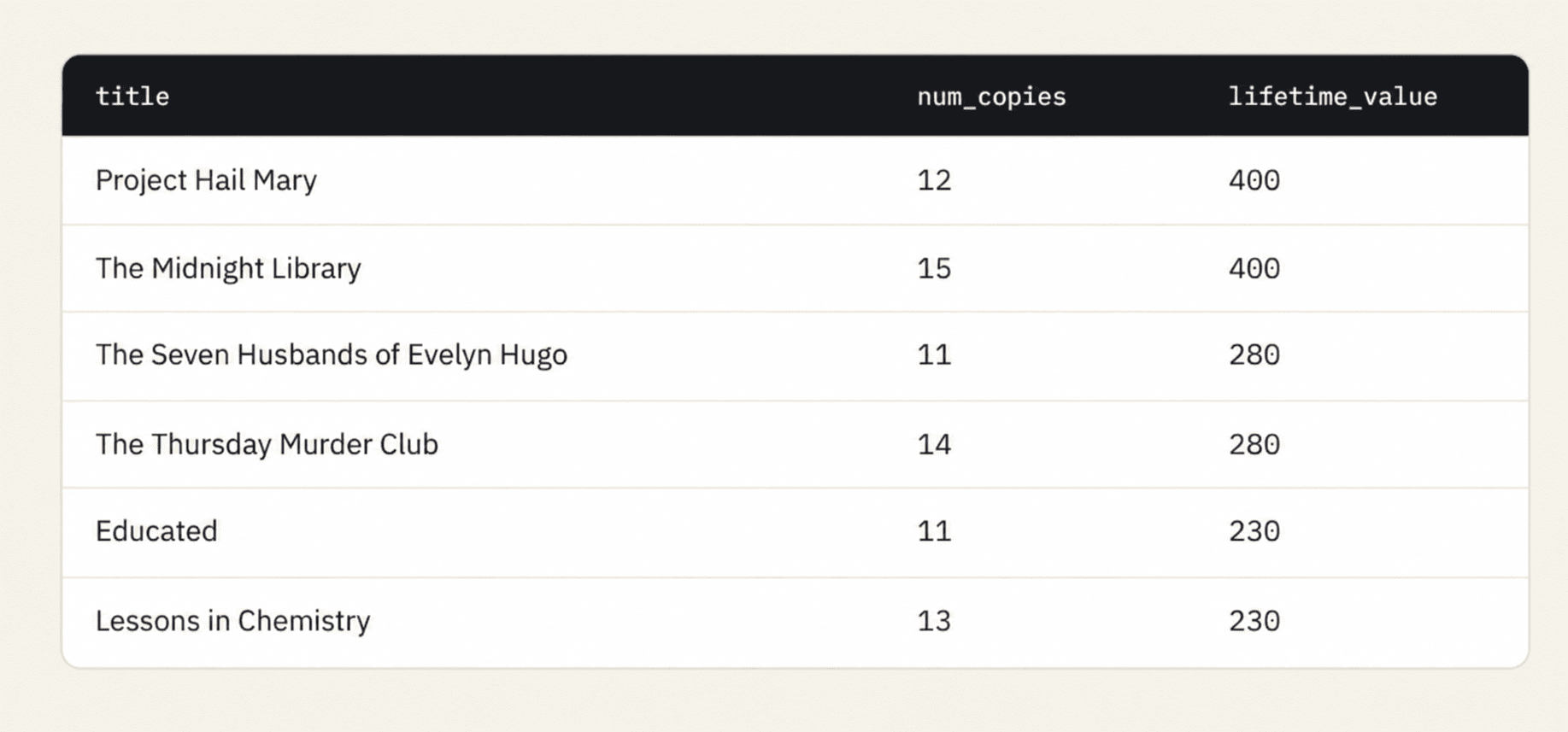
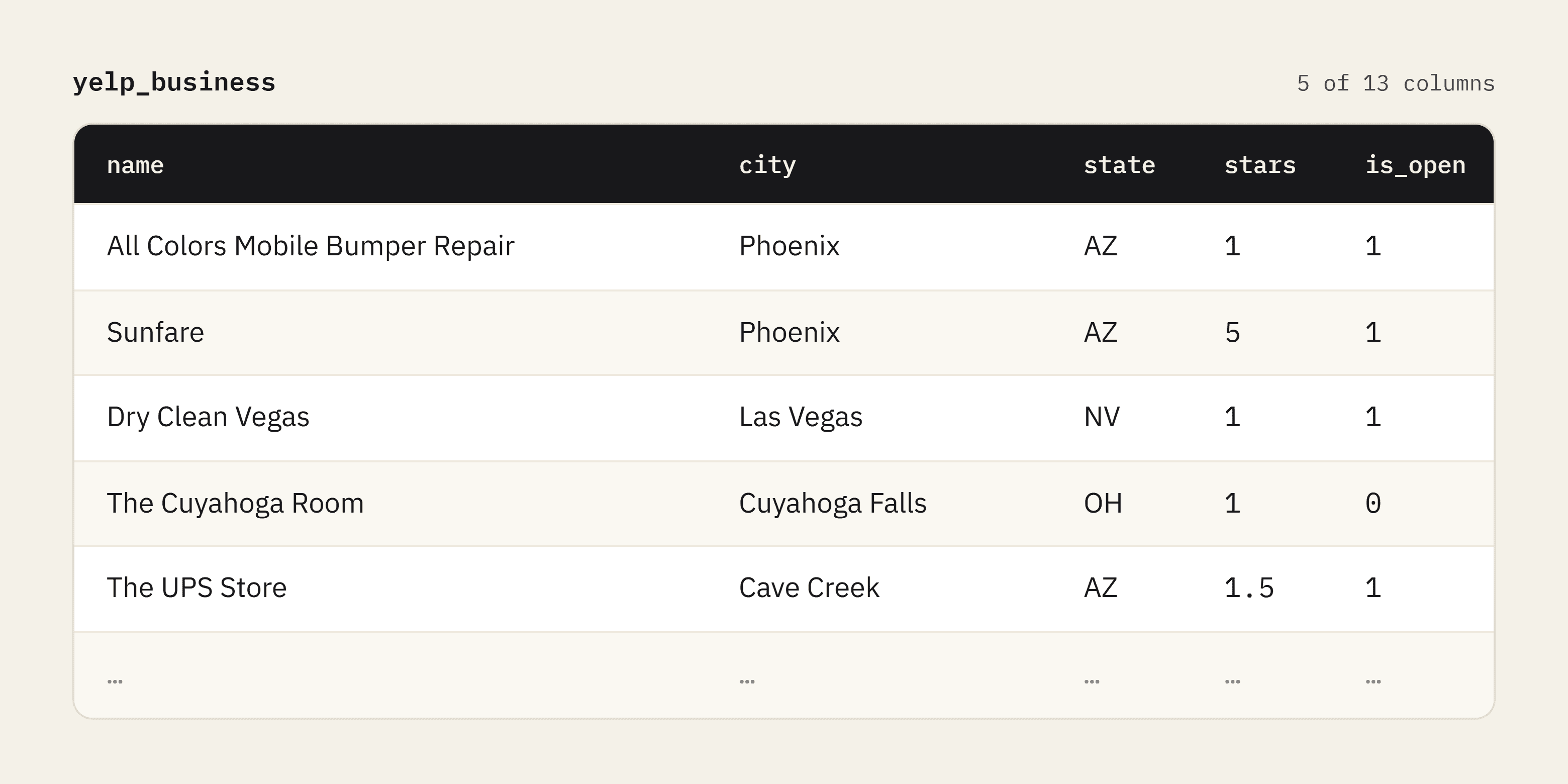
A second common scenario involves a business review prompt, such as determining the top five metropolitan areas with the highest concentration of five-star businesses using a commercial directory dataset. Unlike the previous library example, standard competition ranking is required here, meaning ties share a rank, and the subsequent rank is systematically skipped. Furthermore, the operational guidelines require including both active and permanently closed establishments without filtering on operational status.
A candidate operating under pressure might reflexively reuse the DENSE_RANK logic from the previous question or attempt to use a simple LIMIT 5 clause. However, articulating the rules aloud prevents this oversight: "Both open and closed businesses must be included, so operational status filters are unnecessary. Because ties require skipping subsequent ranks, we must use the standard RANK function. Furthermore, because ties can extend past the fifth position, utilizing LIMIT 5 would arbitrarily truncate valid results. The correct approach is to compute the counts, apply RANK, and filter for ranks less than or equal to five."
The corresponding SQL architecture resolves this cleanly:
WITH city_counts AS (
    SELECT city,
           COUNT(*) AS n_5star
    FROM yelp_business
    WHERE stars = 5
    GROUP BY city
),
ranked AS (
    SELECT city,
           n_5star,
           RANK() OVER (ORDER BY n_5star DESC) AS rnk
    FROM city_counts
)
SELECT city, n_5star
FROM ranked
WHERE rnk <= 5
ORDER BY n_5star DESC, city;
In this query, the initial CTE aggregates the count of five-star establishments per city. The secondary CTE assigns standard competition ranks, and the final selection retrieves all records falling within the top five ranking tiers, properly accommodating multi-city ties at lower thresholds without data loss.
Broader Implications and Preparation Strategies for Data Professionals
The persistent issue of technical interview freezes highlights a structural flaw in how data professionals prepare for career transitions. Traditional study methods focus excessively on algorithmic correctness while ignoring the psychological and communicative stamina required to perform under observation. As hiring pipelines increasingly integrate automated timers, AI proctoring, and live collaborative coding environments, candidates must adapt their preparation strategies accordingly.
Industry experts emphasize that overcoming interview paralysis requires treating communication and stress management as core technical competencies. By systematically incorporating timed mock sessions, forcing verbal narration during problem-solving, and actively auditing how ambiguities are resolved before writing code, data professionals can retrain their cognitive responses. Ultimately, bridging the gap between desk proficiency and interview execution relies on transforming unconscious problem-solving habits into deliberate, vocalized, and structured methodologies.
Related posts: