In the rapidly evolving digital landscape, where global social media users have reached an estimated 5.75 billion, brands are increasingly tasked with maintaining a presence across five or more platforms simultaneously. With the average user spending two hours and 21 minutes daily on social channels, the pressure to maintain a consistent brand voice is higher than ever. Consequently, many marketing professionals have turned to cross-posting—the practice of sharing similar content across multiple channels—to optimize efficiency. However, as platform algorithms become more sophisticated, the strategy of simply duplicating content has become a significant liability. Today, effective social media management requires a nuanced approach that prioritizes content adaptation over mindless replication to avoid appearing spammy or robotic to an increasingly discerning audience.

The Evolution of Cross-Posting as a Strategic Necessity
Historically, social media managers were expected to craft bespoke content for every individual platform. As the sheer volume of channels grew—spanning from the professional corridors of LinkedIn to the visual-centric feeds of Instagram and the real-time discourse of X—this manual approach became unsustainable. Cross-posting emerged as a viable solution, allowing teams to streamline their production workflows while ensuring brand messaging remained unified across digital touchpoints.
The primary incentive for this shift is operational efficiency. By starting with a core message and repurposing it, organizations can maintain a consistent cadence without doubling or tripling their production workload. Nevertheless, this efficiency comes with a caveat: the "one-size-fits-all" approach is effectively dead. Modern algorithms are designed to prioritize native content, meaning that posts that look like automated broadcasts are often penalized, leading to reduced reach and lower engagement rates.

Cross-Posting Versus Content Repurposing: A Critical Distinction
Industry experts emphasize that a vital component of any successful strategy is distinguishing between cross-posting and content repurposing. While the terms are frequently used interchangeably, their execution and goals differ significantly.
Cross-posting involves taking a single message and tailoring it to the specific constraints and norms of different platforms. For example, a product announcement graphic can be cross-posted to Facebook, Instagram, and LinkedIn, provided the caption is adapted to suit each platform’s distinct audience. Conversely, content repurposing is a more labor-intensive process that transforms a single asset into entirely new formats. A single webinar recording, for instance, might be broken down into six vertical short-form videos, a carousel deck, and a comprehensive blog post.
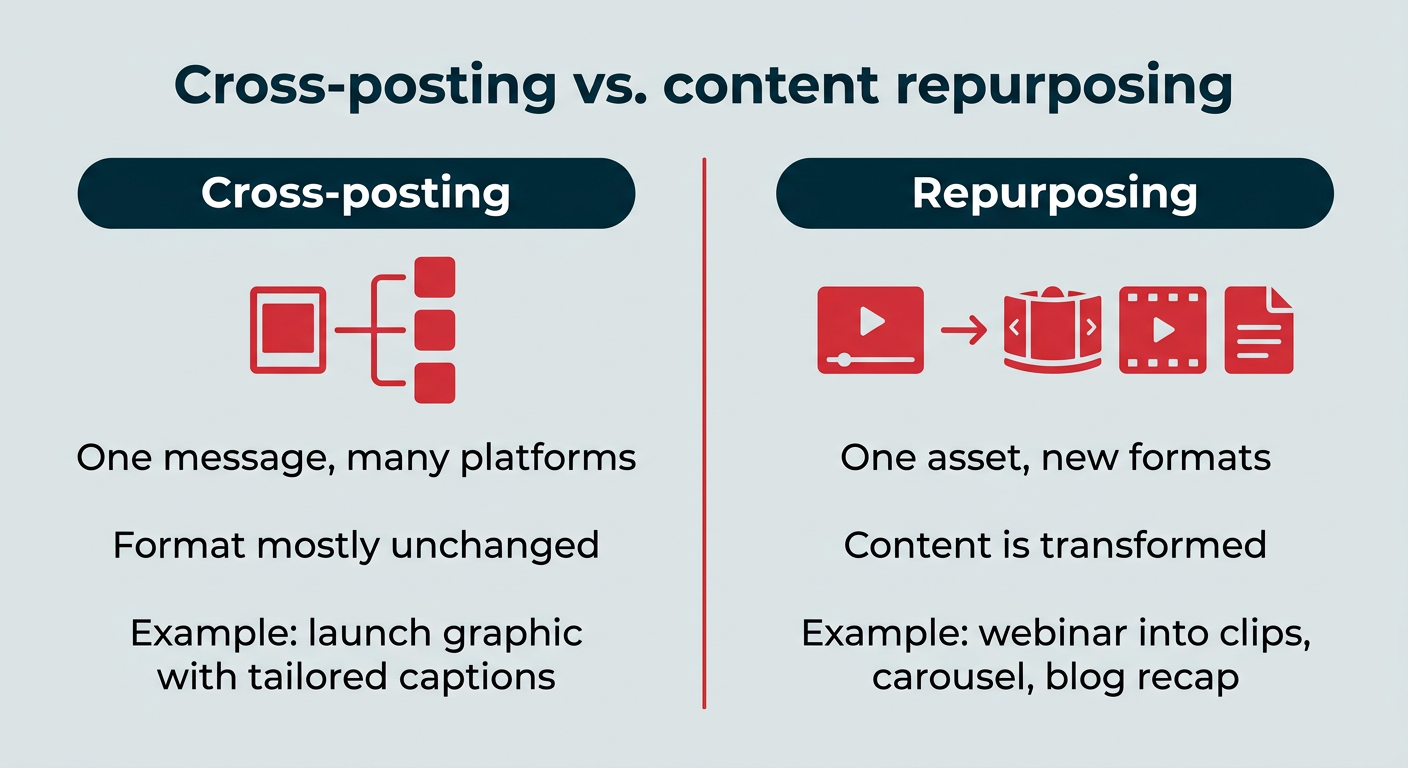
Successful brands typically employ both: cross-posting for straightforward updates and repurposing for deep-dive educational content that requires a format shift to remain effective.
Quantitative Benefits and Risk Mitigation
The benefits of a well-executed cross-posting strategy are measurable. By maximizing the reach of a single content asset, brands can increase their total impressions and maintain a high level of activity without exhausting their creative resources. Data suggests that companies with a coherent, cross-platform strategy experience higher brand recall and stronger community engagement.
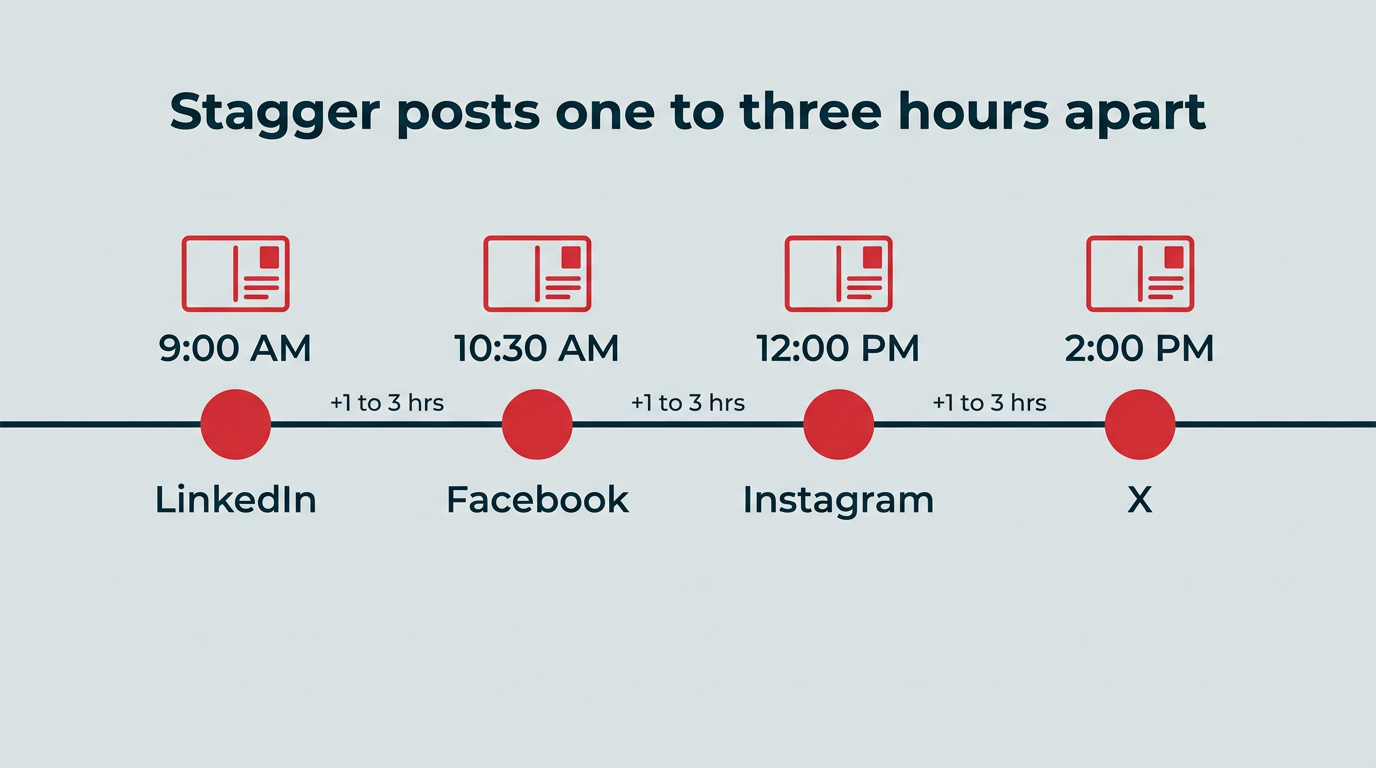
However, the risks of poor execution are equally significant. When adaptation is neglected, the failure points become apparent. An identical post published across multiple channels at the same time is a clear signal of automation. This lack of personalization can lead to "content fatigue" among followers who see the same message repeatedly, ultimately resulting in higher unfollow rates. Furthermore, platforms like X have explicit policies against "platform manipulation," which includes posting duplicate content to trending topics. Violating these guidelines can lead to account restrictions or shadowbanning.
The Six-Step Framework for Effective Implementation
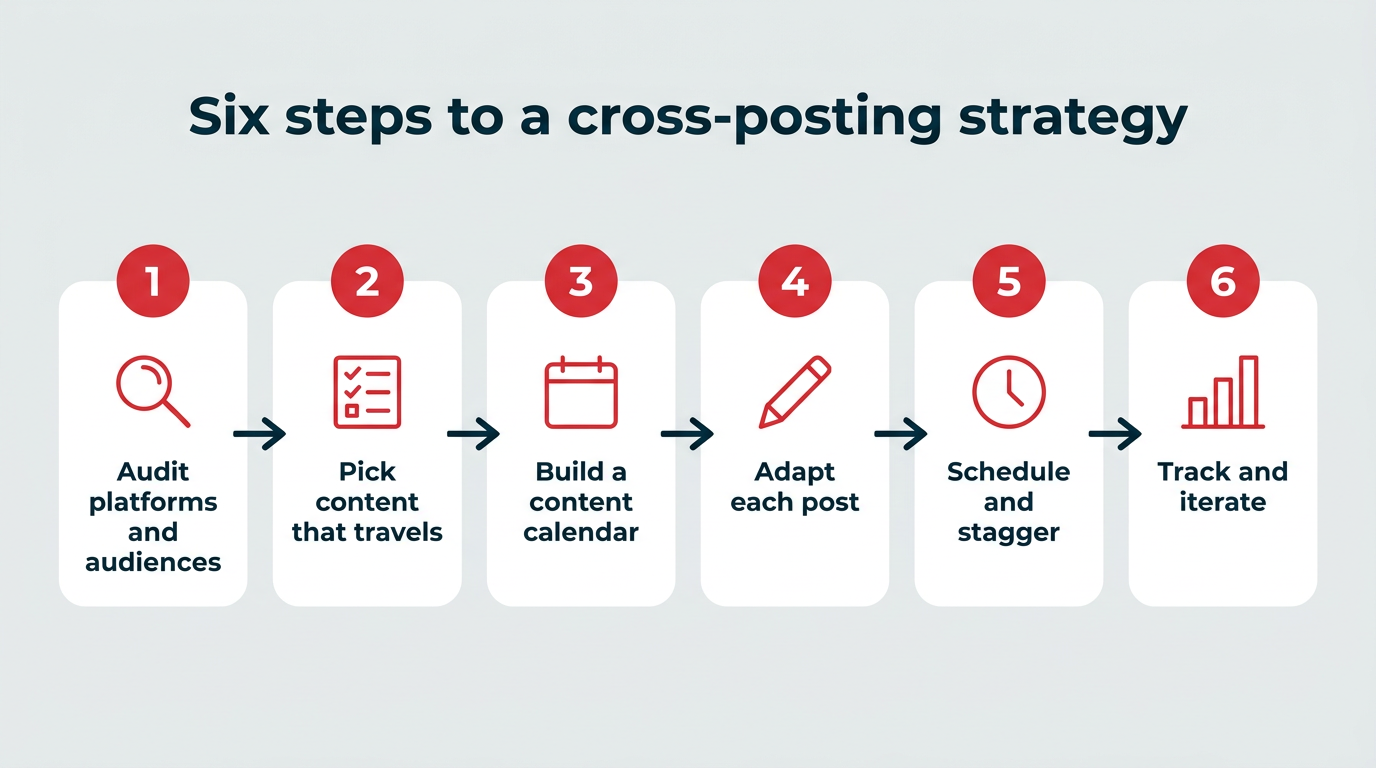
To mitigate risks, marketing teams should adopt a formal, six-step protocol for their cross-posting workflows:
- Conduct a Platform Audit: Evaluate all active profiles to determine audience overlap. Higher overlap requires more significant variation between versions to keep the experience fresh for the user.
- Select Appropriate Content Types: Not all content travels well. Evergreen educational material, product announcements, and high-quality standalone visuals are ideal for cross-posting. Conversely, platform-native trends, community-specific discussions, and time-sensitive content should be kept exclusive to their originating platform.
- Establish a Cross-Posting Calendar: Map each asset to target platforms, assigning specific publish times that align with each channel’s peak performance windows rather than a single, universal schedule.
- Tailor Copy and Captions: Rewrite captions for each destination. A professional tone on LinkedIn should be adjusted to be more conversational on Facebook or punchy on X, respecting the unique character limits and engagement conventions of each.
- Optimize Visual Assets: Avoid "secondhand" content. For example, uploading a video with a TikTok watermark to Instagram Reels is a common error that signals low-quality, unoriginal content. Always export clean, high-resolution files sized correctly for each platform.
- Analyze and Iterate: Utilize analytics dashboards to measure performance per platform. If a specific campaign underperforms on Instagram but thrives on LinkedIn, adjust the strategy accordingly.
Platform-Specific Parameters and Compliance
Understanding the technical specifications of each network is non-negotiable. For instance, while Instagram allows 2,200 characters, it does not support clickable links in captions, necessitating the use of "link in bio" strategies. LinkedIn, with its 3,000-character limit, favors professional, insightful commentary. Facebook, allowing for extremely long-form text, remains the best venue for community-focused storytelling.
Furthermore, hashtags function differently across these spaces. While Instagram users expect a cluster of relevant tags, excessive hashtag use on LinkedIn or Facebook can appear unprofessional and clutter the user experience. By adhering to these platform-specific "languages," brands can ensure that their cross-posted content feels native to every environment.

The Role of Integrated Social Management Tools
In 2026, the complexity of managing these variables has necessitated the rise of centralized social media operating systems. These platforms allow for the simultaneous drafting and customization of posts, enabling users to tweak captions, images, and timing for multiple networks within a single interface.
Tools like Hootsuite’s "Perch" and similar AI-driven management suites now offer features that automatically suggest optimal posting times and provide previews of how a post will render on different devices. This level of automation does not remove the need for human oversight but rather enhances it, allowing managers to focus on strategy and high-level engagement rather than the minutiae of manual posting.

Broader Implications for Brand Authority
The ultimate goal of a cross-posting strategy is to build a cohesive brand identity that feels consistent yet tailored. When a brand speaks with the same voice across all platforms, but adjusts its tone to fit the local culture of each site, it demonstrates a level of sophistication and respect for the audience.
Conversely, the "spammy" appearance of unedited, cross-posted content can erode trust. In an era where digital authenticity is a primary currency, the effort invested in adapting content is an investment in the brand’s reputation. As organizations look toward the future of their digital presence, the ability to balance operational efficiency with personalized, platform-specific engagement will remain the defining characteristic of successful social media leadership. By treating every platform as a unique destination rather than a mirror of the others, brands can ensure their messaging not only reaches their audience but resonates with them.