Mastering Corporate Social Media Governance: A Comprehensive Guide to Policies and Guidelines


In the modern digital landscape, the boundary between professional and personal digital footprints has become increasingly porous, creating significant operational, legal, and reputational risks for organizations. As employees, contractors, and brand ambassadors continue to leverage personal social media accounts to discuss their work, companies are finding it essential to implement robust governance frameworks. These frameworks are primarily comprised of three distinct but interconnected documents: social media guidelines, social media policies, and brand style guides. While these tools are often conflated, they serve fundamentally different purposes in maintaining brand integrity and regulatory compliance.
Defining the Governance Triad

At the core of corporate digital strategy is the distinction between advisory recommendations and binding requirements. Social media guidelines are instructional documents designed to foster positive and safe engagement by employees and collaborators. They serve as a roadmap for best practices, offering guidance on how to represent the brand in a way that is both authentic and professional. Conversely, a social media policy is a formal, legally enforceable document that outlines specific rules, expectations, and the consequences of policy violations. These policies are typically developed in conjunction with human resources and legal departments to ensure compliance with labor laws and industry regulations. Finally, a brand style guide acts as the aesthetic and tonal anchor, standardizing the voice, visual elements, and messaging across all digital touchpoints.
While many organizations operate with fragmented documentation, the most effective strategy involves integrating these three resources. When a company provides clear, accessible guidance alongside enforceable rules, it empowers employees to act as brand advocates while minimizing the likelihood of inadvertent policy breaches.
The Strategic Importance of Brand Protection

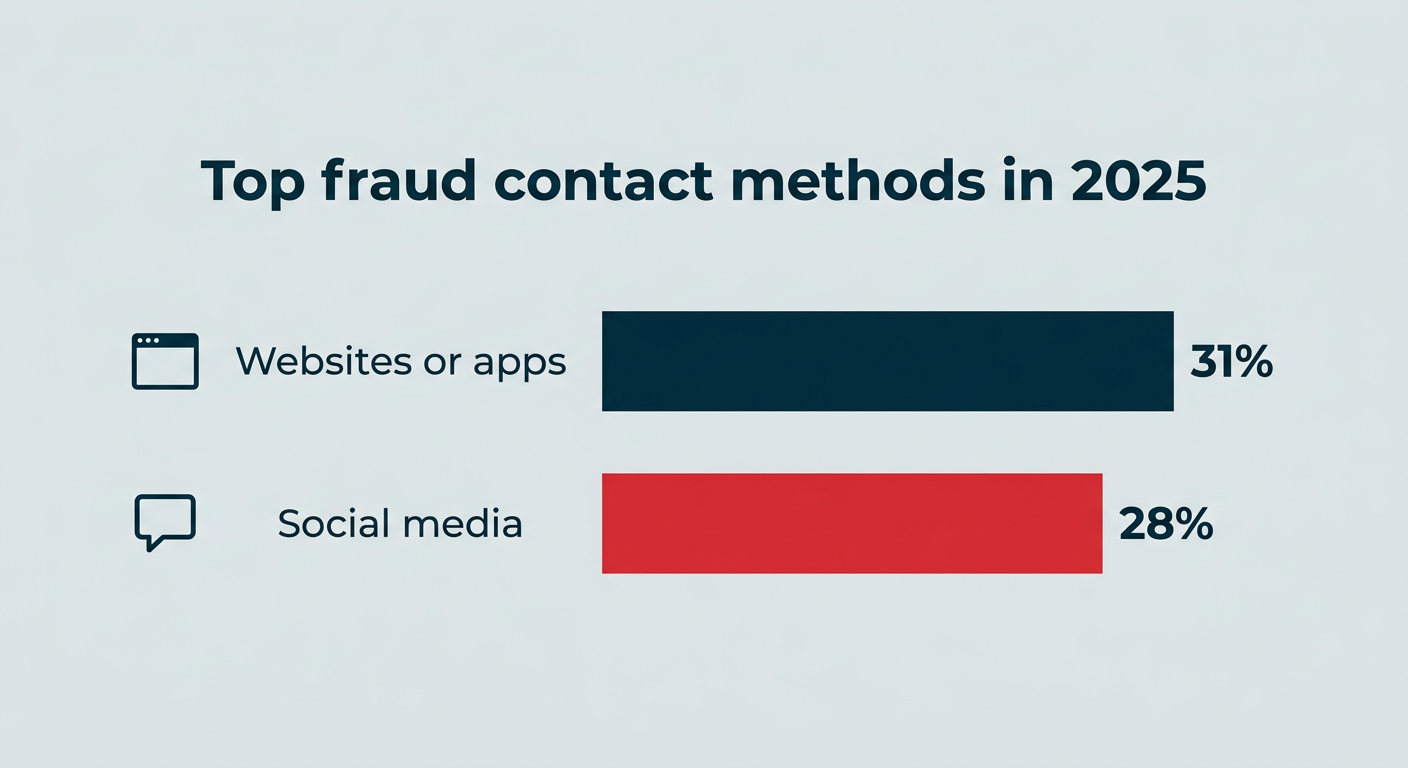
The necessity for these governance structures is underscored by a volatile regulatory environment. According to the Federal Trade Commission (FTC), social media has become a primary vector for consumer fraud, with reports indicating that it is the second most common contact method for fraudsters, accounting for 28% of reported cases involving financial loss. For enterprises, the stakes are equally high. A single post that discloses proprietary information, violates industry-specific compliance standards like HIPAA or FINRA, or fails to disclose a paid partnership can lead to significant legal exposure and public relations crises.
Historically, the lack of clear guidance has been the primary defense for employees who commit social media blunders. By establishing a comprehensive policy, organizations effectively remove the "I didn’t know" defense, ensuring that all stakeholders—from interns to C-suite executives—understand their obligations. Furthermore, as generative AI tools become integrated into daily workflows, policies must evolve to address the complexities of AI-generated content, including the risks of bias, misinformation, and the accidental leakage of intellectual property into public large language models.
Chronology and Implementation: An Eight-Step Framework
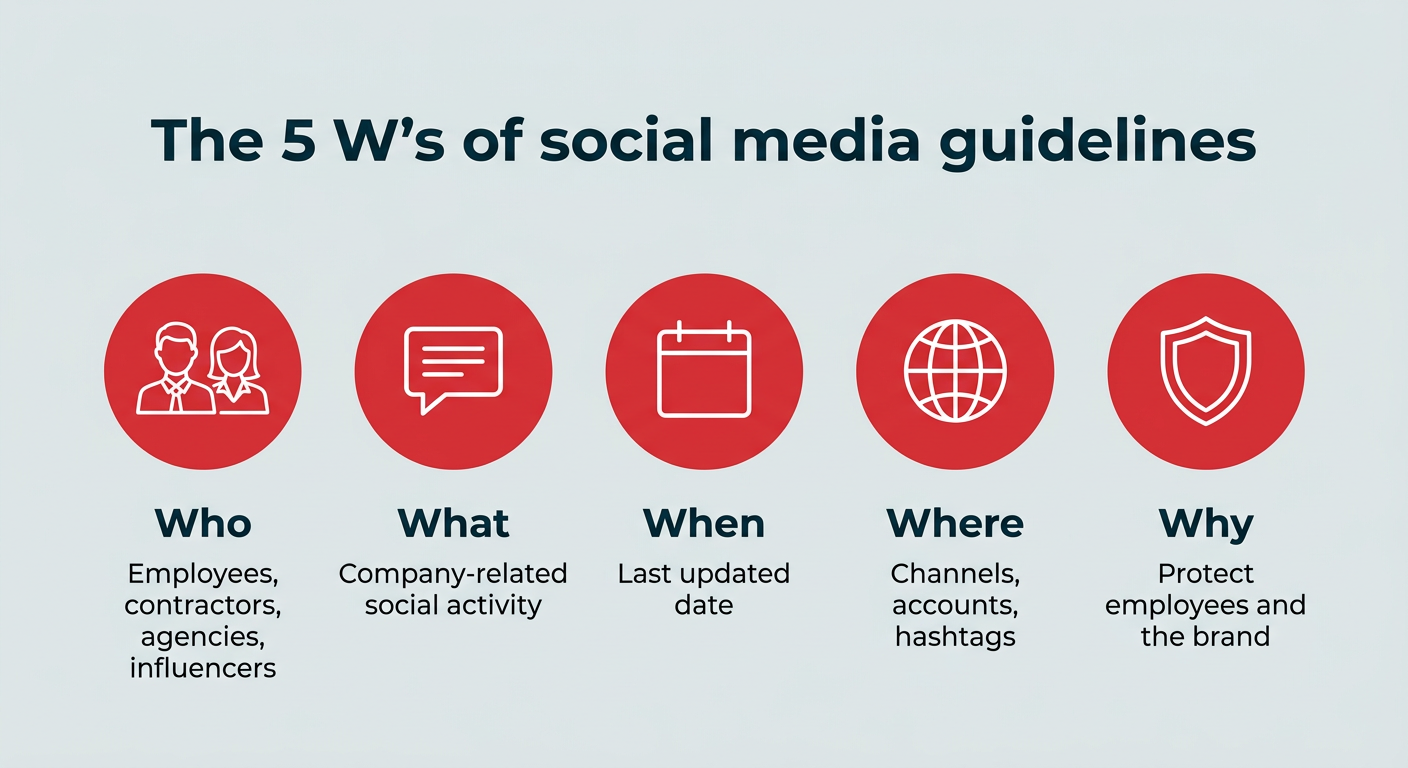
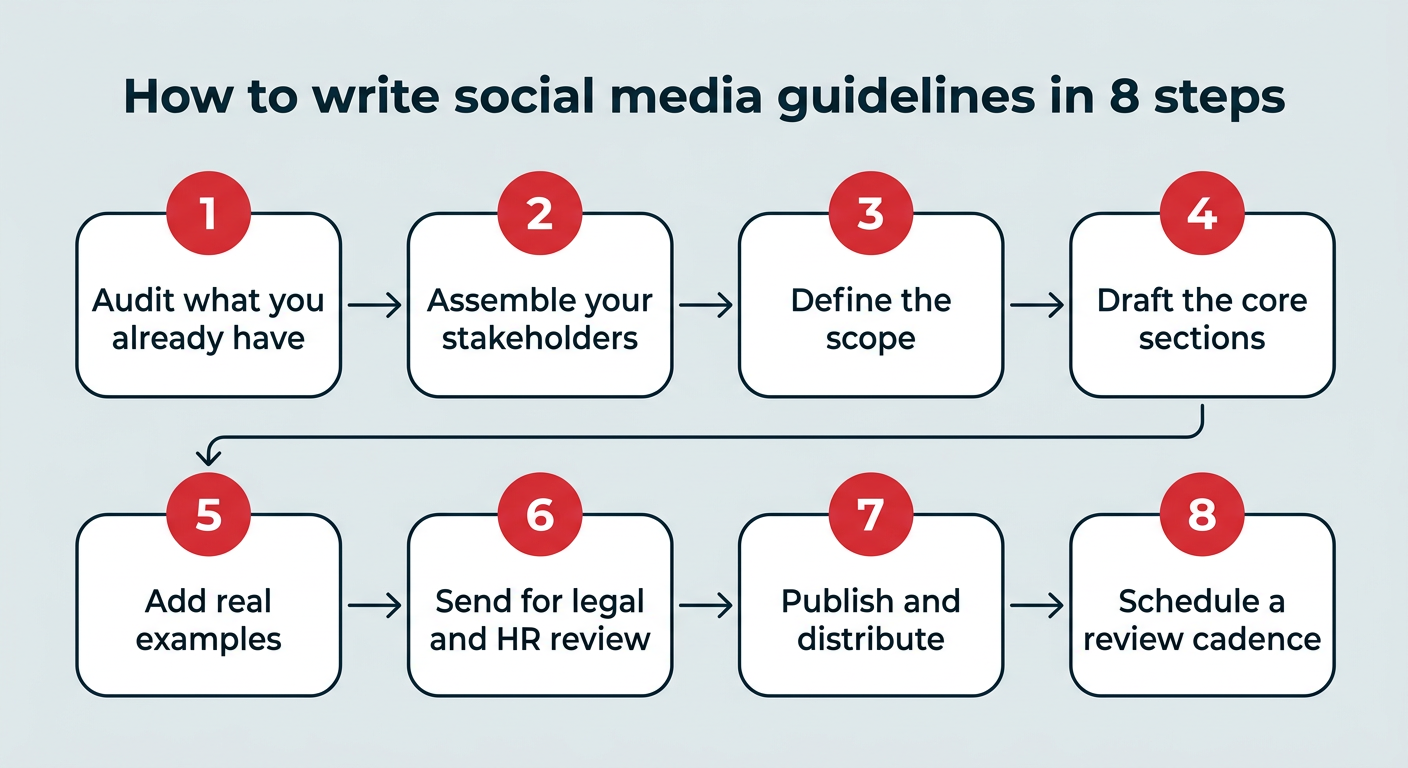
The development of effective social media governance is not a task to be completed in isolation by a marketing department. It requires a cross-functional approach involving legal, human resources, communications, and IT security teams. The following eight-step process is widely recognized as a standard for successful implementation:
- The Audit Phase: Before drafting new rules, organizations must conduct an exhaustive audit of existing documentation. This includes reviewing employee handbooks, legacy social media policies, and internal communications plans to identify contradictions or outdated information.
- Stakeholder Alignment: Assemble a cross-functional task force. Each department brings a unique risk perspective: Legal focuses on disclosure and liability, HR manages behavioral standards, and IT security prioritizes credential protection.
- Defining Scope: Clearly define to whom the guidelines apply. The most successful documents explicitly state that they cover all forms of company-related discourse, even when conducted on private, personal accounts.
- Drafting Core Sections: The content should cover high-level "dos and don’ts," alongside specific sections on copyright, privacy, cybersecurity, and accessibility.
- Integration of Concrete Examples: Abstract principles are frequently misinterpreted. Providing real-world, industry-specific examples of both compliant and non-compliant posts is the most effective way to ensure employee comprehension.
- Legal and Compliance Review: Before distribution, the document must undergo rigorous review by legal counsel to ensure compliance with regional and industry-specific regulations, such as the EU Digital Services Act or the FTC’s endorsement guidelines.
- Deployment and Education: A document hidden on a corporate intranet is ineffective. Organizations should announce the policy through multiple channels, supported by mandatory training sessions that explain the "why" behind the rules.
- Scheduled Review Cadence: Governance documents should not be static. A mandatory annual review, triggered by significant shifts in platform algorithms or legal regulations, ensures the policy remains current.
Industry-Specific Approaches to Governance
Different sectors face unique challenges that necessitate tailored approaches to social media governance. In the financial services sector, companies like Vanguard must adhere to strict FINRA and SEC recordkeeping requirements, treating social media posts as formal business communications. Their policies emphasize that all interactions, including comments, may be monitored and retained for regulatory purposes.
In contrast, the healthcare sector—exemplified by organizations like the Horizon Health Network—must prioritize patient privacy above all else. Their guidelines explicitly mandate compliance with HIPAA, reminding employees that even a seemingly innocuous photo taken in a workspace could lead to a catastrophic breach of patient confidentiality.
Luxury retail brands, such as Chanel, have taken a leadership role in clarifying disclosure requirements. Recognizing the prevalence of influencer marketing, these organizations provide specific, granular examples of what constitutes adequate disclosure for sponsored content, explicitly rejecting vague hashtags like #gifted or #comped as insufficient for FTC compliance.
The Role of Employee Advocacy
While governance is often framed in terms of risk mitigation, it is also a powerful tool for brand advocacy. When employees understand the guardrails, they are more likely to share company content with confidence. Organizations are increasingly using platforms like Hootsuite Amplify to provide staff with a library of pre-approved, high-quality content. This allows employees to participate in social discourse, share their expertise, and amplify the brand’s reach without the stress of wondering whether their posts are compliant or appropriate.
Fact-Based Analysis of Future Implications
Looking forward, the integration of generative AI will be the defining challenge for social media policy. As AI tools are used to draft copy, resize images, and automate community management, organizations must establish clear boundaries. Future-proof guidelines will need to address the requirement for human oversight, the prohibition of inputting confidential data into public-facing AI tools, and the ethical obligation to disclose when content has been significantly altered or created by non-human actors.

Furthermore, as the global regulatory landscape becomes more stringent, the cost of non-compliance will continue to rise. Organizations that treat social media guidelines as a "set it and forget it" project are increasingly vulnerable. The shift toward a culture of transparency—where mistakes are addressed openly and policies are treated as living documents—will distinguish resilient brands from those that remain susceptible to preventable crises.
In conclusion, the development of robust social media guidelines is an essential exercise in organizational discipline. By clearly defining expectations, aligning with legal and HR standards, and fostering a culture of informed advocacy, companies can turn their greatest source of potential risk into a powerful asset for brand growth. The transition from reactive management to proactive governance is not merely a bureaucratic necessity; it is a fundamental requirement for operating effectively in the modern digital economy.