The Evolution of Authorship in the Age of Artificial Intelligence: Redefining Creative Control and Mastery

The intersection of generative artificial intelligence and human creative production has prompted a fundamental reassessment of what it means to be an author. Historically, the definition of an artist or writer has been inextricably linked to the physical act of creation—the direct application of pen to paper or chisel to marble. However, the rise of sophisticated large language models and automated creative systems is challenging this paradigm, forcing a distinction between the labor of production and the strategic architecture of creative intent.
The Historical Precedent: The Studio Model of Authorship
To understand the current tension in AI-assisted writing, one must look at the history of visual arts, specifically the studio systems employed by masters such as Auguste Rodin and, in the contemporary era, Jeff Koons. While the popular perception of the singular genius artist suggests that every stroke is the result of the master’s hand, the reality of high-level production has long relied on collaborative networks.
At the Musée Rodin in Paris, records indicate that Rodin’s process was deeply industrial. He acted as a conceptual director, utilizing a team of skilled practitioners to enlarge or reduce models, foundry workers to cast bronzes, and specialist carvers to translate plaster maquettes into stone. Even artists like Camille Claudel were instrumental in executing intricate details that defined the final product. Despite this distributed labor, the work is universally attributed to Rodin. The attribution is not based on the physical labor of the chisel, but on the intellectual and aesthetic vision that directed the process.
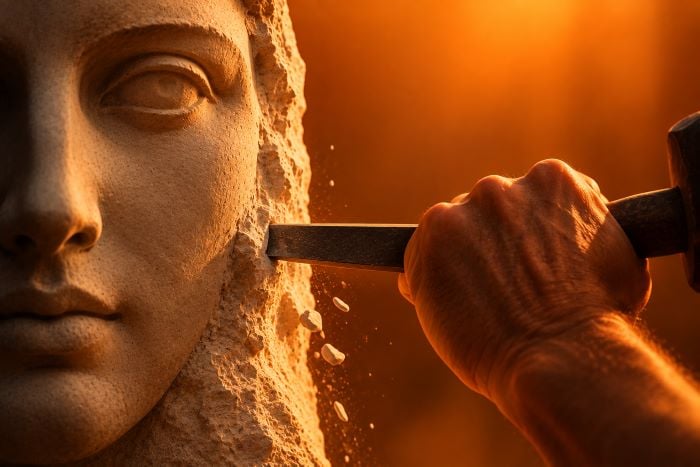
This model is mirrored today in the studio of Jeff Koons. As detailed in recent profiles, Koons employs a rigorous, system-driven approach that includes digital modeling, standardized lighting, and teams of fabricators. Koons maintains that his systems are designed to ensure every gesture and color remains faithful to his specific intent. In both instances, the artist functions as a creative director—a role that requires mastery of the medium to supervise the output effectively.
Chronology of the AI Integration in Writing
The integration of AI into the writing profession has followed a rapid trajectory over the last decade, transitioning from simple predictive text to advanced generative agents.
- 2015–2020: AI is primarily used for utility, such as spell-checking, grammar correction, and basic data synthesis.
- 2022–2023: The public release of generative models like ChatGPT marks a shift toward complex drafting, outlining, and content generation, sparking widespread debate regarding academic integrity and professional authorship.
- 2024: Industry standards begin to emerge, with publications and organizations drafting guidelines for AI disclosure and usage.
- 2025–2026: Research institutions, including those published in Science and Trends in Cognitive Sciences, release longitudinal studies on the impact of AI on creative diversity and skill acquisition.
Empirical Analysis: Productivity vs. Creative Homogenization
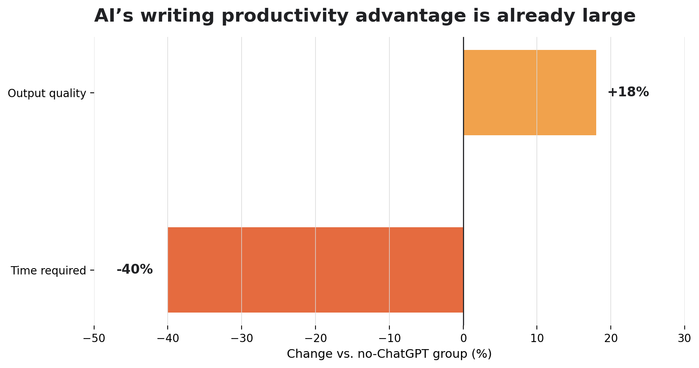
Recent empirical data highlights a nuanced reality regarding AI-assisted writing. A 2023 study published in Science by Shakked Noy and Whitney Zhang examined 453 professionals performing standard writing tasks. The results showed that access to ChatGPT increased productivity, reducing completion time by 40% while simultaneously improving the assessed quality of the output by 18%.
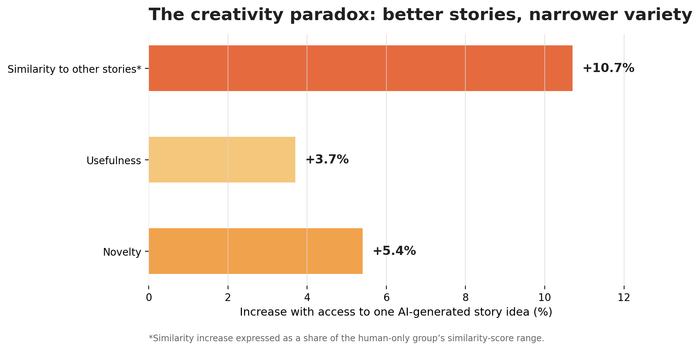
However, this increase in speed and quality comes with a significant trade-off. Subsequent research, such as the Science Advances experiment by Anil Doshi and Oliver Hauser, suggests that while AI can assist in generating novel ideas, it also tends to pull creative output toward a statistical mean. Their study found that writers using AI-generated prompts produced stories that were 9% more useful but notably more similar to one another.
This "homogenization effect" has been corroborated by further meta-analyses. A 2026 review of 19 studies indicated a statistically significant decline in semantic diversity when AI is utilized as a primary drafting tool. This has led to the rise of the term "AI slop"—a designation used by organizations like Merriam-Webster to describe high-volume, low-quality digital content that lacks the unique, idiosyncratic perspective of human experience.
Defining the New Professional Standard
The core of the current debate lies in the distinction between "abstinence" (the refusal to use AI) and "abdication" (the surrender of creative control to the machine). Industry experts and legal bodies are increasingly moving toward a model of authorship based on responsibility rather than manual keystrokes.
The U.S. Copyright Office, in its 2025 report on AI and copyrightability, established that while AI-generated output without human creative control cannot be copyrighted, work that utilizes AI as an assistive tool—where the human exercises significant selection, arrangement, or modification—may qualify for protection. This legal shift mirrors the professional necessity for "formative friction."
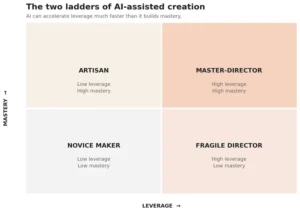
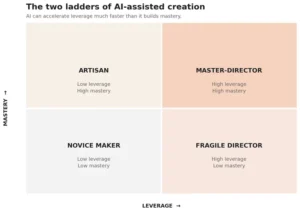
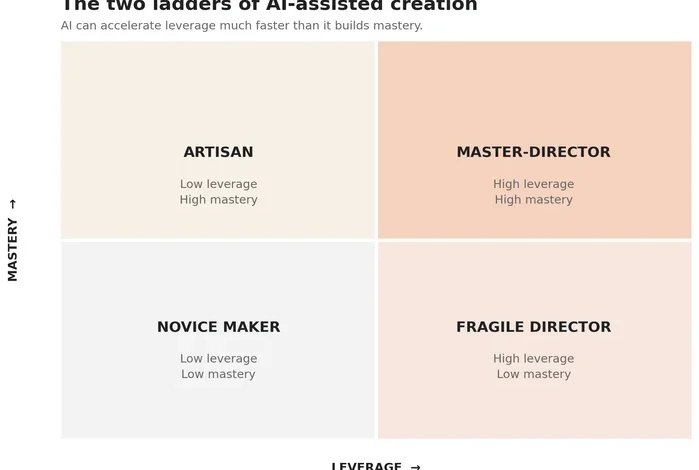
Formative friction refers to the essential cognitive challenges—researching, wrestling with arguments, and refining language—that develop a writer’s judgment. The danger of relying too heavily on AI is the creation of the "fragile director": a professional who can produce work quickly but lacks the internal model of quality necessary to evaluate or defend that work.
Implications for the Future of Creative Work
As AI capabilities continue to expand, the value of the human writer will likely shift toward higher-order functions. The "master-builder" model, which combines the ability to execute, the vision to design, and the judgment to curate, represents the most sustainable path forward.
- Origin: Identifying the source and necessity of the work.
- Intent: Defining the specific message to be conveyed.
- Direction: Overseeing the research and structural integrity of the project.
- Judgment: Applying taste and ethical standards to the output.
- Responsibility: Maintaining accountability for the finished product.
The primary risk in the coming years is not the existence of AI, but the potential for cognitive offloading. If writers stop practicing the craft of writing, they lose the ability to distinguish between high-quality analysis and algorithmic mimicry. As research indicates, the most effective use of AI is to automate the friction that wastes time, while preserving the friction that fosters growth and develops professional expertise.
In conclusion, the definition of an author in the AI era is evolving. Authorship is no longer measured by the volume of text produced manually, but by the intentionality of the direction provided. The challenge for modern writers is to use the leverage provided by AI to amplify their unique perspectives, rather than allowing the machine to determine the substance of their contributions. The future of the industry depends on the ability of professionals to remain "present" in the creative process, ensuring that while technology may multiply output, the human remains the final arbiter of meaning.