The 2026 Social Media Security Checklist: Safeguarding Brands Against AI Phishing and Sophisticated Digital Threats


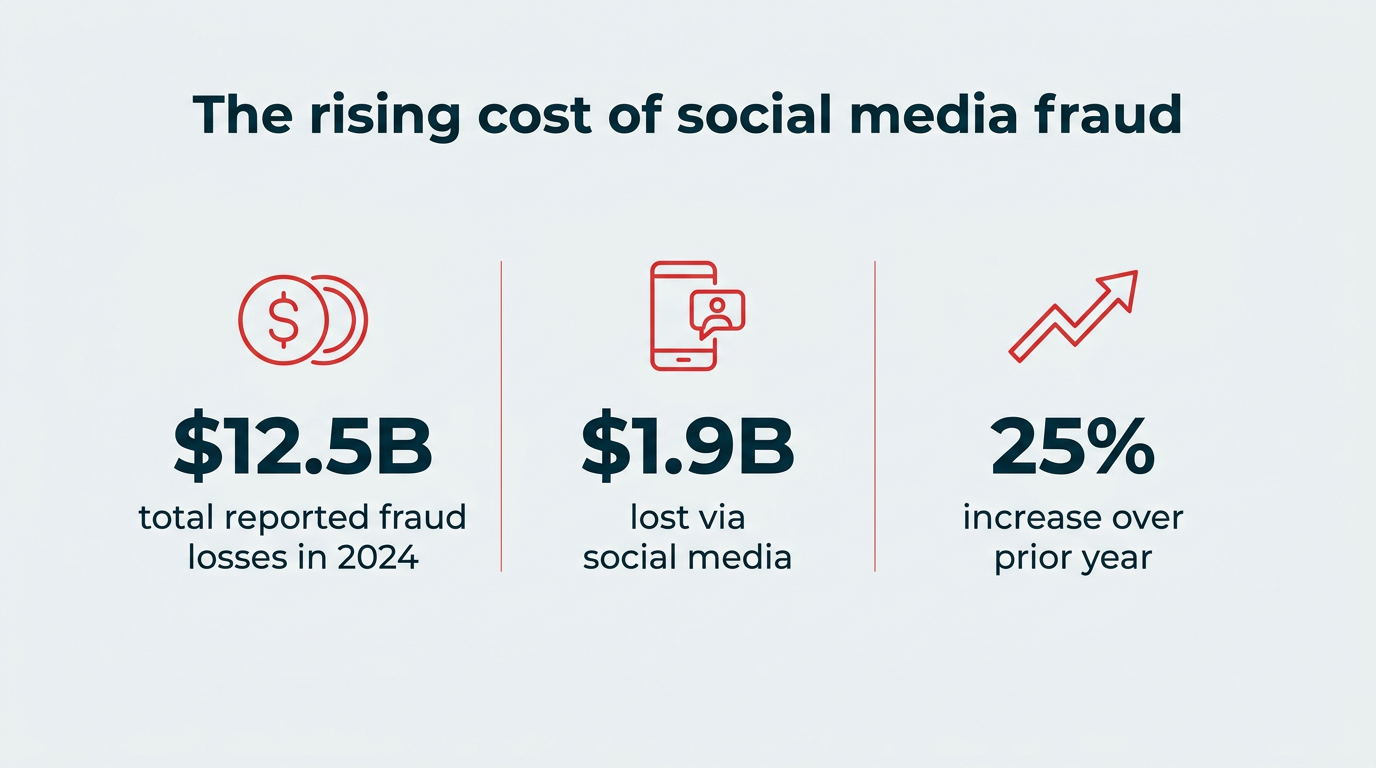
Social media security has evolved from a secondary IT concern into a critical pillar of enterprise risk management. As digital landscapes shift toward hyper-automated, AI-driven interaction, the threat models facing modern organizations have grown increasingly complex. In 2024 alone, consumers reported staggering losses of $12.5 billion to fraud—a 25% increase from the previous year—with social media serving as the primary vector for these attacks. For businesses, the implications of a compromised account extend far beyond temporary downtime; they encompass massive financial liability, the erosion of brand equity, and potential regulatory sanctions.

The current threat landscape is no longer defined by amateurish attempts at unauthorized access. Instead, malicious actors are employing sophisticated, automated systems to conduct large-scale phishing campaigns, generate convincing deepfake media, and execute account takeovers that can cripple a brand’s digital presence in minutes. Protecting an organization now requires a comprehensive, multi-layered strategy that transcends basic password management.
The Escalating Cost of Digital Impersonation
The financial stakes of social media security are underscored by the Federal Trade Commission’s latest data, which identifies social platforms as the leading contact method for scams. Of the $12.5 billion lost to fraud in 2024, approximately $1.9 billion was directly linked to interactions originating on social media. These figures reflect a shift in tactics: scammers are moving away from manual, one-on-one solicitation toward automated, data-rich campaigns that leverage personal information harvested from public profiles.

When a brand’s account is hijacked, the consequences are immediate. In early 2024, the U.S. Securities and Exchange Commission (SEC) experienced a high-profile security breach on X (formerly Twitter). The incident, which involved the dissemination of false market-moving information, served as a stark reminder that even the most high-profile entities remain vulnerable to credential theft. For smaller organizations, the damage is often more insidious—imposter accounts masquerading as legitimate customer support channels can systematically defraud a company’s client base, leading to a permanent loss of trust.
Anatomy of the Modern Threat Landscape
The shift toward AI-powered social engineering has fundamentally altered the security equation. Attackers can now aggregate fragmented information from multiple public sources to craft hyper-personalized phishing messages at scale. This capability has elevated the threat of deepfake technology from a theoretical concern to a standard operational risk. Gartner’s recent research indicates that 62% of surveyed organizations have already faced a deepfake-related security incident.
The danger of deepfakes is perhaps most pronounced in video-conferencing and customer service environments. The well-documented case of a finance employee in Hong Kong who authorized a $25 million transfer after being tricked by a deepfake video of a senior colleague highlights the vulnerability of human-centric verification processes.
Beyond social engineering, account takeovers often stem from:
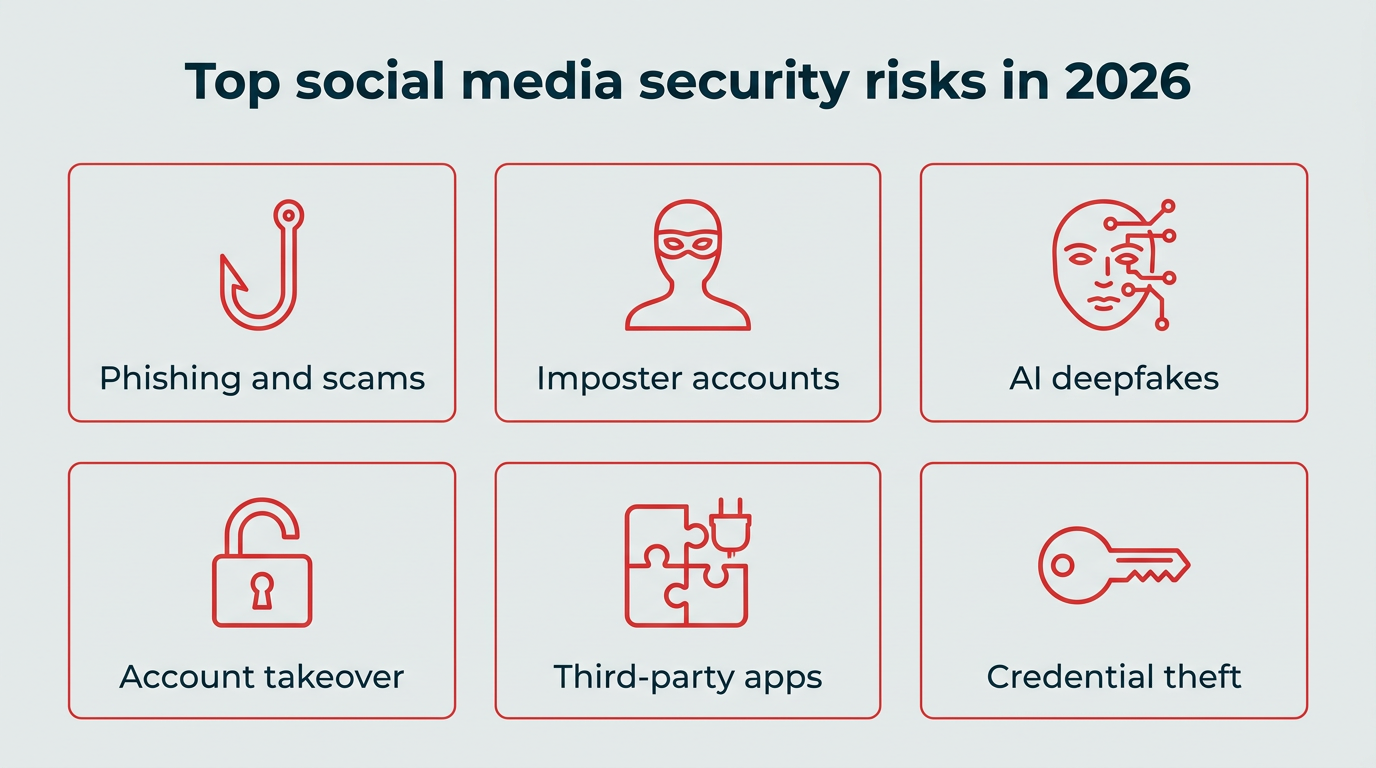
- Credential Stuffing: The use of stolen usernames and passwords from unrelated third-party data breaches to gain unauthorized access.
- Ad Account Hijacking: Attackers gaining control of business ad accounts to deploy fraudulent advertisements, effectively using the victim’s own budget to distribute malware or phishing links.
- Third-Party App Vulnerabilities: Malicious integrations that, once granted permission, gain administrative-level access to private messages, customer data, and publishing tools.
A Comprehensive Framework for Mitigation
To defend against these threats, organizations must transition from reactive measures to a proactive, governance-based security posture. The following eight-point framework is essential for modern enterprises.
1. Implementation of Passwordless Authentication and Passkeys
The reliance on traditional passwords is a significant liability. Organizations should prioritize the transition to passkeys—cryptographic credentials that tie access to a specific device rather than a memory-based string. Where passkeys are not yet supported, robust password managers that generate unique, randomized credentials for every platform are the minimum requirement.

2. The Principle of Least Privilege (PoLP)
Central to any secure strategy is the limitation of access. Not every employee in a marketing department requires full administrative access to every social channel. By employing role-based access control (RBAC), organizations ensure that individuals only possess the permissions necessary to perform their specific duties. This limits the "blast radius" should an individual employee’s account be compromised.
3. Formalizing Governance and Approval Workflows
Governance is the mechanism that prevents unauthorized or erroneous posts from going live. By integrating publishing tools that require a multi-step approval workflow, teams can ensure that content is vetted for compliance, tone, and accuracy before it reaches the public. This process should be strictly documented, creating an audit trail essential for regulatory compliance in sectors like finance and healthcare.

4. Ongoing Employee Training and Simulation
Human error remains the most common point of failure. Security training should be a recurring, bi-annual event, focusing on identifying the latest phishing patterns, the dangers of social media quizzes (which often function as password-hint harvesters), and the importance of device security.
5. Real-Time Monitoring and Threat Intelligence
Proactive monitoring is the only way to identify an imposter account or a surge in malicious sentiment before it escalates into a crisis. Organizations should leverage social listening tools to track brand mentions, unauthorized account creation, and suspicious keyword spikes. Early detection allows for immediate takedown requests and public communication, minimizing the duration of the attack.

6. Privacy and Configuration Audits
Platform privacy settings are frequently updated, often in ways that expand data visibility by default. Quarterly audits of privacy configurations are mandatory. These audits should verify that only necessary data is public and that all administrative settings reflect the current security needs of the organization.
7. Mobile Device and Network Security
With the rise of remote and hybrid work, mobile devices are frequent targets. Organizations must mandate the use of device locks, automatic software updates, and secure VPNs for all employees accessing corporate social accounts. Public Wi-Fi should be treated as fundamentally insecure, and remote-wipe capabilities should be enabled on all company-managed mobile devices.

8. Incident Response and Continuity Planning
No security posture is perfect. An effective incident response plan ensures that when a breach occurs, the team knows exactly how to contain the damage, notify stakeholders, and restore operations. This plan must be tested annually through tabletop exercises involving IT, legal, communications, and executive leadership.
The Role of Technology in Modern Defense
While manual diligence is necessary, it is insufficient at scale. Enterprise-grade platforms like Hootsuite Social OS provide the governance, audit trails, and integrated monitoring required for modern teams. By centralizing access, these tools eliminate the need for employees to manage raw social media passwords, effectively mitigating the risk of credential leakage.
Furthermore, specialized cybersecurity solutions such as ZeroFOX offer automated intelligence regarding external threats, providing the capability to identify and initiate the takedown of fraudulent accounts globally. When combined with a robust password manager like 1Password, which enforces credential hygiene and passkey adoption, these tools create a defensive barrier that is significantly harder for attackers to penetrate.
Conclusion: Security as a Cultural Priority
The security of a brand’s social media presence is not merely an IT issue—it is a foundational component of business continuity. As organizations continue to deepen their reliance on digital channels to engage with customers and drive revenue, they must treat their social accounts with the same level of security rigor as their internal financial systems.

A well-defined social media security policy, coupled with regular audits, ongoing employee training, and the right technological infrastructure, transforms social media from a liability into a secure asset. The goal is not to stop using these channels, but to operate them with a high-fidelity understanding of the risks, ensuring that the brand remains resilient in the face of an ever-changing threat landscape. For enterprises, the cost of complacency is too high; the investment in security, however, provides the peace of mind necessary to innovate and engage in the digital age.
Related posts: