Microsoft Positioned as a Leader in the 2026 Gartner Magic Quadrant for Container Management

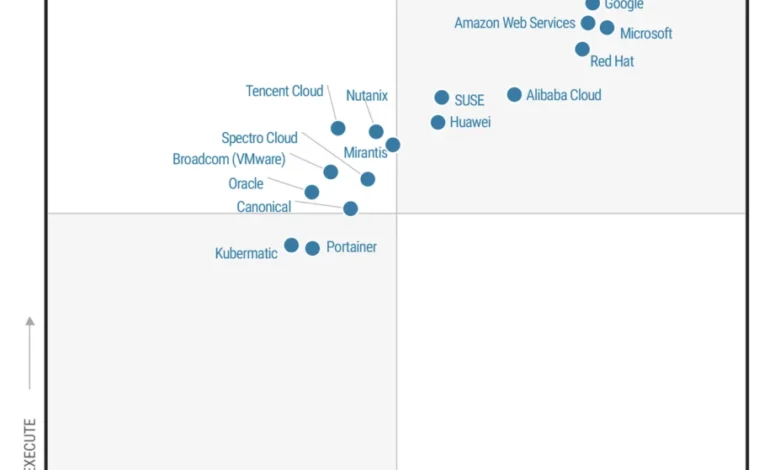
Microsoft has officially been named a Leader in the 2026 Gartner Magic Quadrant for Container Management, securing the furthest position to the right for its Completeness of Vision. This recognition, published on September 2, 2026, marks a pivotal moment for the technology giant as it pivots its container strategy to address the rapidly shifting demands of artificial intelligence, edge computing, and sovereign cloud requirements. The Gartner report, authored by analysts Dennis Smith, Tony Iams, Wataru Katsurashima, and Lucas Albuquerque, evaluates vendors based on their ability to execute and their vision for the future of containerized environments.
The Evolution of Kubernetes: From Democratization to AI Orchestration
The trajectory of container management has undergone a radical transformation over the past decade. When Kubernetes was first introduced to the open-source community, the primary objective was the democratization of distributed systems. The goal was to simplify the building of reliable services by abstracting the infrastructure layer, allowing schedulers to make optimal placement decisions without the system needing to understand the underlying nature of the workloads.
However, the integration of generative AI and Large Language Models (LLMs) has fundamentally altered these requirements. Modern container platforms are no longer just about maintaining uptime for microservices; they must now facilitate high-performance GPU scheduling, handle intermittent connectivity at the network edge, and ensure that data remains within strict regulatory and sovereign boundaries. As AI becomes an integral component of enterprise architecture, the demand for platforms that provide a consistent operating model—spanning cloud, hybrid, and edge environments—has become a top priority for CIOs and platform engineers.
Strategic Portfolio Expansion
Microsoft’s container strategy is built upon a cohesive ecosystem designed to bridge the gap between legacy application modernization and modern AI deployment. This portfolio includes:
- Azure Kubernetes Service (AKS): The core managed service that has maintained a commitment to upstream Kubernetes compatibility, avoiding proprietary forks.
- Azure Container Apps: A serverless platform designed for elastic workloads, allowing for rapid scaling of AI inference tasks without the overhead of managing underlying clusters.
- Azure Arc: A critical component for cross-environment management, extending identity and policy frameworks to Kubernetes clusters residing in other clouds or on-premises datacenters.
- Azure Kubernetes Fleet Manager: A solution for large-scale operations, enabling coordinated policy application and multi-cluster updates.
The company’s commitment to open-source remains a cornerstone of this strategy. Data indicates that Microsoft has remained the second-largest contributor to Cloud Native Computing Foundation (CNCF) projects globally, and it has held the title of the largest contributor among major cloud providers for three consecutive years. This level of involvement ensures that the APIs utilized by developers remain stable and consistent, regardless of where the workload is ultimately deployed.
Architectural Models for AI Integration
In the current enterprise landscape, two primary architectural patterns have emerged for running AI on container platforms. The first model is characterized by platform teams managing a persistent serving layer. In this scenario, the infrastructure team retains control over GPU scheduling, model lifecycles, and compliance boundaries. This approach is preferred for high-volume, predictable AI services where governance is paramount. To support this, Microsoft has integrated tools such as the AI toolchain operator and secured CNCF AI Conformance certification, providing organizations with the assurance that their AI infrastructure is compatible with the broader cloud-native ecosystem.
The second model prioritizes elasticity and isolation, typically driven by application or agent frameworks that invoke inference on demand. In this configuration, capacity is provisioned when needed and decommissioned immediately upon task completion. Azure Container Apps has been optimized for this requirement, utilizing serverless GPUs and hardware-isolated sandboxes that maintain state across interactions. The engineering challenge, as identified by industry experts, lies in enabling seamless transition between these two models, allowing teams to leverage identical images, identity controls, and security policies regardless of the deployment path.
Addressing the Challenge of Cluster Sprawl
As enterprises deploy AI models closer to the data source, the traditional centralized infrastructure model is breaking down. Organizations are increasingly managing clusters across multiple geographic regions, manufacturing sites, and highly regulated environments where connectivity may be intermittent. This decentralization often leads to "coordination failures," where configuration drift, uneven patch management, and inconsistent policy application result in security vulnerabilities.

To mitigate these risks, Microsoft has introduced "AKS Everywhere," aimed at providing a consistent, Azure-secured platform from the cloud to the edge. By extending the common identity and observability model via Azure Arc, the company is attempting to standardize operations across disparate environments. Furthermore, the deployment of the Azure Kubernetes Fleet Manager allows for centralized governance, effectively treating an entire fleet of clusters as a single entity rather than a collection of isolated silos.
The Rise of Agentic Operations
Perhaps the most significant development in the 2026 landscape is the shift toward agentic operations. As the number of managed clusters grows faster than the human talent available to support them, manual intervention is becoming unsustainable. Microsoft’s introduction of the Azure SRE Agent and the AKS MCP Server signals a move toward automated diagnosis and remediation.
By leveraging AI-driven agents, operators can execute routine tasks using existing permissions and security controls, significantly reducing the "mean time to repair" (MTTR) and allowing SRE teams to focus on strategic initiatives rather than reactive firefighting. This is not intended to replace human oversight but to serve as a force multiplier for platform teams managing increasingly complex, multi-region estates.
Industry Impact and Customer Momentum
The adoption of these technologies is evidenced by a diverse range of enterprise use cases. Organizations ranging from high-performance GPU training clusters to regulated multi-tenant SaaS providers are utilizing these tools to navigate the transition to AI. For instance, companies like CallRevu have reported significant gains in cost efficiency and deployment speed by utilizing AKS to scale GPU resources based on real-time call volume, testing new models in a sandbox before promoting them to production.
This momentum suggests that the primary driver for container adoption in the next five years will not be containerization itself, but the ability to manage the complexity of AI workloads at scale. The market for container management is maturing, moving away from simple orchestration and toward intelligent, policy-driven platform engineering.
Analytical Perspective: The Future of Container Management
The 2026 Gartner Magic Quadrant serves as a barometer for the maturity of the cloud-native ecosystem. Microsoft’s positioning as a leader highlights the strategic importance of balancing innovation with stability. While competitors continue to offer robust container services, the differentiator in the coming years will be the "platform experience"—the ability to hide the underlying complexity of the infrastructure while providing developers with the tools to innovate rapidly.
The implications for the industry are clear: the era of manual cluster management is effectively over. Organizations that fail to adopt a unified operating model across cloud and edge will likely face escalating operational costs and security risks. As Microsoft continues to integrate AI into its management layer, the barrier to entry for complex, distributed AI applications will continue to lower. However, the reliance on a single provider for such critical infrastructure also raises questions about vendor lock-in, a concern that the company seeks to mitigate through its continued, aggressive investment in open-source standards and CNCF conformance.
In conclusion, the recognition of Microsoft in the 2026 Gartner Magic Quadrant reflects a broader industry consensus: container management has become the backbone of the modern enterprise. As the focus shifts from "how to run a container" to "how to govern a fleet of AI-enabled workloads," the platform-as-a-service model will remain the dominant paradigm for the foreseeable future. The challenge for Microsoft and its peers will be to maintain this momentum while the underlying technologies—specifically in the realms of edge computing and autonomous SRE—continue to evolve at a breakneck pace.